One of the unique strengths – and challenges – of archival records is their multifaceted nature. Rather than presenting a single, carefully shaped narrative, archival records, from letters to pamphlets to oral histories, offer small, sometimes contradictory glimpses into the larger stories of individuals, communities, and historical eras. This month, Wheaton Archives & Special Collections highlights a few items from our collections that shed a small personal light on one of the most defining and consequential eras of modern American history – the Great Depression.
Much has been written about the stock market crash, bread lines, the New Deal, and the Dust Bowl. Our particular collections, however, offer a view of the Depression through the lenses of evangelism and missions: How did pastors and evangelists address the crisis in their sermons? How did some Christians connect spiritual concerns to the economic and emotional stresses of the era? What effect did the Depression have on shaping the direction and vitality of evangelistic efforts? What was it like to experience the Depression as a missionary, far from home? And how did churches and evangelists respond to the needs—and opportunities—of the period?
E. J. Pace Collection (CN 702)
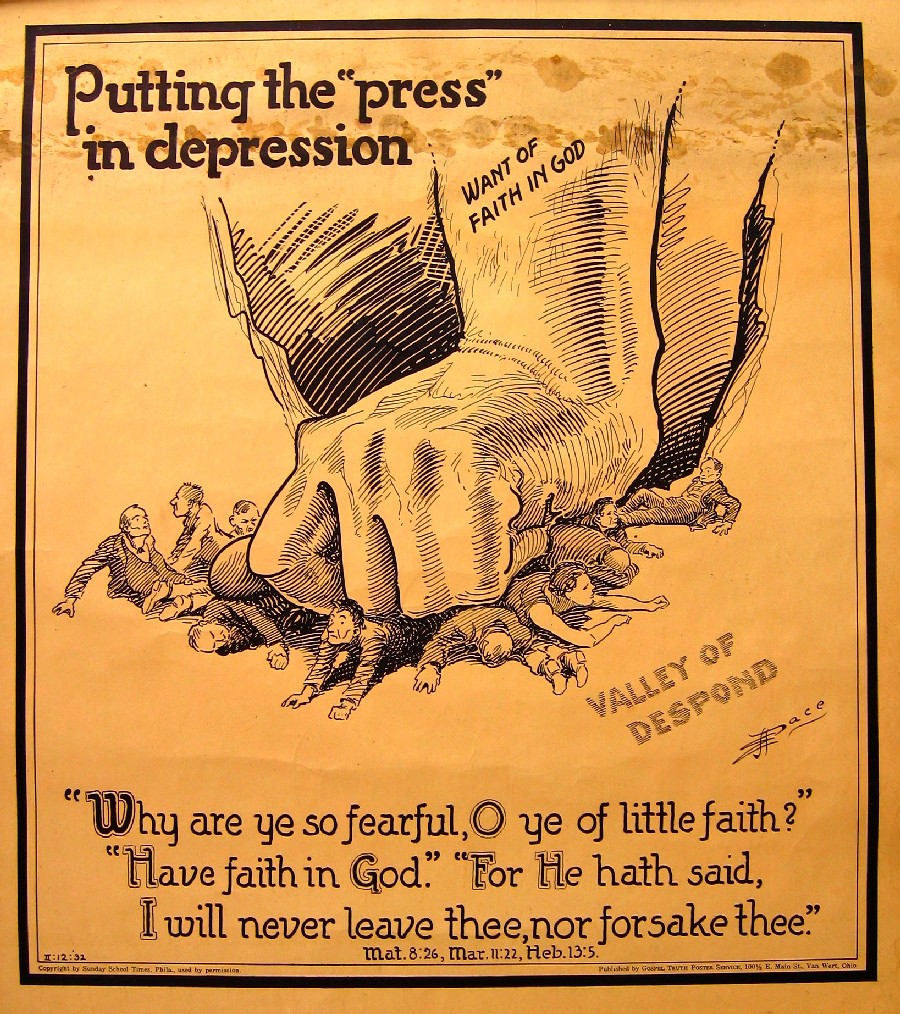
From 1916 to 1946, E. J. Pace, newspaper illustrator, cartoonist, and former missionary, contributed a weekly cartoon to the influential Christian publication The Sunday School Times. The subjects of his cartoons were usually centered on different aspects of Christian life or theology, but also occasionally spoke to current events. In the below cartoons, from March and May of 1932, Pace frames the Depression in the context of Christian faithfulness in God’s provision.

Henry W. Stough Collection (CN 106)
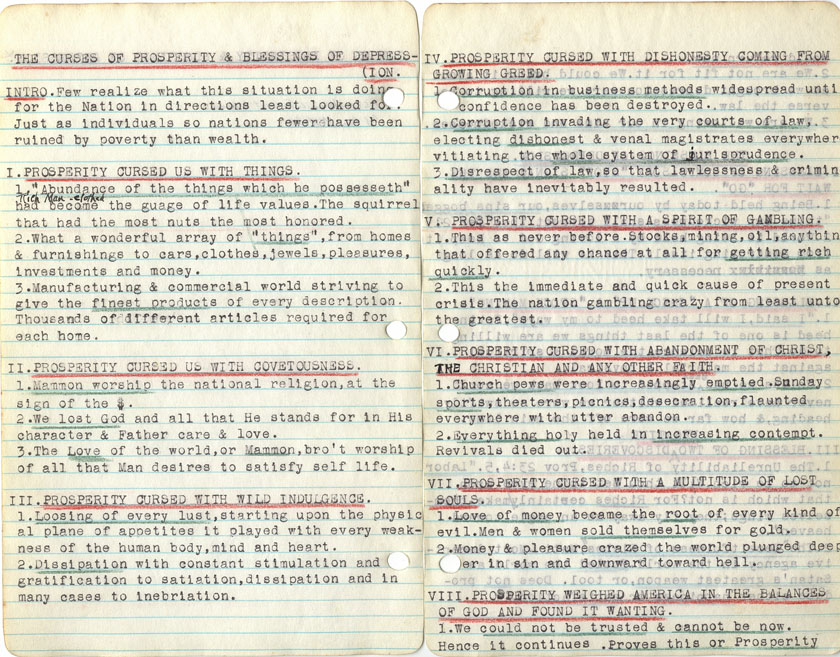
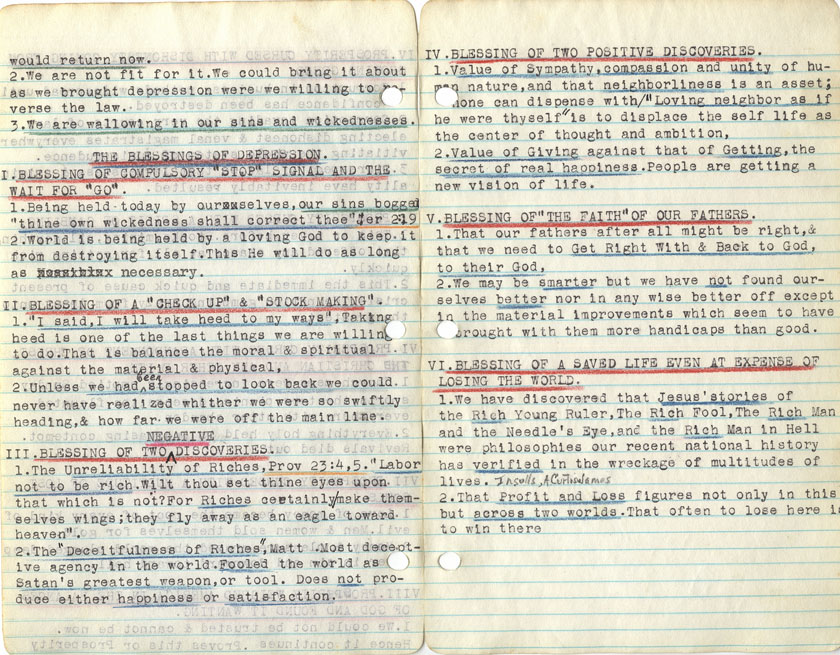
Henry Wellington Stough (1870-1939) began his evangelistic career in 1893 when he was chosen by Dwight L. Moody to preach in the “revival” tents erected during the World’s Columbian Exposition in Chicago. After serving for several years as pastor of Third Congregational Church in Oak Park, Stough partnered with evangelist J. Wilbur Chapman in 1901 to hold meetings across the United States. For the next three decades, he preached thousands of sermons, many touching on contemporary topics like Prohibition. His collection also includes two notebooks from the 1930s filled with sermons and lectures about the Depression:
Sermon I: The Curses of Prosperity and the Blessings of Depression
Sermon II: Gold Rations and a Starving Nation
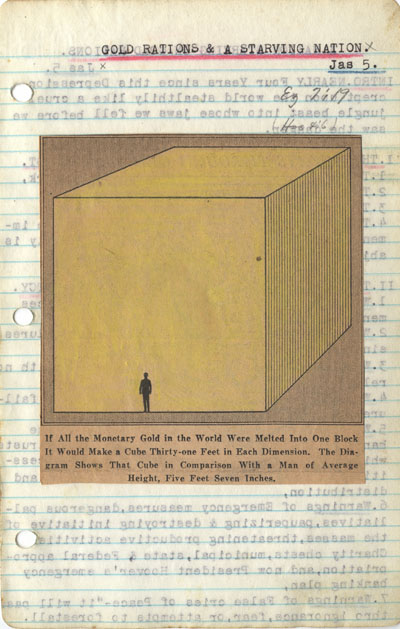
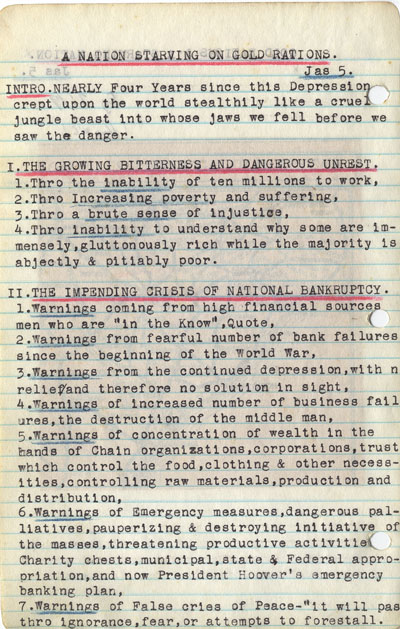
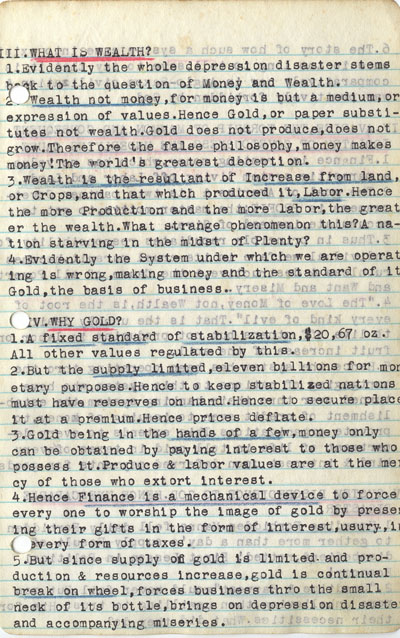
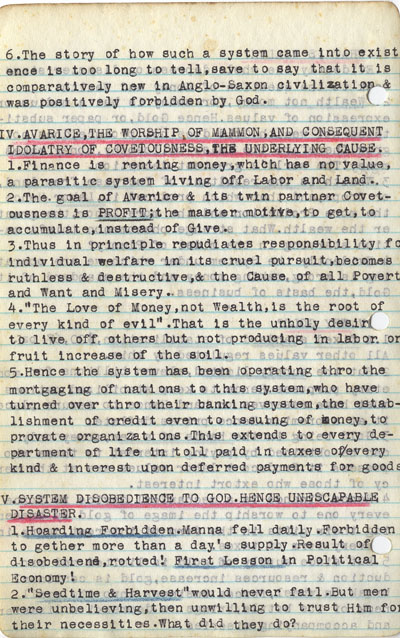
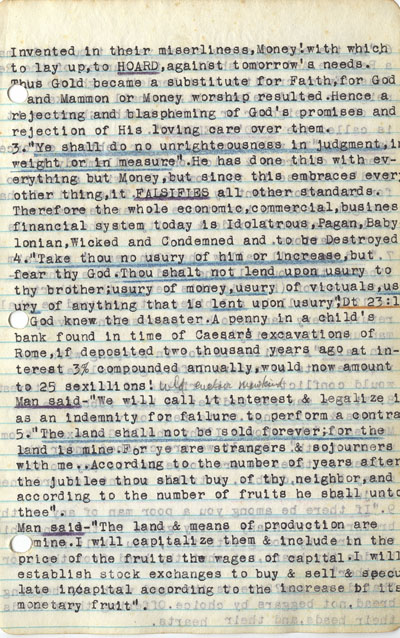
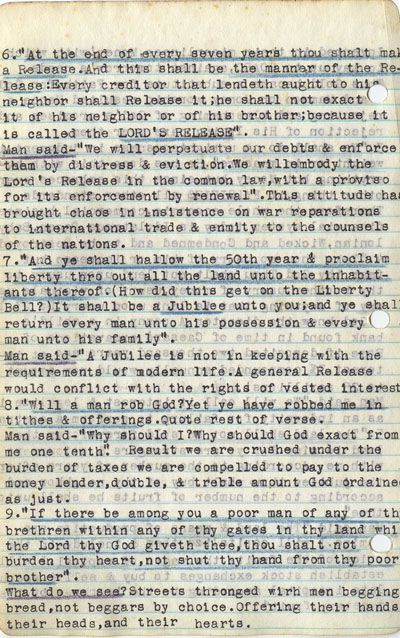
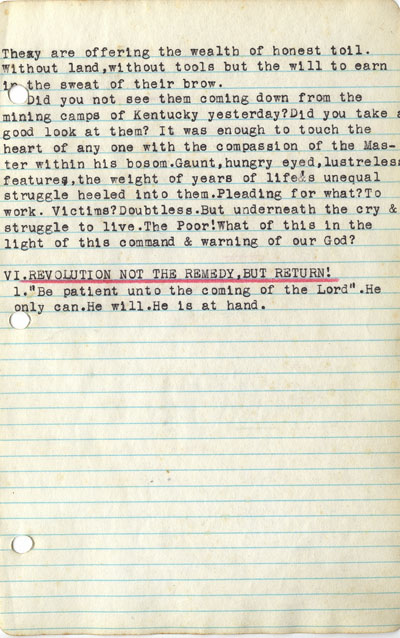
Selections from one of Stough’s sermon notebooks on the Great Depression and other national crises. Collection 106, Folder 2-5.
Henry and Marguerite Owen Papers (CN 534)
Marguerite Goodner Owen (1909-2002) and her husband Henry Owen were missionaries to rural China with China Inland Mission from 1933 to 1939. Before leaving for the mission field, Marguerite was briefly a student at Moody Bible Institute in Chicago for the 1931-1932 academic year, before the Depression interrupted her studies. Below, she recounts the effect of the Depression on her Bible education in a 1996 oral history interview (Collection 534, T1):
“So, I had this forty-five dollars to pay my first board or so. And then I got a job as a waitress, I worked all through college as a waitress making money, my spending money. I wrote back to Daddy and said, “Oh, this is fine. I got this nice tearoom up on Clark Street.” And I got my evening meal every night. And $1.50 an hour which I thought was terrific, you know, and then tips. Because I’m outgoing, I suppose, I always got good tips. And I thought, I said to Daddy, “You won’t need to worry at all.” But, in a month or a month and a half, the lady said to me, “Marguerite, I’m sorry, you’re very good but you’re the last one on and we’ve got to close down.” I knew that, customers weren’t coming to pay for dollar and a half or two dollar dinner, I mean they were too poor. The Depression was just hitting, terribly. In fact, between the time I went to Moody, when there were one thousand students until December, the break, it dropped to five hundred. They just couldn’t come back, they couldn’t come back for the term. So, then I got a lot of different waitress jobs that were very poor and didn’t pay much. For instance, the last one I had was at the “Five and Ten” on Madison street. And I worked two and a half hours a day, five days a week for two dollars and seventy five cents a week. But, I was allowed, of course, fifteen cents was to eat and fifteen minutes to eat it…. No tips at all. You know, they didn’t put tips on the counter. That was it. You got the…. And I was getting thinner and thinner and tireder and tireder. I…I…. And Daddy would’ve had to borrow to send me home, he was still having a struggle time. So, at the end of the year, he borrowed the money to send me home, to take me home.”
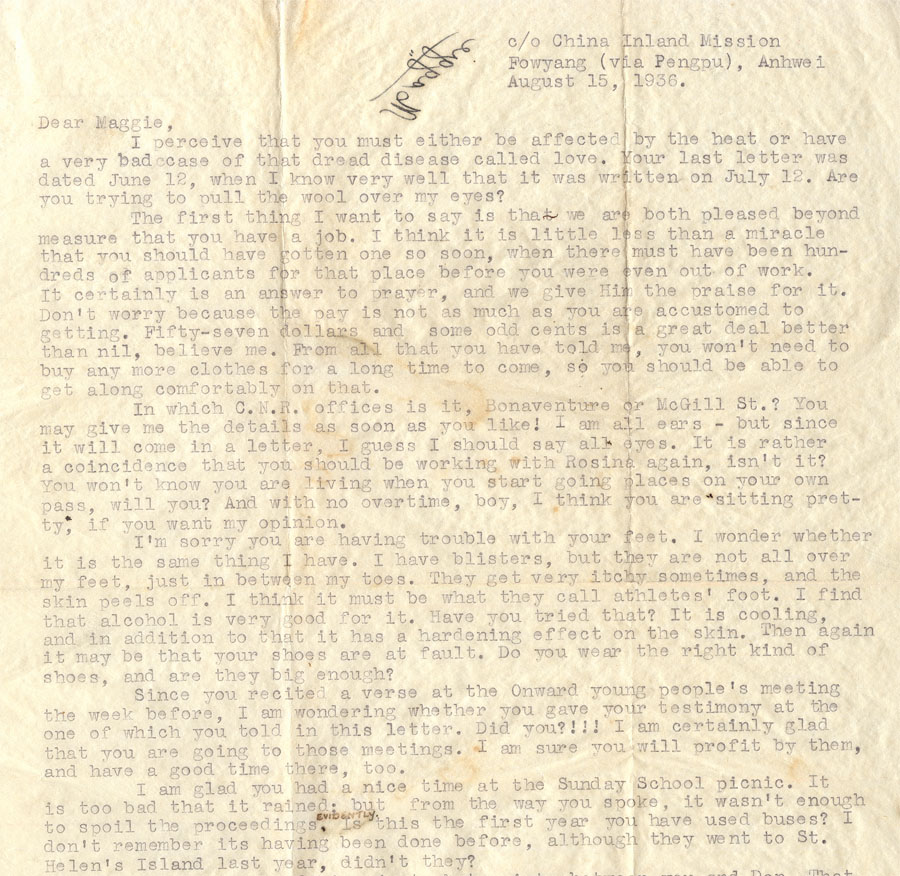
J. Herbert and Winnifred Kane Papers (CN 182)
J. Herbert (1910-1988) and Winnifred (1912-1983) Kane were missionaries to China from 1935 through 1950. During that time, they regularly wrote back to their families in Canada and heard reports about what was going on there, including the difficulties caused by the Depression. Below is a portion of a letter to Winnifred’s sister Maggie which includes comments about the job she managed to find:
Berea St. John Feiner Papers (CN 202)
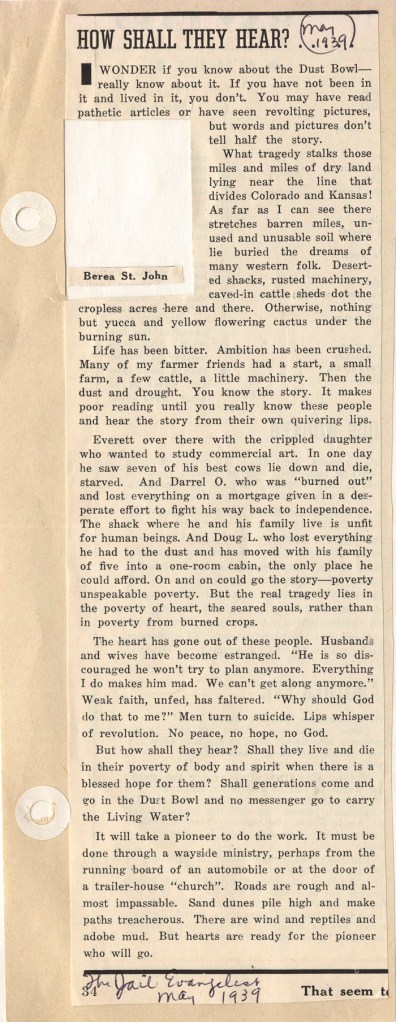
Graduating at the start of the Great Depression, social worker Berea St. John Feiner (1909-2005) served at the Baptist Christian Center under the direction of the American Baptist Home Missions Society (ABHMS) from 1931 to 1932, moving to supervisor of a Social Survey of Delinquent Areas for the ABHMS in 1934, and in 1939 was employed by the WPA as supervisor of case reviews in a seventeen-county area of Colorado. In addition to her case work, she also wrote freelance articles, like the one below from the publication The Jail Evangelist, where Feiner describes the consequences of the Dust Bowl for the families of the farmers she worked with:
Paul Rader Collection (CN 38)
In June of 1922, evangelist Paul Rader began a series of tent meetings in Chicago at the corner of Barry, Clark and Halsted that eventually grew into the Chicago Gospel Tabernacle. For a decade, the Tabernacle represented a dynamic experiment in evangelism, with ministries for radio, music, Christian literature, and overseas missions. When the Depression started, the Tabernacle quickly mobilized to provide food and clothing for tens of thousands of Chicago families. As more and more people lost their jobs, the Tabernacle stepped up its food distribution program and started a rescue mission for the homeless. Well over 36,400 families were fed regularly while the Pantry lasted. However, the ambitious effort strained the Tabernacle’s resources just as it was facing its own severe financial challenge. Unable to recover after losing the financial backing of a major donor due to the Depression, Rader’s Tabernacle declared bankruptcy in 1933.
Below is a pamphlet advertising the community work of the pantry from the summer of 1932:
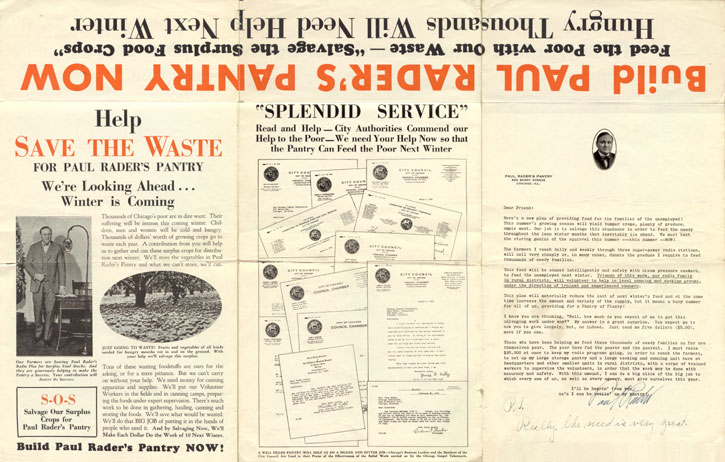
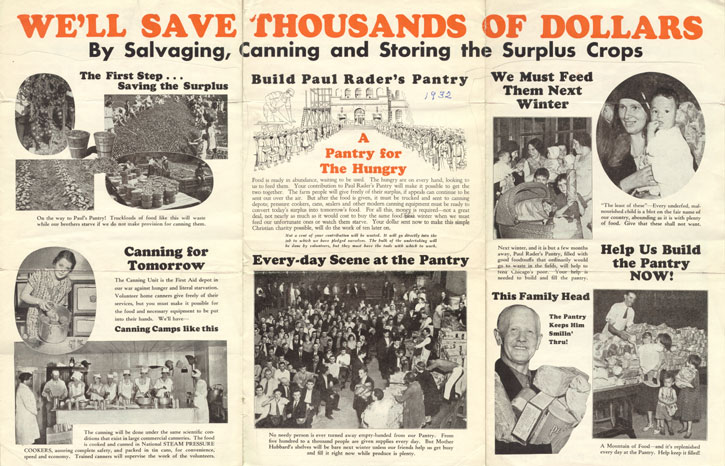
Advertisement for “Rader’s Pantry,” 1932. From Collection 38, Folder 3-8 (and OS10).
This is just a small sample of the many letters, memos, oral histories, photographs, and other records preserved by Wheaton Archives & Special Collections that document how evangelists experienced and responded to many of the defining events of the twentieth century. To discover additional perspectives on the Great Depression from the collections, explore our online database.

