The Evangelism & Missions Archives includes the records of dozens of Christian organizations and each of these has reports, letters, photos, scrapbooks and audio and video records that tell the stories of hundreds of people who spent their lives ministering and sharing the Gospel. From all this multitude, this month we highlight the remarkable life and ministry of one – Nina Eleanor Gemmell van Vleck.
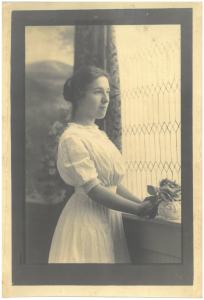
At 24 years old, Nina Gemmell sailed to China in 1919 to work with China Inland Mission (later the Overseas Missionary Fellowship), just a few weeks after the end of the First World War. Born in 1895, she had grown up in Kansas and been educated as a teacher at Washington State Normal School. She then taught for a few years in rural schools in the state. Years later she remembered, “On September 14, 1914, the first day of the first World War, was also the first day of my teaching in the white schoolhouse. I was escorted by the three Batie children, over two board fences and two barbed wire fences and through a lot where there were horses and a field of cattle. The school children, of which there were about 38, stood around the door eyeing the new teacher, who arrived on foot dressed in a shirtwaist and hobble skirt.”[1]
After landing in China and spending time acquiring the Chinese language, she was sent to teach at a girls’ school in Yuanchow (Yuanzou) in the province of Kiangsi (Jiangxi). She found her work there immensely rewarding, as illustrated by this excerpt from a 1922 letter to her supporters, “Two weeks ago we were glad and thankful to see four profess a faith in the gospel. After a quiet afternoon I noticed a serious look on their faces as they finished their evening work…. Toward evening I noticed a group at my door waiting for an interview…. Seeing their patient waiting and with a prayer for wisdom and understanding as to how to deal with their calamity or whatever it might be, [I approached them.] One searching look at their faces drove away all fear and immediately four of them stepped forward and handed me four small pieces of paper. This is a sample of what they contained: “From this day and henceforth until the coming of the Lord, I want to believe on and follow the Lord Jesus Christ and worship the true God. I want to be very good. Signed, Golden Lily.”[2]
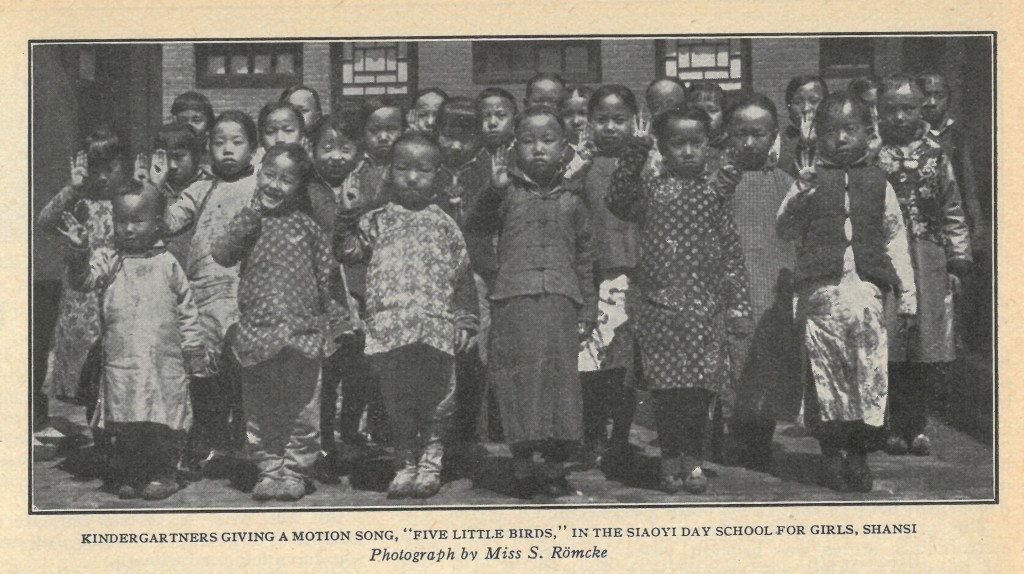
A classmate of Nina’s from Washington State visited her in China and described the school she was leading, “Now it is finished, three doors, four large windows, a beaten floor, bamboo matting tacked from rafter to rafter to keep out wind and dust and space enough for forty-odd students…. This is Miss Gemmell—shall she be described? How I wish you might all know her and her worth as we do. I cannot think what Yuanchow would be without Nina. She will greet you with a smile and a most visible preening of her feathers that you are to see such a seminary. (The pride of this principal and headmistress is not to be matched the world over.)”[3]
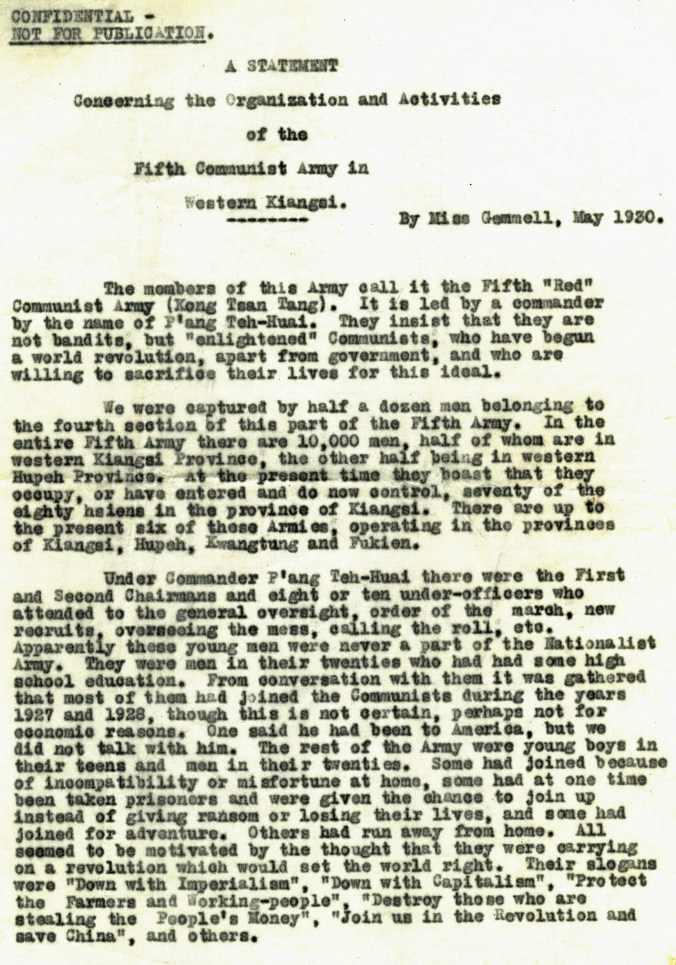
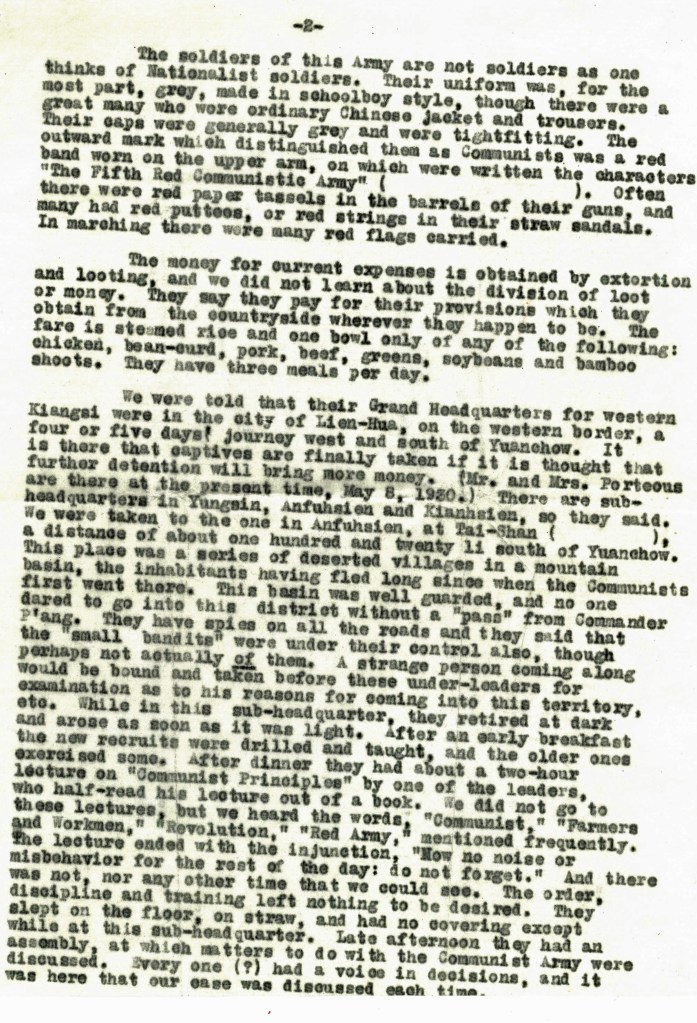
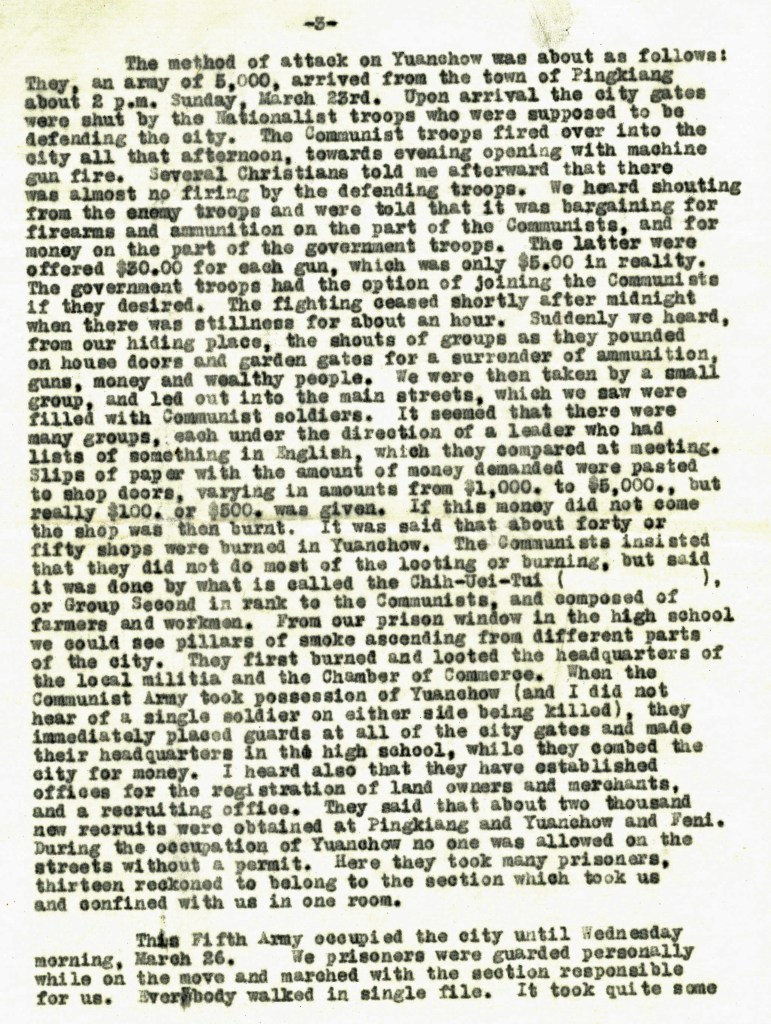
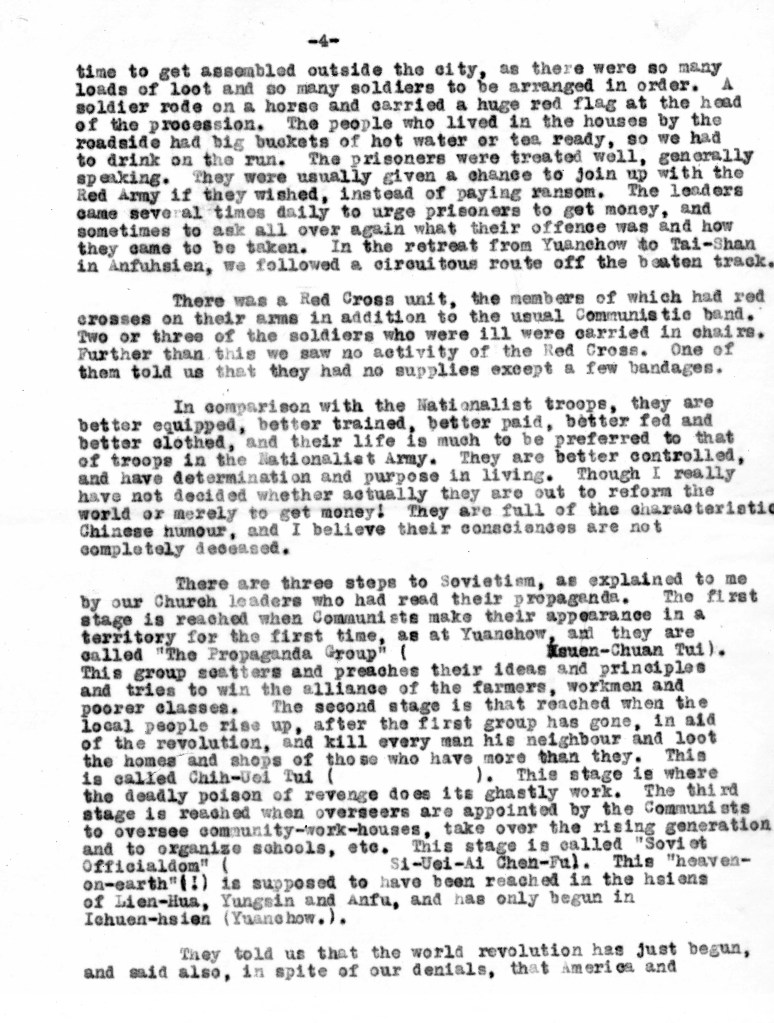
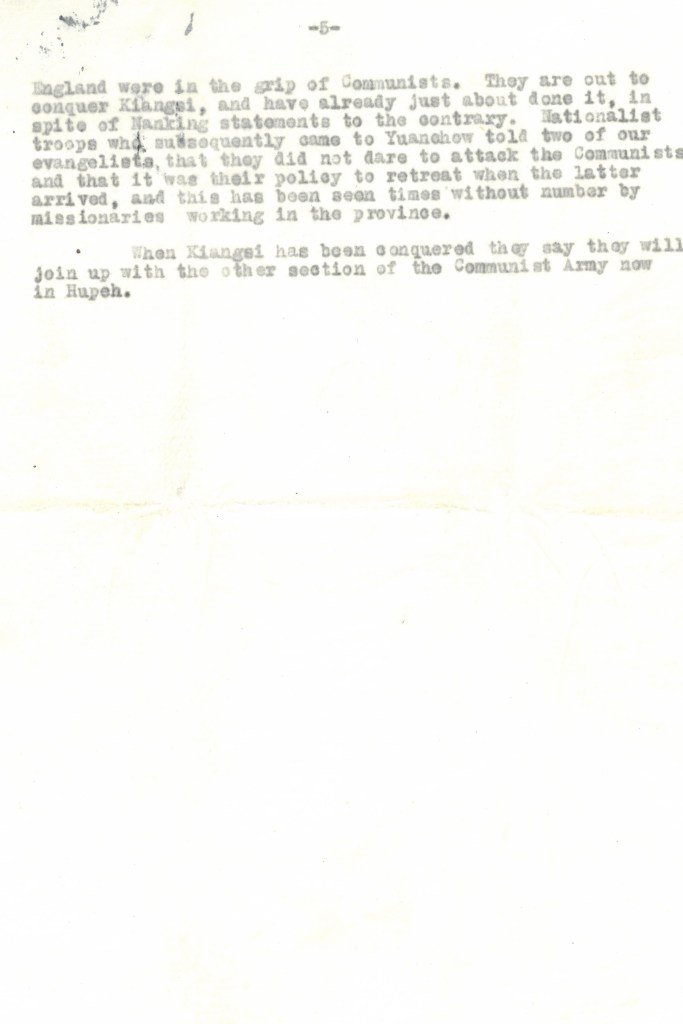
Nina was still teaching in Yuanchow in March 1929 when the city was caught up in the civil war between the Nationalist (Kuomintang) and the Communist factions. The city was attacked by the Communist army, and, after a virtually bloodless conflict, surrendered. Nina and two fellow missionaries, Mr. and Mrs. Porteous, were taken prisoner. Immediately they were put on trial in the street and, “faced with a long list of charges, including filling the people with superstition, having too many servants, cooperating with cigarette and movie companies, being advance agents of foreign oil companies, imperialists, etc., etc., etc. We denied all this, but they said our guilt was already proven, and we must be tried; so for the rest of the morning and far into the afternoon we were taken before one tribunal after another and were convicted of every charge.“[4] They were then held for ransom, as was a common practice with Communist forces at the time. The ransom was set at $60,000, although eventually the Communists accepted much less. Local Christians raised some money and were able to ransom her. The Porteous’ were held several weeks more but they too were released when a small ransom of medicines was paid by three brave Chinese Christians. Nina prepared a five page factual report on what she saw during her captivity. She wrote that apart from the officers, “the rest of the army were young boys in their tens and men in their twenties. Some had joined because of incompatibility or misfortune at home, other had at one time been taken prisoner and were given the chance to join up instead of giving ransom or losing their lives, and some had joined for adventure. Others had run away from home. All seemed to be motivated by the thought that they were carrying on a revolution that would set the world right…. In contrast with the Nationalist troops, they are better equipped, bester trained, better paid, better fed, and better clothed, and their life is much to be preferred to that of troops in the Nationalist army. They are better controlled and have determination and purpose in living. Though I really have not decided whether actually they are out to reform the world or merely to get money! They are full of characteristic Chinese humor and I believe their consciences are not completely deceased.”[5]
After her release, she was assigned to the China Bible Seminary for Women in Kiangwan, a suburb of Shanghai. There she taught young women how to prepare sermons, organize Sunday school and Bible classes and even teach piano. She was there for ten years and later wrote, “I shall never thank the Lord enough for the privilege of living in the Seminary in the close, happy fellowship with the staff and receiving untold blessings from those I met daily in the classroom.”[6]
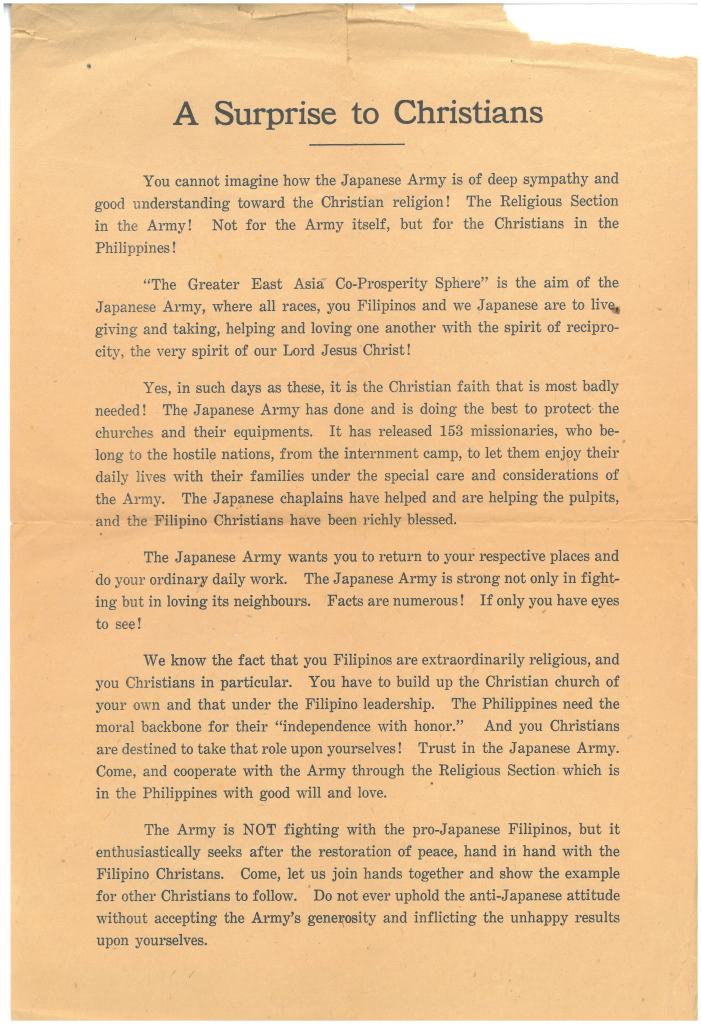
In late 1941, because of growing danger of war between Japan and the United States, Nina Gemmell and another female missionary booked passage for the United States. Their ship had briefly stopped in Manila on December 7th, the same day Japan invaded the Philippines. They could not then leave the city and were still there when the Japanese army entered on New Year’s Day 1942. Nina and her companion were briefly interned with other Allied nationals. They were under more or less open arrest and Nina used the opportunity to hold a class for fourteen Filipino students on Bible study and teaching methods. In September they were sent back to Shanghai on a Japanese ship. There she was interned with over a thousand other Americans in Chapei Camp. “The Japanese bill of fare can be briefly stated – rice and bread, fish, and a tablespoon of greens, so we were not in any real want, but it was a time of testing our Christian faith. We had prayer meetings and Bible study from time to time, and we were permitted to have one service for the while camp once a week, which all enjoyed very much.”[7]
In September 1943, American internees were sent on a Japanese ship to the port of Goa in India. There they met an Swedish ship, the Gripsholm, which had Japanese internees from the United States. The exchange was made. The Gripsholm sailed by way of South Africa and Brazil to New York City, which they reach on December 1st. A few days after her arrival she wrote her friends, “We had a remarkable calm journey home with only two or three days of rough seas, so that even an atheist remarked that she had never believed in God but now she had to admit His Being and power. This remark was the signal for me to start an address on the mercy and love of the Living God in hearing the prayers of his children the world over for us on the Gripsholm.”[8]
After the war, Nina remained in the United States and was soon based at the OMF home office in Pennsylvania as a speaker and candidate secretary, interviewing potential missionaries. Another OMF missionary, Louis Almond remembered her encounters with Nina in an oral history interview with the Archives: “She noticed that…one of my eyes was a little crossed. She said, “Shouldn’t you be wearing your glasses?” I thought, you know, I would look better without them…. [Interviewer laughs] So I went back and started wearing my glasses…. And we were sitting at [dinner] I said, “I don’t like that,” or something. She said, “I want to advise you. When you go home, eat everything on your plate.” She got me straightened out on that! A very practical person. Well she was a feisty single lady until the end of her life…. She was feisty, practical…just a delightful person to know…. We called these lady missionaries, “Strong minded jou so”[sp?] A jou so [sp?] is a “young woman” in Chinese…. She was very helpful.‘”[9] OMF missionary and Secretary/Treasurer Wayne Courtney also valued her advice, remarking on the value of candidate school: “Well…it was good because we saw some of these old godly saints who told us about some of the things that we would face in China, and how we’d need to look to the Lord. Mrs. H.E.V. Andrews…. Dear elderly lady, but godly. And Nina Gemmell was another one. She taught a school in…Shanghai for years.”[10]
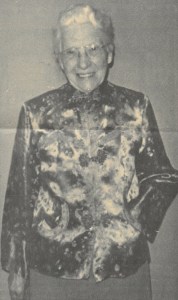
Even when retired, Nina had time for another adventure. Almond recounted, “And lo and behold, when Aunt Nina Gemmell…was quite elderly, we heard she was engaged to be married. And she was engaged to be married [to] a man, an old Bavarian, older than she, but in good health. And he used to come to the weekly prayer meeting at CIM Philadelphia. We noticed when we were in Philly, he…he’d come. He was a widower by the way. And so when we heard that Aunt Nina and Uncle Van were engaged to be married…all the missionaries from the States roared with laughter….. They got married, spent many years together. Uncle Van, Van Vleck, and Aunt Nina.”[11] As she wrote to her supporters in April 1950 (when she was 55), “I had not planned to marry at my age certainly and was praising the Lord for His blessing in the work in which I have been engaged in for several years in this Center. Within the pass few months the Lord has been increasing Mr. Van Vleck’s and my interest in and love for each other, and now we praise Him that He has led us to be engaged to be married.”[12]
They continued to minister in a variety of ways, first in Florida and then in a retirement home in Lancaster, Pennsylvania. In 1982, Nina undertook to write an autobiography of 67 pages and ended on a typical cheerful note, “How can I adequately describe these last sixteen years in the lush Pennsylvania countryside with its mountains, streams, valleys and covered with flourishing farms of fruits of all kinds, no end of delicious vegetables and grains, prosperous villages, and in the midst of all this, was a friendly religious people known as the Amish.”[13]
Nina died in 1983, just a year after she finished her autobiography. Her obituary in the OMF magazine stated, “Known lovingly as ‘Aunt Nina,” this tiny lady was one of a kind – zealous, loving, intense. Her niece remembers her as one who saw good in everyone, who recognized the potential for serving Christ in every event of her life.”[14]
[1] “Through the Moon-Gate to China” by Nina Gemmell Van Vleck, 1982, pg. 11. An autobiographical manuscript Nina wrote a year before her death.
[2] Nina E. Gemmell to “Dear Friends,” April 1922, CN 215, Box 29, folder 2
[3] The Weekly Messenger of Bellingham, Washington, April 21, 1922, “Interesting Letter from Former C0-Ed,” pg. 8, CN 215, Box 29, Folder 5
[4] “A Statement Concerning the Organization and Activities of the of the Fifth Communist Army in western Kiangsi by Miss Gemmell, May 1930,” pg. 2, CN 215, Box 4, Folder 20
[5] Ibid, pg. 4.
[6] “Through the Chinese Moon-Gate to China,” pg. 49
[7] Ibid, pg. 55
[8] Nina E. G. to “My Dear Relatives and Friends,” December 11, 1943, CN 215, Box 29, Folder 4.
[9] CN 680, T1
[10] CN 603, T2
[11] CN 680, T1
[12] Letter from Gemmell to “My dear Friends,” April 3, 1950, CN 215, Box 29, folder 4.
[13] “Through the Moon-Gate to China,” pg. 67, CN 215, Box 29, folder 7.
[14] Overseas Millions, August/September/ October 1983, “Nina Van Vleck,” pg. 95, CN 215, Box 25, Folder 5.

