A Practical Woman: The Purpose-Filled (and Adventurous) Life of Nina Eleanor (Gemmell) Vleck

The Evangelism & Missions Archives includes the records of dozens of Christian organizations and each of these has reports, letters, photos, scrapbooks and audio and video records that tell the stories of hundreds of people who spent their lives ministering and sharing the Gospel. From all this multitude, this month we highlight the remarkable life and ministry of one – Nina Eleanor Gemmell van Vleck.
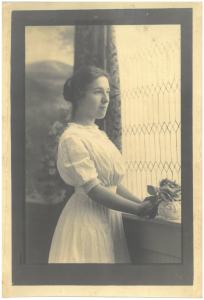
Nina Gemmell as a young woman, ca. 1915. PF: Gemmell, Nina.

At 24 years old, Nina Gemmell sailed to China in 1919 to work with China Inland Mission (later the Overseas Missionary Fellowship), just a few weeks after the end of the First World War. Born in 1895, she had grown up in Kansas and been educated as a teacher at Washington State Normal School. She then taught for a few years in rural schools in the state. Years later she remembered,  “On September 14, 1914, the first day of the first World War, was also the first day of my teaching in the white schoolhouse. I was escorted  by the three Batie children, over two board fences and two barbed wire fences and through a lot where there were horses and a field of cattle. The school children, of which there were about 38, stood around the door eyeing the new teacher, who arrived on foot dressed in a shirtwaist and hobble skirt.”[1]

After landing in China and spending time acquiring the Chinese language, she was sent to teach at a girls’ school in Yuanchow (Yuanzou) in the province of Kiangsi (Jiangxi). She found her work there immensely rewarding, as illustrated by this excerpt from a 1922 letter to her supporters, “Two weeks ago we were glad and thankful to see four profess a faith in the gospel. After a quiet afternoon I noticed a serious look on their faces as they finished their evening work….  Toward evening I noticed a group at my door waiting for an interview….  Seeing their patient waiting  and with a prayer for wisdom and understanding as to how to deal with their calamity or whatever it might be, [I approached them.]  One searching look at their faces drove away all fear and immediately four of them stepped forward and handed me four small pieces of paper.  This is a sample of what they contained:  “From this day and henceforth until the coming of the Lord, I want to believe on and follow the Lord Jesus Christ and worship the true God. I want to be very good.  Signed, Golden Lily.”[2] 

Continue reading
Wheaton College in Wartime: Life on the Home Front, 1941–1945

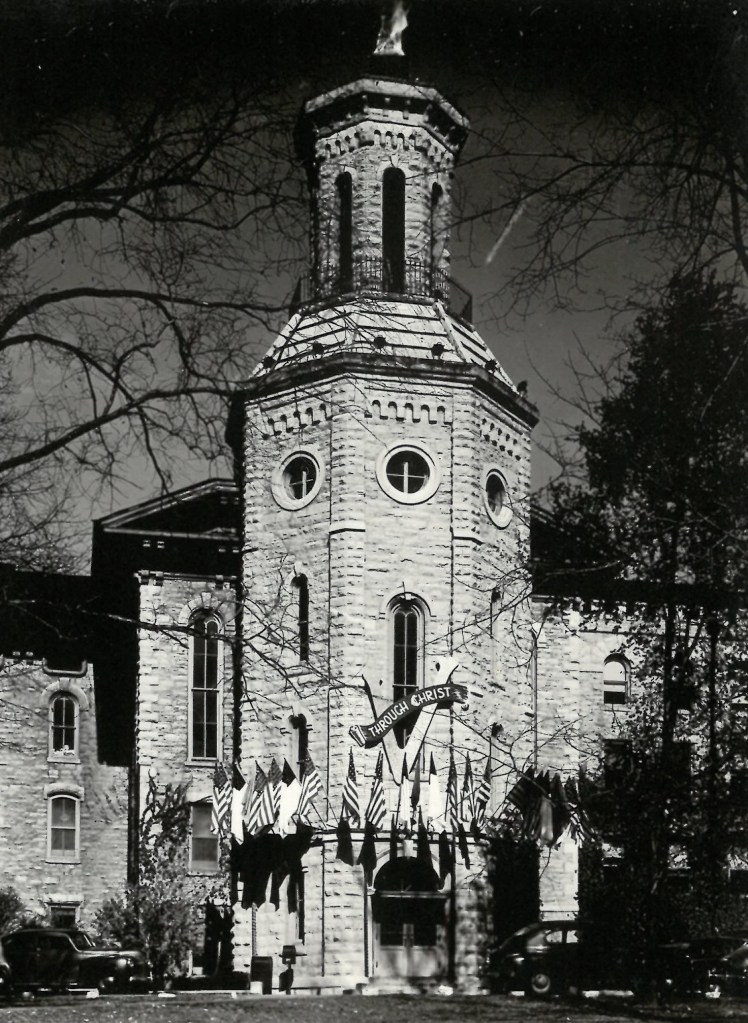
Blanchard Tower decorated for the 1945 Homecoming with theme “Victory Through Christ,” College Archives Photograph #CA-B13859.

This September marks the 80th anniversary of the end of World War II – A conflict that reshaped many aspects of American life, from industrial production and women in the workforce to urban migration and higher education. In commemoration of this anniversary, Wheaton Archives & Special Collections features photographs, clippings, and other materials from the Wheaton College Archives that document the experience of the Wheaton College home-front from 1941 to 1945.

Like much of the country at the start of 1941, Wheaton faculty and students were divided on America’s appropriate role in the European and Pacific wars. Debates on the growing conflict appeared in dueling opinion pieces in the Wheaton Record and as topics for lectures and featured speakers. However, for most of 1941, the possibility of America entering the war lingered only as a shadow over the busy routines of campus life. When the U.S. base at Pearl Harbor was attacked at the close of the year, the hypothetical quickly became reality. On December 8, 1941, students, faculty, and staff gathered together in Pierce Chapel to hear President Franklin Roosevelt’s special radio broadcast requesting a Congressional declaration of war.

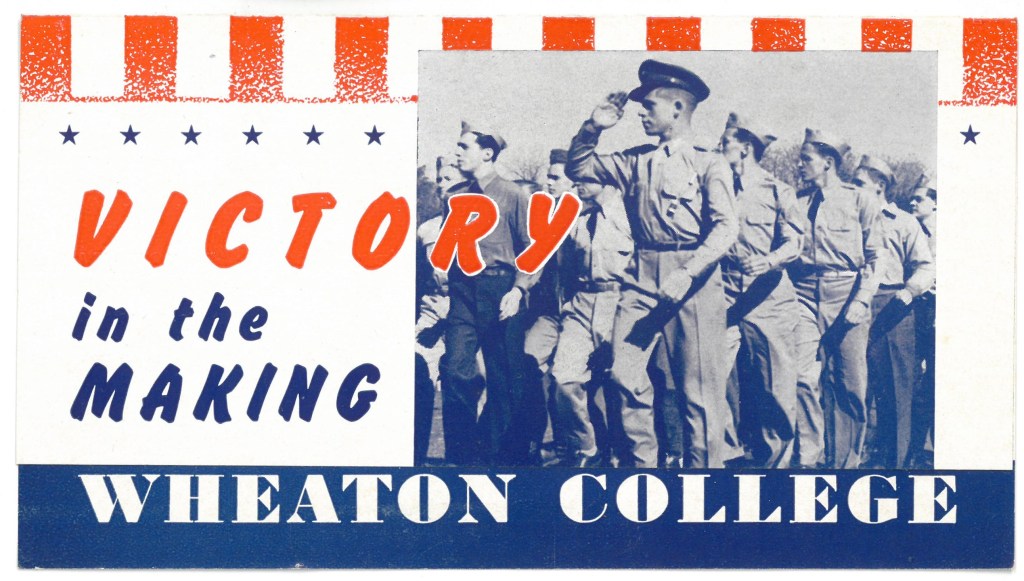
Front of a brochure advertising the War Training Program at Wheaton College. Vertical File: War Training Program.
Continue reading

The Zamzam Sails Again

On March 19, 2025, the Evangelism Missions Archives received a wonderful item for its Zamzam collection (Collection 624): A 58-page typescript with handwritten notes of a diary kept by one of the ship’s passengers, along with a photo.

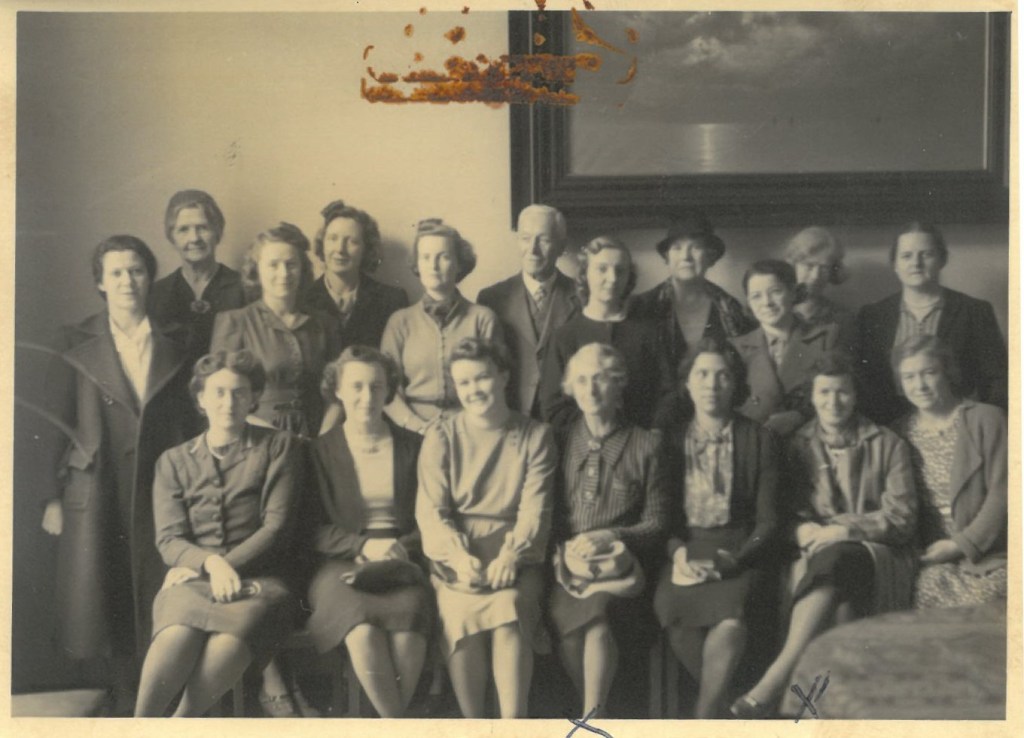
Photo included with the transcript. The back reads, “Released internees (Shipwrecked), S. S. Zam zam [sic], S. S. Port Brisbane.” The only man in the picture, in the back row, is Dr. Dudley Wright. Perhaps the older woman, sitting down slightly to his left, is Ethel Wright. The Port of Brisbane was torpedoed near Australia in November 1940.

The Zamzam was an Egyptian vessel which had been chartered in early 1941 to take passengers to Africa, including over 100 missionaries. Travel was dangerous, of course, because war had broken out between Germany, Great Britain, and France and was being waged on land and sea. As a civilian vessel under a neutral flag, it should have been exempt from attack. However, the German commerce raider Atlantis mistook it for a troop transport and started shelling the ship on April 17, 1941. The captain of the Zamzam used a flashlight to frantically signal the German ship that the Zamzam was a noncombatant vessel with women and children aboard and the German stopped the attack, but the damage was done. The Zamzam was sunk. However, all the passengers and crew were pulled out of the sea by the Germans. They were transferred to a German supply ship and taken to Nazi-occupied Europe. America was not yet in the war, so American citizens were repatriated back home. But all British citizens, as well as members of the British Empire such as Canadians, were sent to German internment camps where many stayed until the end of the war in 1945. For about one day, the sinking of the Zamzam was big news in American and British newspapers, until it was known that all passengers and crew had been plucked from the waters.

Continue reading

“We’re Glad You’re Here”: Wheaton College’s Japanese American Alumni

This blog post has been adapted and updated from the Wheaton College Historical Review Task Force Report (pp 55-57), released on September 14, 2023. The entire report can be found here.  

Every spring, Wheaton College celebrates Asian American Pacific Islander Heritage Month from April 15 – May 15, and this year the Wheaton Archives & Special Collections commemorates several Japanese American alumni who studied at Wheaton College during the turbulent years of World War II. The United States’ entry into World War II after the Japanese attacks on Pearl Harbor in December 1941 brought a wave of Japanese students to Wheaton College and with them questions surrounding the place of Japanese and Japanese American students both on Wheaton’s campus and in American society.

On February 19, 1942, President Roosevelt signed Executive Order 9066, stipulating that civilians could be excluded from military spaces. Under EO 9066, the military began “evacuating” Japanese American residents from the West Coast the following month, first into temporary assembly centers followed by incarceration in camps supervised by the War Relocation Authority. Scattered over seven states, the 10 internment camps eventually housed over 122,000 Nikkei (Japanese immigrants and their descendants), the majority of whom were American citizens.

When the United States entered World War II in December 1941, approximately 2,500 Japanese American students were enrolled in colleges and universities on the West Coast, their lives and educations traumatically interrupted by the War Relocation Authority. To assist Japanese American students whose educations were interrupted, the National Japanese-American Student Relocation Council (NJASRC) was formed in May 1942 to place select college-aged students into higher education institutions east of the military areas. Candidates for placement were screened for “doubtful loyalty.” If cleared by the Council, students were transferred to participating institutions and enrolled. While some colleges and universities chose not to accept students out of the Relocation Centers due to anti-Asian prejudice, others advocated to bring Nikkei students to their institutions, working to provide campus housing, support from the community, and financial assistance in the form of scholarships. Although spearheaded by the American Friends Service Committee, the Council included a wide range of members, from college and university presidents and administrators to clergy representing mainline Protestant churches, to evangelical mission board executives, to the YMCA/YWCA.

Continue reading