Earlier this August, archivist Robert (Bob) Shuster retired from Wheaton College after 51 years. From the first days of the Billy Graham Center Archives in 1975, Bob has built, guided, and championed the Archives as a major research collection documenting evangelical global missions and evangelism. This month, Wheaton Archives & Special Collections features an interview with Bob reflecting on his five decades of work in the Archives. The interview has been edited for length and clarity.
What first drew you to archival work?

Well, I knew I wanted to make a living in history, and I didn’t want to work for a living, so I didn’t want to be a teacher [laughs]. We had at our school in the library this vocational dictionary with different occupations, and I saw archivists in there. And it seemed like that’s something I could do. It would be interesting. I went to Wheaton College and I got a degree in history. Then I went up to the University of Wisconsin, Madison, because they were one of the relatively few schools at that time who had a program in archive administration. I was taught by their archivist, F. Gerald Ham. When I went to Wheaton, Earle Cairns was a history professor here, and head of the department, and I was his assistant, and then he gave me a reference to Jerry Ham, who was his old student. So that’s how I got into the program up at Wisconsin.
What aspects of that education prepared you the most for the profession?
The master’s degree I got at Madison was in history with a minor in archive administration. And more valuable than the degree, or the minor, I actually worked at the State Historical Society in Wisconsin when I was a graduate student up there for two years. So, I went on field trips with John Fleckner, and I wrote guides. I did one whole collection on my own. It was the papers of someone who had an A&W root beer stand in some suburb of Milwaukee. So, putting that together gave me some actual experience. The archive administration courses were helpful grounding. So, it was all beneficial, but particularly, as you would expect, the actual hands on experience.
After you graduated from Madison, how did you first become involved with the Billy Graham Center Archives?
I had actually heard that the Graham Center was getting started. This was 1974 or ’75. The first director of the Center, Don Hoke was hired in ’74, and he had already been working. And he asked his old professor, Earle Cairns, for a recommendation for an archivist, because he didn’t really know what an archive was. So, Earle Cairns contacted his old student, F. Gerald Ham, the State Archivist of Wisconsin. And F. Gerald Ham recommended his student, me, who was also a student of Cairns, so, you know, the old school tie [laughs]. When I came here to Wheaton, I wasn’t expecting to be here more than two, three, four years, which is what people always say. I just wanted a job in archives, but of course, I knew a lot about Wheaton, I knew a lot about Billy Graham. Because when I came, it was not the Evangelism & Mission Archives. It was going to be the Billy Graham Archives, basically the records of the BGEA [Billy Graham Evangelistic Association].
As the Graham Archives was developing, what did you see as its distinctive purpose? Did that change over time?
Well, it certainly has changed. When the Graham Association gave money for the Center to get started at Wheaton College, the idea was that this was going to be the papers of the BGEA and of Reverend Graham. But when it actually came down to it, Reverend Graham was reluctant about giving his papers, letting go of them. Also, when I came down, I made the case to Don Hoke, who was my boss, that to be a really valuable collection, it can’t just be about Billy Graham. It’s got to be about something broader, like a history of evangelism, the history of witnessing to the gospel. Obviously, mass evangelism would fit into that easily, also missions, youth work, prison ministry, radio, television broadcasting, all those kind of things. So that’s what I wanted to do. And so, I suggested setting up a committee that would wind up suggesting to do what I wanted to do [laughs]. The committee included Earle Cairns, and Jerry Ham, of course, he was up in Wisconsin, so he couldn’t really come very much, and Lois Ferm, who was Billy Graham’s archivist. She was a friend of Graham’s, she was on [BGEA] staff. So that’s how it broadened. The full policy was collecting materials on 19th and 20th century Protestant evangelical efforts to spread the gospel. But even that’s a large territory, so I can’t say that we have covered it comprehensively. There are big gaps, and we just have a little bit here and there. But I think, considering the resources involved, we’ve done as well as could be expected. And, the truth of the matter is, there aren’t a lot of religious archives that are not denominational archives, or a Diocesan Archives for the Catholic Church. I really can’t think of many collecting on a theme, as opposed to just collecting the denomination’s records. So, that’s one reason that people have been attracted to this archives, because it’s more thematic.
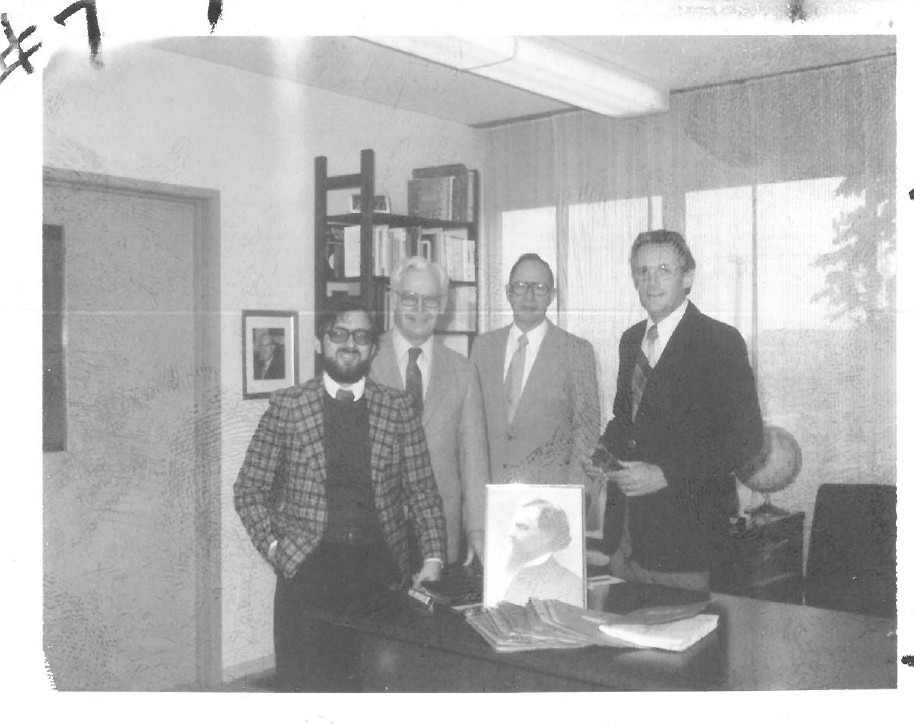
How did you come up with a list for organizations to collect beyond Billy Graham? What were some of the initial responses from organizations?
I don’t think I had an approach list as such, but I knew there were a number of large organizations – Of course, there was the BGEA and Youth for Christ. China Inland Mission is very significant mission, historically, besides its work in China and among Chinese populations. I also talked with staff at Wheaton. Charles Weber, and the Wheaton College history department was helpful. I asked various people, including researchers, what organizations, what people they thought should be contacted. And with researchers, with historians, I contacted, invariably, the people that they thought most important for us to have was something that they were working on at the moment [laughs]. But from a few people like Chuck, I got more disinterested advice. That gave us a number of possible leads. The other thing, when we started contacting organizations in particular…. Evangelical organizations aren’t really historically minded. They’re very present-minded. They see the task before them, and they want to do it. One head of an organization when I approached said, “Well, we’ll let God worry about archives. We’ll just do our ministry.” But most of them are responsive. And many of them very early started giving us records. And many of them even generously paid for them to ship them to us.
I remember one early project, maybe in ’78 or so. I had discovered that Grace College, in Winona Lake, where the evangelist Billy Sunday had his home, had inherited dozens of scrapbooks from Sunday campaigns, as well as all these papers of he and his wife, Helen. So, I had proposed to the library at Grace College: You let me come down and organize these materials and write up a guide for them, then take them back to Wheaton and get it microfilmed, let us have a microfilm copy and a negative, and the originals go back to you. And I was very young at that time, and I had never proposed anything to anybody before, so I wasn’t really expecting anything would come of it. But to my surprise, they said yes. So, I went down there in winter, and it was ’78 or ’79, when the snow was, like, 12 feet high. And I was just going back and forth from the library with everything covered with ice working on the Sunday papers. I eventually had to cart all this stuff back up to Wheaton, and to my surprise, Jim Stambaugh showed up with a truck to help me do it. Jim Stambaugh was the director of the museum [Billy Graham Museum], and a friend of mine. And so, we came back, and I took it down to University of Chicago, who sometimes did microfilming for a fee. So we microfilmed it. And that was really the first big project we had at the Archives that I got a lot of personal satisfaction out of. Unfortunately, the guide I wrote has a lot of mistakes in that I look at… A lot of errors in what it said, but it was the first guide, so there you go.
As you were developing collections for the Billy Graham Center Archives, were you thinking about who would use the collections and how did that shape the Archives’ policies, services, and promotional projects?
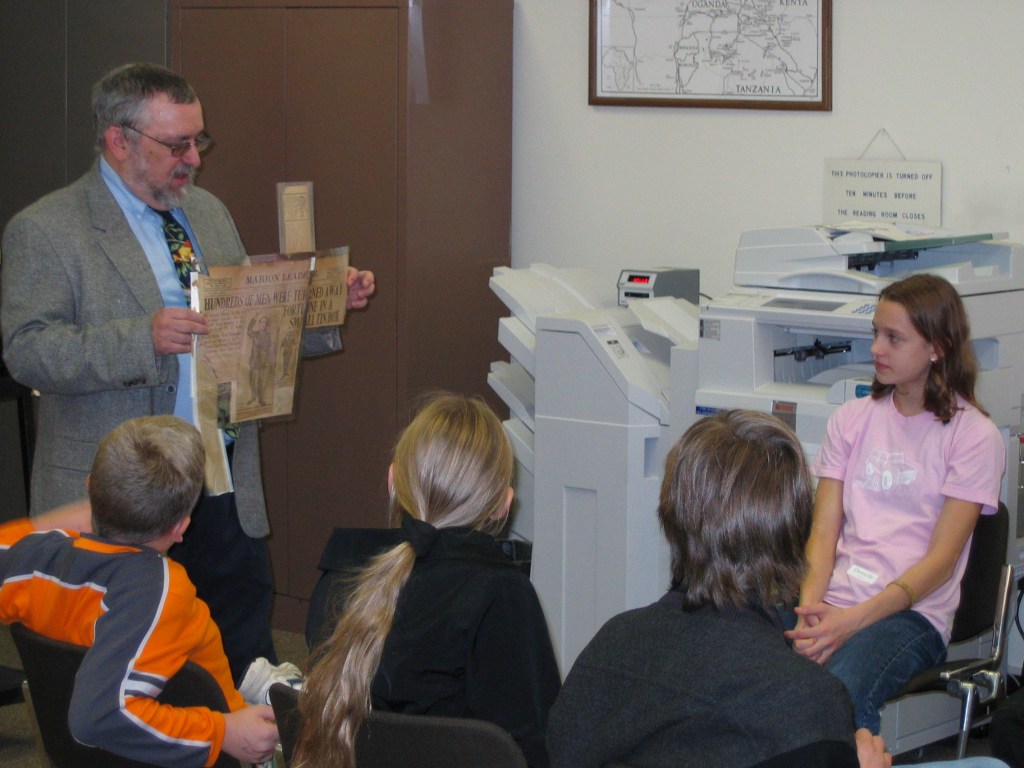
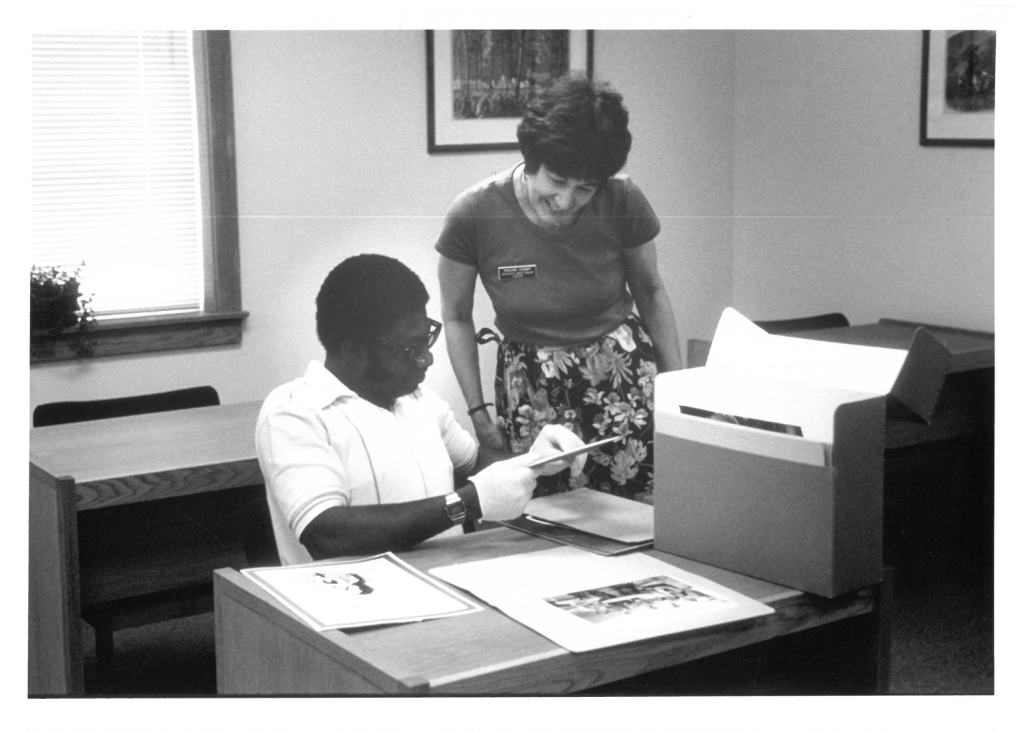
Well, the way that the Billy Graham Center started…. Hudson Armerding, who was the president of the College (Billy Graham had been his classmate when they both went to Wheaton), said to Billy in, I think, probably the early 70s, “You ever think about putting your papers somewhere? How about putting them here at Wheaton?” And now, at that point, Billy Graham was of course a national figure, he had gotten offers from Yale University, Library of Congress, to put his papers there. Mr. Graham really was a staff man. When he had to make decisions, he got his staff together. And so he got a committee together to talk about his papers, what should be done with him, what they were worth, etc. And they came up with the idea of a Center. You don’t just want to put your papers somewhere, where just a bunch of sleepy old scholars are going to look at them. You want to have a Center that’s going to continue to approach your ministry. You want a Center that will be a resource for the church in America, to support evangelism. So, they came up with this idea of archive, museum, library, an Institute of Evangelism, and, of course, other things like the China Institute and the Prison Institute were added to it as time went on. So that’s how the Center came to be at Wheaton. And so, when I came, it was basically going to be Billy Graham’s papers, and honestly, I don’t think anybody thought very much about people using them. There was just going to be this great gezornenplatz [non-existent word, meaning a big deal] here at Wheaton that would radiate energy and glory [laughs]. But, of course, as an archivist who had got my training up at Wisconsin, I was thinking about people using it, and how it fit into the whole story of America, as well as American Christianity. So, we had projects with encouraging homeschoolers, of course, and for high school students and college students. But mainly the people who are going to come, we expected it would be researchers, people writing books, doing studies. We made great efforts to get Christian workers to come in to study these materials. Somebody who wants to be an evangelist or be a missionary. But the truth of the matter is, somebody who wants to be an evangelist or a missionary probably isn’t going to sit down and read somebody else’s sermons. They’re going to be out preaching on street corners or fulfilling them. But we tried to do that. We expected to have scholars, non-scholars, of course, genealogists, all would be major groups coming in, and we tried to encourage students, not just people going for PhD theses, but high school, and even elementary students coming in, as well as people who just had an interest. So, we wanted to to make these materials available to not just scholarly users, but anyone who was interested, and give them a friendly place to work.
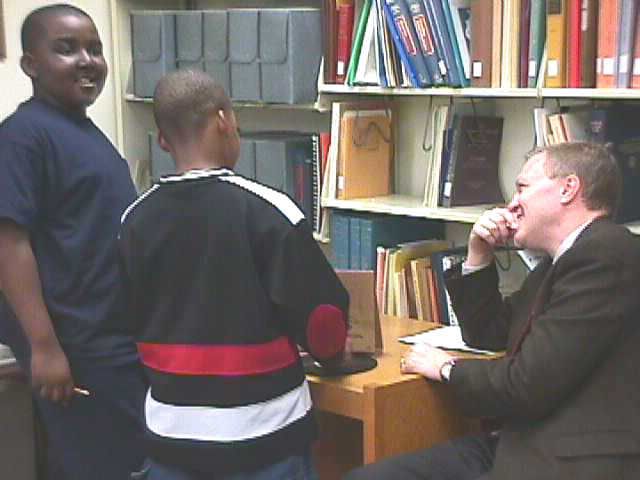
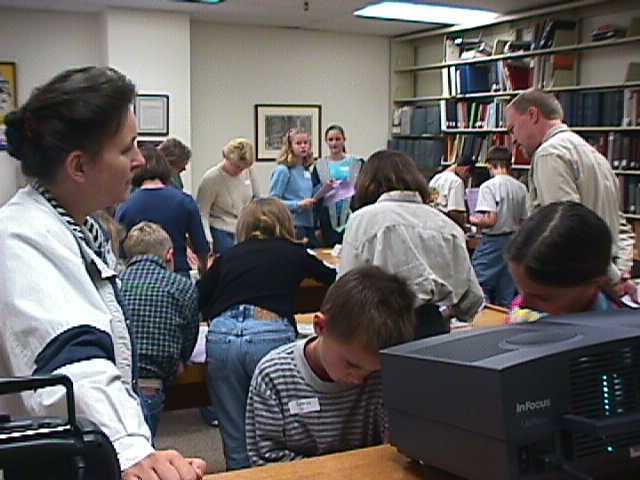
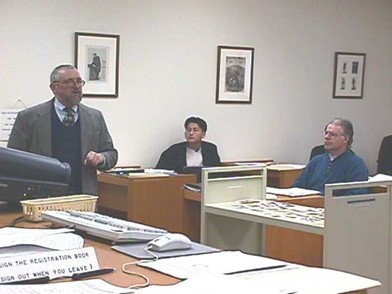
What did the day-to-day work of the archives look like in the first years of the BGC Archives and how does that compare with later decades?
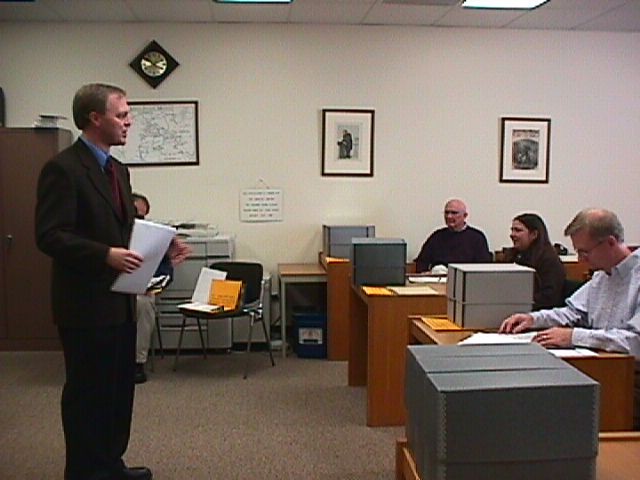
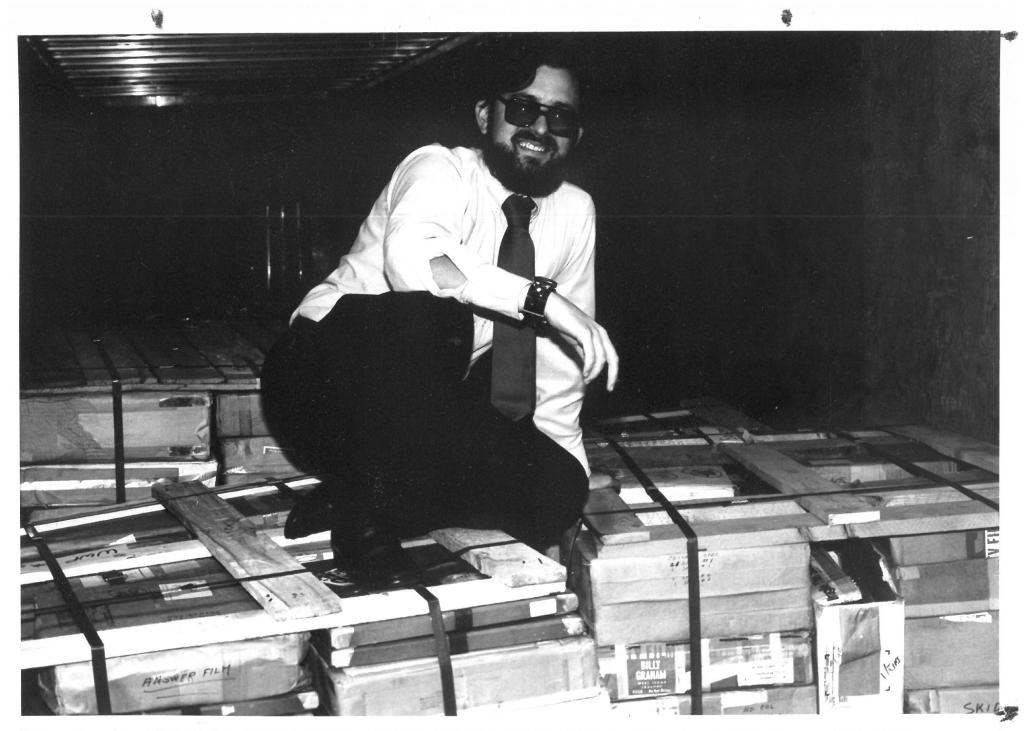
As far as our archives, the early years consisted a lot of traveling and a lot of contacting people. Writing hundreds of letters to people or organizations. Another thing that we did was all of the Wheaton graduates, who were missionaries…. I don’t know, all of them, but hundreds of them, we contacted, saying, “Oh, would you be interested in putting your papers here?” And later, we were talking about doing oral history interviews with those we could do. So, I was traveling. I traveled out to the West Coast to talk with the people at Angelus Temple about doing a guide for Aimee Semple McPherson’s papers, and travel to Indiana, of course, for the Billy Sunday papers. Anyway, I traveled all over the country, visiting different organizations, in some cases, visiting people. Of course, we hardly do that at all anymore. At a certain point, people started offering things to us.
Originally, of course, we weren’t in this building because this building didn’t exist. We had a warehouse out in Carol Stream, just an ordinary industrial warehouse, one story. Five-sixths of the space was just a big, empty space, and the other part was a small space for offices. Jim Stambaugh and I were out there for five years until 1980. Another project was just getting industrial shelving, setting up a space. A warehouse space is not really… It was not really intended for any kind of climate control. We did try to do a little bit, but with a metal roof and all, it got very hot in the summer, very cold in the winter. We had tried to do a few things to control the environment somewhat. We built a room around the industrial door in the back. So all these kinds of things getting ready. And then, of course, in 1980, moving to the Billy Graham Center. From 1975 to 1980, there were continual meetings with the college architect, and with Anderson Company, about what the archive needed. But getting, you know, getting organized, getting known.
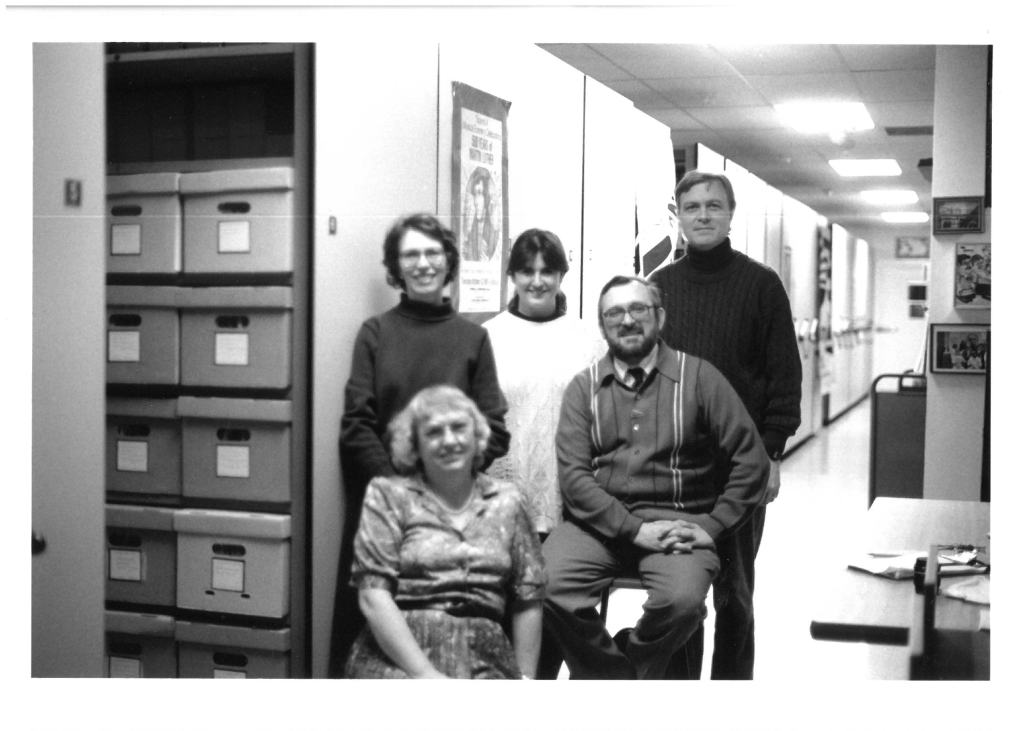
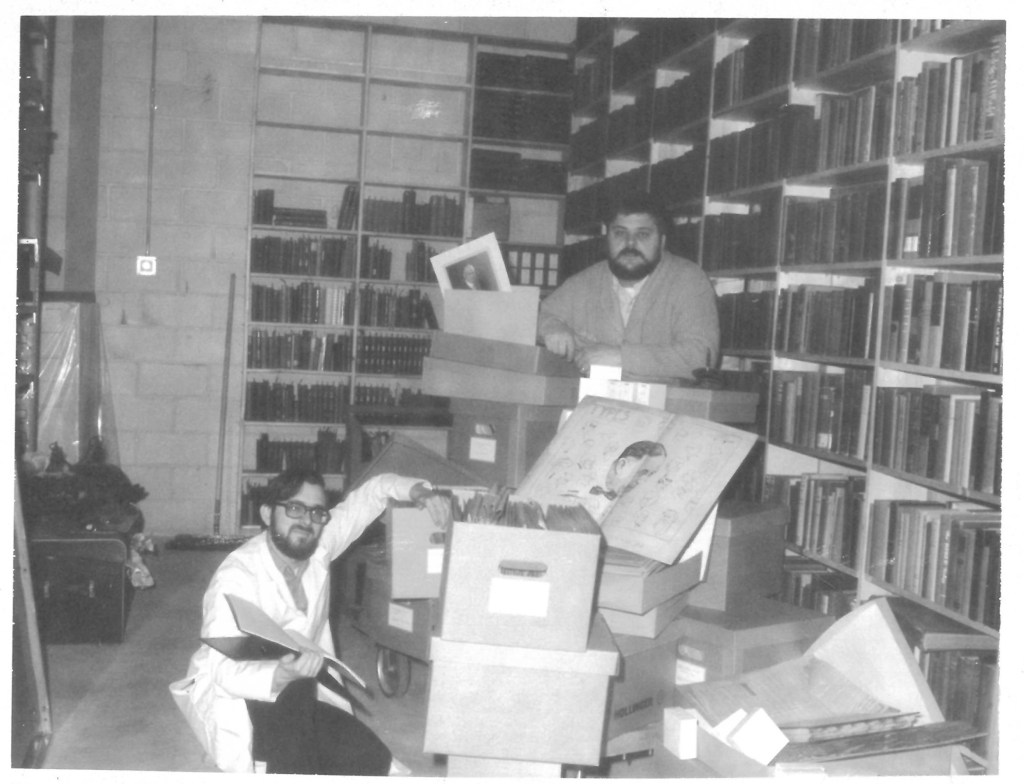
We’re reasonably well known in our area now. And over time we’ve accumulated a huge backlog, so we could just spend the next 10 years, I think, just processing what we already have. Although, of course, we’re still trying to add, and we’re still collecting. The records of SIM International was just recently received, through Katherine Graber’s efforts. Ellen Vaughn, who was associate of Chuck Colson, helped him write many of his books, we’re getting her papers. So, those kinds of things are still coming in. So, we’re spending a lot more time processing now, but we’re still doing some collecting. I guess that’s the change. And there’s no problem getting people to come in and use the collections now, since we’re better known. We also developed a published guide around 1985 or so. But that was just before, of course, the internet really went crazy. So now people, when they want to know what’s in our Archives, they look at our website, they don’t have to go to a book, which is now badly out of date.
When the Archives was first opened, computers were not a part of everyday archival work, but that has certainly changed. So how did you and the Archives adapt to the rise of computers, the internet, and other digital tools?
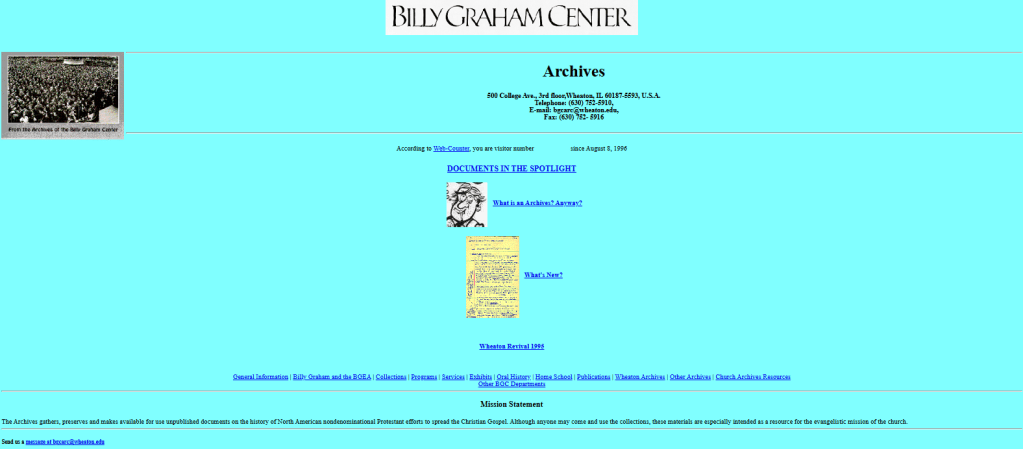
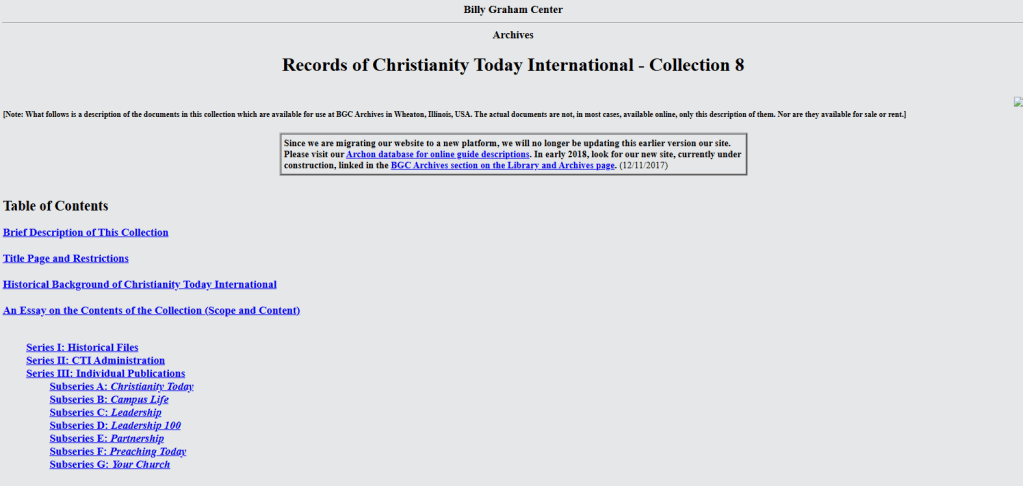
Originally, the way that you got to use the Archives, of course, you couldn’t look up anything on a nonexistent internet. You would write to us and we would tell you. And how did we know what was in our collection? Well, we had card catalogs. We had one down here, we had one upstairs. The library had one, too. There were thousands of cards in there, and so Jan Naskowitz, who was the office coordinator in the beginning, had to type up three cards for every access point. So if you have the Overseas Missionary Fellowship Collection with, I don’t know, 500 access points, that’s 1,500 cards. And sometimes it had to be changed, updated, some added, some removed. It was a lot of work, but it’s what libraries all over the world were doing. So when we were able to have an online catalog, of course, we wanted to adapt to that. We wanted to computerize. But none of us knew how to do it. And there were a lot of futile committee meetings, and a lot of scratching our heads, and eventually, Ferne Weimer, who was director of the [Billy Graham Center] Library, took charge of creating a segue to computerize all of our resources, both the BGC library and the College library. She was the person who really brought together the group, and the specialists that gave the College their first catalog, which I believe was Voyager.
Originally, of course, we were just trying to digitize, computerize our own collection data. And then the internet was a separate thing, and that would have been in the late ’90s that we finally were able to go online with collection guides so anybody could access it. And there’d been a little resistance back and forth. This was a new thing, you know? But as far as the Archives, Paul Ericksen and I and the staff here were all in favor of it, all excited about it, although we didn’t know how to do it. But fortunately, other people were also involved and did it, and we were able to do it that way. The internet was unbelievable. I mean, we were so happy when that became possible.
Did you see use change when you put the collection catalogs on the Internet?
That’s a good question. I haven’t looked at statistics on that. I can’t really say. I suspect it did. I mean, certainly, we started getting emails from people in different parts of the world asking about collections. Certainly, email requests became much more common. I assume there was an increase, but I don’t really have any statistics on that off hand.
One of the resources that has been online for a long time is the Evangelism & Mission Archives’ collection of oral history interviews. How did that effort begin and what do you think oral histories contribute to the archival record?
Well, oral histories in general, of course, contribute a very personal touch. Archives have organizational records, records of evangelistic campaigns…. And they show an organization, people in an organization, setting goals, and evaluating those goals, corresponding with their accounts, constituents, etc. But oral history by its nature has to be very personal. It has to be one person’s eye view of what was happening around them and what they were involved in. So it’s much more of a human touch for our history, which has always been part of the appeal. American historian Alan Nevin started doing oral histories back in the 1940s, and he didn’t have a tape recorder, he brought a grad student along who would write down what people were saying. Obviously, that wasn’t completely satisfactory, so they started moving to oral histories. But the idea was to capture these memories, impressions, stories that people had, people who were never going write a book, or a history or anything, but it’s still vital, you know, it’s like…. What would you do if you could sit down with a Revolutionary War soldier and talk about his experiences?
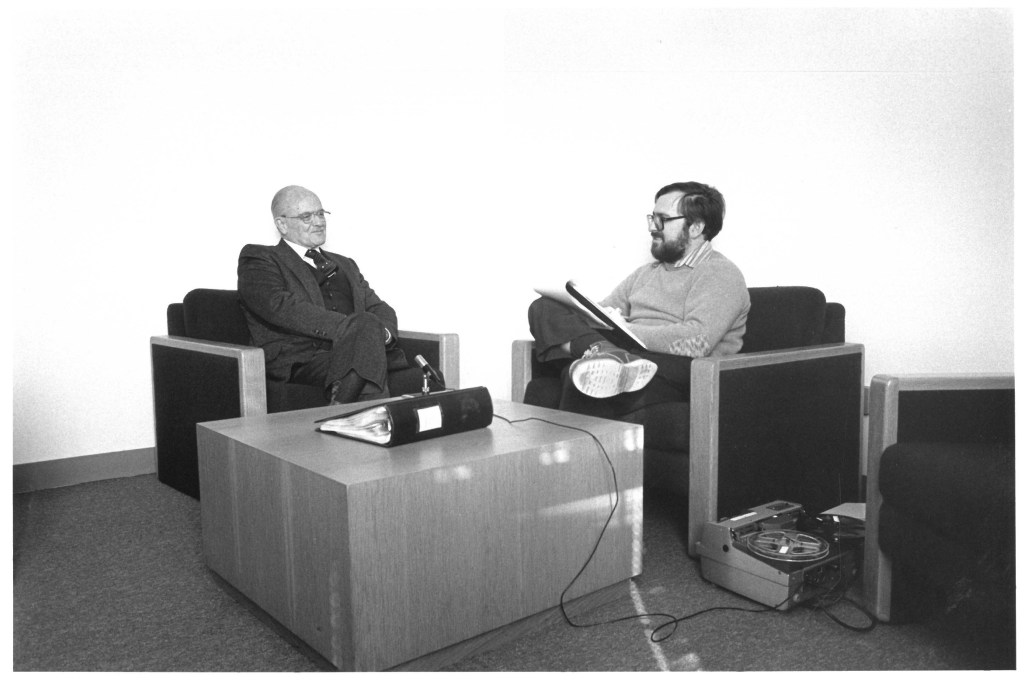
So, the first time that I did an oral history interview, I hadn’t had any training at all. The Archives had these huge Wollensak machines, which weigh probably about 30 pounds or so. And I had heard, I can’t remember how, about Andrew Wyzenbeek. Andrew Wyzenbeek was a Chicago businessman. He manufactured various types of machinery. And he had done very well for himself. He was a Dutch immigrant, who had come over here and went into business and was very well off. He was living on the north side of Chicago in some of those apartments towards Evanston, very nice, very fancy apartments. So, I had heard that he had known Billy Sunday. In fact, he was converted at a Billy Sunday meeting. And so, I thought, this would be a chance to get the experiences of somebody who had known Sunday. This was around the same time I was working on the Billy Sunday papers at Winona. So, I contacted him, and he very graciously allowed me to come over. He was in, as I say, one of these high rises, and I was lugging this 30-pound Wollensak with me, and he was up on the 28th floor. I did not have to go up the stairs, thank goodness. I took the elevator. And he was great. I mean, he told these great stories.
He had these seven Swedes who worked for him, that were unreliable, and were drunkards, et cetera. And then he noticed there was just a change in their attitude. He said, “What happened to you guys?” And they said, “We went to a Billy Sunday meeting.” He said, “Billy Sunday, what’s that?” Because he didn’t really know much…anything about American culture. He had been an immigrant, and he had been mainly in an immigrant community. And so they told him who Billy Sunday was, “You want to go? You wanna go? You belong there.” So he says, “Well, okay, I’ll go.” So he went there, and Billy Sunday preached. And Wyzenbeek listened to him and he didn’t understand a word he said. Once again, he was an immigrant. Billy Sunday was talking too fast. He was using slang and things that Wyzenbeek had no idea…. He just sat there. And it meant absolutely nothing to him, except it was rather strange. At the end, Billy invited people to come up and shake his hand. Now, what he actually said was, you know, “if you want to commit your life to Christ, come up and shake my hand.” But he didn’t get that. He just saw a line of people going up to shake his hand. So he went up, and he shook his hand, and then he said, “And then, you know, I went out to tent on the outside… They sent me to a tent on the outside, and I said, ‘This is it. This is nothing. What is the big deal?’” So, he was sitting there, and then Sunday had counselors, of course, just, like, Billy Graham, and other evangelists too. He just came up, and he got his name, and he said, “Okay, so how did you make your decision?” And Wyzenbeek said, “Well, what decision? I didn’t make any decision.” “Well, you gave your life to Christ.” “No, what are you talking about?” He said, “Oh, didn’t you hear what Billy said?” “I couldn’t understand a word he said.” And so, the guy was filling out a card. He’s supposed to fill in a card and tell local churches that this person has some connection with, so the pastor there can witness to him. So he said, “Well, what church do you go to?” “I don’t go to church.” “Well, what church do your people go to?” He said, “My people went Holland, and they didn’t go to church there.” And so, the guy didn’t know. So the poor, poor counselor didn’t know what else to do. So Wyzenbeek took pity on him, and he said, “Okay, well, tell me, what church does Billy Sunday go to?” He says, well, “He’s a Presbyterian.” “Okay, put down Presbyterian for me.” So, they gave that card to the local Presbyterian Church, and a minister there that did contact him. A lot of times, when you give out these cards, they don’t. But they did contact him, and that was the start of him becoming a Christian. And he became a very active and devoted Christian. And he was involved in helping Billy Graham get started and helping Youth for Christ, and all sorts of things. So that’s Andrew Wyzenbeek. That’s how I did my first oral history. And it was a very good one. I think better than most of the ones that followed. But that’s how I got involved. And after that, as I mentioned, we had contacted Wheaton College graduates who were missionaries. And when we asked for their papers, we also asked about the possibility of an oral history interview. And when I was traveling over the country, often I would do interviews with people. So that’s how we started building up an oral history collection.
Any interviews that you missed out on or wished that the Archives had gotten?
I don’t rightly recall. But a few times we approached somebody in evangelism or had some kind of outreach ministry, and they said, “Oh, no, no, I don’t see the point in that.” You know, they might be being modest, or the idea of putting something in an archive for other historians, or others, was just totally outside their orbit. I remember one fellow I had to persuade a little bit was William Drury. William Drury was a businessman, another businessman, but he was a Christian, and he started this youth ministry in Philadelphia, and some of the other larger suburban towns around, that was basically an after school ministry of high school kids, for kids that… this was mainly ghettos or, you know, places where it was a very poor environment, someplace where they could go, and they could play sports, and they could have conversations, and, of course, there would also be witnessing, and they share the gospel with them. And Bill Drury was a tough old guy, and, um… He, again, was… didn’t quite see the point of it, but eventually, I persuaded him. I did a few interviews with him, and he was just a wonderful interview.
Over the years, you’ve worked with tens of thousands of records. Are there any documents, photographs, or other materials that have remained especially memorable to you?
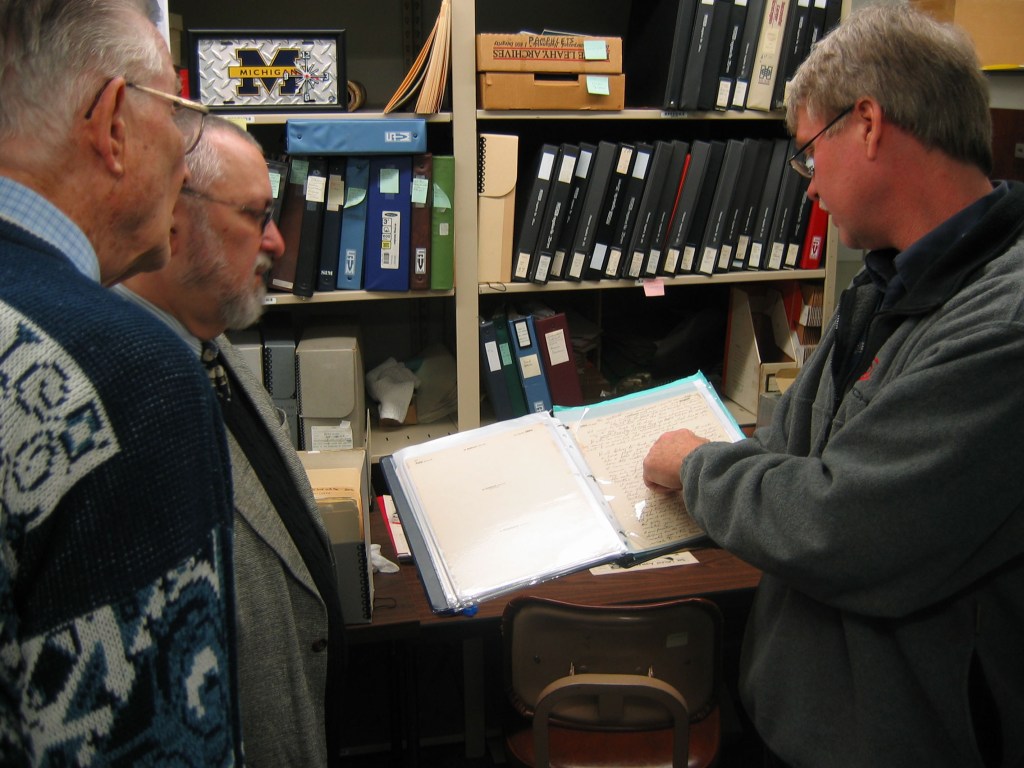
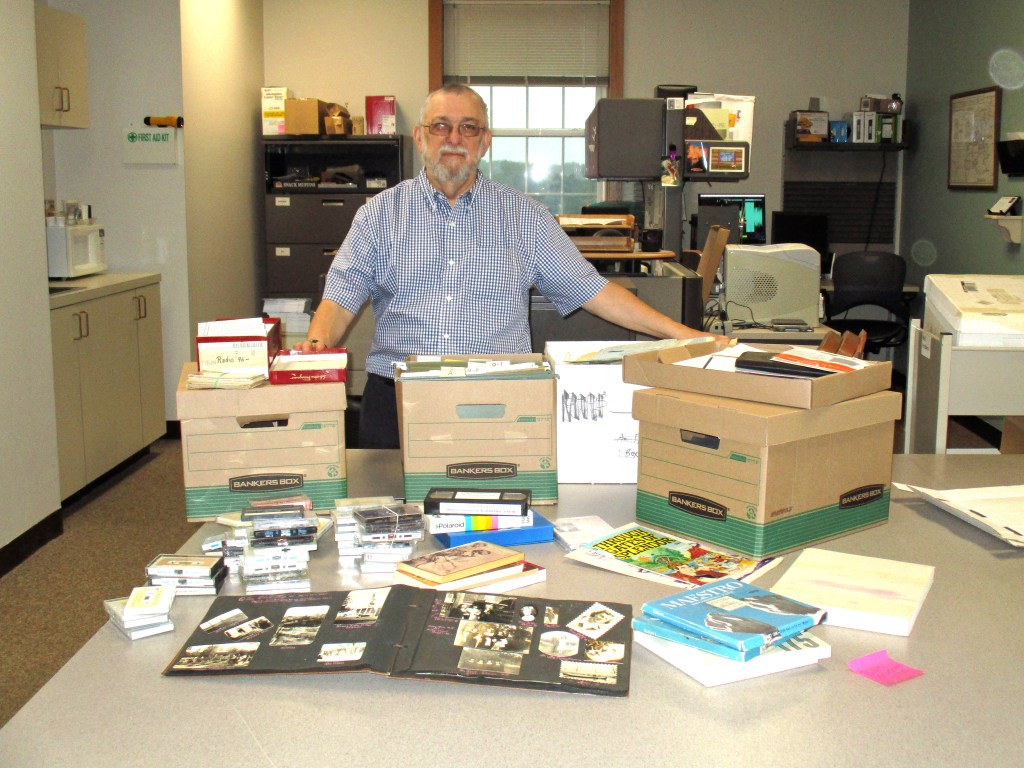
Hope Publishing gave the Archives these incredible manuscripts of Fanny Crosby’s lyrics. Fanny Crosby was an epic hymn writer in the 19th century, and her hymns did a great deal to consolidate and inspire evangelical Christianity in the United States. “Blessed Assurance” is one of them, and there are many others. Fanny Crosby, of course, was blind. She didn’t write anything. These were all hymns that she dictated, and we have all of the lyrics. In some cases, we also have the music for them. And, you know, handling those materials was very satisfying for me, knowing that they would be preserved here. Also, the papers of Jonathan and Rosalind Goforth, missionaries to China. Their daughter, Mary Goforth Moynan, gave us their papers, and that was extremely interesting collection. Rosalind, we have her manuscripts, she wrote some books and other things about her husband and about their ministry. And then another item that comes to mind from Elisabeth Elliot‘s family – We got papers and scrapbooks of hers, including one scrapbook she made when she was a little girl. It includes a map of the 1939 World’s Fair. It includes the first essay she every wrote, when she was five or six years old, and just these other things that a young girl might be impressed by and put in scrapbooks…. pieces of fabric, and letters from friends, and photographs, all these kind of things. And, of course, Elisabeth Elliot went on to become a missionary, and then a writer and lecturer…. was very inspirational and admired by many people. So, to have this early part of her childhood, much earlier than most of the other things we have in the Archives for somebody’s life, was very delightful to me.
You’ve also been involved in encouraging and supporting archives of religious history internationally. Are there particular projects or partnerships from that work that stand out to you?
Well, a couple of things. We had two archives conferences. One was for church archives – We had people from different denominations and evangelical organizations come. How does an individual church develop an archives? And we had people talking about that, that was called A Heritage at Risk, and we had a booklet printed up afterwards with the papers that were given there, and that was widely distributed. I heard a couple people tell me that they were glad to receive it, that was helpful. I don’t really know how much impact it had. Hope it had some. We also had a conference for mission agencies to encourage them to keep their own archives and telling them how to do that. And that had some results, too, not a great deal. But we have, over the years, been contacted by people who were starting some kind of archives, and we gave advice, you know. Advice is always free and cheap and easy to get. And a couple of times, we traveled to places to help people start something. So, I hope that’s had some impact. I’d always hoped that some evangelical college or seminary would start an archives that collected things beyond strictly their own institution and their own graduates, something on a thematic instance. That’s never really developed. Yale, of course, has another mission archives, largely collecting mainline mission materials.
What did you focus on when giving advice to smaller institutions about starting an archives?
Well, focusing mainly to do with what you have. You don’t have to have a building, and you don’t have to have ten people and staff and a million dollars. If all you have is a file cabinet, then… do that. You should concentrate on putting them in good condition, describing them, and making them known, and making them available. Those basics, and, of course, giving them information, where to buy archival supplies, and giving them examples of writing guides, and describing material. But archives are always poor as church mice, and they’re never going to have a big budget, and they’re never going to have much attention from their institution, probably. So, work with what you have, and build up from there.
Anything else that comes to mind as you look back?
I’ve always felt it’s been a privilege to be working here. And it was doing something that was in some ways new, there was no kind of archives like this. So starting this, and seeing people use it…. Most of what I enjoy is helping people use the collection. For somebody with not a lot of talents, this has been a great occupation [laughs]. I appreciate the Lord bringing me into pleasant waters.

