Faith, Athletics, and the Archives: An Interview with Dr. Paul Putz

This past October, Wheaton Archives & Special Collections welcomed Dr. Paul Putz for the annual Archival Research Lecture, where he presented “Sports and the Stories We Tell: Evangelical Identity and the Christian Athlete Movement in America.” This month, we feature an interview with Dr. Putz that dives into his research at the intersection of American evangelicalism and big-time sports.

When and how were you first introduced to Wheaton Archives & Special Collections?

When you study American evangelicalism, the archives at Wheaton are a go-to destination. During my dissertation research, I looked to see what holdings Wheaton had related to sports and Christianity, and I found that it had several significant collections. I applied for a travel grant that allowed me to make the trip up from Texas. Getting to spend a week at Wheaton going through archival material was truly a joy, and it shaped my dissertation and then my book project in significant ways, too.

Continue reading

Hidden In Plain Sight

The Evangelism and Missions Archives holds over seven hundred processed collections. Some correspondence in our purchased microfilm stretches back into the 1600s, but we also have documents and media from as recent as the current year. The predominant time frame for most of the evangelistic and missionary activity documented in these collections, however, is the 20th century. As the Archives’ name suggests, the topics that hold together all the collections are evangelism and missions.

But to assume that the Archives only reflects these two areas is to miss the depth and breadth that these primary sources offer. Many collections also document social movements, political events, cultural trends, and more in the countries where missionaries and evangelists happened to find themselves. It is still surprising to discover unexpected points of convergence between collections that we archivists never anticipated or noticed until a collection was arranged and described to be fully open to the public. Four examples come to mind:

Continue reading

150 Years of The Wheaton Record

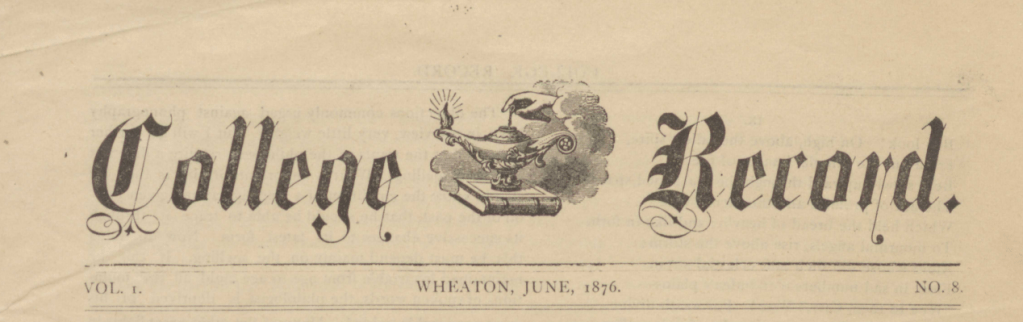
In November 1875, the Literary Union of Wheaton College published the first issue of the College Record, Wheaton’s student newspaper. Over the next 150 years, the Record became both a laboratory for student writing and journalism and a living chronicle of campus life. Its pages have documented student activities, campus developments, educational changes, social movements and conflicts, political campaigns, visiting speakers, chapels and mission work, theological debates, faculty projects, and countless other moments that trace the evolving history of Wheaton College.

Wheaton Archives & Special Collections holds only scattered records for the first twenty years of the paper’s publication. Among these, the earliest surviving issue of the Record dates from June 1876. Although the inaugural issue of the Record is lost to history, the June 1876 editorial provides a helpful update on the paper’s first eight months, including plans for an enlargement of the paper from eight to sixteen pages. To fill this new space, the editors appealed directly to the student body, urging Wheaton students to contribute writing:

Students write for your paper. Don’t say you haven’t time to write because you are so pressed with your studies, but take a few moments each day to write and you will soon find you are the gainer by it. Of what value will your education be to you unless you learn to apply what you learn? It may, indeed, be some satisfaction to you to know that you have a college education, but certainly it will be of very little benefit to others if you know not how to use it. And in our opinion, there is no better way of putting to practical use the knowledge we have gained than by writing.

Let us, then, improve the opportunities given to us, and thus be enabled to benefit ourselves and our fellows. A college paper furnishes one of the means of improvement, and it is to be hoped that the students in future will improve the advantages thus offered to them more than they have in the past.

Continue reading

The Jim Elliot Bible Project

Ava Pardue and Mariah Sray

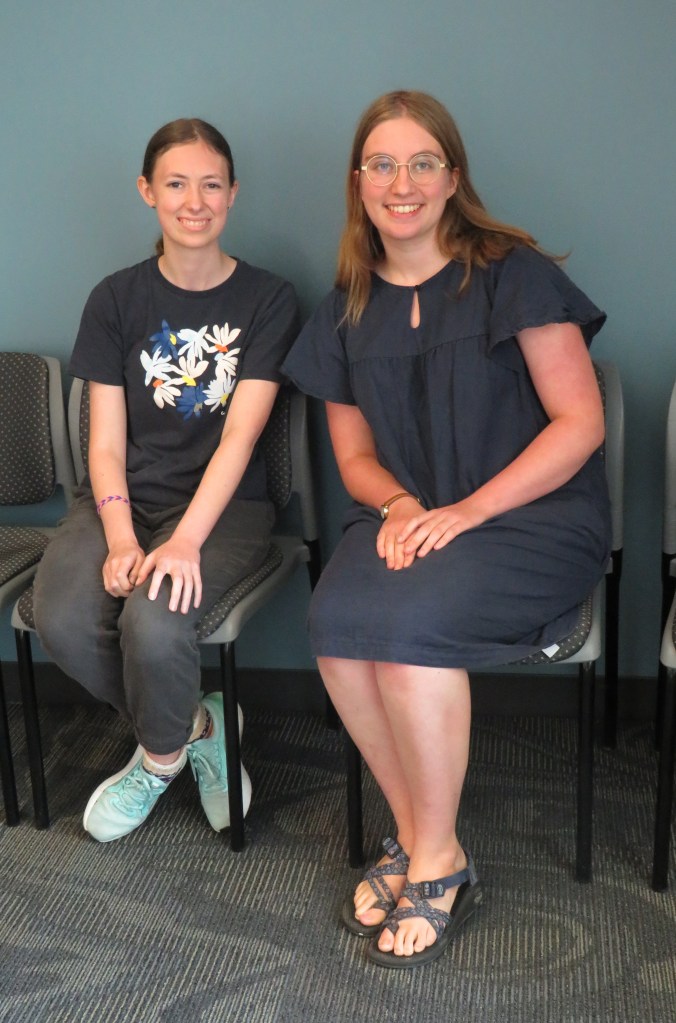
In November of 2024, Wheaton Archives & Special Collections collaborated with the Museum of the Bible to digitize Jim Elliot’s three college-era annotated Bibles held in CN 277: Jim Elliot Collection. After digitization was completed in February 2025, two archives interns, Ava Pardue and Mariah Sray, both part of Wheaton’s Aequitas Fellows Program in Public Humanities and Arts, spent the summer indexing all the annotations in the Bibles.

Ava Pardue just finished her freshman year at Wheaton. Along with being an Aequitas Fellow, she plans to major in English and Classical Languages. Mariah Sray is a senior at Wheaton with a major in Classical Languages integrated with Choral Studies.

Below, we feature an interview with Ava and Mariah about their work on the project.

What drew you to the Jim Elliot Bible project?

Ava: When I heard about the opportunity to work with Elliot’s Bibles, I jumped at the chance to engage with language, theology, and history in a way that could be useful to the public. One of the three Bibles is a Greek New Testament, which I was particularly interested in studying with the knowledge of Koine Greek that I’ve picked up during the last several years. And ultimately, I think the biggest thing that drew me to the project was a chance to look at Jim Elliot—a man hailed as a martyr, hero, and catalyst for modern missions—as an ordinary college student.

Mariah: An interest in exploring archival work drew me to this internship, but I was also curious to learn more about Jim Elliot. I knew the broad contours of his death in Ecuador but wasn’t familiar with the details of his life. I was also interested to how Jim interacted with his Bible, especially his Greek New Testament.

Continue reading

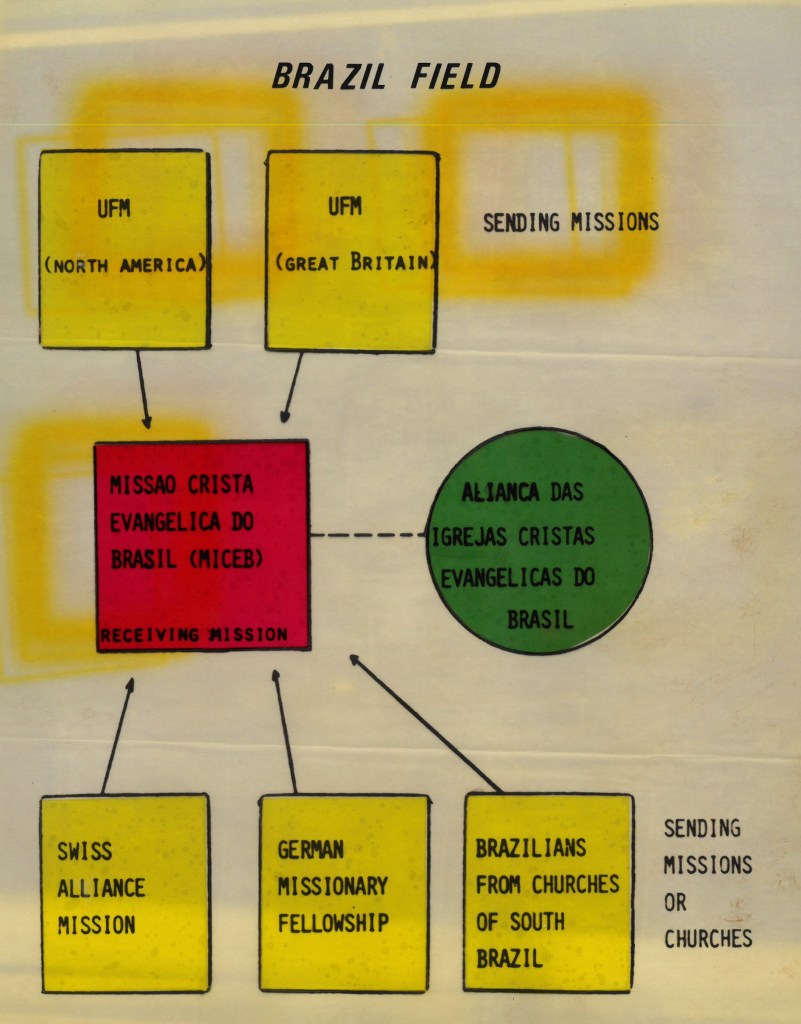
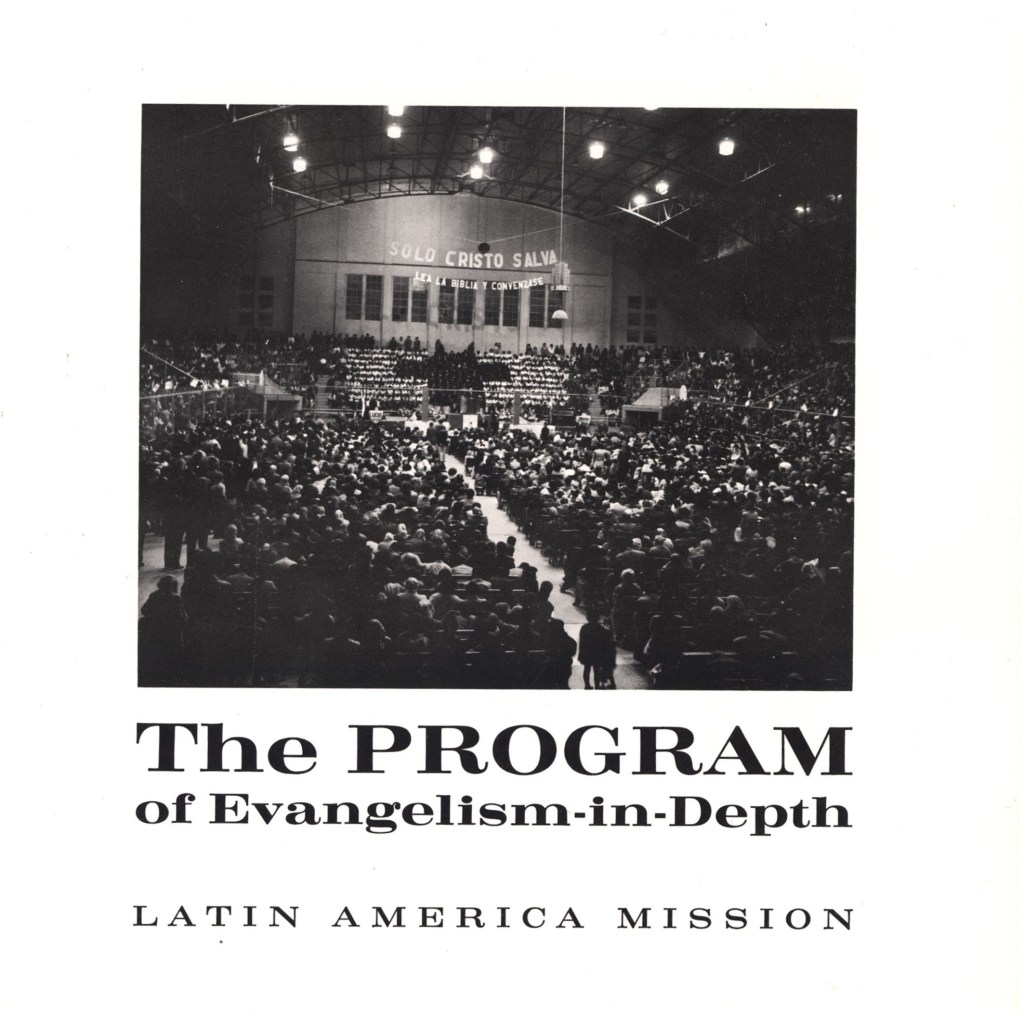
“Por Una Patria Mejor”: Evangelism-In-Depth in Latin America

After a decade of citywide evangelistic campaigns through the 1950s, Latin America Mission and LAM director, Robert Kenneth Strachan, launched a new program for mass evangelism in 1959 — “Evangelism-in-Depth” (E/D) or, as it was known in South America, “Evangelismo a Fondo.” Building on LAM’s efforts to “Latin Americanize” mission work, the program grew from Strachan’s central principle that “the growth of any movement is in direct proportion to the success of that movement in mobilizing its total membership in the constant propagation of belief” (E/D Manual, CN 236, Folder 138-7).

E/D shifted the focus of evangelism from presenting a single professional evangelist in a one-time event to a countrywide, congregation and laity-based, year-long effort. Proposing “a lasting revolution in missionary strategy,” the E/D program sought to impart “an increased vision and a renewed conviction” to individual Christians, local churches, and national leaders “that the total evangelization of their community in their generation is a distinct possibility and their definite responsibility” (Folder 138-7).

While designed to be adapted to different regional contexts, the core of the E/D program consisted of organized prayer, training for lay Christians, preparation for counselors, follow-up with new Christians, widespread publicity, door-to-door visitation, local and regional evangelistic meetings, regional and national parades, radio and television programs, and widespread Bible and tract distribution. The program flourished on a broad scale in fourteen Latin American countries until 1971, continuing afterwards in Mexico.

Continue reading

Wheaton College in Wartime: Life on the Home Front, 1941–1945

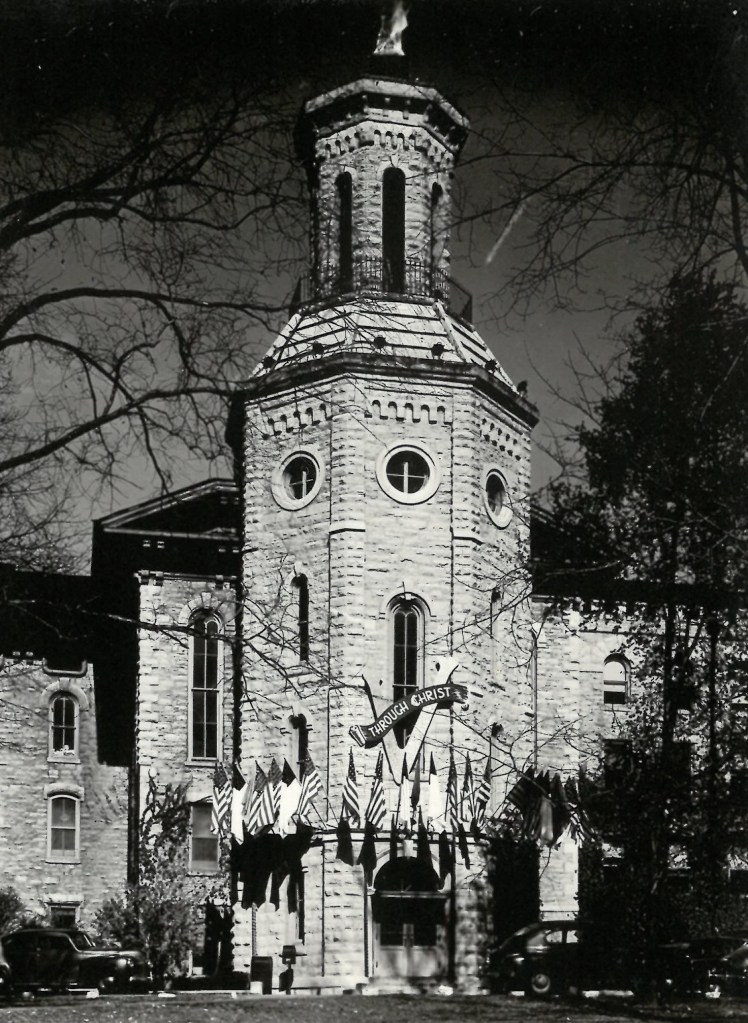
Blanchard Tower decorated for the 1945 Homecoming with theme “Victory Through Christ,” College Archives Photograph #CA-B13859.

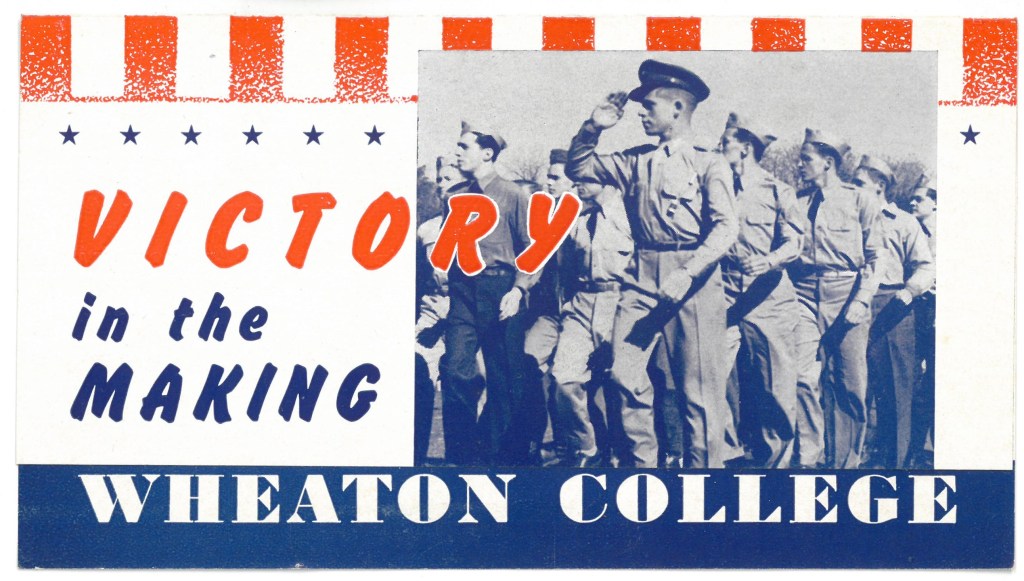
This September marks the 80th anniversary of the end of World War II – A conflict that reshaped many aspects of American life, from industrial production and women in the workforce to urban migration and higher education. In commemoration of this anniversary, Wheaton Archives & Special Collections features photographs, clippings, and other materials from the Wheaton College Archives that document the experience of the Wheaton College home-front from 1941 to 1945.

Like much of the country at the start of 1941, Wheaton faculty and students were divided on America’s appropriate role in the European and Pacific wars. Debates on the growing conflict appeared in dueling opinion pieces in the Wheaton Record and as topics for lectures and featured speakers. However, for most of 1941, the possibility of America entering the war lingered only as a shadow over the busy routines of campus life. When the U.S. base at Pearl Harbor was attacked at the close of the year, the hypothetical quickly became reality. On December 8, 1941, students, faculty, and staff gathered together in Pierce Chapel to hear President Franklin Roosevelt’s special radio broadcast requesting a Congressional declaration of war.

Front of a brochure advertising the War Training Program at Wheaton College. Vertical File: War Training Program.
Continue reading

Shakespeare on Display

One of the jewels of the E. Beatrice Batson Shakespeare Collection is a copy of Henry the Fourth, taken from the fourth folio edition of Mr. William Shakespear’s Comedies, Histories, and Tragedies (1685). The play was donated to the College in honor of Dr. Batson’s retirement from the English Department in 1990. In celebration of the fourth folio turning an impressive 340 this year, Wheaton Archives & Special Collections revisits a 2015 feature from former Wheaton Library Metadata Associate, Brittany Adams, on the history and unique textual features of Wheaton’s “Henry.” The folio will be on display throughout the 2025 fall semester in the Wheaton College Library.

Continue reading

Seeing with Both Eyes: Church History in a New Perspective

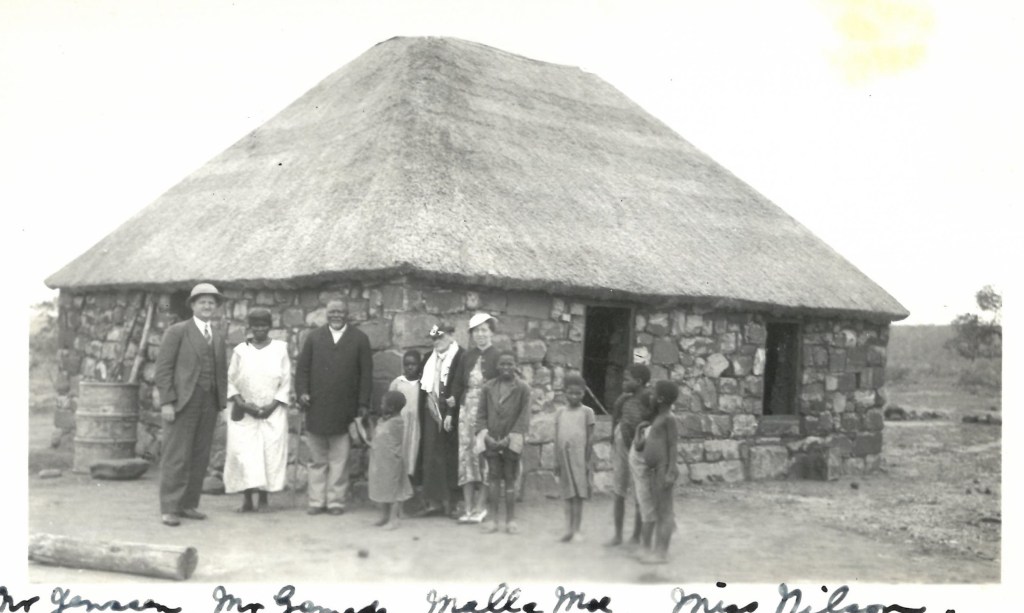
Malla Moe was a legend among missionaries during her own lifetime. Born in Norway in 1863, she immigrated to Chicago as a young woman to live with her sister. However, after meeting Frederick Franson and hearing of his work with the nascent Scandinavian Alliance Mission, she felt a strong call to missions. In 1892 she traveled to Port Natal (Durban) in South Africa to begin missionary and language training. She then went to live and work in the Swaziland (now Eswatini) countryside, traveling between Swazi homesteads (sometimes called kraals in Afrikaans). From that time on, in the words of one biographical dictionary, “she served as evangelist, church planter, teacher, and preacher.”  Although she often rubbed other missionaries the wrong way, she loved and was loved by her African congregations. When it became difficult for her to walk, she traveled in a specially built gospel wagon. By the time of her death in 1953, Swaziland and Tonga were dotted with the dozens of churches she helped to found.

“This is a church. A good evangelist, Johann Muosi[?], died there like a good soldier in the fever country for the work of God. He left his good home for Jesus’ sake. He was happy when he went to be with the Lord. Malla Moe.” (From Acc. 2007-031).

That is the story told in many Western histories of missions. But it is incomplete. (An exception is TEAM’s own history, God Made It Grow, by Vernon Mortenson). Some of those histories mention a Swazi helper named Gamede or sometimes just indicate she had an anonymous native helper. Sometimes no African worker is mentioned.

Continue reading

A Trip Down the Río Sinú

The Biblical call to “make disciples of all nations” has driven missionaries to some of the most remote regions on earth—areas inhabited by indigenous peoples with diverse languages, religions, and cultural traditions. From the steppes of China and the Pacific islands to the Andes highlands and the African Sahara, missionaries have striven to carry the Gospel to all communities and peoples across the globe. Wheaton Archives & Special Collections preserves extensive records of missionary work among indigenous communities in remote and urban settings, including outreach to the Lisu and Hmong people in Asia, the Zulu and Kikuyu in Africa, and the Zapotec and Waodani in the Americas, among many others.

This month, we feature a pictorial report from missionary Ernest Fowler that documents the early stages of Latin America Mission’s outreach to the Emberá people of northern Colombia.

Ernie Fowler with two men in Colombia. (Photo File: LAM – Colombia).
Continue reading

The Zamzam Sails Again

On March 19, 2025, the Evangelism Missions Archives received a wonderful item for its Zamzam collection (Collection 624): A 58-page typescript with handwritten notes of a diary kept by one of the ship’s passengers, along with a photo.

Photo included with the transcript. The back reads, “Released internees (Shipwrecked), S. S. Zam zam [sic], S. S. Port Brisbane.” The only man in the picture, in the back row, is Dr. Dudley Wright. Perhaps the older woman, sitting down slightly to his left, is Ethel Wright. The Port of Brisbane was torpedoed near Australia in November 1940.

The Zamzam was an Egyptian vessel which had been chartered in early 1941 to take passengers to Africa, including over 100 missionaries. Travel was dangerous, of course, because war had broken out between Germany, Great Britain, and France and was being waged on land and sea. As a civilian vessel under a neutral flag, it should have been exempt from attack. However, the German commerce raider Atlantis mistook it for a troop transport and started shelling the ship on April 17, 1941. The captain of the Zamzam used a flashlight to frantically signal the German ship that the Zamzam was a noncombatant vessel with women and children aboard and the German stopped the attack, but the damage was done. The Zamzam was sunk. However, all the passengers and crew were pulled out of the sea by the Germans. They were transferred to a German supply ship and taken to Nazi-occupied Europe. America was not yet in the war, so American citizens were repatriated back home. But all British citizens, as well as members of the British Empire such as Canadians, were sent to German internment camps where many stayed until the end of the war in 1945. For about one day, the sinking of the Zamzam was big news in American and British newspapers, until it was known that all passengers and crew had been plucked from the waters.

Continue reading