Tracing Wheaton’s First Black Students Through the Archives

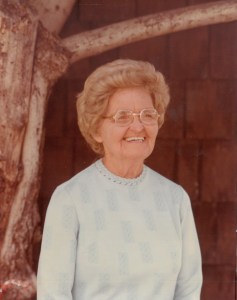
February is national Black History Month, and in celebration the Wheaton Archives & Special Collections offers a glimpse into the lives of Wheaton College’s first African American students: Mary Barker, Edward Sellers, and William Osborne. To trace these stories, archivists delved into the institutional records held in the College Archives and other sources to explore and uncover the unique voices and experiences of these pioneering students.

How did Mary Barker, Edward Sellers, and William Osborne pursue higher education at Wheaton College at a time when even few middle-class, white Americans could boast about holding a college degree? What challenges and obstacles did these individuals encounter on their educational journey? After completing their studies at Wheaton College, where did their paths lead, and what professional endeavors did they pursue?

Continue reading

‘Oswald in His Presence’

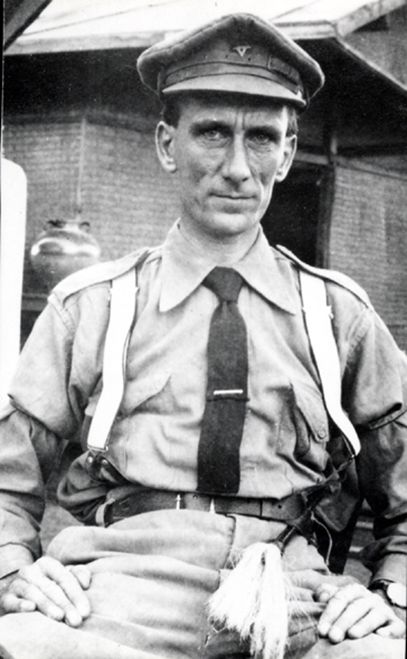
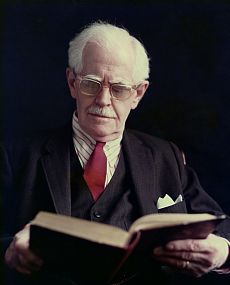
Oswald Chambers, 1917. Photograph #SC112-068.

This year marks the 150th anniversary of Oswald Chambers’ birth on July 24, 1874, in Aberdeen, Scotland. Chambers’ best known work, My Utmost for His Highest, has remained in print since its first publication in Britain in 1927. The daily devotional has been translated into over forty languages and ranks in the top ten of religious bestsellers in the United States, with millions of copies sold since the first American edition was published in 1935.

Continue reading

Humble Beginnings

While December signifies the year’s end, this last month also marks a significant point of beginning for the stories of the fledging Illinois Institute of 1853 and the emerging Wheaton College of 1860.

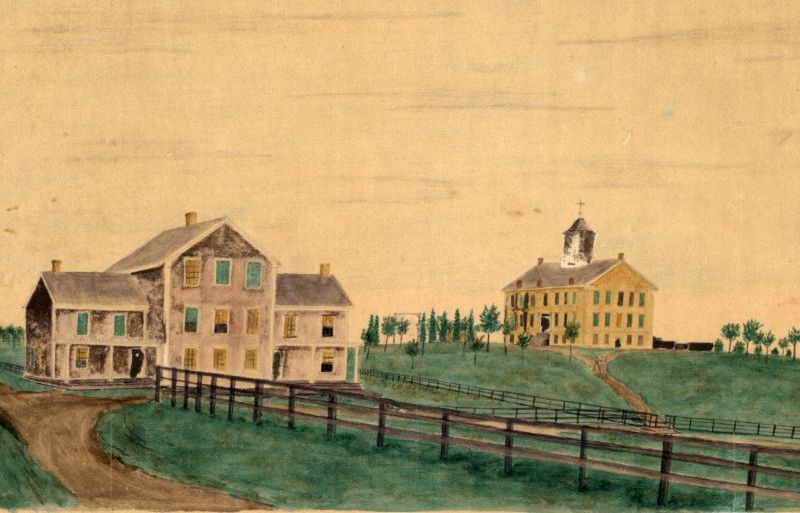
On December 14, 1853, one-hundred and seventy years ago, the first classes of the Illinois Institute were held in the basement of a incomplete stone building atop a hill in Section 16, Township 39, DuPage County. Only a small town on the Illinois prairie in the close of 1853, the location in the new Milton Township offered the advantage of legislation common to many Midwest townships that enabled the special use of land in section 16 for schools.

Sketch of ‘Main and White House,’ c. 1863. College Archives Photograph #CA-B14012
Continue reading

Pages of Wonder: A Journey Through the William S. Akin Rare Book Collection

William S. Akin
William Akin (SC-01, Folder 2-91).

In this day of technology, AI, and rapid information growth many decry the extinction of the printed book. But when someone handles a fine rare book, one does not easily look to its demise. Books are wonders. They are thoughts distributed to the world. They are invitations to new possibilities and new horizons.

Wheaton Archives & Special Collections has many wondrous examples of the power of the book – as presenter of ideas and as art. Special Collections’ foundational rare book collection, SC-01, was a gift from collector William Sanford Akin. The collection numbers over 2,000 monographs, with a special emphasis on British literature, including James Boswell, Samuel Johnson, Lewis Carroll, and John Bunyan.

Continue reading

‘A Prophetic Document’: The 1973 Chicago Declaration of Evangelical Social Concern

This November, Wheaton Archives & Special Collections commemorates the 50th Anniversary of the Thanksgiving Workshop on Evangelicals and Social Concern and the resulting “Chicago Declaration.” At a time when many American evangelicals were increasingly grappling with the role of political action and social justice in American religious life, the 1973 Chicago Declaration emerged as a call for action – and a point of controversy – for a new vision of American evangelicalism grounded in social, economic, and racial justice.

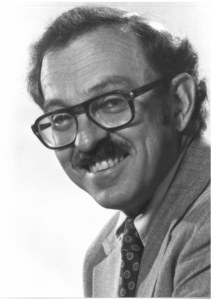
Ronald J. Sider, ca. 1980s. (Photo File: Sider, Ron).

Several collections in Archives & Special Collections document the development of this movement, including Collection 37: Records of Christians for Social Action and newly received papers from Ronald Sider (Accession 2022-053), which contain many folders of correspondence on the workshop planning, as well as the extensive discussions and disagreements surrounding the first drafts of the Chicago Declaration.

Continue reading

‘Luis Palau Responde’

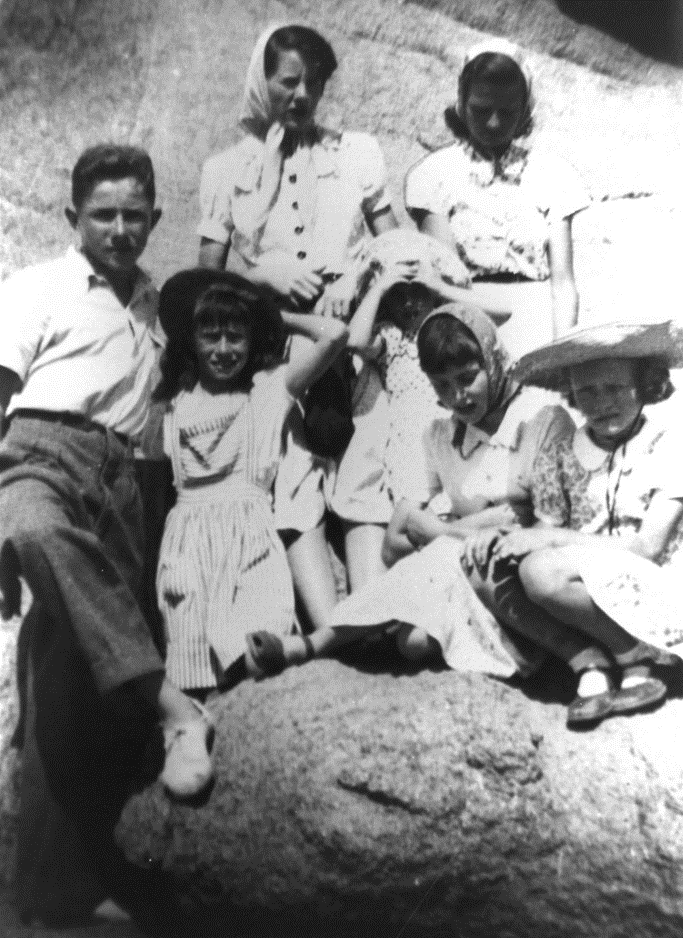
Photograph of Palau (left) with his six sisters, ca. 1950. From Photo File: Palau, Luis.

When evangelist Luis Palau died in 2021 at the age of 86, he concluded more than sixty years of ministry and presenting the Christian Good News to over one billion people. Growing up in a small Argentinian town outside of Buenos Aires, Palau’s parents – his father died when Palau was ten – were part of a small congregation. Converted as a twelve-year old in 1946, Palau began street-corner preaching as a teenager, and began hosting his own Christian radio program in 1953. Mentored by Pastor Ray Steadman who persuaded Palau to come to the United States in 1960, he studied at Multnomah School of the Bible, where he also met his wife Pat. Joining Overseas Crusades (OC) in 1961, Palau went on to establish OC’s Latin American-focused ministry based in Mexico City. In 1978, after being the president of OC for his two final years in the organization, he established Luis Palau Evangelistic Ministries (later Luis Palau Association), including a team of dedicated colleagues who had been part of the Luis Palau Team in OC. Along the way, he served as an intern for the Billy Graham Evangelistic Association and as a Spanish translator for Graham; the BGEA was instrumental in opening doors for LPA as the organization was being launched. Palau and Graham continued their friendship, with Graham occasionally appearing at Palau’s large events.

Continue reading

A Modern Caleb: The Life and Ministry of Elizabeth Evans

This September, Wheaton Archives & Special Collections shines a spotlight on the remarkable life of Elizabeth Morrell Evans, a woman who tirelessly dedicated herself to doing what she believed was necessary to spread the gospel and multiplied her impact by training others to do the same.

Excerpt from a brochure describing the Christian Education program of the New England Fellowship, 1946. Accession 91-83. Donated by Kathryn Evans.
Continue reading

From Pantomimes to Parliamentary Procedure: Remembering the Wheaton College Literary Societies

In his history of the Wheaton College literary societies, former Wheaton College communications professor, Edwin Hollatz, aptly stated that “the development of the American college is a story that can hardly be told without some consideration of Literary Societies” (Wheaton Alumni Magazine, September 1967). These student-led organizations, which thrived at Wheaton College from the mid-nineteenth century until World War II, played a pivotal role in shaping the college life and education of Wheaton students.

Members of the Celts (Excelsior) and Phils (Philalethian), brother-sister societies, 1914. (College Archives Photograph B06142)
Continue reading

The Scriptures Visualized: Archives of Christian Film

Cover of the film catalog of Scriptures Visualized Films (later the C. O. Baptista Film Mission), ca. late 1940s. Collection 225, Box 1, Folder 1.

In the 20th century, Archives became museums of obsolete technology, collectors of valuable records in formats no longer commercially viable or practical. This growing list includes wax cylinders, wire recordings, analog audio tapes, audio cassettes, microcassettes, Dictaphone disks, 1” and 2” video reels, U-Matic video cassettes, VHS and Beta cassettes, as well as 8mm and 16mm films.

From the mid-1930s through the late-1980s, 16mm film was a very popular medium for schools, businesses, churches, and parachurch organizations. The Evangelism & Missions Archives has hundreds of movies in these formats (especially 16mm), as well as the production and correspondence files of evangelical film companies. Meant to be shown in church or at church events, these movies were particularly thought to be a means of attracting young people to church. 

Continue reading