A Centennial Crusade

In September 1959, Wheaton, Illinois, made history as “the smallest city ever to conduct a crusade,” when it welcomed evangelist Billy Graham back to his alma mater, Wheaton College.

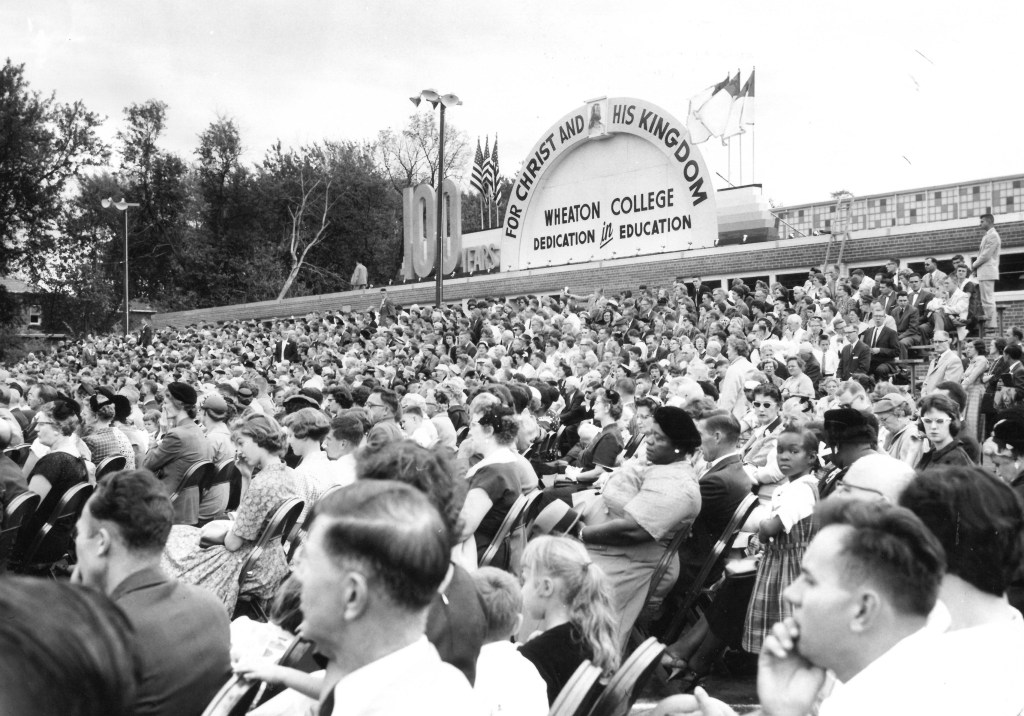
The crowd at one of the outdoor crusade meetings, Wheaton College’s Centennial motto “Dedication in Education” in background. College Archive Photograph #B06313.
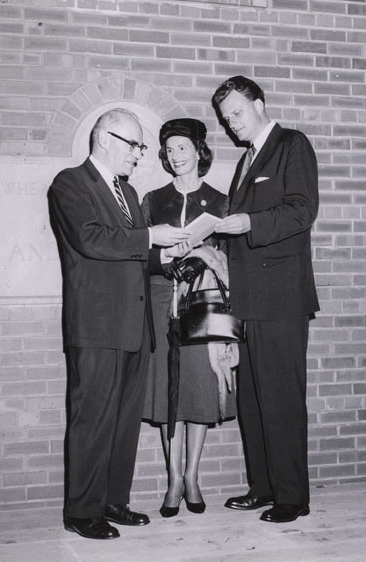
V. Raymond Edman with Ruth and Billy Graham in front of Memorial Student Center, 1959. CN 74, OS 13: 1959 Crusade Scrapbook.

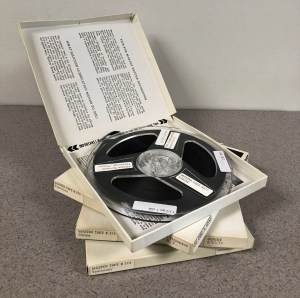
To commemorate the 65th anniversary of the Wheaton crusade, Wheaton Archives & Special Collections features below recordings, photographs, and documents from this historic event.

Originally, Wheaton’s president, V. Raymond Edman, had invited Graham to lead the College’s annual fall evangelism meetings as part of its centennial year celebrations. However, at Graham’s suggestion, the scope of the event quickly expanded to a weeklong crusade that extended far beyond the campus, reaching into the surrounding suburbs and Chicago. The following letter from Billy Graham to Wheaton Chaplain Evan Welsh, held in the College’s Centennial Committee Records, outlines Graham’s growing vision for the meetings:

Continue reading

“The Truth Needs to Be Illustrated”: Gospel Posters in China

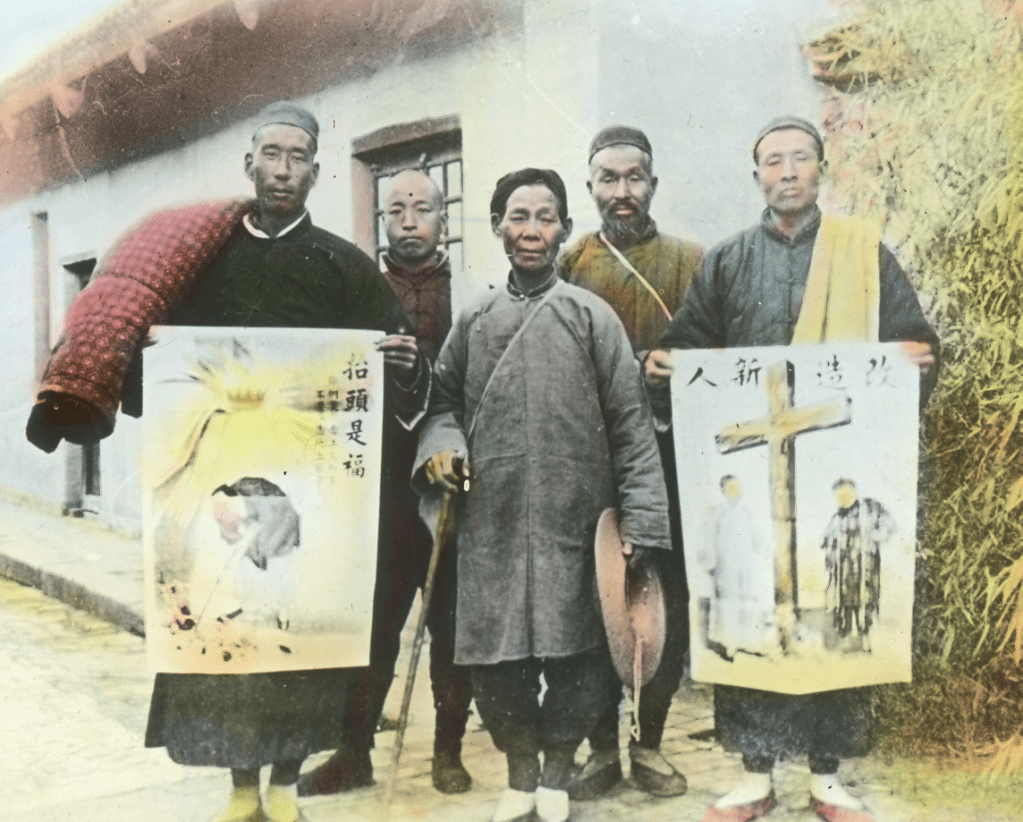
In the early 1920s, the first commercial four-color offset lithograph machines arrived in China. While Chinese Christian posters, tracts, and books had circulated from various presses for a century, these machines allowed for quick, inexpensive, and large-scale print production. Christian mission organizations like the Religious Tract Society and Christian Witness Press quickly capitalized on the new technology. In 1929 alone, the Religious Tract Society printed 150,000 posters in China. Joining and in some ways anticipating China’s vibrant political and commercial print culture, these colorful posters became a prevalent tool for Christian evangelization in China through the 1930s and 1940s.

Chinese Christians, possibly an itinerate preaching band, with evangelism posters, ca. 1930-1940. Collection 215, Lantern Slide Box 11.

Wheaton Archives & Special Collections holds more than fifty of these posters throughout several collections, including Collection 215: Records of Overseas Missionary Fellowship, Collection 231: Papers of Ian and Helen Anderson and Collection 706: Evangelism Posters Ephemera.

Continue reading

‘For the Evangelization of the Whole World’: Looking Back at the 1974 Lausanne Congress

Logo for International Congress of World Evangelization (ICOWE), Lausanne, 1974. Printed on Congress program.

In July 1974, 2,500 leaders from 150 countries gathered in Lausanne, Switzerland, for the International Congress on World Evangelization, better known as the Lausanne Congress. Over the course of ten days, evangelical leaders from around the world spoke in plenary sessions and workshops to consider the project of world evangelization in the modern era. An immediate outcome of the congress was the Lausanne Covenant, a statement of Christian belief and lifestyle that became a touchstone for many evangelicals around the globe.

To celebrate the 50th anniversary of the Lausanne Movement’s founding Congress, Wheaton Archives & Special Collections features highlights from Collection 46: Records of the Lausanne Movement, as well as our oral history collections with Lausanne leaders and participants.

Continue reading

Wheaton Goes to the Olympics!

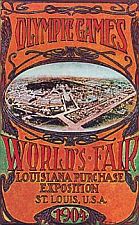
Advertisement for the 1904 Olympics
Poster for the 1904 Summer Olympics in St. Louis, Smithsonian Image Collection.

As the 2024 Summer Olympic Games are set to open this July in Paris, France, Wheaton Archives & Special Collections looks back to the 1904 Olympics held in St. Louis, Missouri, where Wheaton College sent seven student-athletes to compete for the collegiate basketball championship.

Originally planned for Chicago, the 1904 Olympics were moved to St. Louis and combined with the Louisiana Purchase Exposition after extensive political negotiations from the World’s Fair organizers. Among 38 athletic contests, including wrestling, tug-of-war, track, and croquet, St. Louis marked the first time the new sport of “basket ball” appeared in the Olympics. Held as a demonstration sport, four levels of competition were offered, with Wheaton College participating in the College-level against two teams – Hiram College of Ohio and Latter-Day Saints University of Salt Lake City.

Continue reading

Japan for Christ: The Evangelistic Travels of H. S. Kimura

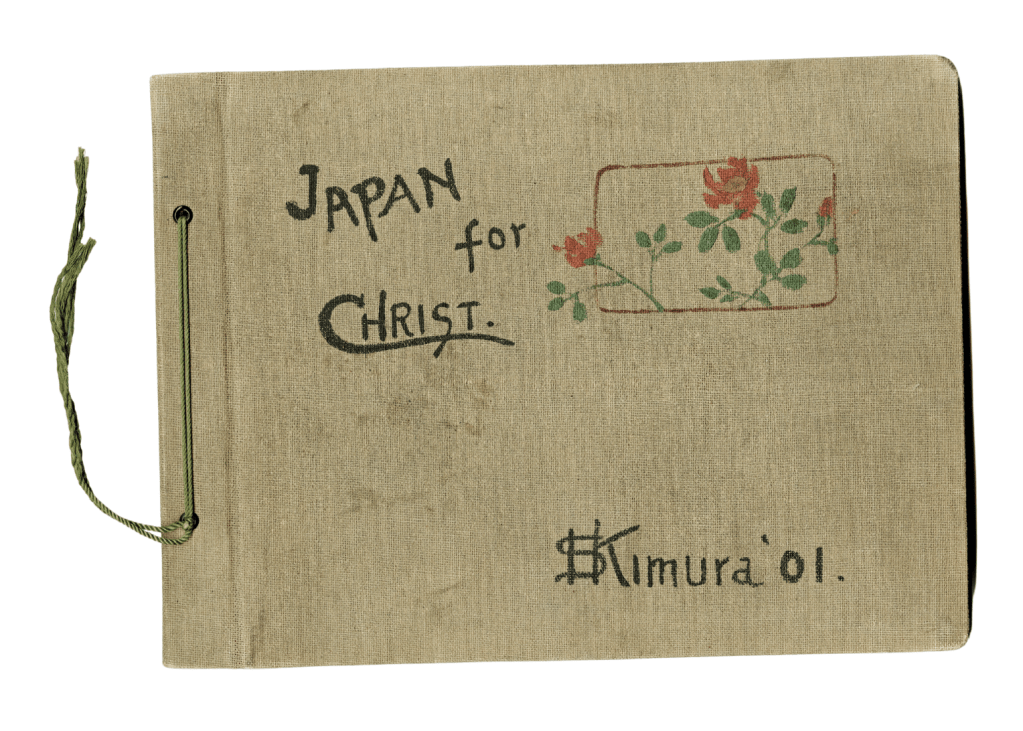
Kimura Kiyomatsu (木村 清松), known in the United States as Henry Seimatsu Kimura, was born in 1874 to a family of sake brewers in Gosen City, Niigata Prefecture. At seventeen Kimura was baptized during an evangelistic service held by Teiichi Hori in Niigata. His conversion to Christianity led to conflict within his family, especially with his father, who disowned him; although both his parents and his two brothers eventually became Christians.

Continue reading

“Who Cares for the Woman Who Toils for Her Bread?”: The Ministry of Virginia Healey Asher

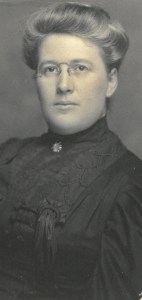
Portrait photo of Virginia Asher, 1905. Photo File: Asher, Virginia.

Scattered throughout the Evangelism & Missions Archives are paper fragments that tell the story of a remarkable woman – Virginia Healey Asher.

Virginia Healey was born to Irish parents in Chicago in 1869. Although her family was Catholic, she attended the church that had grown out of Dwight L. Moody’s Sunday School class and there gave her life to Christ during an evangelistic meeting when she was eleven. Her future husband, William Asher, was saved at the same meeting. When a few years later D. L. Moody called for workers, she volunteered. He assigned her to outdoor street meetings in Chicago where she sang and witnessed. She planned to go to Moody’s school in Northfield, Massachusetts when William, who had also volunteered for evangelism ministry, proposed. She was a teenage bride when they married on December 14, 1887.

Continue reading

It’s a beautiful day in Chicago!

Along with hundreds of collections on global missions and evangelism, Wheaton Archives & Special Collections also holds records documenting the history of Chicagoland, from institutions like the historic Moody Church, Chicago Gospel Tabernacle and the Chicago Sunday Evening Club to individuals like William Leslie, Herbert J. Taylor, Vaughn Shoemaker, and Harold “Red” Grange. This month, Wheaton Archives & Special Collections features one such collection, the papers of hymn singer and radio broadcaster Everett Mitchell, best known for his memorable opening line, “It’s a beautiful day in Chicago!”

Continue reading

Life-writing and the Archives: A Conversation with Lucy S. R. Austen

Wheaton Archives & Special Collections is pleased to announce that writer Lucy S. R. Austen will be our speaker for the annual Fall Archival Research Lecture! In anticipation of her upcoming visit, this month we feature a conversation with Lucy about her time researching for Elisabeth Elliot: A Life, her biography of missionary, speaker, and public evangelical Elisabeth Elliot, published by Crossway last June.

When and how were you first introduced to Archives & Special Collections?

I actually discovered the Archives & Special Collections through a Google search! In 2009, I was working on a mini-biography of missionary and author Elisabeth Elliot for a high-school English textbook featuring American Christian writers, and when I went looking for critical biographies of Elliot to learn more about her life, I was startled to discover that there were no full-length biographies of her in existence. Essentially the only published information about her life dealt with a small portion of the decade she spent in Ecuador as a young woman, working to reduce unwritten languages to writing for the purposes of Bible translation. In the process of digging around for any source material I could lay my hands on, I discovered the webpage for Elliot’s papers at Wheaton. I wasn’t able to visit the Archives at that time, but I relied on the biographical information and the list of “Exceptional Items” from the page for her papers, along with other sources, as I completed my project.

Continue reading

“Too Impractical to be a Missionary”: Remembering Missions Pioneer Joy Ridderhof

Joy Ridderhof, (Acc. 96-34, 3).

March is Women’s History Month! In celebration, the Wheaton Archives & Special Collections spotlights the stories, voices, and legacies of women who blazed trails as medical workers, linguists, preachers, evangelists, educators, CEOs, and more found in our collections. Today, we highlight missionary Joy Ridderhof (1903-1984), founder and director of Gospel Recordings, whose pioneering work in portable sound recording captured thousands of indigenous languages in remote corners of the globe. Today, these Gospel Recordings represent the preservation of oral cultures around the world and contain high research value for historians, missiologists, linguists, and anthropologists studying these cultures.

Joy Ridderhof’s story has been told in biographies like Phyllis Thompson’s Count It All Joy, and institutional histories of Gospel Recordings, like Faith by Hearing, but many of Ridderhof’s personal papers remain untouched in the archives’ holdings, and many of the documents and images featured here are located in unprocessed portions of the Gospel Recordings Records.

Continue reading

Faith, Memory, and Archives: An Interview with Devin Manuzullo-Thomas

Last September, Wheaton Archives & Special Collections hosted Dr. Devin Manzullo-Thomas for the annual Archival Research Lecture, where he presented “Exhibiting Evangelicalism: Exploring the History of Christian Museums in the United States.” This month, we feature an interview with Dr. Manzullo-Thomas, delving into his archival exploration of how evangelical communities engage with and commemorate their histories.

When and how were you first introduced to Archives & Special Collections?

I first visited the Archives and Special Collections at Wheaton in 2013 or 2014, to conduct research related to my denomination, the Brethren in Christ Church. (Several Brethren in Christ leaders are either alumni of Wheaton College or are otherwise represented in Archives & Special Collections materials.) While there, I also visited the Billy Graham Museum on the first floor of Billy Graham Hall, and my interest was piqued. Because of my training as an archivist/public historian and my scholarly work on the history of my own denomination, I’ve long been interested in how religious communities present their history in museums and historic sites. I started wondering: “How have other evangelical groups and institutions represented the past in public spaces?”

Continue reading