For American Archives Month this October, Wheaton Archives & Special Collections features archivist Paul Ericksen’s behind-the-scenes look at the recent donation of SIM International’s historical records, one of the largest collections the Archives has ever received. Matching the uniqueness of archival material, the donation and accessioning process can present particular challenges, especially for a collection of SIM International’s scale and complexity.
Documents often tell stories of long-ago events. Archivists, on the other hand, usually don’t see the acquisition of a collection that spans most of their career. In 1984 – this really is a forty-year-long archival story – the Billy Graham Center Archives was asked to come to SIM International’s Toronto office to consult with the mission about the future of its in-house archives. Although the mission had already accumulated a substantial collection of archival materials, SIM was looking to the future to ensure that the materials documenting the mission’s history were preserved for its own and researchers’ use.
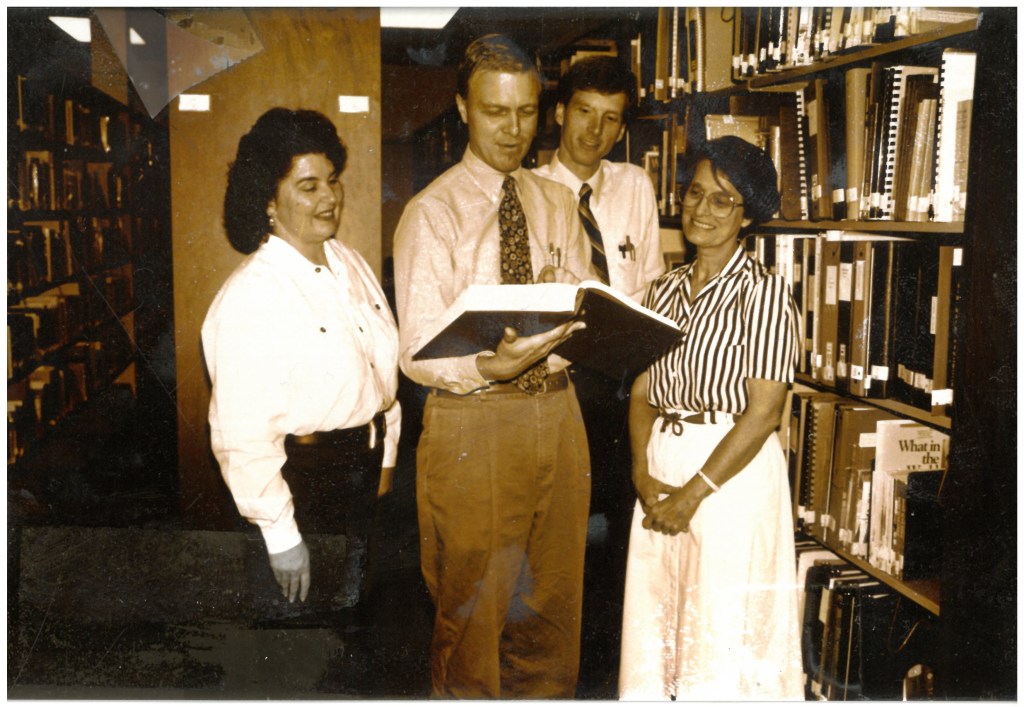
I was the archivist designated to confer with the SIM team in Toronto in 1984. An obvious question for SIM at that point was whether to continue its own in-house archives or if Wheaton was interested and able to accept their records. Because of the considerable space their existing archives already occupied – not to mention the anticipated growth of the collection from its records in various countries and from various several missions that had been merged into SIM – it was out of the question then that the Archives in Wheaton could accept the SIM records. So, the Archives’ service in this case was to act as consultants and guides to help SIM envision and plan for its future with an ongoing in-house archive. Doing so is not a decision to make lightly – it requires a commitment to provide long-term care of the records with a professional archivist, outfit space for storage, staff operations, and researcher study space.
Following that consultation, SIM’s first step in 1984 was to relocate its archives to the new SIM USA office in Charlotte, North Carolina, where the mission developed space and staff to care for and make available to researchers these materials. As their facility and program were being established in Charlotte, SIM again invited me to consult with them about their plans and professional standards. The SIM archives later moved the collection from its U.S. office in Charlotte to the SIM International office in Fort Mill, South Carolina.
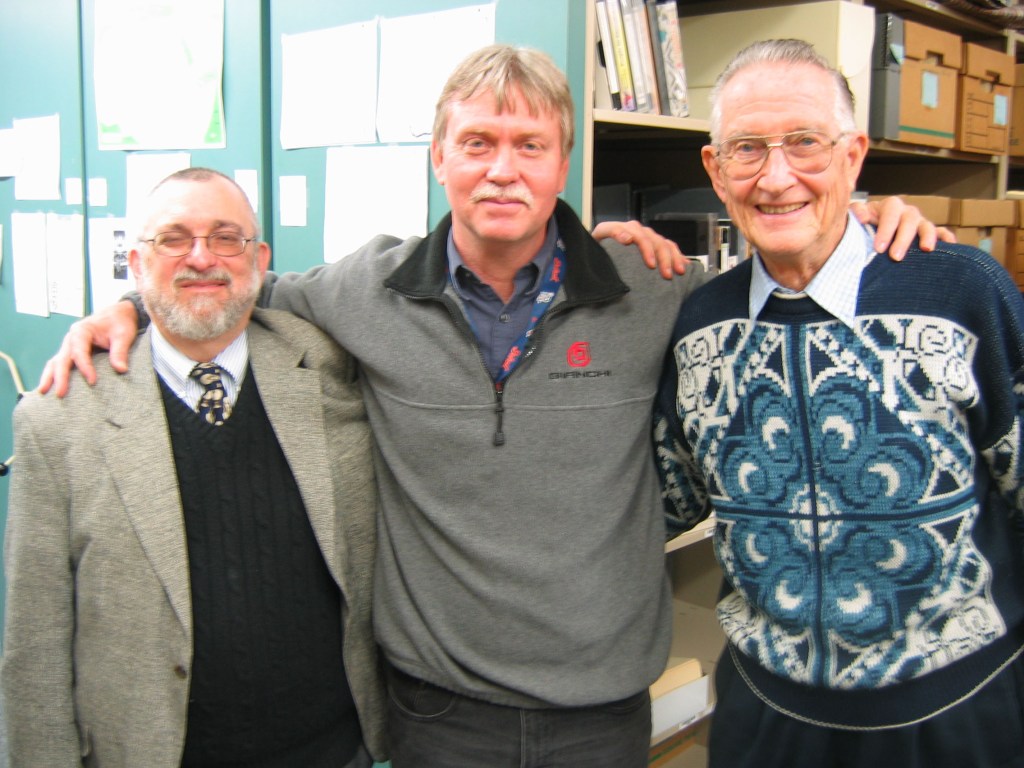
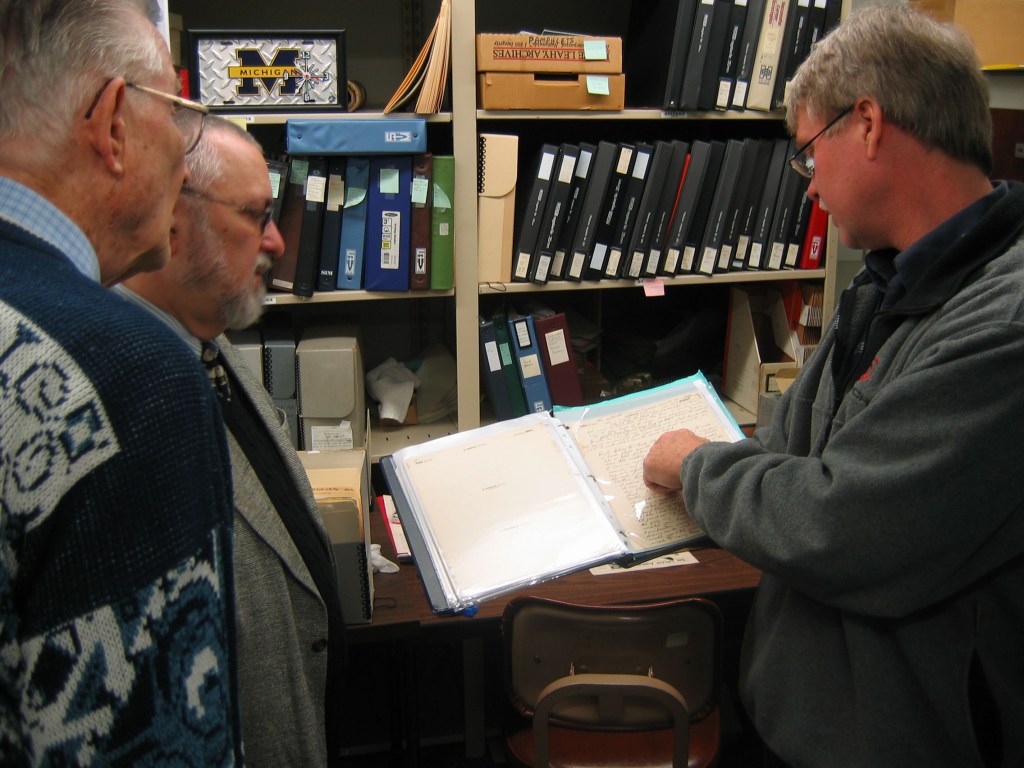
Over the decades since those early steps, the consequences of the scale of its organization and the size of its archival collection, demand on available space and staff in South Carolina, ease of availability to visiting researchers, and continuing commitment to providing professional care and access to researchers, exceeded SIM’s resources or vision for the future. Consequently, in 2024 SIM offered its collection to the Wheaton Archives. In the meantime, the Archives had acquired additional storage, making such an offer feasible to consider if the collection could fit in available space and be manageable for processing, reference, and Reading Room use.
In 2024, Katherine Graber, head archivist and library faculty, and I visited SIM International’s headquarters in South Carolina and received an extensive tour of their archives to see the scope of the collection. Graber and I then met with SIM representatives to inform their consideration of donating the collection to the Archives at Wheaton, exploring the implications, logistics, and cost of such a move. Based on the fact-gathering Graber and I did, and the significance of the collection, we agreed to accept the records. (Also in 2024, the Archives was in the process of onboarding the records of TEAM, which had also been maintained in-house for decades; taking on two such sizeable and significant collections is both challenging and future-defining for the Archives).
As a result, beginning in June 2025 and in four subsequent shipments into the fall of 2026, SIM sent roughly 1,300 linear feet – imagine hundreds of boxes in a line extending the length of over four football fields – of administrative records, personal missionary papers, correspondence, and photographs of SIM missionaries, and an extensive accumulation of media material (films, videotapes, glass lantern slides, slides, audio cassettes and reels, microfilm, and more). Delivered in consumer-market shipping containers that now seem ubiquitous across the country for on-site storage and relocation, the deliveries arrived in Wheaton to be unloaded by archivists, students, and Wheaton College’s Facilities team.
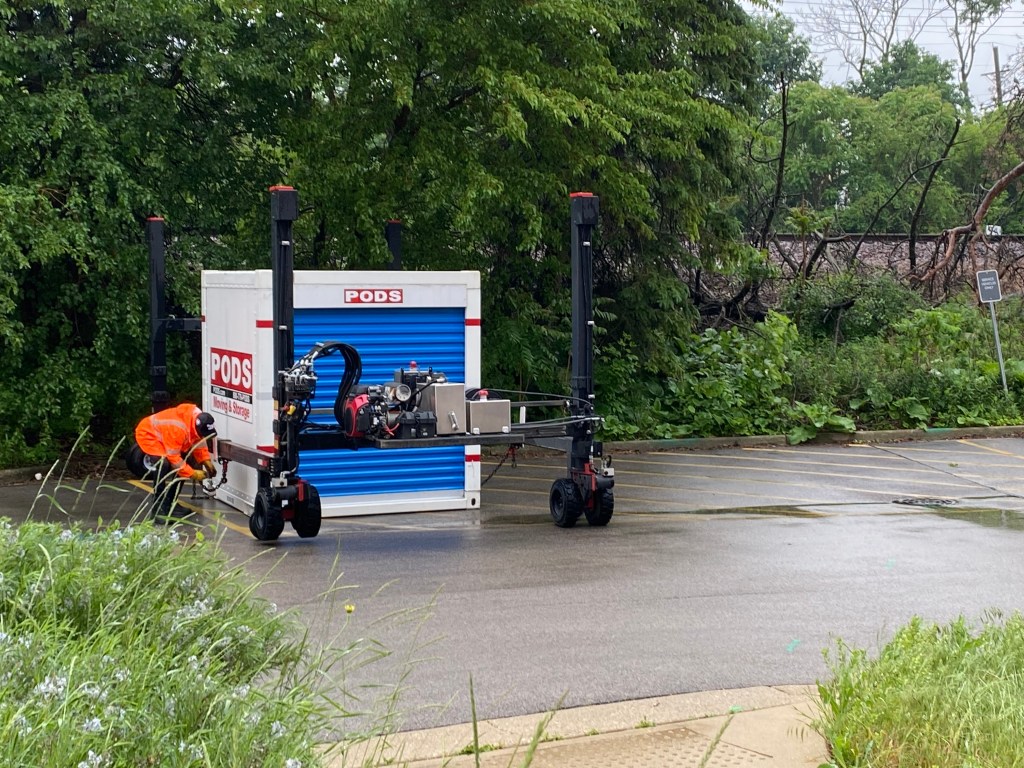
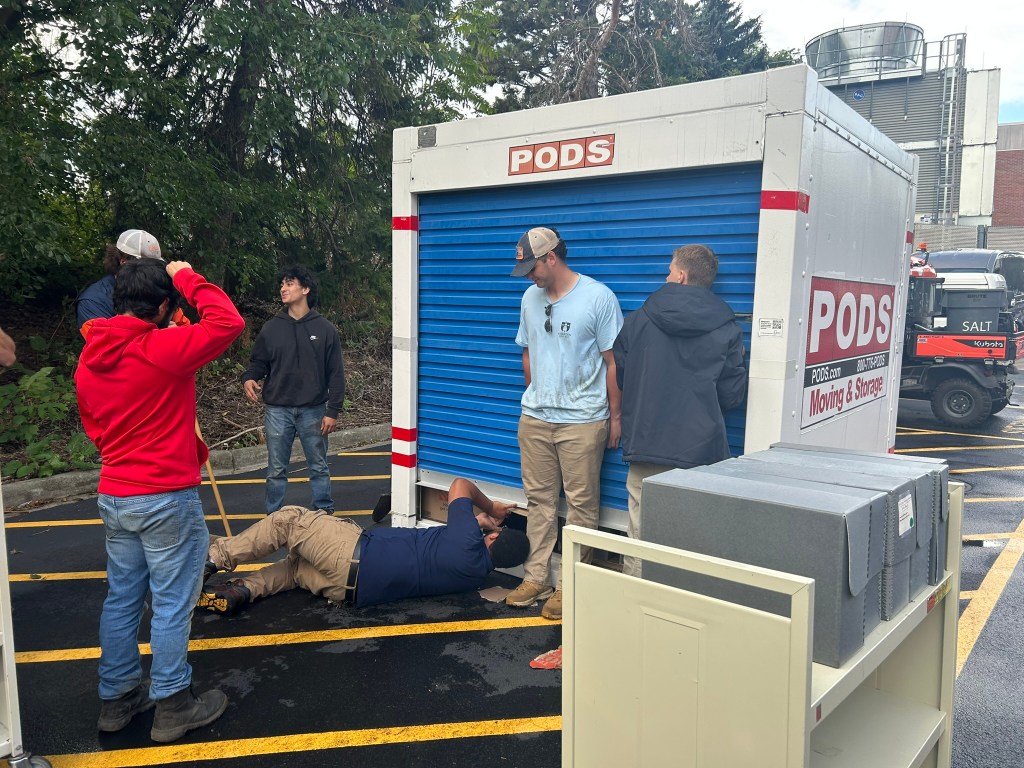
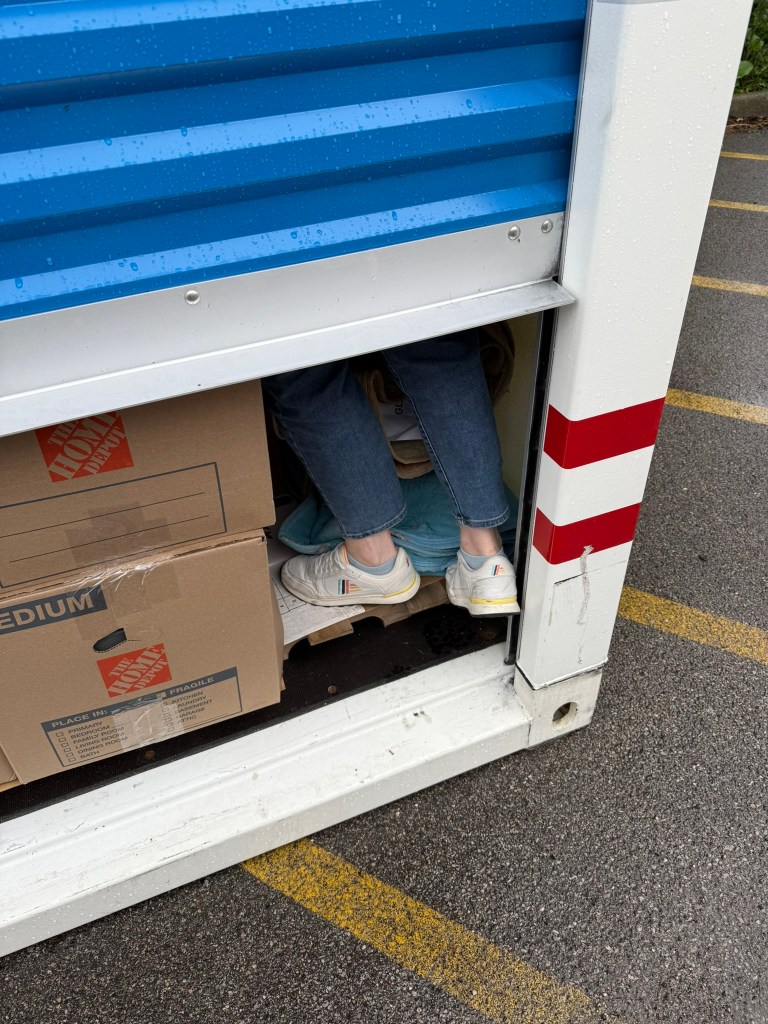
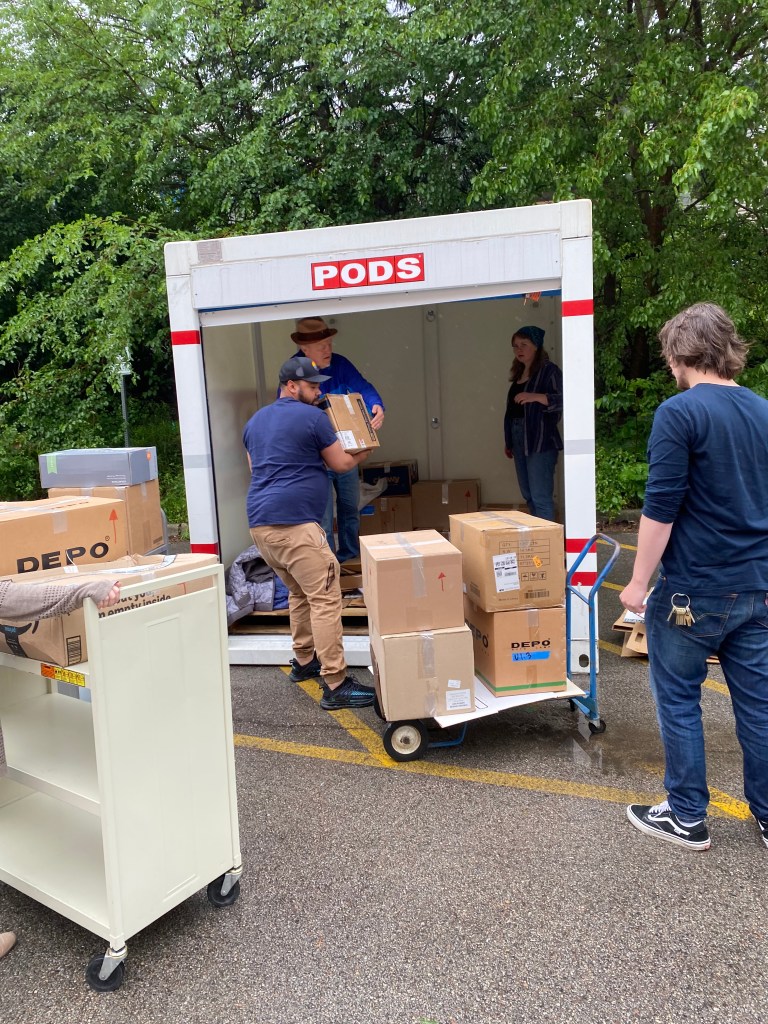
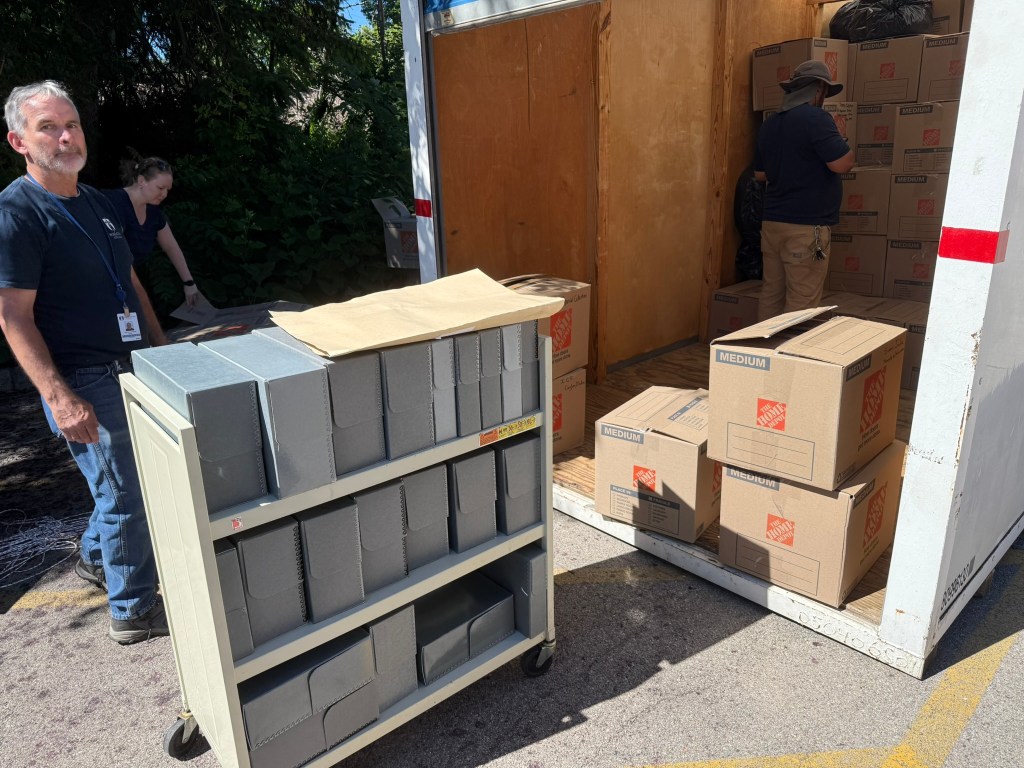
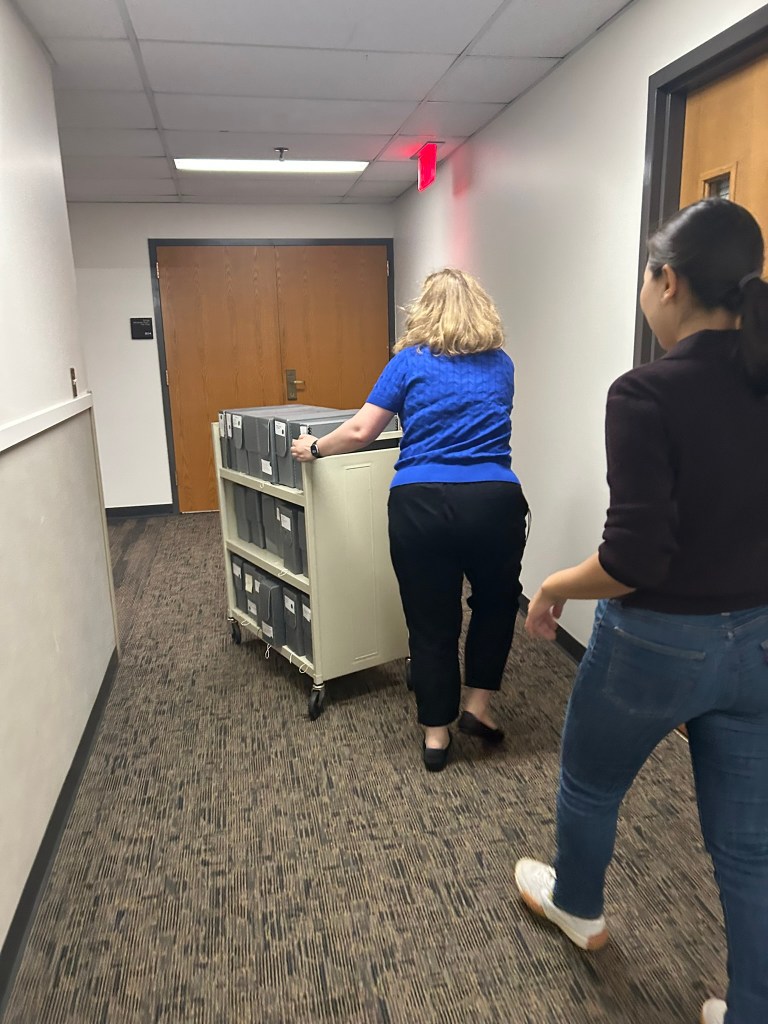
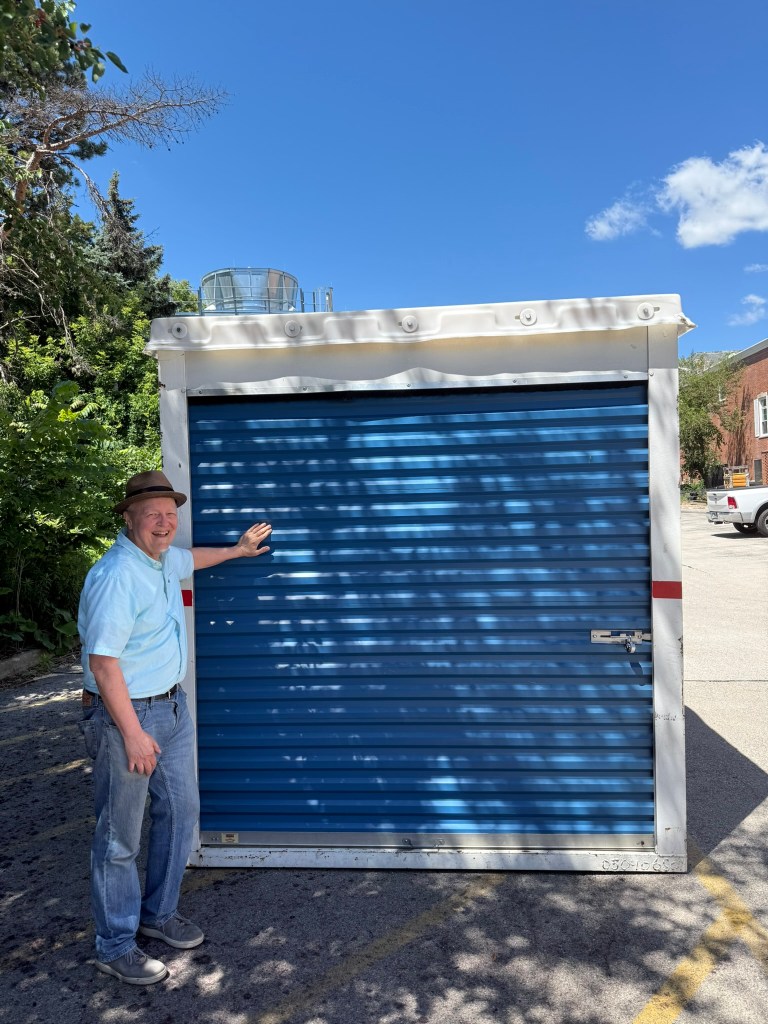
Unpacking the PODs proved to be unpredictable and unexpectedly challenging. SIM had packed its gray archival boxes inside shipping boxes. Those shipping boxes, packed systematically in South Carolina, had shifted during transport, making the POD’s roll-up door almost impossible to open. For one delivery, one of our team had to crawl through the small opening under an only-partially-opened door into the POD to shift boxes away from the door enough for it to be fully opened. In another case, the larger shipping boxes at the front had to be cut open to remove the archival boxes enough to take pressure off the roll-up door. Of course, there still was the physical challenge of shuffling boxes between our basement staging storage and our primary, climate-controlled storage.
Taking the pieces of those five shipments that previously existed as SIM’s corporate archives and reassembling them into their former order is another challenge, requiring study, insight, and creativity. As expected, onboarding such a sizeable accumulation of SIM’s documentary history is a commanding task, occupying most of the Archives’ remaining available space. The archivists also have to grasp the inferred or possible order of the materials – not changing it to a model order but revealing the existing order that SIM established. That ongoing original order will be helpful to SIM and to researchers to facilitate their ongoing use and to make sense of the records as a coherent unit to researchers. A primary commitment of archivists is to grasp the full scope and organization of their collections, which is especially complicated when dealing with a massive and sprawling collection of records from one of the the largest nondenominational missions.
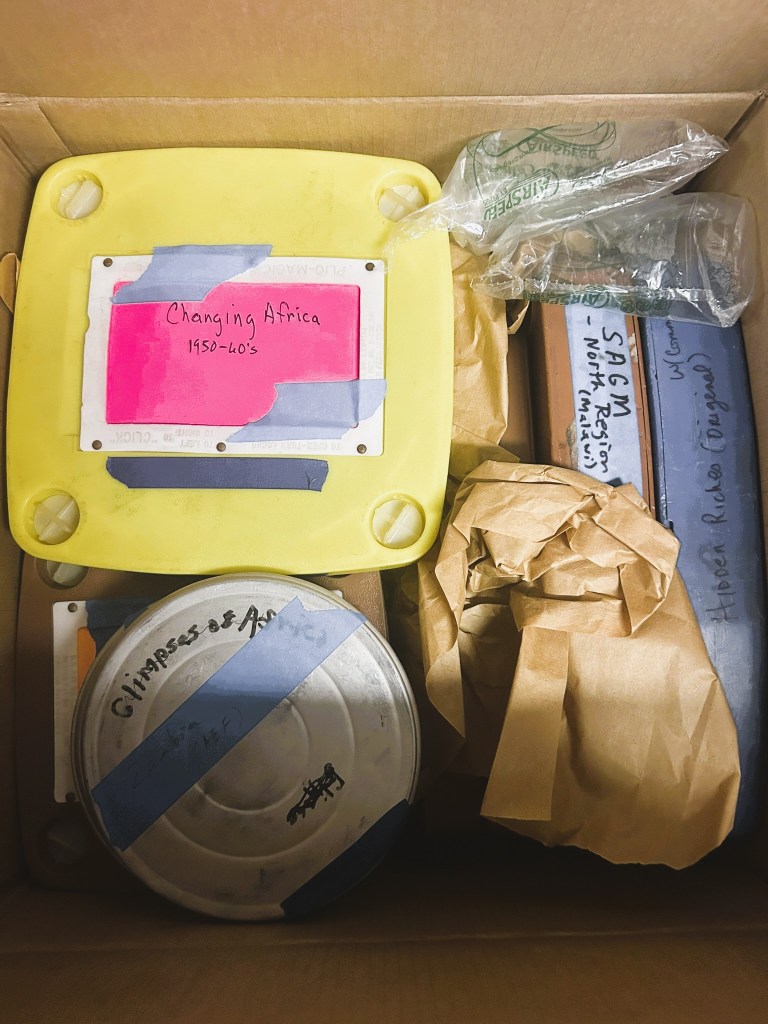
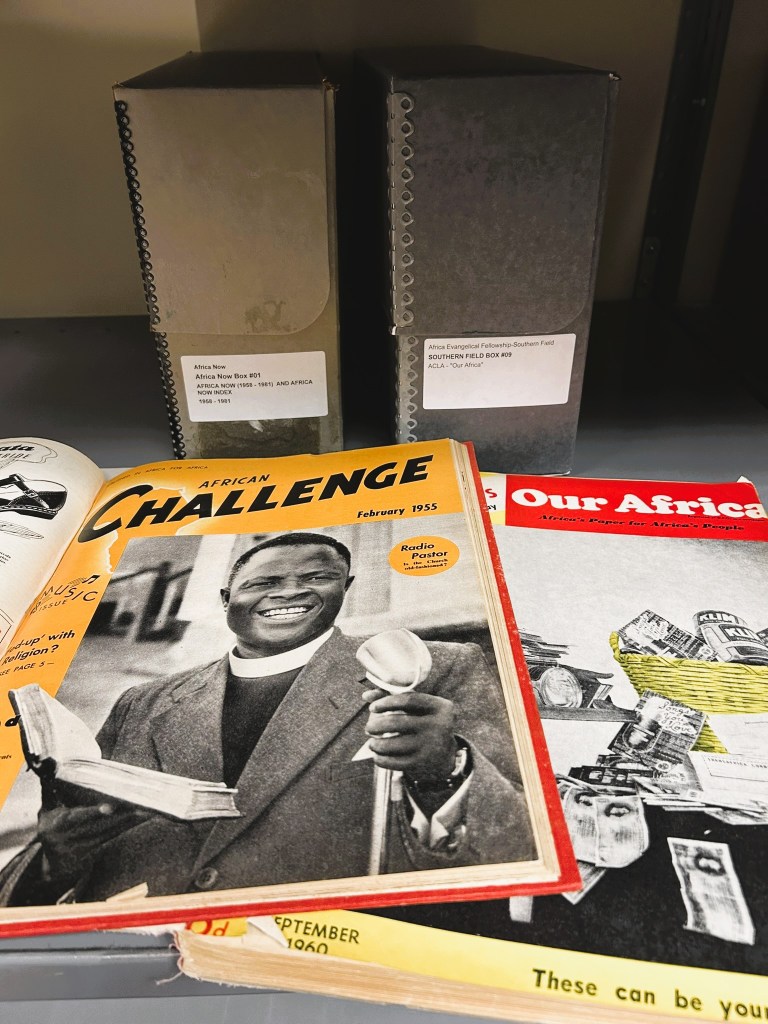
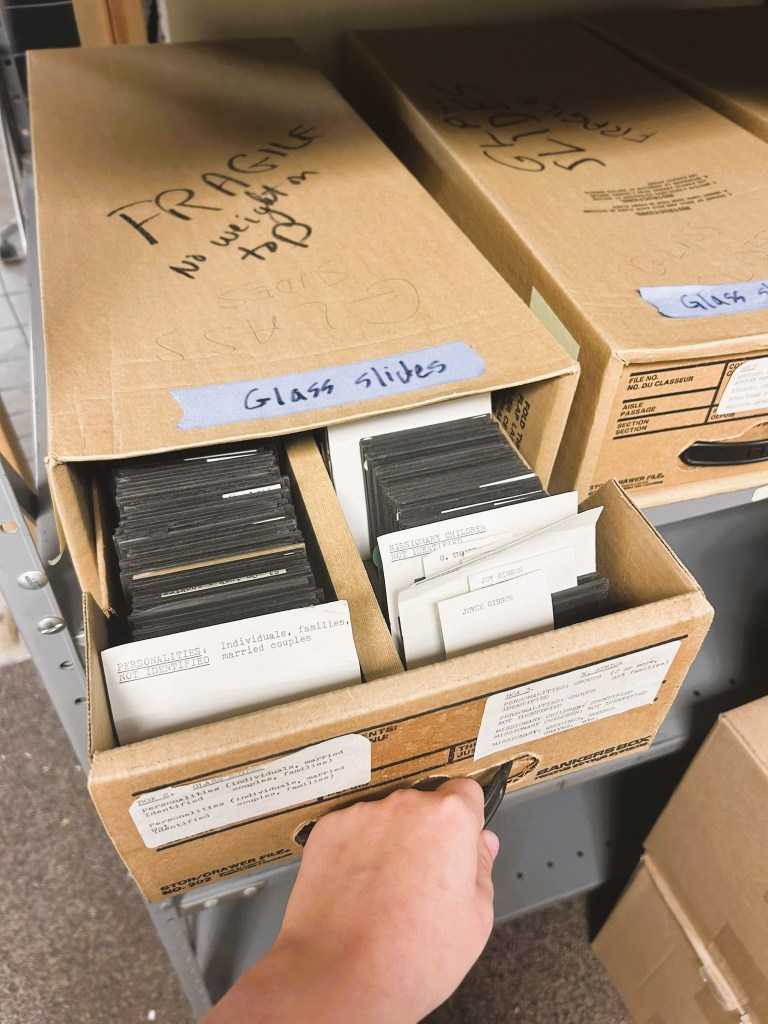
This massive task, launched first by SIM in collecting their records and then maintaining and making them available for research use over the last four decades, now continues at the Wheaton Archives, where it will occupy the Archives planning and processing for the next few years.
Read more about the collections of the Wheaton Archives & Special Collections on our website or explore the collections database at archives.wheaton.edu.

