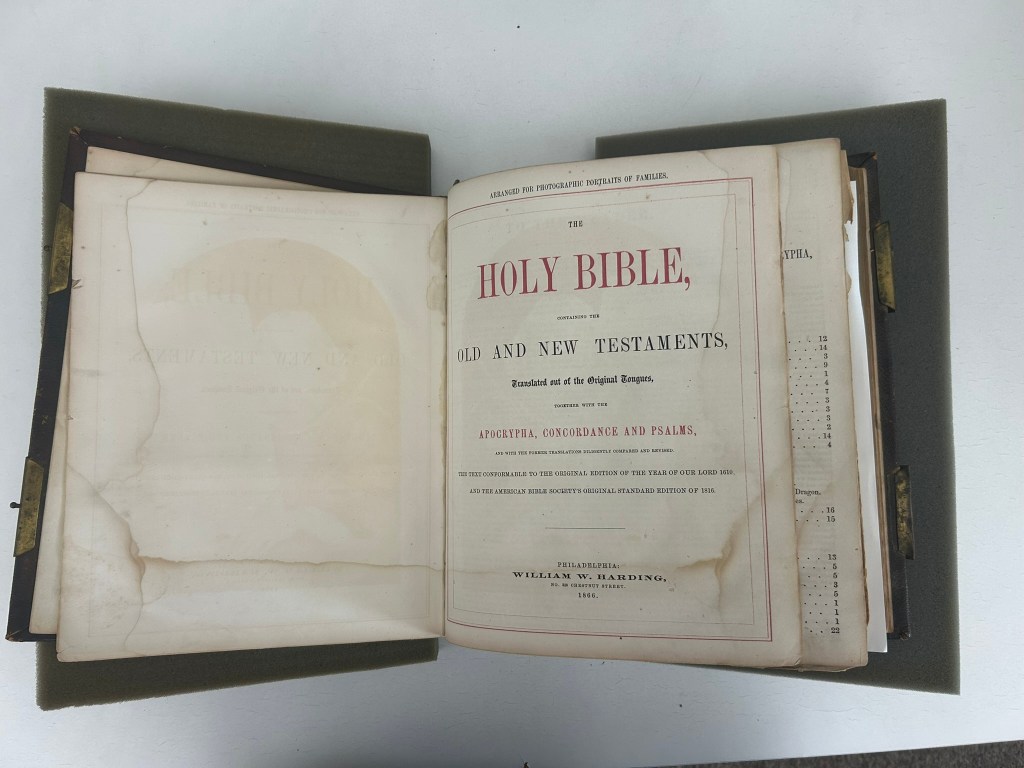
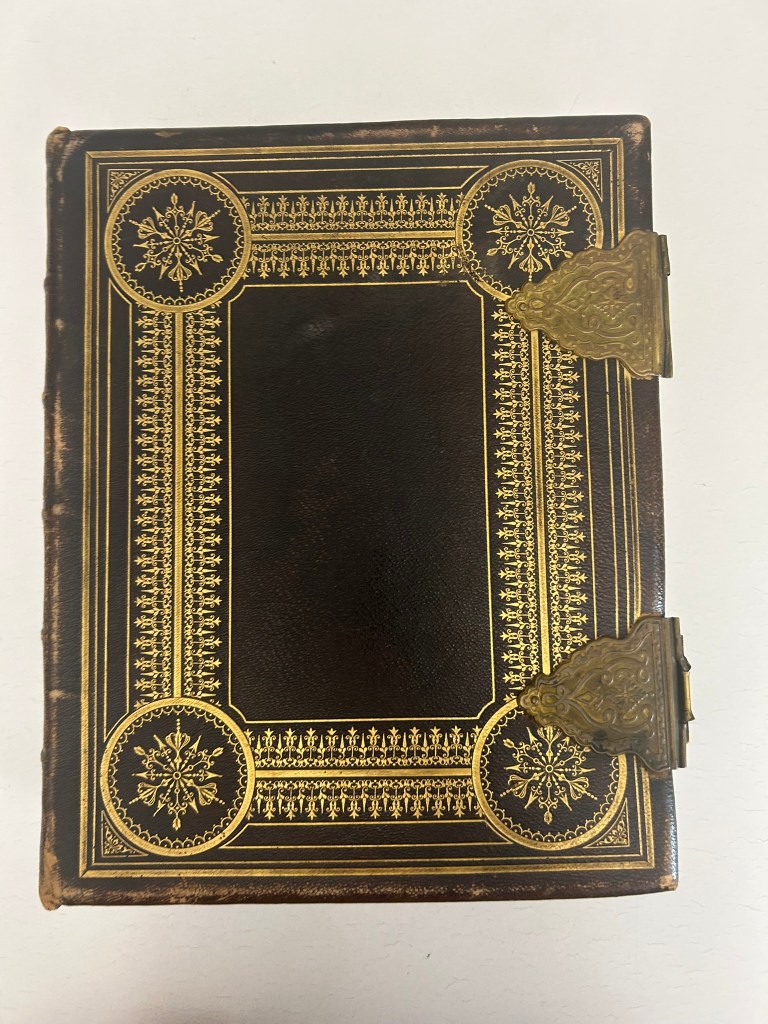
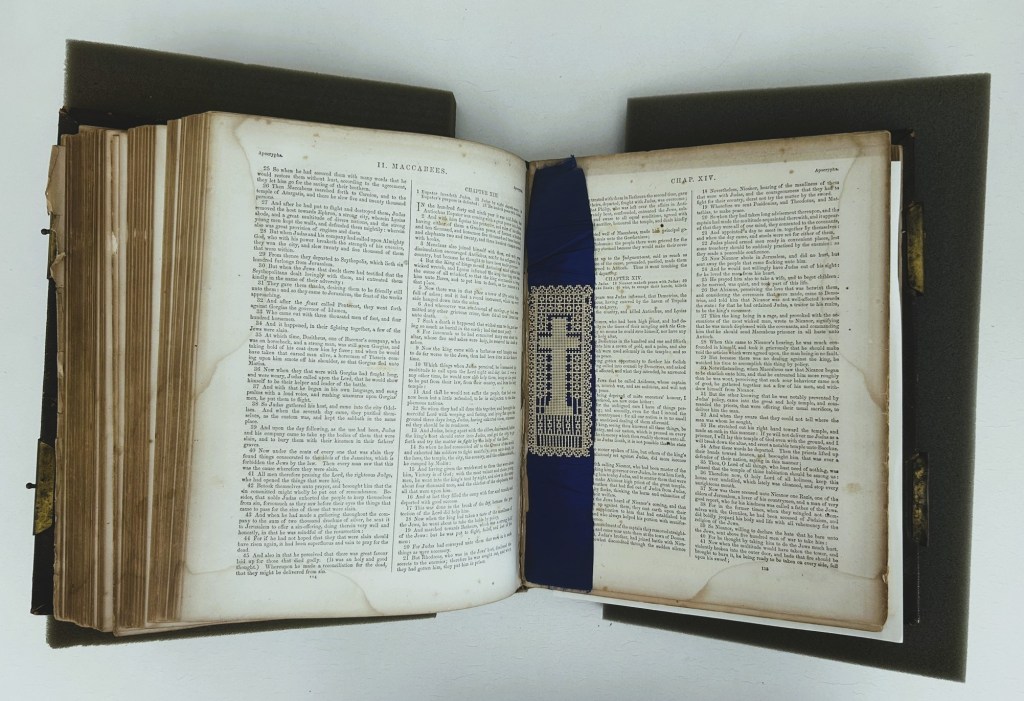
While different translations and editions of the Bible document fascinating histories of scholarship, publication, and Christian tradition, the use of the Bible cab also tell its own story. Adding to the printed text, many Bibles preserve traces of the people who owned, read, gifted, studied, and treasured them, including handwritten names, inscriptions, marginalia, and other signs of use. These extra-textual additions give glimpses into how Bibles have been encountered not only as religious texts, but also as devotional aids, study tools, family records, and commemorative objects.
This month, Wheaton Archives & Special Collections features several examples of annotated Bibles from our collections that highlight the different ways readers have used Bibles across generations.
The Bible as Family Record
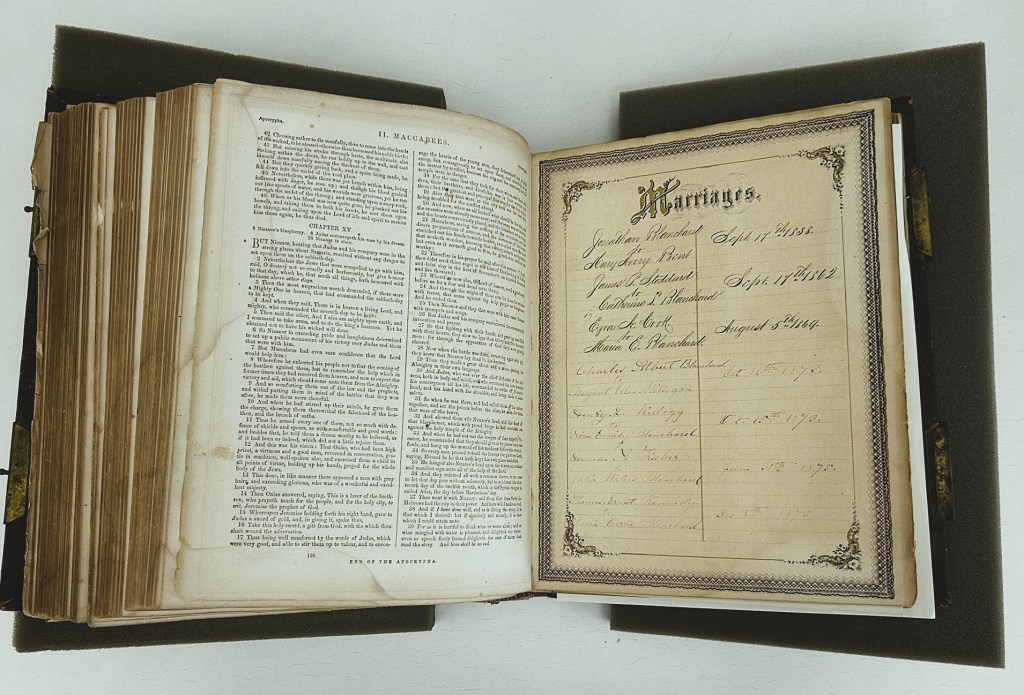
In times when many households owned relatively few books, the family Bible often served as a record of family history. On the available blank leaves, families preserved records of marriages, births, deaths, and other genealogical notes. Some Bible publishers eventually accommodated this common practice by producing Bibles with dedicated family record sections. One example in the collections of Wheaton Archives & Special Collections is the Blanchard Family Bible, which preserves the family tree of Jonathan Blanchard, Wheaton College’s first president.