On March 19, 2025, the Evangelism Missions Archives received a wonderful item for its Zamzam collection (Collection 624): A 58-page typescript with handwritten notes of a diary kept by one of the ship’s passengers, along with a photo.
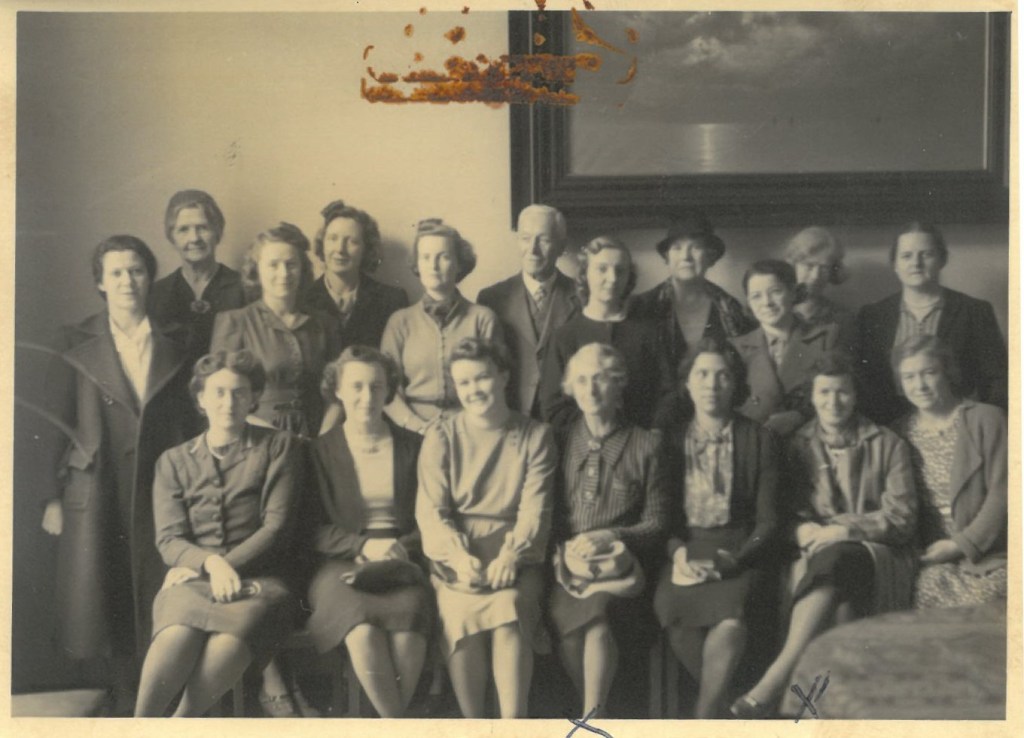
The Zamzam was an Egyptian vessel which had been chartered in early 1941 to take passengers to Africa, including over 100 missionaries. Travel was dangerous, of course, because war had broken out between Germany, Great Britain, and France and was being waged on land and sea. As a civilian vessel under a neutral flag, it should have been exempt from attack. However, the German commerce raider Atlantis mistook it for a troop transport and started shelling the ship on April 17, 1941. The captain of the Zamzam used a flashlight to frantically signal the German ship that the Zamzam was a noncombatant vessel with women and children aboard and the German stopped the attack, but the damage was done. The Zamzam was sunk. However, all the passengers and crew were pulled out of the sea by the Germans. They were transferred to a German supply ship and taken to Nazi-occupied Europe. America was not yet in the war, so American citizens were repatriated back home. But all British citizens, as well as members of the British Empire such as Canadians, were sent to German internment camps where many stayed until the end of the war in 1945. For about one day, the sinking of the Zamzam was big news in American and British newspapers, until it was known that all passengers and crew had been plucked from the waters.
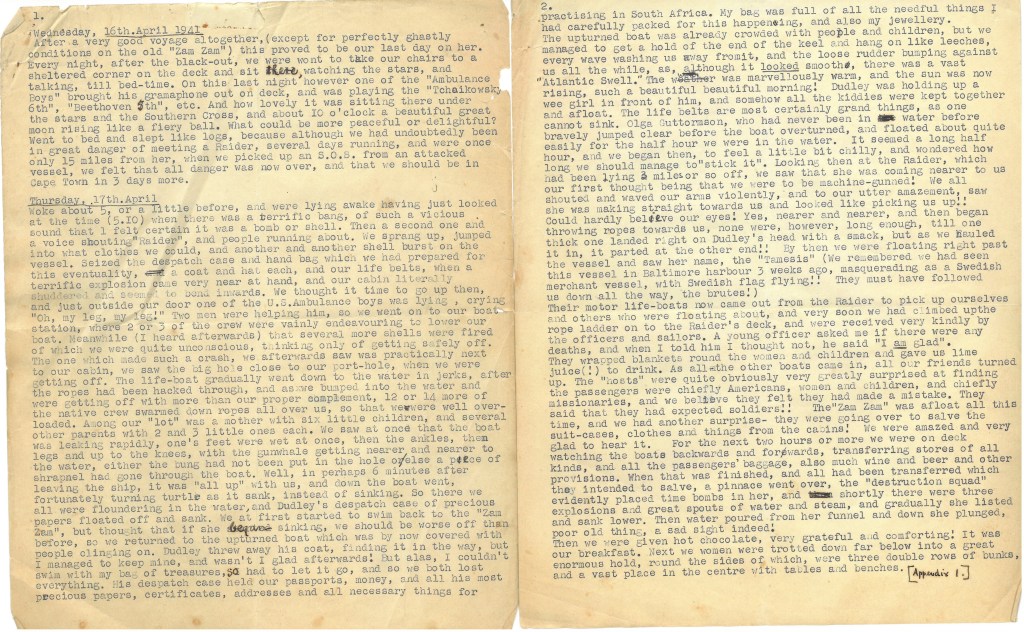
Thursday, 17th April: Woke about 5 or a little before, and were lying awake having just looked at the time (5:10) when there was a terrific bang of such vicious sound that I was certain it was a bomb or a shell. Then a second one and a voice shouted ‘Raider”, and people running about.
Ethel Wright Diary
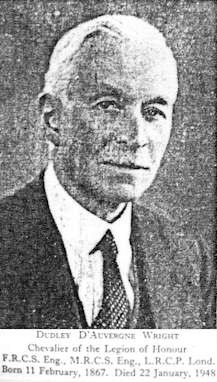
The diary, with numerous handwritten additions, was kept by Ethel Wright. She was a British citizen traveling with her doctor husband Dudley to Durbin, South Africa. Her diary gives a detailed account of all the Zamzam internees experienced, from the time the Zamzam was attacked until Ethel and Dudley were able to sail from Portugal for South Africa fifteen months later (Because Dudley was 75 and Ethel 70, they were allowed to leave by the Germans). It seems unlikely that Ethel was able to keep a typewritten record while she was confined, especially since she and Dudley had lost all their possessions in the attack. But perhaps she had an opportunity to type the record from a handwritten diary soon afterwards. She certainly was the one who added the handwritten notes. Her diary is a vivid record of the terror of the attack, the strangeness of war-torn Europe and the boredom and uncertainty of internment. The Wrights were able to get to South Africa on the second try. After the war, they returned to England where Dudley died in 1948.
Here are a few excerpts from the diary:
Thursday, April 17th (cont).
The life-boat gradually went down to the water in jerks, after the ropes had been hacked through and as we bumped into the water and were getting off with more than our proper compliment, 12 or 14 of the native crew swarmed down the ropes all over us so we were overloaded…. Well in about 6 minutes after leaving the ship it was “all up” with us, and down the boat went, fortunately turning turtle as it sank instead of sinking. [The passengers were picked up by the Germans.] Then we were given hot chocolate, very grateful and comforting! It was our breakfast. Then we women were trotted down far below into a great enormous hold, round the sides of which, were three double rows of bunks, and a vast place in the centre with tables and benches.
Sunday, April 20th
At 3:30 there was a service on deck, to which all were allowed. The Missionaries hymns are very heartfelt and noisy, but the tunes very dull I think, and words somewhat childish. But one supposes that is just what the negroes need [sic] want. The 160 missionaries came out under the wing of a great many organizations. But all without fail seem to know their hymns off by heart, and sing them with great gusto…. They seem wonderfully good souls, and it is so curious to hear this all going on in broad yankee! I must say that they, and everyone on board, behaved quite splendidly through these trying events , everyone is cheerful, or tries to be, and there are no grouses, and we are very, very thankful for all the mercies shown us.
Tues, May 20th
“Our port” at last, St. Jean de Lus, after nine weeks of everlasting blue (or grey) Atlantic. Well, we were allowed on deck in the sunshine later, all, men and women; Lots of German officials came on board and gradually it filtered through that all Americans were to be taken off today, to go to Biarritz, and thence we suppose to Spain or Lisbon; while we Britishers and other nationalities are to remain on board and go tomorrow to Bordeaux!!! All the rest of the day was spent of deck talking and saying good-bye to our many many friends, including the “Holy Rollers” and missionaries belong to innumerable and varied sects.
Tues. June 3rd
[The Zamzamers where now traveling by train to their internment camps in Germany.] Another ghastly night of shunting and whistling, but I didn’t sleep too badly. Two the men, we heard, slept in the “racks” poor dears! Another beautiful day with sunny meadows everywhere. About 8:30, just as we were going to eat our “breakfast” of bread and water at a small station, a man came shyly up to the train with a long sausage; a present from the local butcher! Oher, not to outdone, ran home and came back with cans and bottle of milk for us. So we fed nobly that day, and oh! How delicious the fresh milk was, the very first we had tasted since leaving New York!!
Mon. Sept 22nd
[The men and women are sent to separate internment camps. Ethel is sent to Camp Liebenau in southern Germany.] Room 6 and ourselves gave a tea party to Mrs. Mitchell, the new internee from Yugoslavia. She is a journalist and has been in Yugoslavia in the thick of everything there. She was in Montenegro and Serbia at the time the Serbs were asked to sign the treaty with Germany last March, and gave us most thrilling and realistic account of all that happened then, and how the Serbs refused to sign and went to war instead. As for the Croats [who allied with the Germans] she hadn’t a good word to say for them. After a lovely tea, and this exciting talk, we went out and had a lovely sunny evening till supper-time.
Thurs. Dec. 11th
[The Japanese Empire bombed the American naval base at Pearl Harbor, Hawaii on December 7th.] America declared war on Japan! This I fear means good bye to our Embassy. [Since America had remained neutral, they still had an embassy in Berlin and the staff there had been helping the British and Canadian internees in various ways. George F. Kennan, First Secretary of the Embassy, had given Dudley one of his suits.] We went to tea with Mrs. Flenge and Mrs. Marehand, etc. there. A wonderful tea with Devonshire scone and pastry and all! Then in the evening to the American church for what proved alas to be the last time. Had a lovely evening and saw Dr. [Stewart W.] Herman for the last time. [Herman was the American pastor of the church.] We stayed very late. No one seemed anxious to break up the party and go, and we all talked hard.
Fri. April 17th [1942]
A year ago today!! [A year since the Zamzam was sunk.] A lovely day just as it was last year. Got some fish. D. [Dudley] went to Hospiz in afternoon and felt better. After supper I went around to Miss [name crossed out] to collect a present of ½ Danish butter….
Sat. June 20th
[After innumerable frustrations and delays, the Wrights and many Canadian women internees were allowed to reach Portugal, and the Wrights arrange to sail to South Africa.] Well, we got on board with all our possessions at ll [long last], and finally sailed about 1. We have a jolly little cabin, with two beds, and a bathroom between ourselves and the next cabin. A vast crowd to see the ship sail and of course “streamers” everywhere. Quite calm. Passengers practically all Portuguese. We sail off, into the wide world and the “Unknown” once more. [The transcript ends at this point.]
You can read more about the story of the Zamzam on a past blog from the Archives, “The Rainbow in the Storm.” Visit the Manuscripts Reading Room at Wheaton College to explore the complete Wright diary and other photographs, news clippings, and documents from Collection 624: Zamzam Incident Collection.

