“We’re Glad You’re Here”: Wheaton College’s Japanese American Alumni

This blog post has been adapted and updated from the Wheaton College Historical Review Task Force Report (pp 55-57), released on September 14, 2023. The entire report can be found here.  

Every spring, Wheaton College celebrates Asian American Pacific Islander Heritage Month from April 15 – May 15, and this year the Wheaton Archives & Special Collections commemorates several Japanese American alumni who studied at Wheaton College during the turbulent years of World War II. The United States’ entry into World War II after the Japanese attacks on Pearl Harbor in December 1941 brought a wave of Japanese students to Wheaton College and with them questions surrounding the place of Japanese and Japanese American students both on Wheaton’s campus and in American society.

On February 19, 1942, President Roosevelt signed Executive Order 9066, stipulating that civilians could be excluded from military spaces. Under EO 9066, the military began “evacuating” Japanese American residents from the West Coast the following month, first into temporary assembly centers followed by incarceration in camps supervised by the War Relocation Authority. Scattered over seven states, the 10 internment camps eventually housed over 122,000 Nikkei (Japanese immigrants and their descendants), the majority of whom were American citizens.

When the United States entered World War II in December 1941, approximately 2,500 Japanese American students were enrolled in colleges and universities on the West Coast, their lives and educations traumatically interrupted by the War Relocation Authority. To assist Japanese American students whose educations were interrupted, the National Japanese-American Student Relocation Council (NJASRC) was formed in May 1942 to place select college-aged students into higher education institutions east of the military areas. Candidates for placement were screened for “doubtful loyalty.” If cleared by the Council, students were transferred to participating institutions and enrolled. While some colleges and universities chose not to accept students out of the Relocation Centers due to anti-Asian prejudice, others advocated to bring Nikkei students to their institutions, working to provide campus housing, support from the community, and financial assistance in the form of scholarships. Although spearheaded by the American Friends Service Committee, the Council included a wide range of members, from college and university presidents and administrators to clergy representing mainline Protestant churches, to evangelical mission board executives, to the YMCA/YWCA.

Continue reading

In the Beginning Was the Song

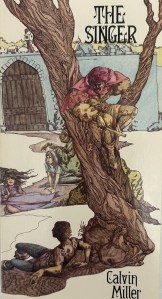
Book cover of The Singer with original illustrations by Chicago artist, Joe Devalsico.
The Singer with original illustrations by Chicago artist, Joe Devalsico.

April is National Poetry Month! To celebrate, Wheaton Archives & Special Collections features Calvin Miller’s The Singer, a poetic allegory of the life of Christ, published by InterVarsity Press in 1975.

Along with original manuscripts of The Singer, SC 24: The Calvin Miller Papers includes extensive correspondence and other records that highlight Miller’s life and work as a pastor, artist, author, and professor.

Building on the rich Christian tradition of allegorical writing—from Medieval morality plays and Dante’s Divine Comedy to John Bunyan’s Pilgrim’s Progress, Hannah Hurnard’s Hinds’ Feet on High Places, and C. S. Lewis’ Chronicles of NarniaThe Singer offers a vivid retelling of the Gospel story as a longform narrative poem.

Continue reading

Memorial to a Friendship

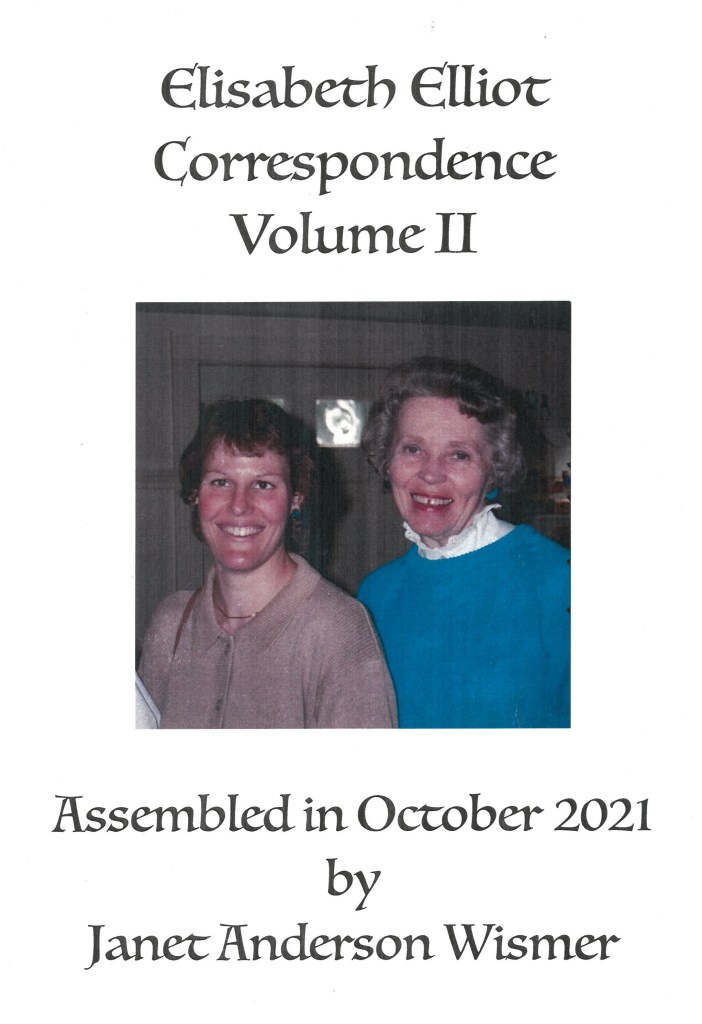
Front piece of the notebook, showing Wismer on the left and Elliot on the right.

One of the most interesting recent additions to Wheaton Archives & Special Collections arrived in 2021 when Janet Wismer gave the Archives a notebook that consisted of a quarter-century of letters, cards, photos, and a variety of ephemera. All were artifacts of her abiding friendship with missionary, author, and teacher Elisabeth Elliot.

Elliot had been a Plymouth Brethren missionary to Ecuador when her husband Jim and four other missionaries were killed by warriors of the Waorani people, a tribe they had hoped to tell about Jesus. Elisabeth wrote an enormously popular book about this, Through Gates of Splendor. Then she and Rachel Saint, sister of another one of the men who was killed, went to live among the Waorani at the tribal people’s invitation. The two began the work of Bible translation and evangelism, alongside the Waorani woman Dayuma, a Christian convert. The whole story has been told most recently and completely in Dr. Kathryn Long’s book, God in the Rainforest: A Tale of Martyrdom and Redemption in Amazonian Ecuador.

Continue reading

A Global Chorus Before the Lord: Remembering Ethnomusicologist Vida Chenoweth

Vida Chenoweth
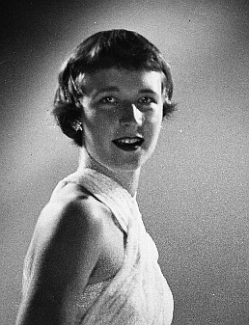
Portrait of Vida Chenoweth, c. 1950s. SC114, Photo-08.

This March, in honor of Women’s History Month, Wheaton Archives and Special Collections remembers Vida Chenoweth—a concert marimbist, Bible translator, and pioneering ethnomusicologist. From the glittering concert halls of Europe to the remote highlands of Papua New Guinea, Vida’s life and ministry combined a love of music with a deep commitment to the dignity of all peoples and a celebration of the unique traditions of diverse musical cultures. SC 114: Vida Chenoweth Papers showcase the breadth of her remarkable career, featuring recital and field recordings, photographs, press clippings, original research, correspondence, and diaries.

Continue reading

“Show, Don’t Tell:” Introducing the Religious Postcard Collection 

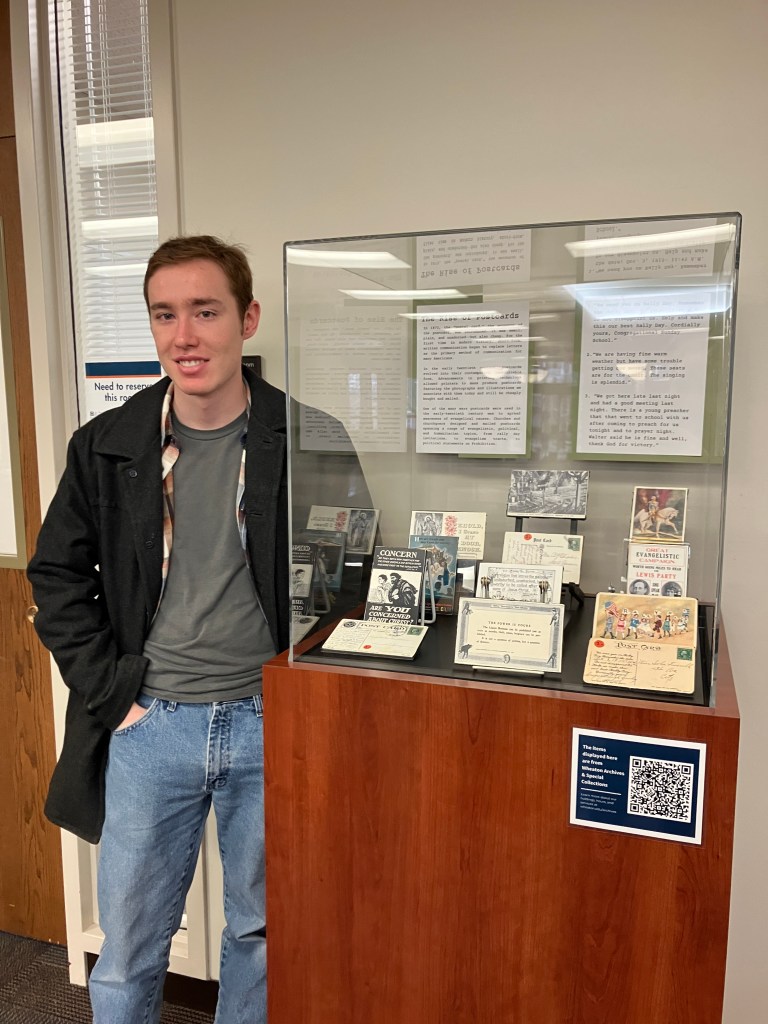
This week, Wheaton Archives & Special Collections shares a guest post from Andre-Ross Gennette, who is interning with the Archives this academic year. Andre-Ross Gennette is a junior at Wheaton College, dual majoring in History and Biblical and Theological Studies, as well as a Wheaton Aequitas Fellow with the cohort for the Fellowship in Public Humanities and the Arts. Along with his work processing Wheaton College alumni scrapbooks, Andre-Ross curated three exhibits for the Archives this spring, including one on the Archives’ extensive collection of religious postcards.

This February, Wheaton Archives and Special Collections digs into its collection of evangelical postcards, a now forgotten but vitally important resource for 20th century Christians in the United States.  

In 1873, the United States Postal Service introduced the “postal card”—a small and plain card that had its postage pre-printed on it, and cost just one cent, equivalent to about 25 cents today. It wasn’t big enough to send a full letter but was enough for a few sentences. Despite its simplicity, the postal card was a resounding success. For the first time in United States history, short form communication via cheap and accessible postal cards began to replace full-size letters.  

Continue reading

A Voice for Change: Excerpts from the William E. Pannell Oral History Collection

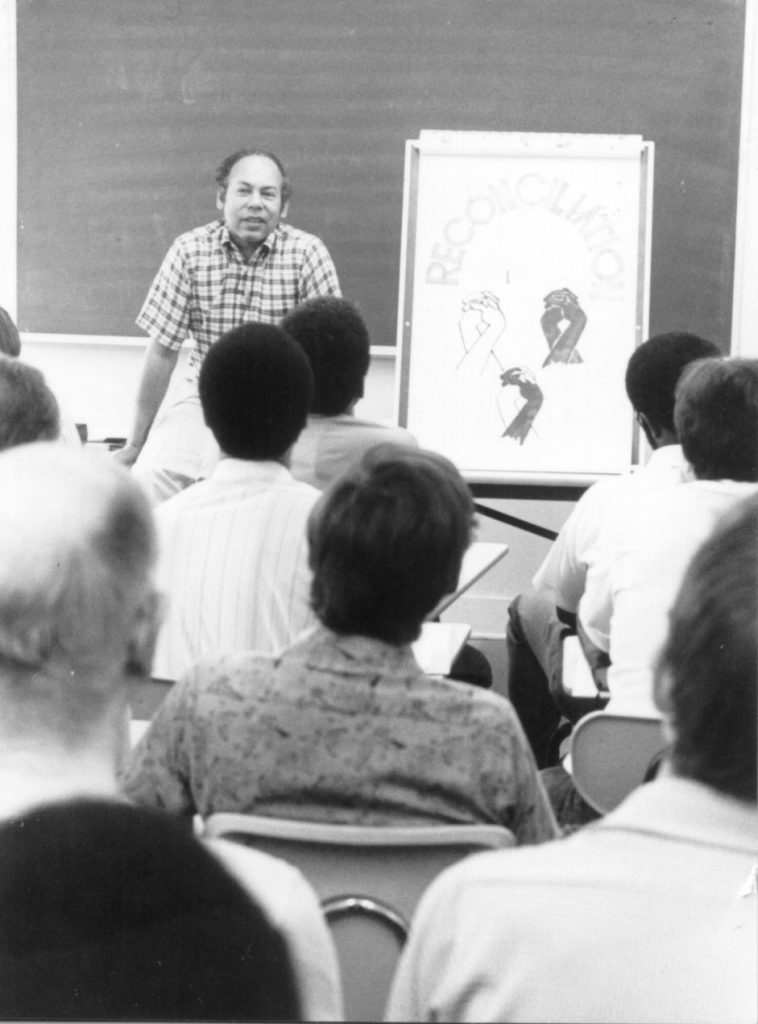
1981: Rev. Pannell leading a Christian Community Development workshop at the Voice of Calvary Ministries’ Study Center in Jackson, Mississippi, USA. (PF: Voice of Calvary – Conferences and Meetings)

In celebration of Black History Month this February, Wheaton Archives & Special Collections features our oral history collection with Rev. Dr. William E. Pannell, who passed away last October. Over more than five decades of ministry, Dr. Pannell served as a youth pastor in Detroit, directed training for Youth for Christ, helped lead Tom Skinner Associates as Vice President, and taught future generations of pastors and evangelists at Fuller Theological Seminary as the assistant professor of evangelism and director of the Black Pastors’ program. Along with his busy work as an evangelist and teacher, Dr. Pannell published several influential books on race and the evangelical church, including My Friend, the Enemy (1968), Evangelism from the Bottom Up (1992), and The Coming Race Wars?: A Cry for Reconciliation (1993).

From 1995 to 2007, Wheaton archivist Bob Shuster sat down with Dr. Pannell for several sessions of oral history interviews. Totaling more than seven hours, the recordings include Dr. Pannell’s reflections on his childhood, education, Christian faith, ministry development, and race relations in the American church. Wheaton Archives & Special Collections recently released the complete transcripts to these interviews, which are now available through the online guide to Collection 498: William E. Pannell Oral History Interviews. Below are selections from the interviews covering Dr. Pannell’s early life, growing racial consciousness, visit to the 1966 Congress on Evangelism, and development of his work with B.M. Nottage and Tom Skinner. The selections have been edited for clarity and brevity.

Continue reading

A Half Century with Perry Mastodon

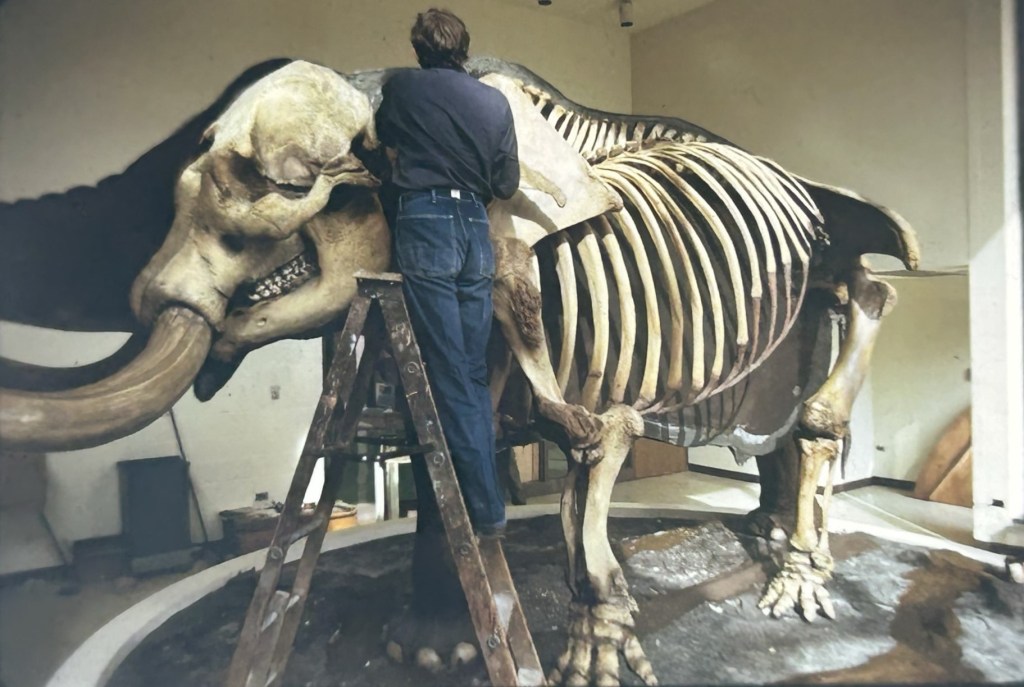
Perry Mastodon being prepared for display in Deicke Exhibit Hall in the former Armerding Science Building, ca. 1974. RG 10.02, Box 5.


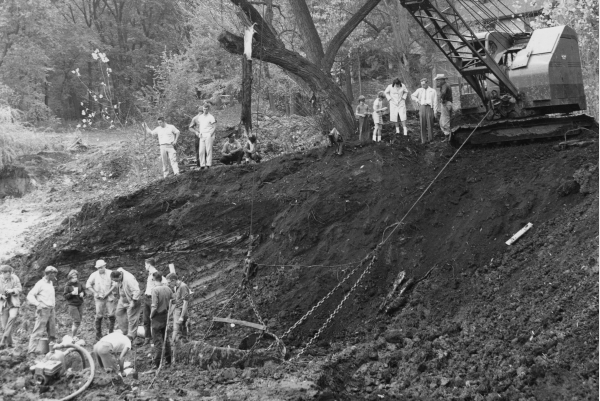
On October 16, 1963, Judge Sam Perry of Glen Ellyn, intending to merely deepen the pond on his property, received much more than he expected when diggers unearthed a prehistoric femur. Upon hearing the news, Judge Perry called for help from Wheaton College, and Dr. Douglas Block of the Geology Department took charge of the site. Judging the find to be geologically significant, the decision was made to drain the lake and excavate. Enlisting Wheaton students from the Geology Department and with technical advice from Orville Gilpin of the Chicago Field Museum, Dr. Block oversaw a strenuous eight-day dig. The muddy excavation was soon joined by hundreds of interested community members and extensive media coverage from local DuPage County and Chicago papers.

Continue reading

New Old Stuff in the Archives: 2024 Edition

As we celebrate the start of a new year, Wheaton Archives & Special Collections looks back at some of the interesting accessions of historical documents that the Archives received in 2024 and the new or updated collections we processed and opened to researchers.

New Accessions

For almost seventy years, the story of missionaries’ attempts to bring Christianity to the Waorani people of the Amazon (called the Aucas by their enemies) has been well known to American evangelicals. This year we received the files of Dr. Kathryn Long, who wrote God in the Rainforest (2017), which tells the story from the killing of the five missionaries who first made the attempt to reach the Waorani in 1956 through the development of an Indigenous Christian community among the Waorani in later years. She generously gave her voluminous research files and relevant books to the Archives, including material from her own trips to Ecuador and documents about her work on the staff of Campus Crusade in South America in the 1980s.

Boat used for Unevangelized Fields Mission (later CrossWorld) for river ministry in Brazil.
Continue reading

Oration Glorious

Wheaton Archives & Special Collections holds hundreds of sermon manuscripts from evangelists and pastors like Jonathan Blanchard, William Biederwolf, Billy Sunday, Jonathan Goforth, Oswald Chambers, Aimee Semple McPherson, Torrey M. Johnson, Kathryn Kuhlman, V. Raymond Edman, Louis H. Evans, and Luis Palau.

Portrait of Aimee Semple McPherson. Photo File: McPherson, Aimee Semple.

Ranging from brief outlines and research notes to full sermon transcripts and covering a wide variety of Biblical and pastoral topics, these manuscripts showcase evangelists’ great diversity in style and approach to sharing the gospel. This December, in celebration of the Christmas season, Wheaton Archives & Special Collections features three Advent sermons from one of the most unique and charismatic communicators in our collections – Aimee Semple McPherson.

Aimee Semple McPherson (1890–1944) was a pioneering evangelist and founder of the International Church of the Foursquare Gospel. Converted at a Pentecostal tent revival in 1908, she began her ministry career as a missionary alongside her first husband, Robert Semple, before his untimely death in China. She returned to the U.S. and after a troubled second marriage, she launched an itinerant revival ministry, ultimately founding the Angelus Temple in Los Angeles in 1923. Known for her dramatic and musical preaching, she brought thousands into the Angelus Temple for multiple services every week, made several transcontinental speaking tours, and became the first woman to preach a sermon over the radio.

Continue reading

Billy Graham Before the Crusades: Stories from Wheaton College Classmates

Portrait of Billy Graham, c. 1940s. Taken by local Wheaton photographer (and Wheaton College alum) Orlin Kohli. Photo File: Graham, Billy 1940s

Seeking to add a liberal arts education to his Bible College background, Billy Graham enrolled in Wheaton College for the fall of 1940. With previous credits from Florida Bible Institute and Bob Jones University, Graham came to Wheaton as a Sophomore, graduating in the spring of 1943.

In 2010, the staff of the Evangelism & Missions Archives at Wheaton College contacted dozens of Graham’s surviving classmates, asking them to fill out questionnaires about their memories of Wheaton in the 1940s and especially their memories of Billy Graham. The staff also taped and transcribed oral history interviews with more than twenty-eight of these classmates. The interviews are all online in the guide to Collection 74 and can be accessed there. Below are excerpts from the interviews, documents, and questionnaires. The excerpts have been edited for length and clarity.

Continue reading