“Por Una Patria Mejor”: Evangelism-In-Depth in Latin America

After a decade of citywide evangelistic campaigns through the 1950s, Latin America Mission and LAM director, Robert Kenneth Strachan, launched a new program for mass evangelism in 1959 — “Evangelism-in-Depth” (E/D) or, as it was known in South America, “Evangelismo a Fondo.” Building on LAM’s efforts to “Latin Americanize” mission work, the program grew from Strachan’s central principle that “the growth of any movement is in direct proportion to the success of that movement in mobilizing its total membership in the constant propagation of belief” (E/D Manual, CN 236, Folder 138-7).

E/D shifted the focus of evangelism from presenting a single professional evangelist in a one-time event to a countrywide, congregation and laity-based, year-long effort. Proposing “a lasting revolution in missionary strategy,” the E/D program sought to impart “an increased vision and a renewed conviction” to individual Christians, local churches, and national leaders “that the total evangelization of their community in their generation is a distinct possibility and their definite responsibility” (Folder 138-7).
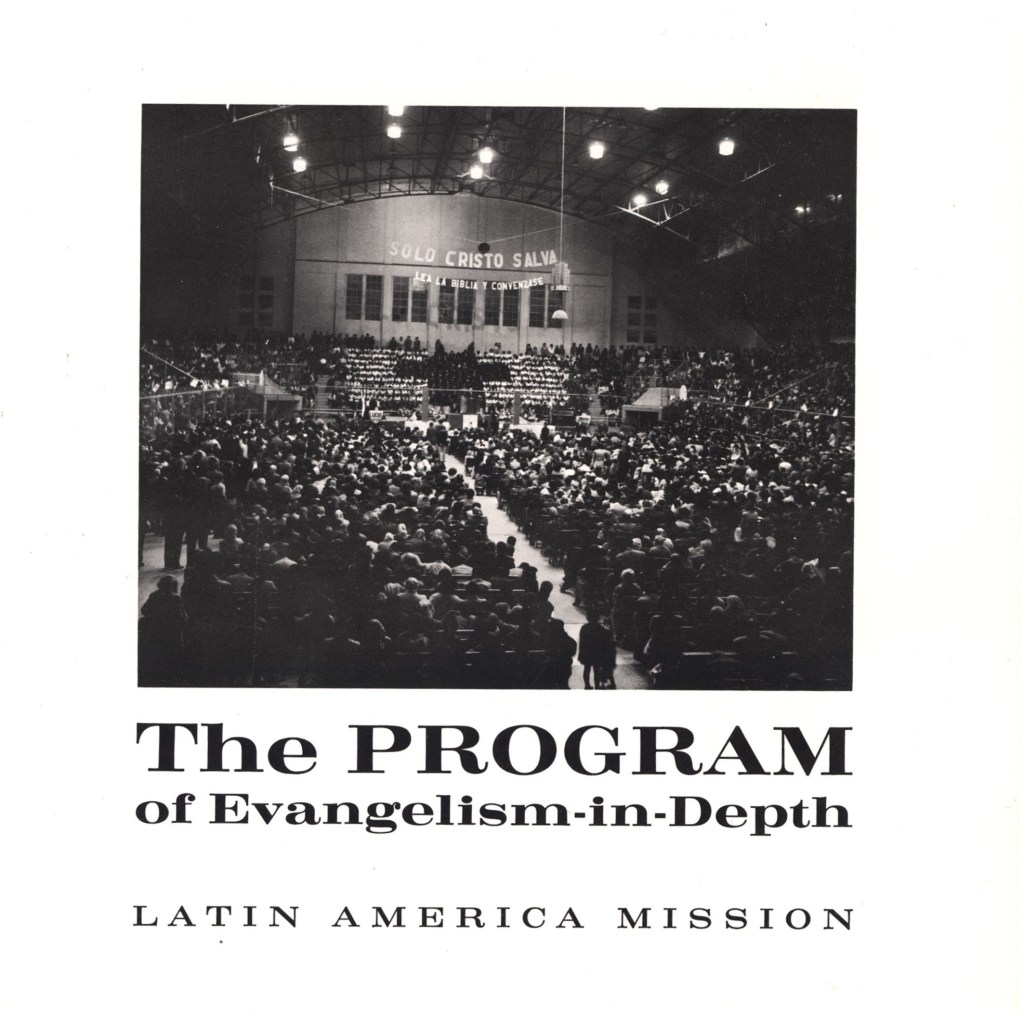
While designed to be adapted to different regional contexts, the core of the E/D program consisted of organized prayer, training for lay Christians, preparation for counselors, follow-up with new Christians, widespread publicity, door-to-door visitation, local and regional evangelistic meetings, regional and national parades, radio and television programs, and widespread Bible and tract distribution. The program flourished on a broad scale in fourteen Latin American countries until 1971, continuing afterwards in Mexico.

Continue reading
Shakespeare on Display

One of the jewels of the E. Beatrice Batson Shakespeare Collection is a copy of Henry the Fourth, taken from the fourth folio edition of Mr. William Shakespear’s Comedies, Histories, and Tragedies (1685). The play was donated to the College in honor of Dr. Batson’s retirement from the English Department in 1990. In celebration of the fourth folio turning an impressive 340 this year, Wheaton Archives & Special Collections revisits a 2015 feature from former Wheaton Library Metadata Associate, Brittany Adams, on the history and unique textual features of Wheaton’s “Henry.” The folio will be on display throughout the 2025 fall semester in the Wheaton College Library.

Continue reading

Seeing with Both Eyes: Church History in a New Perspective

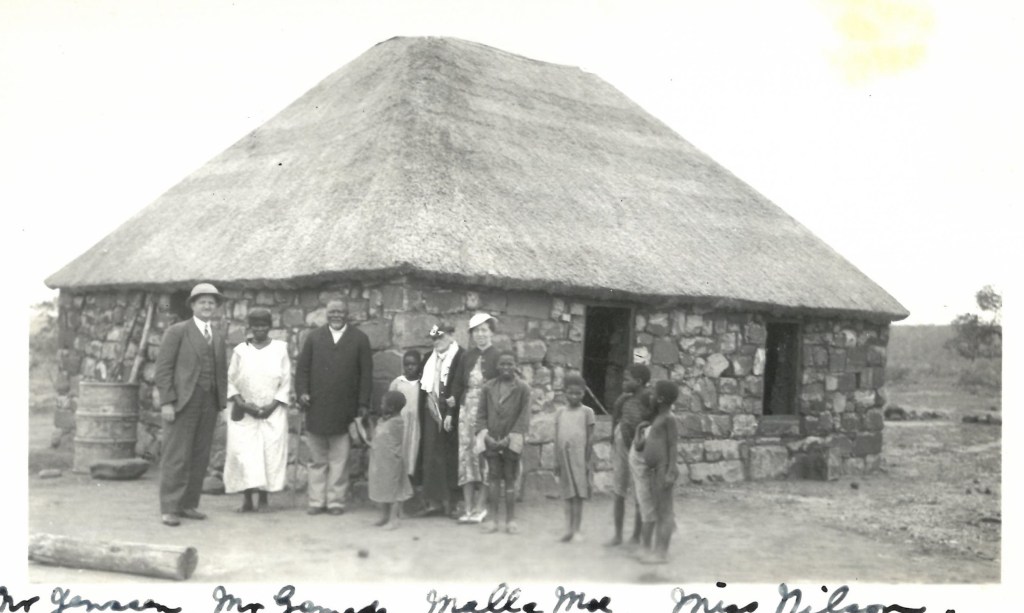
Malla Moe was a legend among missionaries during her own lifetime. Born in Norway in 1863, she immigrated to Chicago as a young woman to live with her sister. However, after meeting Frederick Franson and hearing of his work with the nascent Scandinavian Alliance Mission, she felt a strong call to missions. In 1892 she traveled to Port Natal (Durban) in South Africa to begin missionary and language training. She then went to live and work in the Swaziland (now Eswatini) countryside, traveling between Swazi homesteads (sometimes called kraals in Afrikaans). From that time on, in the words of one biographical dictionary, “she served as evangelist, church planter, teacher, and preacher.”  Although she often rubbed other missionaries the wrong way, she loved and was loved by her African congregations. When it became difficult for her to walk, she traveled in a specially built gospel wagon. By the time of her death in 1953, Swaziland and Tonga were dotted with the dozens of churches she helped to found.

“This is a church. A good evangelist, Johann Muosi[?], died there like a good soldier in the fever country for the work of God. He left his good home for Jesus’ sake. He was happy when he went to be with the Lord. Malla Moe.” (From Acc. 2007-031).

That is the story told in many Western histories of missions. But it is incomplete. (An exception is TEAM’s own history, God Made It Grow, by Vernon Mortenson). Some of those histories mention a Swazi helper named Gamede or sometimes just indicate she had an anonymous native helper. Sometimes no African worker is mentioned.

Continue reading

A Trip Down the Río Sinú

The Biblical call to “make disciples of all nations” has driven missionaries to some of the most remote regions on earth—areas inhabited by indigenous peoples with diverse languages, religions, and cultural traditions. From the steppes of China and the Pacific islands to the Andes highlands and the African Sahara, missionaries have striven to carry the Gospel to all communities and peoples across the globe. Wheaton Archives & Special Collections preserves extensive records of missionary work among indigenous communities in remote and urban settings, including outreach to the Lisu and Hmong people in Asia, the Zulu and Kikuyu in Africa, and the Zapotec and Waodani in the Americas, among many others.

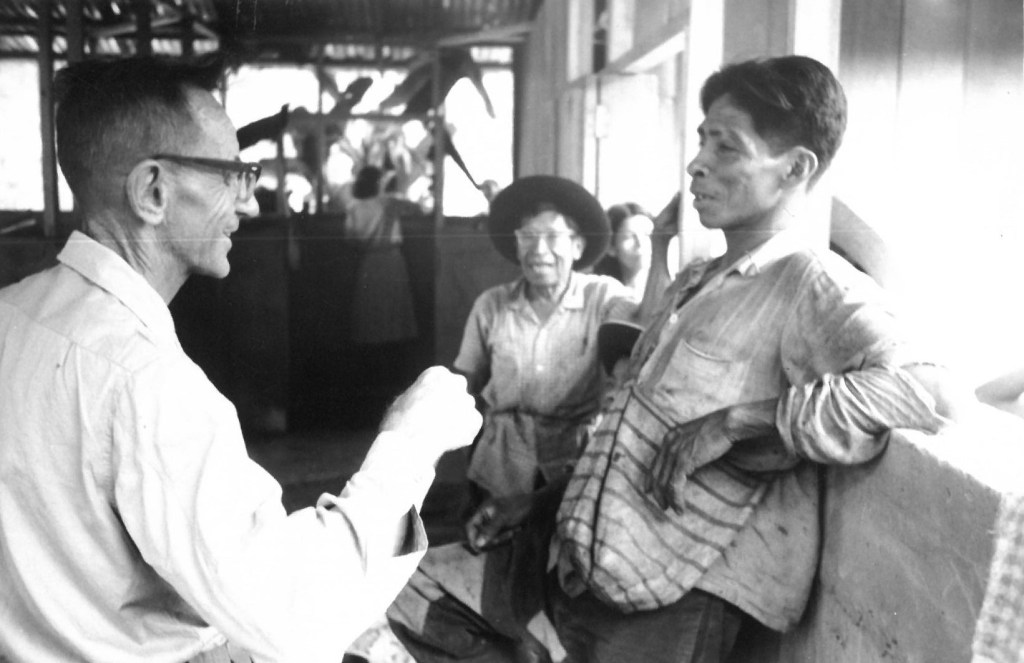
This month, we feature a pictorial report from missionary Ernest Fowler that documents the early stages of Latin America Mission’s outreach to the Emberá people of northern Colombia.

Ernie Fowler with two men in Colombia. (Photo File: LAM – Colombia).
Continue reading

In the Beginning Was the Song

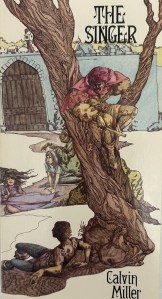
Book cover of The Singer with original illustrations by Chicago artist, Joe Devalsico.
The Singer with original illustrations by Chicago artist, Joe Devalsico.

April is National Poetry Month! To celebrate, Wheaton Archives & Special Collections features Calvin Miller’s The Singer, a poetic allegory of the life of Christ, published by InterVarsity Press in 1975.

Along with original manuscripts of The Singer, SC 24: The Calvin Miller Papers includes extensive correspondence and other records that highlight Miller’s life and work as a pastor, artist, author, and professor.

Building on the rich Christian tradition of allegorical writing—from Medieval morality plays and Dante’s Divine Comedy to John Bunyan’s Pilgrim’s Progress, Hannah Hurnard’s Hinds’ Feet on High Places, and C. S. Lewis’ Chronicles of NarniaThe Singer offers a vivid retelling of the Gospel story as a longform narrative poem.

Continue reading

Memorial to a Friendship

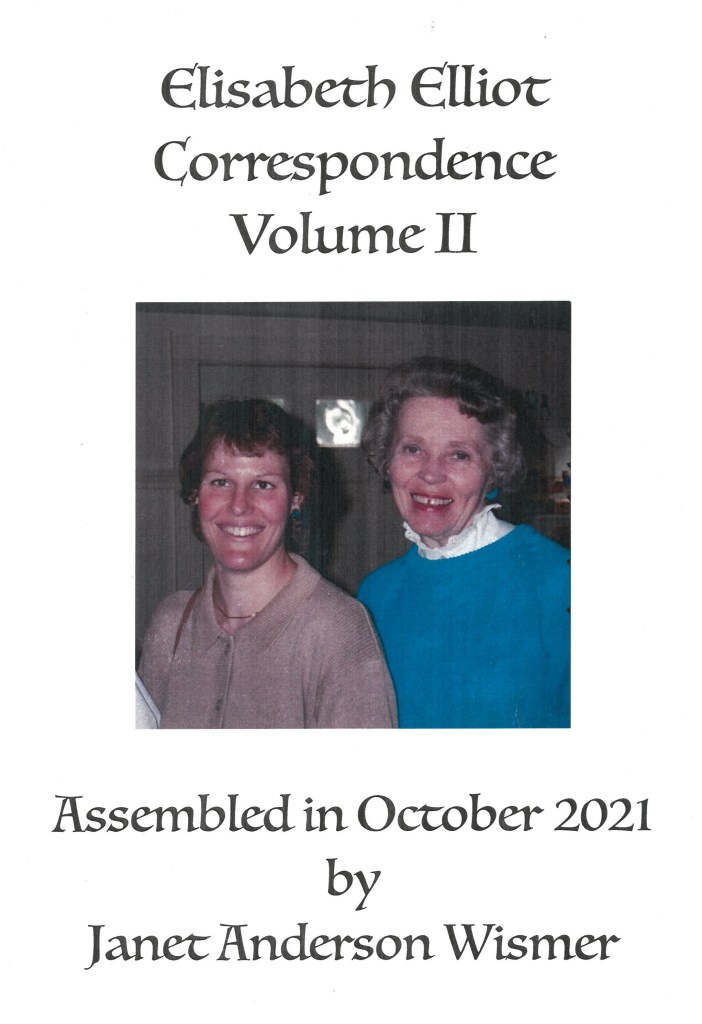
Front piece of the notebook, showing Wismer on the left and Elliot on the right.

One of the most interesting recent additions to Wheaton Archives & Special Collections arrived in 2021 when Janet Wismer gave the Archives a notebook that consisted of a quarter-century of letters, cards, photos, and a variety of ephemera. All were artifacts of her abiding friendship with missionary, author, and teacher Elisabeth Elliot.

Elliot had been a Plymouth Brethren missionary to Ecuador when her husband Jim and four other missionaries were killed by warriors of the Waorani people, a tribe they had hoped to tell about Jesus. Elisabeth wrote an enormously popular book about this, Through Gates of Splendor. Then she and Rachel Saint, sister of another one of the men who was killed, went to live among the Waorani at the tribal people’s invitation. The two began the work of Bible translation and evangelism, alongside the Waorani woman Dayuma, a Christian convert. The whole story has been told most recently and completely in Dr. Kathryn Long’s book, God in the Rainforest: A Tale of Martyrdom and Redemption in Amazonian Ecuador.

Continue reading

“Show, Don’t Tell:” Introducing the Religious Postcard Collection 

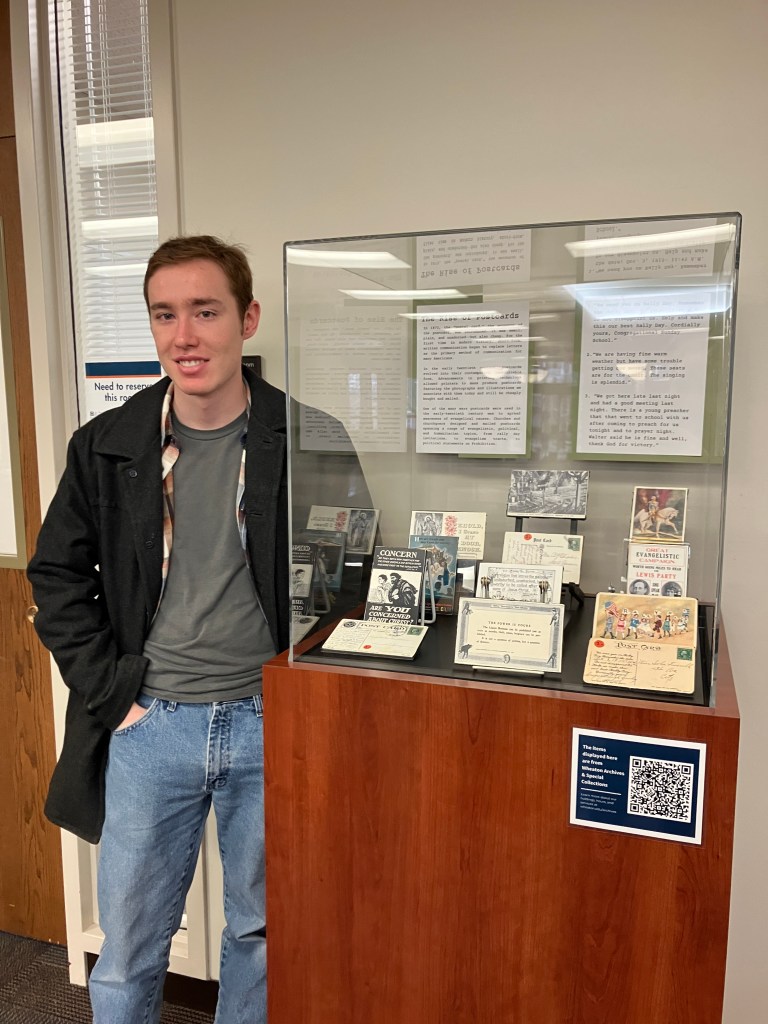
This week, Wheaton Archives & Special Collections shares a guest post from Andre-Ross Gennette, who is interning with the Archives this academic year. Andre-Ross Gennette is a junior at Wheaton College, dual majoring in History and Biblical and Theological Studies, as well as a Wheaton Aequitas Fellow with the cohort for the Fellowship in Public Humanities and the Arts. Along with his work processing Wheaton College alumni scrapbooks, Andre-Ross curated three exhibits for the Archives this spring, including one on the Archives’ extensive collection of religious postcards.

This February, Wheaton Archives and Special Collections digs into its collection of evangelical postcards, a now forgotten but vitally important resource for 20th century Christians in the United States.  

In 1873, the United States Postal Service introduced the “postal card”—a small and plain card that had its postage pre-printed on it, and cost just one cent, equivalent to about 25 cents today. It wasn’t big enough to send a full letter but was enough for a few sentences. Despite its simplicity, the postal card was a resounding success. For the first time in United States history, short form communication via cheap and accessible postal cards began to replace full-size letters.  

Continue reading

Oration Glorious

Wheaton Archives & Special Collections holds hundreds of sermon manuscripts from evangelists and pastors like Jonathan Blanchard, William Biederwolf, Billy Sunday, Jonathan Goforth, Oswald Chambers, Aimee Semple McPherson, Torrey M. Johnson, Kathryn Kuhlman, V. Raymond Edman, Louis H. Evans, and Luis Palau.

Portrait of Aimee Semple McPherson. Photo File: McPherson, Aimee Semple.

Ranging from brief outlines and research notes to full sermon transcripts and covering a wide variety of Biblical and pastoral topics, these manuscripts showcase evangelists’ great diversity in style and approach to sharing the gospel. This December, in celebration of the Christmas season, Wheaton Archives & Special Collections features three Advent sermons from one of the most unique and charismatic communicators in our collections – Aimee Semple McPherson.

Aimee Semple McPherson (1890–1944) was a pioneering evangelist and founder of the International Church of the Foursquare Gospel. Converted at a Pentecostal tent revival in 1908, she began her ministry career as a missionary alongside her first husband, Robert Semple, before his untimely death in China. She returned to the U.S. and after a troubled second marriage, she launched an itinerant revival ministry, ultimately founding the Angelus Temple in Los Angeles in 1923. Known for her dramatic and musical preaching, she brought thousands into the Angelus Temple for multiple services every week, made several transcontinental speaking tours, and became the first woman to preach a sermon over the radio.

Continue reading

“The Truth Needs to Be Illustrated”: Gospel Posters in China

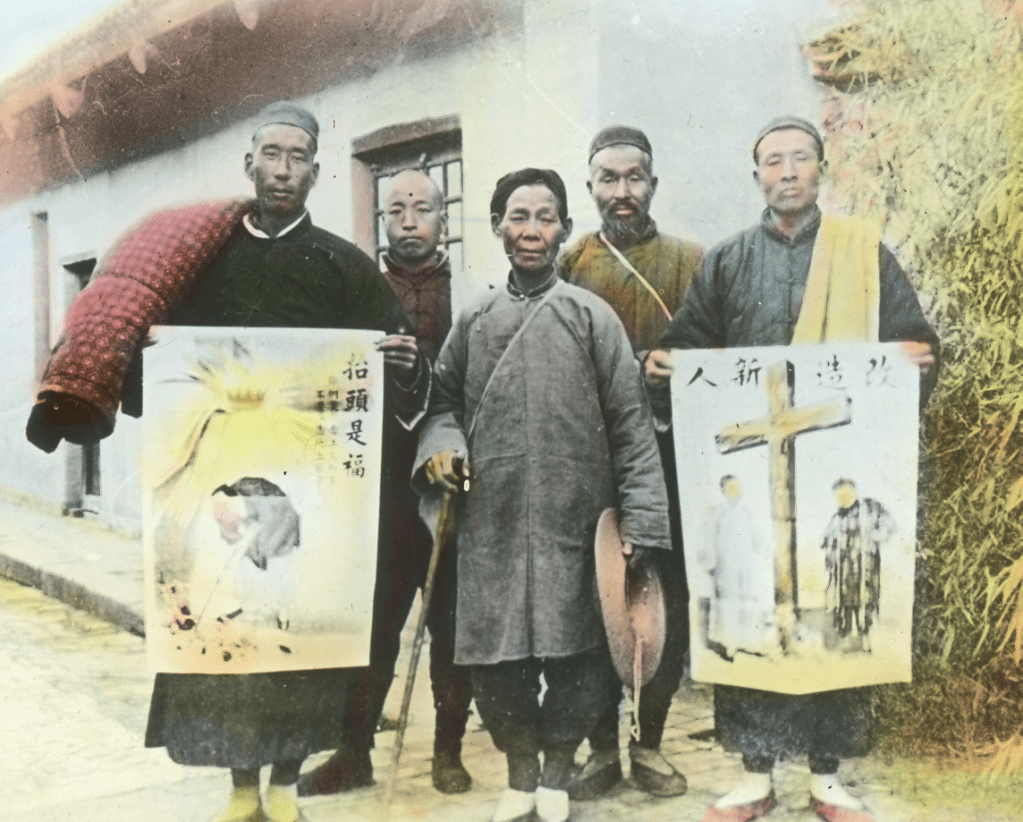
In the early 1920s, the first commercial four-color offset lithograph machines came to China. While Chinese Christian posters, tracts, and books had circulated from various presses for a century, these machines allowed for quick, inexpensive, and large-scale print production. Christian mission organizations like the Religious Tract Society and Christian Witness Press quickly capitalized on the new technology. In 1929 alone, the Religious Tract Society printed 150,000 posters in China. Joining and in some ways anticipating China’s vibrant political and commercial print culture, these colorful posters became a prevalent tool for Christian evangelization in China through the 1930s and 1940s.

Chinese Christians, possibly an itinerate preaching band, with evangelism posters, ca. 1930-1940. Collection 215, Lantern Slide Box 11.

Wheaton Archives & Special Collections holds more than fifty of these posters throughout several collections, including Collection 215: Records of Overseas Missionary Fellowship, Collection 231: Papers of Ian and Helen Anderson and Collection 706: Evangelism Posters Ephemera.

Continue reading

Japan for Christ: The Evangelistic Travels of H. S. Kimura

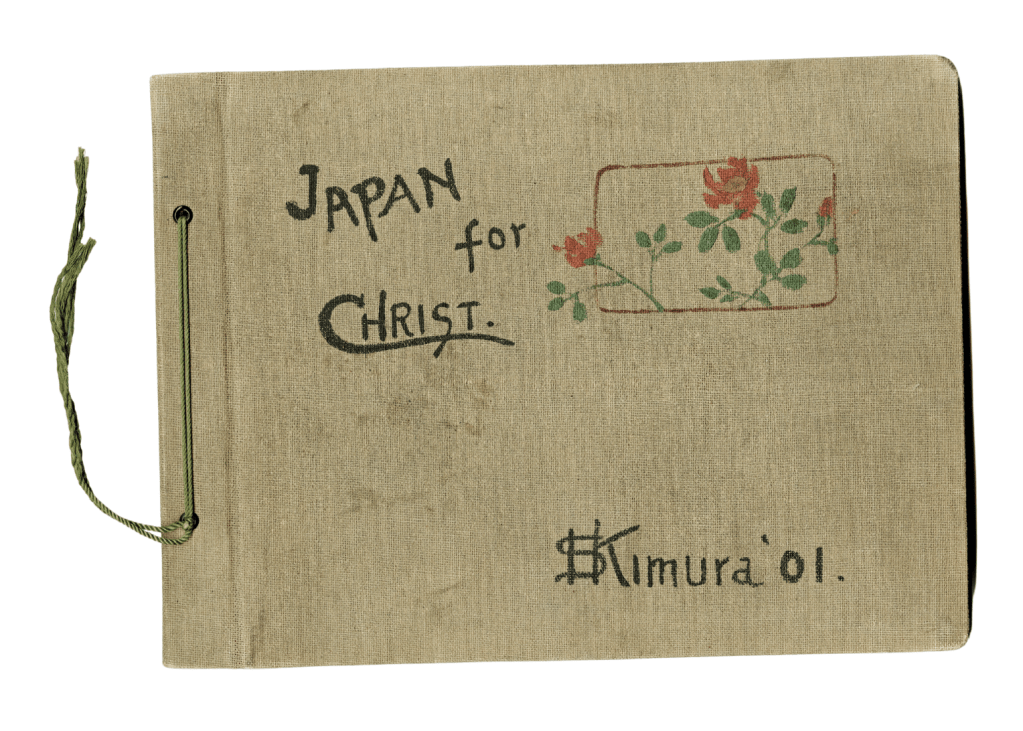
Kimura Kiyomatsu (木村 清松), known in the United States as Henry Seimatsu Kimura, was born in 1874 to a family of sake brewers in Gosen City, Niigata Prefecture. At seventeen Kimura was baptized during an evangelistic service held by Teiichi Hori in Niigata. His conversion to Christianity led to conflict within his family, especially with his father, who disowned him; although both his parents and his two brothers eventually became Christians.

Continue reading