
This past October, Wheaton Archives & Special Collections welcomed Dr. Paul Putz for the annual Archival Research Lecture, where he presented “Sports and the Stories We Tell: Evangelical Identity and the Christian Athlete Movement in America.” This month, we feature an interview with Dr. Putz that dives into his research at the intersection of American evangelicalism and big-time sports.
When and how were you first introduced to Wheaton Archives & Special Collections?
When you study American evangelicalism, the archives at Wheaton are a go-to destination. During my dissertation research, I looked to see what holdings Wheaton had related to sports and Christianity, and I found that it had several significant collections. I applied for a travel grant that allowed me to make the trip up from Texas. Getting to spend a week at Wheaton going through archival material was truly a joy, and it shaped my dissertation and then my book project in significant ways, too.
What first drew you to the intersection of faith and sports as a topic of historical research?
I grew up in Nebraska, a huge sports fan and also a pastor’s kid. I played basketball throughout high school and into college, and I was always wrestling with how to reconcile those two parts of my identity: an athlete and a Christian. Sometimes it felt like they came into conflict. An organization called the Fellowship of Christian Athletes (FCA), which I joined in high school, was really important in helping me navigate those tensions and integrate my identities as both a Christian and an athlete.
When my time playing organized basketball came to an end after college, and as I moved into a career as an educator and began thinking about becoming a historian, I grew more and more interested in the history of organizations like the FCA. How was this community of Christian athletes and coaches, one that shaped my own life in profound ways, formed and developed? What ideas did they promote? What questions did they pursue?
Essentially, I wanted to understand the meanings Christians in the United States have assigned to athletic competition, and how they have both transformed and been transformed by the culture of sports. It’s been fascinating to explore that history over the past ten years.
What kinds of collections in Wheaton Archives & Special Collections did you use most heavily and how were they applicable to your research?
The most important collection for me was the Bill Glass/Champions for Life Collection. Glass was an All-American football player at Baylor in the 1950s and then a standout NFL player in the 1960s. After his NFL career he became a full-time evangelist, and he is most famous today for his trailblazing work in prison ministry. But before prison ministry, he was a significant leader in sports ministry, shaping that world in its formative years.
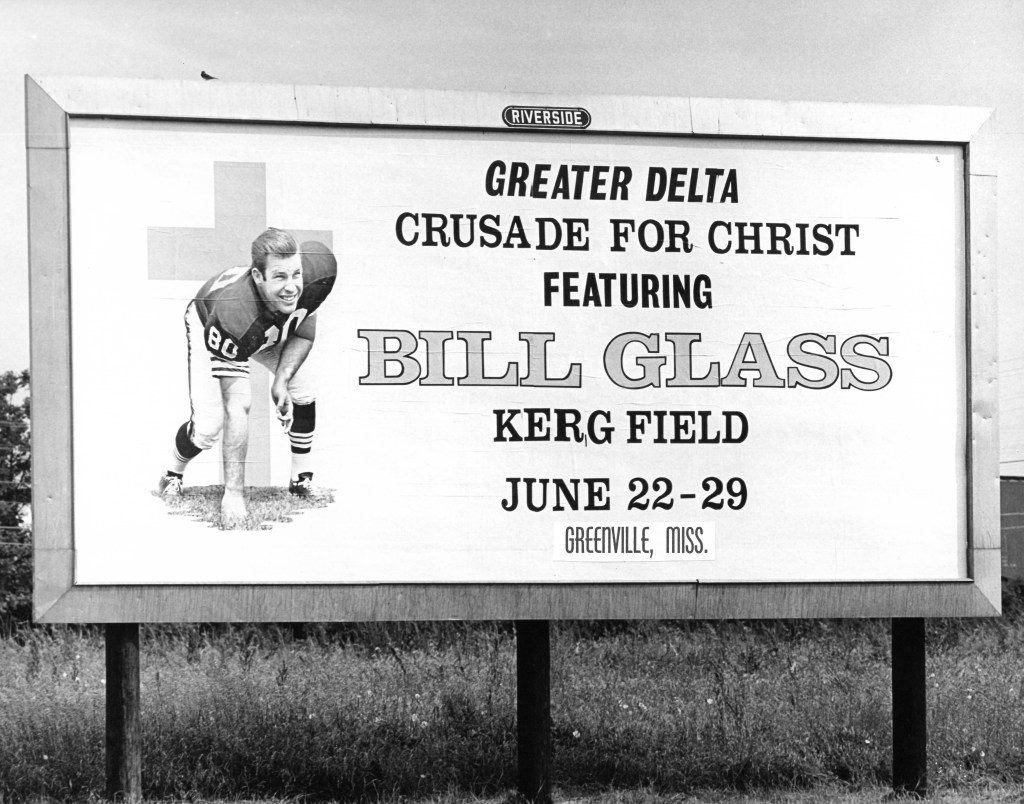
Glass helped to develop initiatives that Christians in sports take for granted today: team Bible studies, pre-game chapel services, spiritual autobiographies of athletes, and more. His papers at Wheaton were a treasure trove of insight into the networks, ideas, and behind-the-scenes workings of sports ministry leaders as they shaped the Christian athlete movement in the 1960s and 1970s.
In addition, one of the aims of my project was to show how different Christian communities made sense of sports from an intellectual and cultural perspective. I benefited from several collections that showed how evangelical leaders and organizations outside the Christian athlete movement thought about sports. The papers of L. Nelson Bell, a Presbyterian leader and Billy Graham’s father-in-law, was one example of this.
The history of sports in America is often documented by mass-media sources like sports magazines, newspapers, and broadcasts. In your research, did you navigate or interpret these sources differently than those from institutional archives?
Absolutely. Whenever you’re interpreting a source, you need to think carefully about its intended audience. Mass media sources can tell you a lot about the public message that the authors want to convey, but that message might not correspond with reality. Or it might be a message that is presented as if everyone within an organization or movement is on board, while in reality the consensus is not so smooth.
In my book, I really wanted to be able to understand sources of internal conflict and tension within sports ministry networks and organizations. At points of disagreement, why did they choose to go one way over the other? What ideas about being a Christian athlete were promoted, and what ideas were set aside and why? You need institutional archives and personal papers to understand those dynamics.
A good example of this came from the Bill Glass papers. In the early 1970s, the Fellowship of Christian Athletes began to write about controversial topics within their official magazine. They took on issues like violence, drug use, greed, and unhealthy competition, and published pieces seeking to encourage deeper Christian thought and reflection.
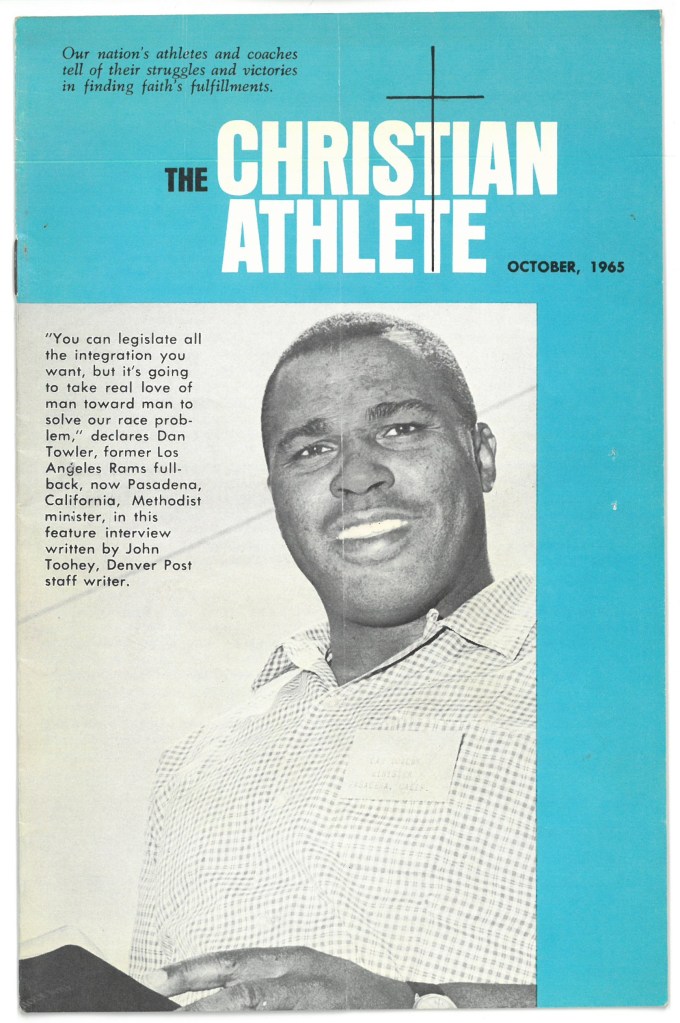
Behind the scenes, however, many sports ministry leaders did not feel comfortable with the magazine’s new direction. They wanted it to focus more on inspiration and positive encouragement. I found letters from Bill Glass where he represents this view, expressing his frustration with the direction of FCA’s magazine and seeking a return to the magazine’s old mission.
Those letters helped me better understand the competing visions at play among leaders who wanted to shape the direction of the Christian athlete movement. If we only looked at sources published for a public audience, we would not be able to understand the behind-the-scenes forces that shape what the public sees.
Do you have a favorite collection or item from Archives & Special Collections? Or one that has yielded unexpected treasures?
The source I just mentioned from Bill Glass stands out. It provided the foundation for a key section in my book, and helped me understand some of the internal debates within sports ministries over what to prioritize and how to engage with challenging social issues.
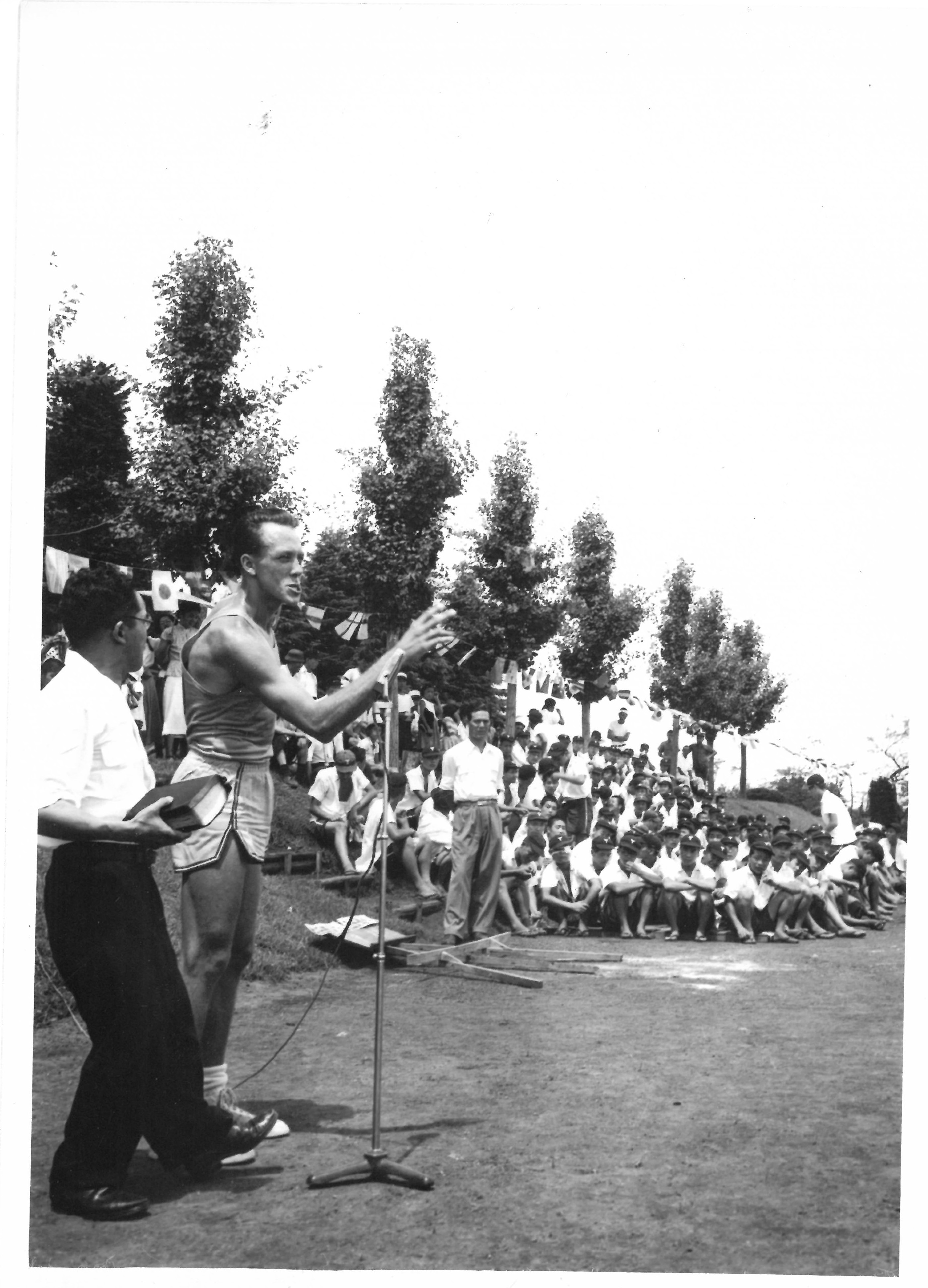
Another source that stands out is a letter located in the papers of Sports Ambassadors, the first global sports evangelism organization. Sports Ambassadors got its start in 1952 when it sent a team of Christian basketball players (primarily from Taylor University) to Taiwan where they competed against local competition and preached the gospel.
Sports Ambassadors expanded its work over the years, adding more sports on its traveling missionary teams. But basketball remained central, with a Wheaton graduate named Bud Schaeffer playing an especially important role.
In the 1970s, Sports Ambassadors caught the attention of Hellen Dodd, the daughter of basketball’s inventor, James Naismith. Naismith originally created basketball in 1891 out of a desire to “win men for the master through the gym.” Dodd saw in Sports Ambassadors a continuation of her father’s Christian vision, and in her letter she told Sports Ambassadors that her father “would be so pleased” with their work.
Because my book project was focused on big-time sports in America, I didn’t end up using much material related to Sports Ambassadors. But as someone who loves basketball, seeing that letter was a meaningful moment, and a reminder of the ongoing ways that Christians have influenced sports culture as a whole.
What project(s) are you currently working on?
Interestingly, that letter from Hellen Dodd helped to inspire my current project. I’m writing a book about the Christian history and meaning of basketball, from its origins with James Naismith to the present. It is under contract with Eerdmans, and will hopefully come out sometime in 2027.
Paul Putz (PhD, Baylor University) is Director of the Faith & Sports Institute and Program Director for the M.A. in Theology and Sports Studies at Truett Seminary. His first book, The Spirit of the Game: American Christianity and Big‑Time Sports, was published by Oxford University Press in 2024.

