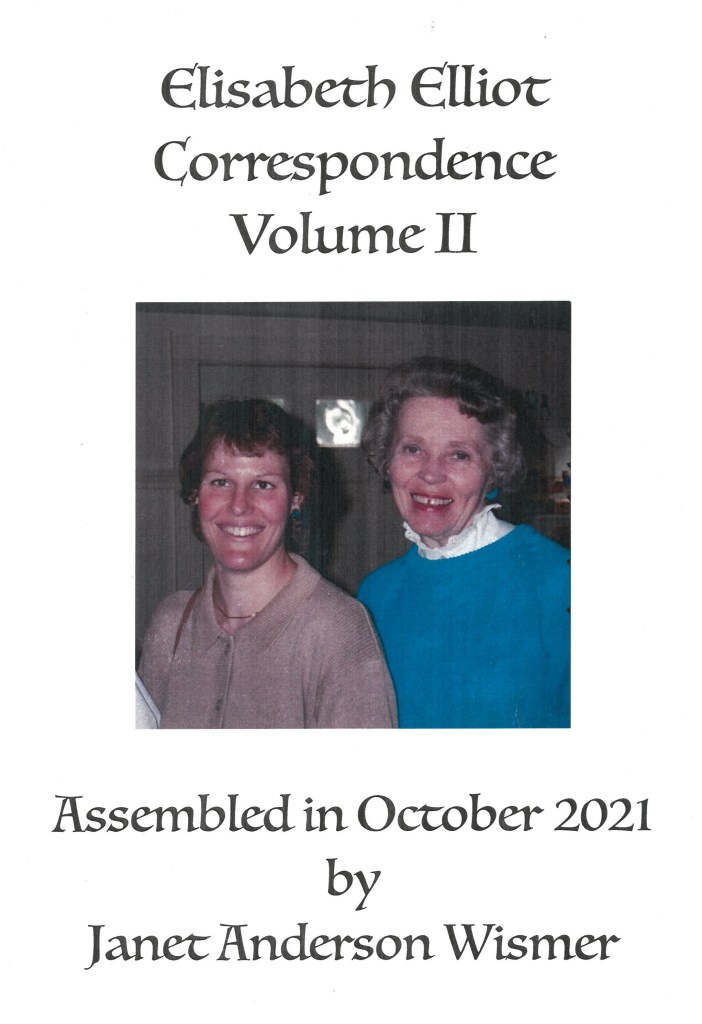
One of the most interesting recent additions to Wheaton Archives & Special Collections arrived in 2021 when Janet Wismer gave the Archives a notebook that consisted of a quarter-century of letters, cards, photos, and a variety of ephemera. All were artifacts of her abiding friendship with missionary, author, and teacher Elisabeth Elliot.
Elliot had been a Plymouth Brethren missionary to Ecuador when her husband Jim and four other missionaries were killed by warriors of the Waorani people, a tribe they had hoped to tell about Jesus. Elisabeth wrote an enormously popular book about this, Through Gates of Splendor. Then she and Rachel Saint, sister of another one of the men who was killed, went to live among the Waorani at the tribal people’s invitation. The two began the work of Bible translation and evangelism, alongside the Waorani woman Dayuma, a Christian convert. The whole story has been told most recently and completely in Dr. Kathryn Long’s book, God in the Rainforest: A Tale of Martyrdom and Redemption in Amazonian Ecuador.
Elisabeth returned to the United States with her daughter Valerie in 1961 and began a second career as writer and speaker, along with some teaching, on topics growing out of her Christian faith, such as the missionary enterprise, spiritual discipline, the meaning of suffering, the Biblical view of male/female relations, marriage, and childrearing. She became a very popular Evangelical author, publishing 24 books during her lifetime, including a biography of Jim Elliot, The Shadow of the Almighty (1958), and her own story of living with the Waorani in The Savage My Kinsman (1961). Later popular titles included Let Me Be a Woman (1976), Passion and Purity (1984), and A Path through Suffering (1990). Her only work of fiction was the novel No Graven Image (1966).
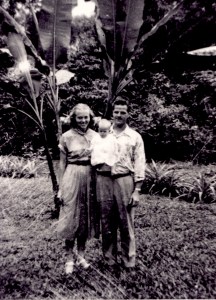
In 1979, Elliot received a note of appreciation from one of her readers, Janet Anderson (later Janet Wismer). This began a correspondence that continued almost to the end of Elliot’s life. They discussed deep topics relating to God and life, their marriages, their children and grandchildren and the other things friends might share. Wismer was the originator of the idea that Elliot should do a daily radio talk on topics relating to living a Christian life. She persuaded Elisabeth to do it and arranged for the Back to the Bible ministry to air it starting in 1988 as the Gateway to Joy (GTJ) program. Wismer served as the first producer and announcer and remained involved throughout the life of the program, which ended in 2001.
In 2018, Mrs. Wismer gave Wheaton Archives & Special Collections numerous transcripts from the program, as well as some of Elliot’s correspondence with her and other miscellaneous items, which were processed into Collection 719: Janet Wismer Papers. (There is also a set of audio files of GTJ in Collection 278.) Then in 2021, Mrs. Wismer sent us the notebook, which is a much more complete documentation of the two friend’s decades-long rapport. Well, half of their rapport. Almost everything in the notebook is by Elliot, with a couple of items by her husband Lars Gren. The only items by Wismer are one letter and the direct and indirect quotes Elliot sometimes includes in her letters.
The notebook, which is now fully processed and available to researchers in Box 3 of Collection 719, shows Elliot at work and at home, with many sharp insights into others and herself. She did not hesitate to tell Wismer how, as announcer for the program, she should present herself and how to end the program. “Would you say that to Don after Sunday School?… Maybe you would, but I am sure you would not say it quite the way you say it on the tape. It is an evangelicalism, alas.”
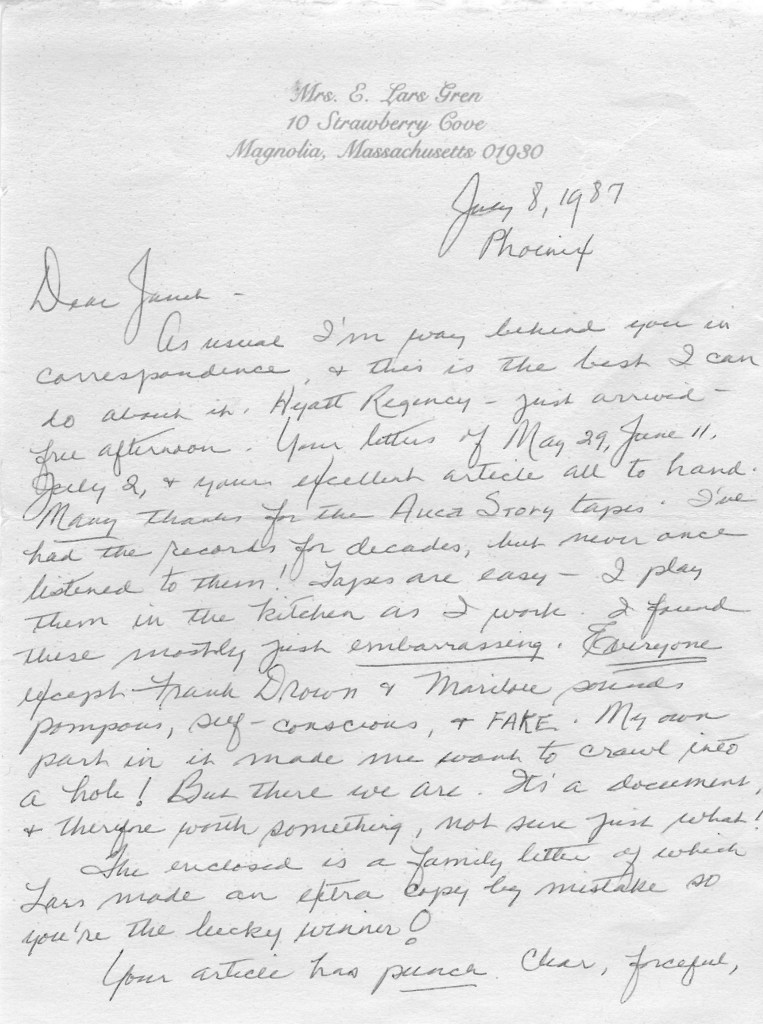
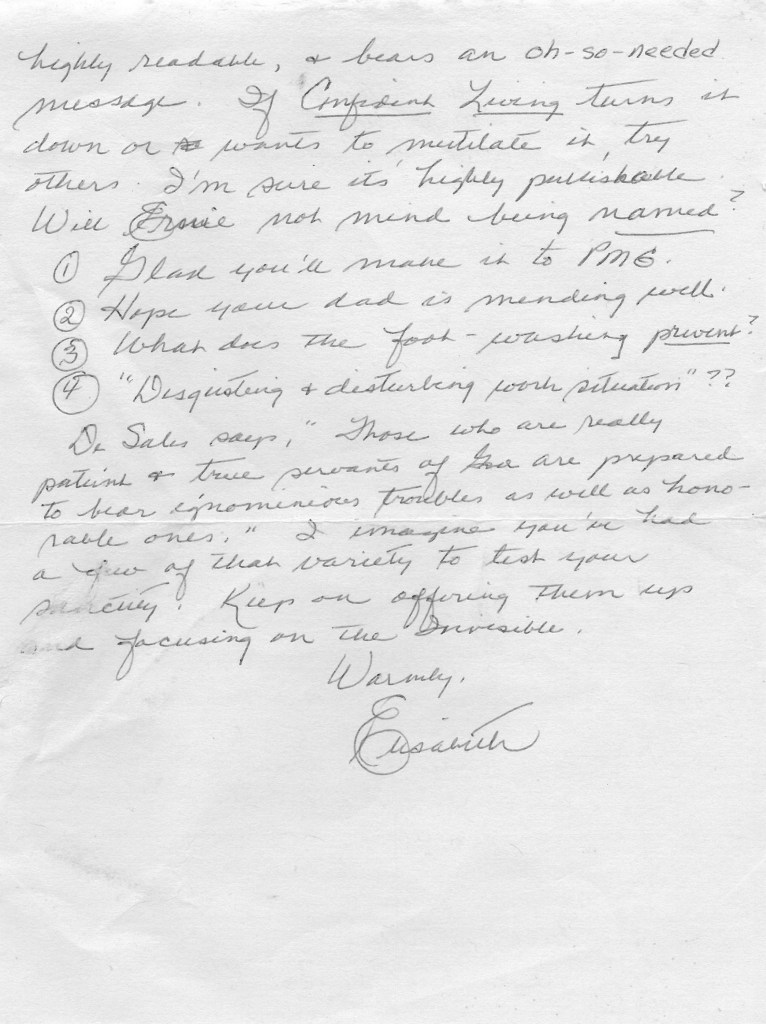
Elisabeth could also be quite harsh about herself. In another letter, she talked about the tapes Wismer had sent her about the effort to reach the Waorani people called The Auca Story. ”I play them in the kitchen as I work. I found them mostly just embarrassing. Everyone except Frank Drown + Marilou [Saint] sounds pompous, self-conscious, + FAKE. My own part in it made me want to crawl into a hole! But there we are. It is a document and therefore worth something, not sure just what!”
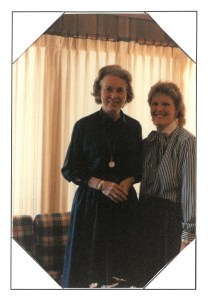
The letters also include reflections on family life, “This is what impresses me about watching my grandchildren—the breathtaking speed with which they change… And so your children will grow, faster than you can believe, and I thank God you’re home with them, for it’s a very few years you have them in which to shape their lives.” And then there were her observations of nature, such as this New England storm, “Last week’s storm—AWESOME thrilling, loud, destructive, beautiful. Lost some big bites below our cliff, but others suffered terrible damage. Sections of our ocean-front route when [sic] we walk were completely demolished, along with seawalls which had stood for 100 years. Blacktop was ripped out and flung way up on people’s lawns. Steel guard rails yanked out, twisted and catapulted 50 yards from the sea. And rocks? You wouldn’t believe the size of ricks tossed up like ping pong balls.” And always some kind of loving closing to a letter or note, such as, “Much love and appreciation of what you have done for me, dear Jan—I think of my reason for being on the air—you and God! And what riches have come to me because of those listeners out there!”
Mrs. Wismer summed up the contents of this notebook (and of Elisabeth Elliot’s ministry and life) in the letter with which accompanied the notebook to the Archives: “Without question, Elisabeth Elliot’s central message, articulated so brilliantly in person and in print, called us to step heavenward in this manner: give to receive, lose to find, die to live.”
To explore the collection, review the finding aid at Collection 719: Janet Wismer Papers. Browse further content from Elisabeth Elliot on past From the Vault posts, the digital exhibit To Carry the Light Farther, or the collection guides for CN 278: Papers of Elisabeth Elliot and CN 277: Ephemera of Jim Elliot.
 From the Vault