The Zamzam Sails Again

On March 19, 2025, the Evangelism Missions Archives received a wonderful item for its Zamzam collection (Collection 624): A 58-page typescript with handwritten notes of a diary kept by one of the ship’s passengers, along with a photo.
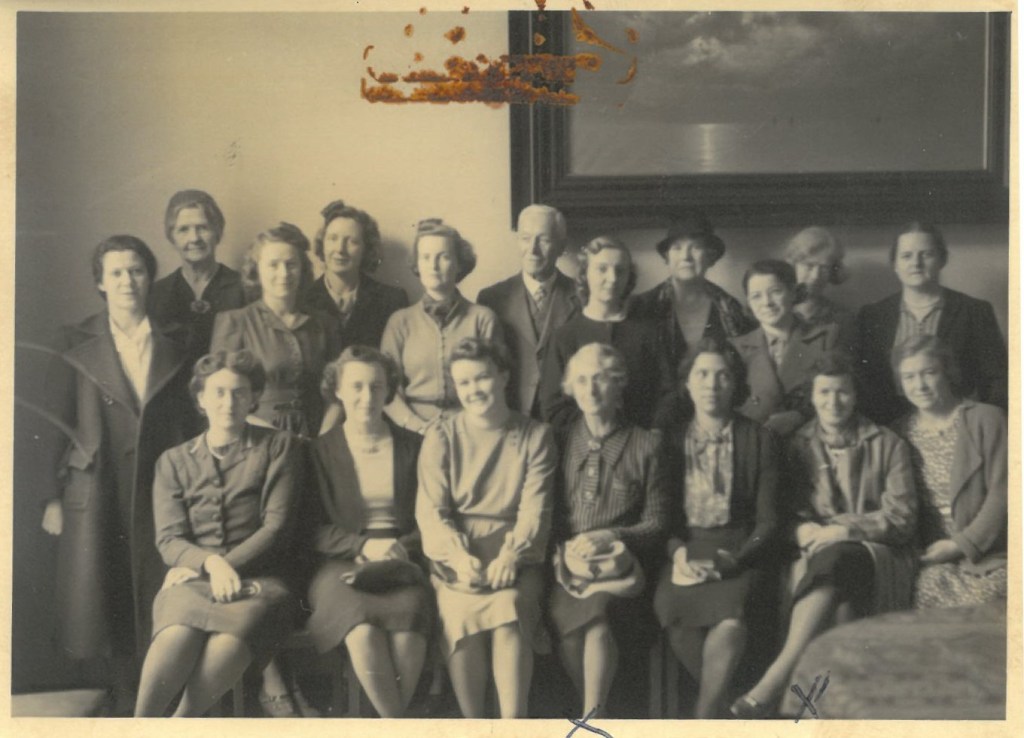
Photo included with the transcript. The back reads, “Released internees (Shipwrecked), S. S. Zam zam [sic], S. S. Port Brisbane.” The only man in the picture, in the back row, is Dr. Dudley Wright. Perhaps the older woman, sitting down slightly to his left, is Ethel Wright. The Port of Brisbane was torpedoed near Australia in November 1940.

The Zamzam was an Egyptian vessel which had been chartered in early 1941 to take passengers to Africa, including over 100 missionaries. Travel was dangerous, of course, because war had broken out between Germany, Great Britain, and France and was being waged on land and sea. As a civilian vessel under a neutral flag, it should have been exempt from attack. However, the German commerce raider Atlantis mistook it for a troop transport and started shelling the ship on April 17, 1941. The captain of the Zamzam used a flashlight to frantically signal the German ship that the Zamzam was a noncombatant vessel with women and children aboard and the German stopped the attack, but the damage was done. The Zamzam was sunk. However, all the passengers and crew were pulled out of the sea by the Germans. They were transferred to a German supply ship and taken to Nazi-occupied Europe. America was not yet in the war, so American citizens were repatriated back home. But all British citizens, as well as members of the British Empire such as Canadians, were sent to German internment camps where many stayed until the end of the war in 1945. For about one day, the sinking of the Zamzam was big news in American and British newspapers, until it was known that all passengers and crew had been plucked from the waters.

Continue reading
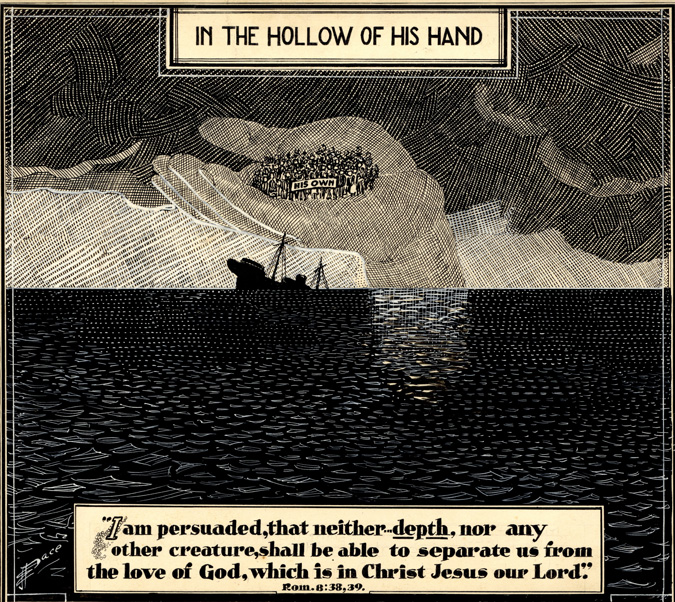
The Rainbow in the Storm: The Final Voyage of the Zamzam

Cartoon by E. J. Pace celebrating the survivors of the Zamzam sinking. This image appeared on the front page of The Sunday School Times on August 16, 1941. From Collection 624, OS9.

For a brief moment in 1941, the attention of the Western world was transfixed by the unknown fate of the Zamzam, an aging cargo and passenger ship en route from the United States to Cape Town, South Africa. Built in 1909 as a British luxury liner and christened Leicestershire, the vessel was requisitioned to carry British troops during World War I. In peacetime, the steamer was purchased by an Egyptian company and renamed in honor of the Zamzam Well in Mecca, a holy site for Muslim pilgrims. Over the next decade, the Zamzam served primarily as a passenger ship ferrying pilgrims to the holy city of Mecca, but by 1940, its owners broadened services to transatlantic travelers and cargo. On March 20, 1941, the Zamzam sailed from Hoboken, New Jersey for Alexandria, Egypt, with planned stops at Baltimore, Trinidad, Recife, Cape Town, and Mombasa. Between passengers and crew, the Zamzam featured a truly international cast of characters—the Scottish captain and chief engineer, Greek stewards, Egyptian and Sudanese crew, and passengers from around the globe. The Zamzam’s passenger list featured 202 names, including twenty-four members of the British-American Ambulance Corps, traveling to North Africa to serve as noncombatants with the Allied forces. But the largest passenger contingent by far was American and British missionaries bound for Africa. Over 140 Christian workers, including 17 Roman Catholics and members of twenty-one Protestant denominational and independent faith missions, boarded the Zamzam, eager to begin Christian service across the African continent. But the aging steamer never reached its home port in Alexandria. In the early hours of April 17, 1941, the unarmed civilian vessel was shelled and sunk by the German surface raider, Atlantis, off the coast of southwestern Africa. This April, the Archives highlights the voices of missionaries who survived the final voyage of the Zamzam, a straightforward transatlantic crossing turned international event, eighty years ago this month.  

Continue reading