A Centennial Crusade

In September 1959, Wheaton, Illinois, made history as “the smallest city ever to conduct a crusade,” when it welcomed evangelist Billy Graham back to his alma mater, Wheaton College.
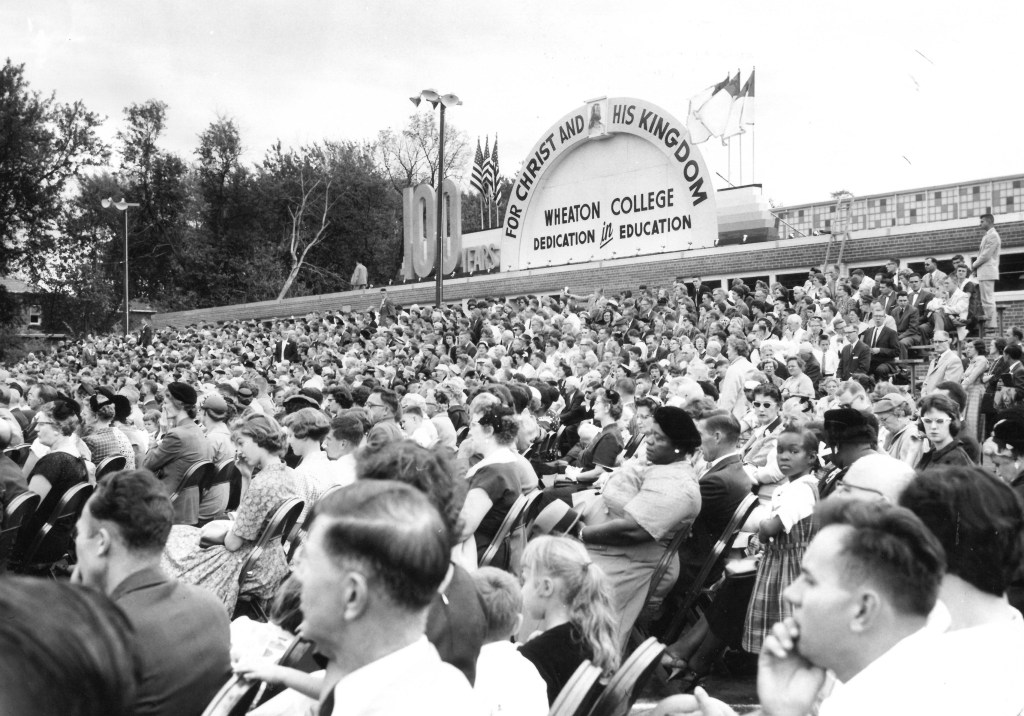
The crowd at one of the outdoor crusade meetings, Wheaton College’s Centennial motto “Dedication in Education” in background. College Archive Photograph #B06313.
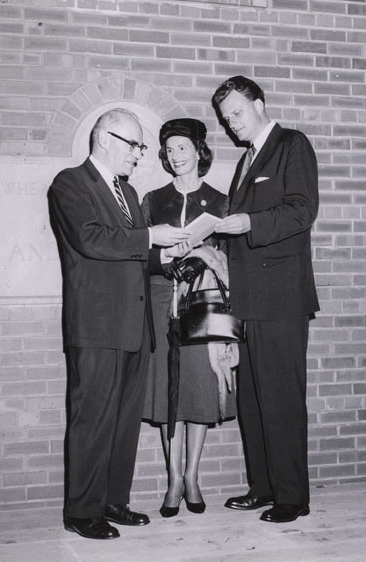
V. Raymond Edman with Ruth and Billy Graham in front of Memorial Student Center, 1959. CN 74, OS 13: 1959 Crusade Scrapbook.

To commemorate the 65th anniversary of the Wheaton crusade, Wheaton Archives & Special Collections features below recordings, photographs, and documents from this historic event.

Originally, Wheaton’s president, V. Raymond Edman, had invited Graham to lead the College’s annual fall evangelism meetings as part of its centennial year celebrations. However, at Graham’s suggestion, the scope of the event quickly expanded to a weeklong crusade that extended far beyond the campus, reaching into the surrounding suburbs and Chicago. The following letter from Billy Graham to Wheaton Chaplain Evan Welsh, held in the College’s Centennial Committee Records, outlines Graham’s growing vision for the meetings:

Continue reading
Wheaton Goes to the Olympics!

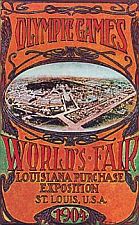
Advertisement for the 1904 Olympics
Poster for the 1904 Summer Olympics in St. Louis, Smithsonian Image Collection.

As the 2024 Summer Olympic Games are set to open this July in Paris, France, Wheaton Archives & Special Collections looks back to the 1904 Olympics held in St. Louis, Missouri, where Wheaton College sent seven student-athletes to compete for the collegiate basketball championship.

Originally planned for Chicago, the 1904 Olympics were moved to St. Louis and combined with the Louisiana Purchase Exposition after extensive political negotiations from the World’s Fair organizers. Among 38 athletic contests, including wrestling, tug-of-war, track, and croquet, St. Louis marked the first time the new sport of “basket ball” appeared in the Olympics. Held as a demonstration sport, four levels of competition were offered, with Wheaton College participating in the College-level against two teams – Hiram College of Ohio and Latter-Day Saints University of Salt Lake City.

Continue reading

Faith, Memory, and Archives: An Interview with Devin Manuzullo-Thomas

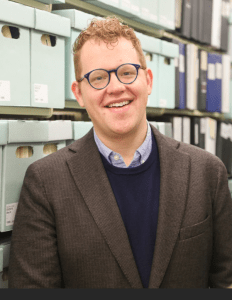
Last September, Wheaton Archives & Special Collections hosted Dr. Devin Manzullo-Thomas for the annual Archival Research Lecture, where he presented “Exhibiting Evangelicalism: Exploring the History of Christian Museums in the United States.” This month, we feature an interview with Dr. Manzullo-Thomas, delving into his archival exploration of how evangelical communities engage with and commemorate their histories.

When and how were you first introduced to Archives & Special Collections?

I first visited the Archives and Special Collections at Wheaton in 2013 or 2014, to conduct research related to my denomination, the Brethren in Christ Church. (Several Brethren in Christ leaders are either alumni of Wheaton College or are otherwise represented in Archives & Special Collections materials.) While there, I also visited the Billy Graham Museum on the first floor of Billy Graham Hall, and my interest was piqued. Because of my training as an archivist/public historian and my scholarly work on the history of my own denomination, I’ve long been interested in how religious communities present their history in museums and historic sites. I started wondering: “How have other evangelical groups and institutions represented the past in public spaces?”

Continue reading

Tracing Wheaton’s First Black Students Through the Archives

February is national Black History Month, and in celebration the Wheaton Archives & Special Collections offers a glimpse into the lives of Wheaton College’s first African American students: Mary Barker, Edward Sellers, and William Osborne. To trace these stories, archivists delved into the institutional records held in the College Archives and other sources to explore and uncover the unique voices and experiences of these pioneering students.

How did Mary Barker, Edward Sellers, and William Osborne pursue higher education at Wheaton College at a time when even few middle-class, white Americans could boast about holding a college degree? What challenges and obstacles did these individuals encounter on their educational journey? After completing their studies at Wheaton College, where did their paths lead, and what professional endeavors did they pursue?

Continue reading

Humble Beginnings

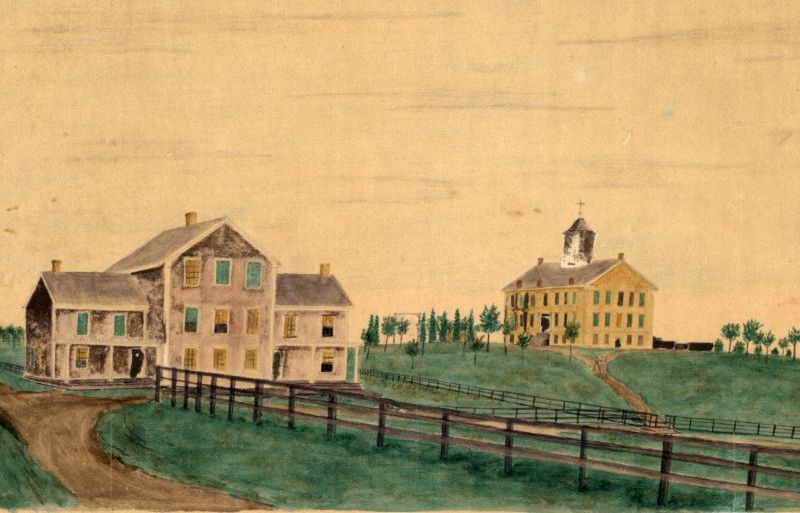
While December signifies the year’s end, this last month also marks a significant point of beginning for the stories of the fledging Illinois Institute of 1853 and the emerging Wheaton College of 1860.

On December 14, 1853, one-hundred and seventy years ago, the first classes of the Illinois Institute were held in the basement of a incomplete stone building atop a hill in Section 16, Township 39, DuPage County. Only a small town on the Illinois prairie in the close of 1853, the location in the new Milton Township offered the advantage of legislation common to many Midwest townships that enabled the special use of land in section 16 for schools.

Sketch of ‘Main and White House,’ c. 1863. College Archives Photograph #CA-B14012
Continue reading

Pages of Wonder: A Journey Through the William S. Akin Rare Book Collection

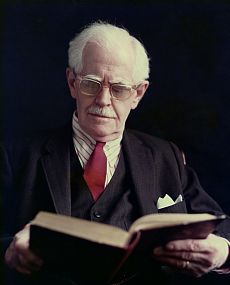
William S. Akin
William Akin (SC-01, Folder 2-91).

In this day of technology, AI, and rapid information growth many decry the extinction of the printed book. But when someone handles a fine rare book, one does not easily look to its demise. Books are wonders. They are thoughts distributed to the world. They are invitations to new possibilities and new horizons.

Wheaton Archives & Special Collections has many wondrous examples of the power of the book – as presenter of ideas and as art. Special Collections’ foundational rare book collection, SC-01, was a gift from collector William Sanford Akin. The collection numbers over 2,000 monographs, with a special emphasis on British literature, including James Boswell, Samuel Johnson, Lewis Carroll, and John Bunyan.

Continue reading

From Pantomimes to Parliamentary Procedure: Remembering the Wheaton College Literary Societies

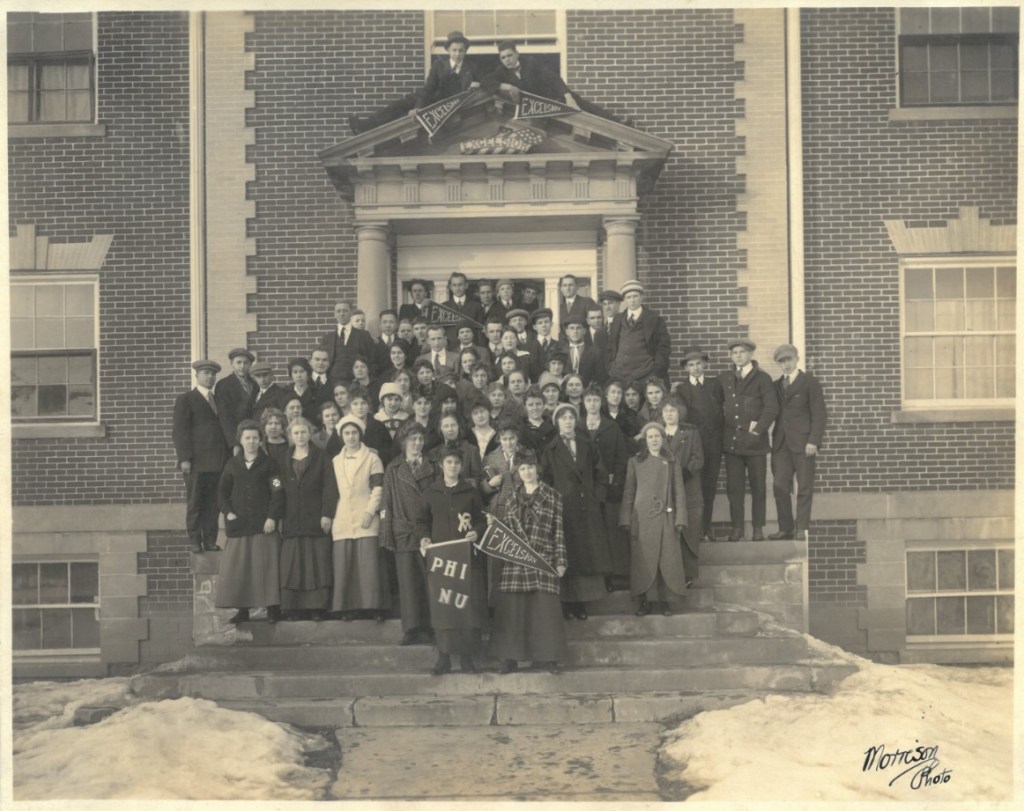
In his history of the Wheaton College literary societies, former Wheaton College communications professor, Edwin Hollatz, aptly stated that “the development of the American college is a story that can hardly be told without some consideration of Literary Societies” (Wheaton Alumni Magazine, September 1967). These student-led organizations, which thrived at Wheaton College from the mid-nineteenth century until World War II, played a pivotal role in shaping the college life and education of Wheaton students.

Members of the Celts (Excelsior) and Phils (Philalethian), brother-sister societies, 1914. (College Archives Photograph B06142)
Continue reading

“From force of habit”: The Chicago, Aurora and Elgin

For nearly sixty years the primary means of transportation for Wheaton College staff, students or anybody traveling from the Fox River Valley into the concrete canyons of the Windy City was the Chicago, Aurora and Elgin railway. Established in 1902, the locomotive, called “The Roarin’ Elgin,” conveyed passengers and freight between Chicago, Geneva, Batavia, Aurora, Elgin and St. Charles. Because evening trains headed westward from Chicago into the setting sun, it was also romantically (but unofficially) nicknamed the “Sunset Lines.”

Continue reading

Memories of a College Life

Each class of Wheaton College brings new traditions, experiences, and stories to the long history of the campus. One of the ways the College Archives seeks to preserve these transitory memories is by collecting student scrapbooks. With their rich ephemera of college life – jokes, notes, invitations, photographs, and other mementos – student scrapbooks offer a glimpse into a strange yet familiar past. While clothing has changed, new buildings have appeared, and student groups have come and gone, these scrapbooks document the continued vibrancy and experimentation of a liberal arts college education. Here are the snapshots of jaunts off-campus, the portraits of new friends, the paper remains of events (official and unofficial), and the scraps from the programs and clubs that come to define many students’ college experience.

Continue reading

Research by Proxy: In the Manuscripts Reading Room with Chelsey Geisz

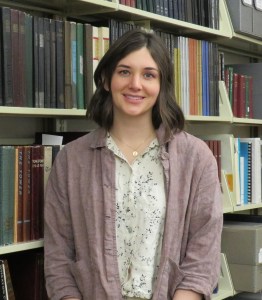
While Wheaton Archives & Special Collections continually adds new digital content to our online archival photograph database and oral history interview collections, most of the thousands of pages of records in our collections can only be accessed in the Manuscripts Reading Room. We frequently receive inquiries from researchers who are unable to travel to use the collections, and so keep a list of local researchers who provide research and scanning services to distance patrons as “proxy researchers.” This week, we sat down with Chelsey Geisz for a behind-the-scenes look at proxy research in the Archives.

Chelsey Geisz is in her final semester of Wheaton College Graduate School’s MA in Systematic Theology. For the last year and a half, she has also served as a proxy researcher and a research assistant for a major College history project. Because of her work as a research assistant, she has the dubious distinction of likely being the only person alive who has read every Wheaton student publication from 1860-2000!

Continue reading