Shakespeare on Display

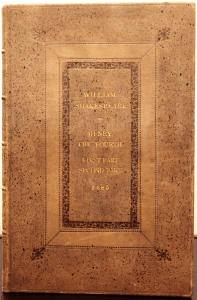
One of the jewels of the E. Beatrice Batson Shakespeare Collection is a copy of Henry the Fourth, taken from the fourth folio edition of Mr. William Shakespear’s Comedies, Histories, and Tragedies (1685). The play was donated to the College in honor of Dr. Batson’s retirement from the English Department in 1990. In celebration of the fourth folio turning an impressive 340 this year, Wheaton Archives & Special Collections revisits a 2015 feature from former Wheaton Library Metadata Associate, Brittany Adams, on the history and unique textual features of Wheaton’s “Henry.” The folio will be on display throughout the 2025 fall semester in the Wheaton College Library.

Continue reading

Pages of Wonder: A Journey Through the William S. Akin Rare Book Collection

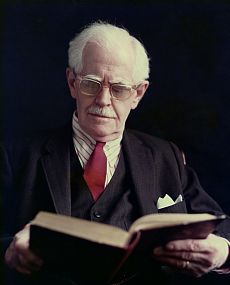
William S. Akin
William Akin (SC-01, Folder 2-91).

In this day of technology, AI, and rapid information growth many decry the extinction of the printed book. But when someone handles a fine rare book, one does not easily look to its demise. Books are wonders. They are thoughts distributed to the world. They are invitations to new possibilities and new horizons.

Wheaton Archives & Special Collections has many wondrous examples of the power of the book – as presenter of ideas and as art. Special Collections’ foundational rare book collection, SC-01, was a gift from collector William Sanford Akin. The collection numbers over 2,000 monographs, with a special emphasis on British literature, including James Boswell, Samuel Johnson, Lewis Carroll, and John Bunyan.

Continue reading

Marginalia in the Archives

Wheaton Archives & Special Collections holds a wide variety of rare book collections, including more than 200 editions of John Bunyan’s Pilgrim’s Progress, many early texts by and about influential theologians and ministers like John Wesley and Jonathan Edwards, and hundreds of other manuscripts on Christian life, missions, art, and history. A few of these books also include inscriptions and marginalia – the scribbles, notes, and other markings made on the cover pages or in the margins of texts. These extra-textual materials often provide unique insights into the history of a book, as well as its impact.

Continue reading

“The Letter Kills but the Spirit Gives Life”: Julia E. Smith’s Bible Translation

From the first century onward, the form and text of the Bible has been a source of near-endless debate, review, reinvention, and artistry. Available in thousands of different translations, editions, and compilations, it is a text that is at once universal and individual.

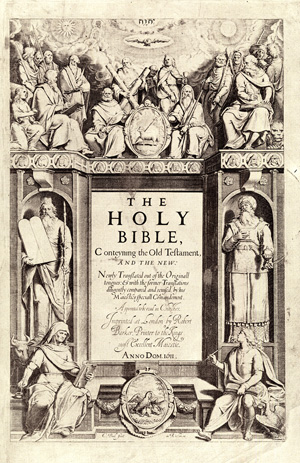
Title page for a King James translation, 1613. (SC-10)

Wheaton Archives & Special Collections holds more than five hundred whole or partial Bible monographs. Each of these instances carry forward the spirit of their common text and yet remain unique, with their own voices and particularities. Some of this variety comes from the different language translations available in the Archives (ranging from Hawaiian to Sanskrit), but remarkable diversity can also be found within the English translations alone.

The archive’s shelves include multiple printings, editions, and facsimiles of famous English translations, such as the Wycliffe Bible (1388), the Coverdale Bible (1535), and the King James version (1613), as well more modern classics, like the New International Version (1984) and the Living Bible (1971), among many others.   

Continue reading