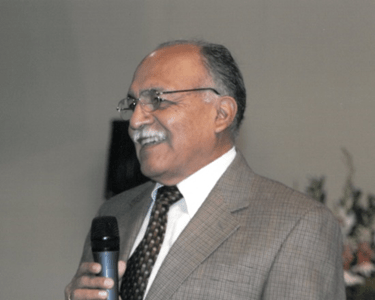
Dr. Samuel Escobar, undated. From Accession 2024-0023, Box 6.
The Wheaton Archives & Special Collections is pleased to announce the recent acquisition of a significant research collection documenting the life and ministry of Peruvian missiologist and theologian Dr. Samuel Escobar. Spanning more than five decades of Dr. Escobar’s life and ministry, the papers are a valuable addition to the Evangelism & Missions Archives and will significantly expand our collections representing the Global South, especially voices from Latin America.
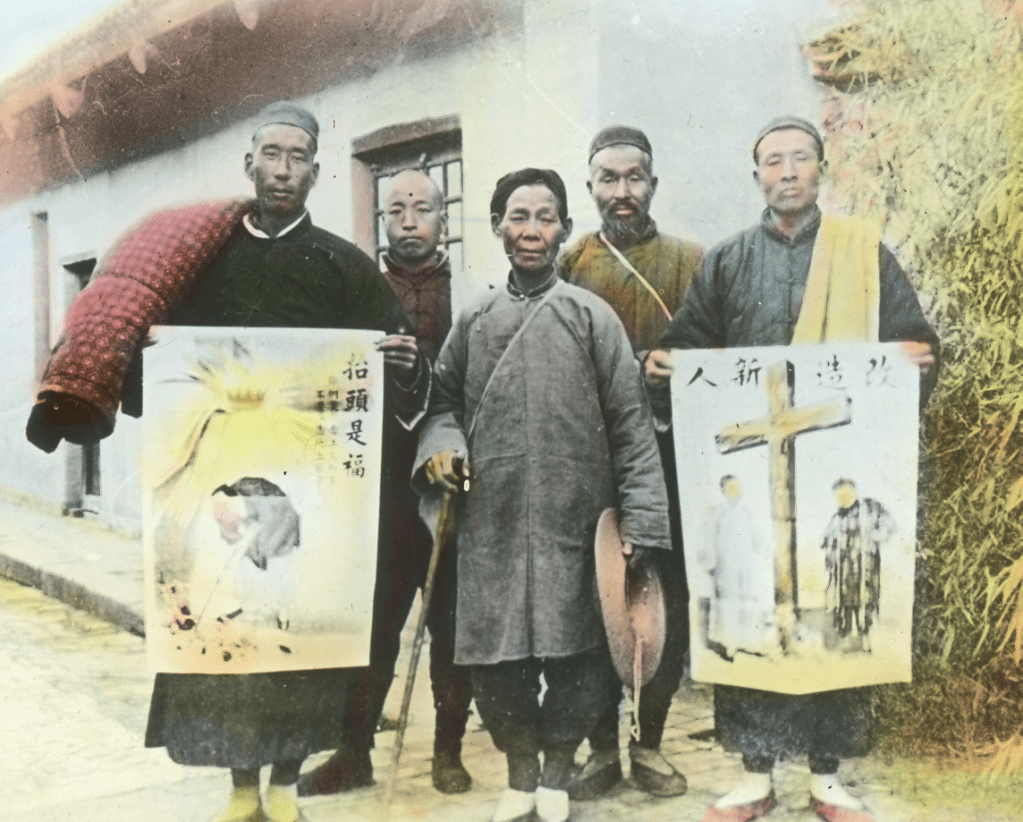
In the early 1920s, the first commercial four-color offset lithograph machines came to China. While Chinese Christian posters, tracts, and books had circulated from various presses for a century, these machines allowed for quick, inexpensive, and large-scale print production. Christian mission organizations like the Religious Tract Society and Christian Witness Press quickly capitalized on the new technology. In 1929 alone, the Religious Tract Society printed 150,000 posters in China. Joining and in some ways anticipating China’s vibrant political and commercial print culture, these colorful posters became a prevalent tool for Christian evangelization in China through the 1930s and 1940s.
Chinese Christians, possibly an itinerate preaching band, with evangelism posters, ca. 1930-1940. Collection 215, Lantern Slide Box 11.
Logo for International Congress of World Evangelization (ICOWE), Lausanne, 1974. Printed on Congress program.
In July 1974, 2,500 leaders from 150 countries gathered in Lausanne, Switzerland, for the International Congress on World Evangelization, better known as the Lausanne Congress. Over the course of ten days, evangelical leaders from around the world spoke in plenary sessions and workshops to consider the project of world evangelization in the modern era. An immediate outcome of the congress was the Lausanne Covenant, a statement of Christian belief and lifestyle that became a touchstone for many evangelicals around the globe.
To celebrate the 50th anniversary of the Lausanne Movement’s founding Congress, Wheaton Archives & Special Collections features highlights from Collection 46: Records of the Lausanne Movement, as well as our oral history collections with Lausanne leaders and participants.
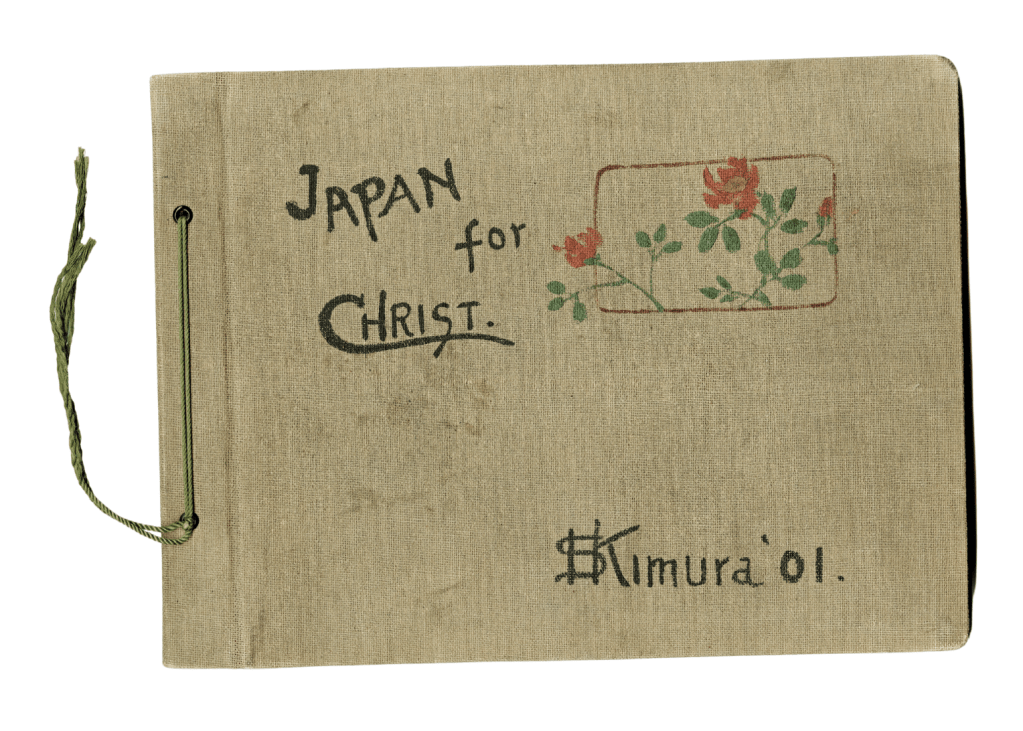
Kimura Kiyomatsu (木村 清松), known in the United States as Henry Seimatsu Kimura, was born in 1874 to a family of sake brewers in Gosen City, Niigata Prefecture. At seventeen Kimura was baptized during an evangelistic service held by Teiichi Hori in Niigata. His conversion to Christianity led to conflict within his family, especially with his father, who disowned him; although both his parents and his two brothers eventually became Christians.
Wheaton Archives & Special Collections is pleased to announce that writer Lucy S. R. Austen will be our speaker for the annual Fall Archival Research Lecture! In anticipation of her upcoming visit, this month we feature a conversation with Lucy about her time researching for Elisabeth Elliot: A Life, her biography of missionary, speaker, and public evangelical Elisabeth Elliot, published by Crossway last June.
When and how were you first introduced to Archives & Special Collections?
I actually discovered the Archives & Special Collections through a Google search! In 2009, I was working on a mini-biography of missionary and author Elisabeth Elliot for a high-school English textbook featuring American Christian writers, and when I went looking for critical biographies of Elliot to learn more about her life, I was startled to discover that there were no full-length biographies of her in existence. Essentially the only published information about her life dealt with a small portion of the decade she spent in Ecuador as a young woman, working to reduce unwritten languages to writing for the purposes of Bible translation. In the process of digging around for any source material I could lay my hands on, I discovered the webpage for Elliot’s papers at Wheaton. I wasn’t able to visit the Archives at that time, but I relied on the biographical information and the list of “Exceptional Items” from the page for her papers, along with other sources, as I completed my project.
March is Women’s History Month! In celebration, the Wheaton Archives & Special Collections spotlights the stories, voices, and legacies of women who blazed trails as medical workers, linguists, preachers, evangelists, educators, CEOs, and more found in our collections. Today, we highlight missionary Joy Ridderhof (1903-1984), founder and director of Gospel Recordings, whose pioneering work in portable sound recording captured thousands of indigenous languages in remote corners of the globe. Today, these Gospel Recordings represent the preservation of oral cultures around the world and contain high research value for historians, missiologists, linguists, and anthropologists studying these cultures.
Joy Ridderhof’s story has been told in biographies like Phyllis Thompson’s Count It All Joy, and institutional histories of Gospel Recordings, like Faith by Hearing, but many of Ridderhof’s personal papers remain untouched in the archives’ holdings, and many of the documents and images featured here are located in unprocessed portions of the Gospel Recordings Records.
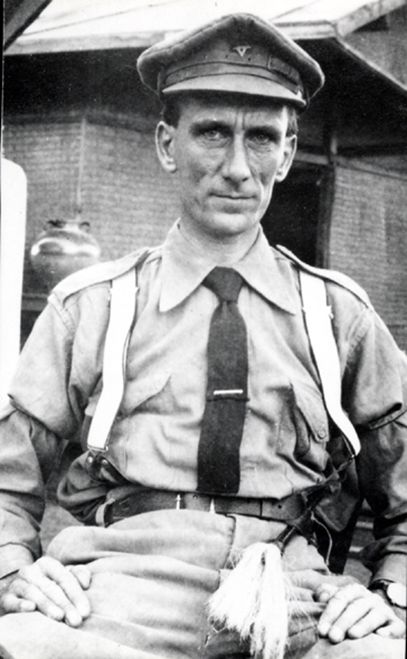
This year marks the 150th anniversary of Oswald Chambers’ birth on July 24, 1874, in Aberdeen, Scotland. Chambers’ best known work, My Utmost for His Highest, has remained in print since its first publication in Britain in 1927. The daily devotional has been translated into over forty languages and ranks in the top ten of religious bestsellers in the United States, with millions of copies sold since the first American edition was published in 1935.
Once again at the start of the new year we pause to reflect on the acquisition and processing of the previous year. “New Collections” are those materials which have been fully processed, arranged, described, conserved and made available to users. “New Accessions” are materials we received and which will eventually be processed into collections.
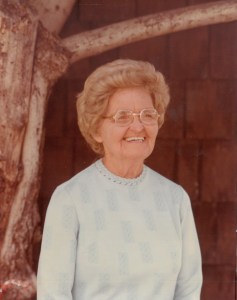
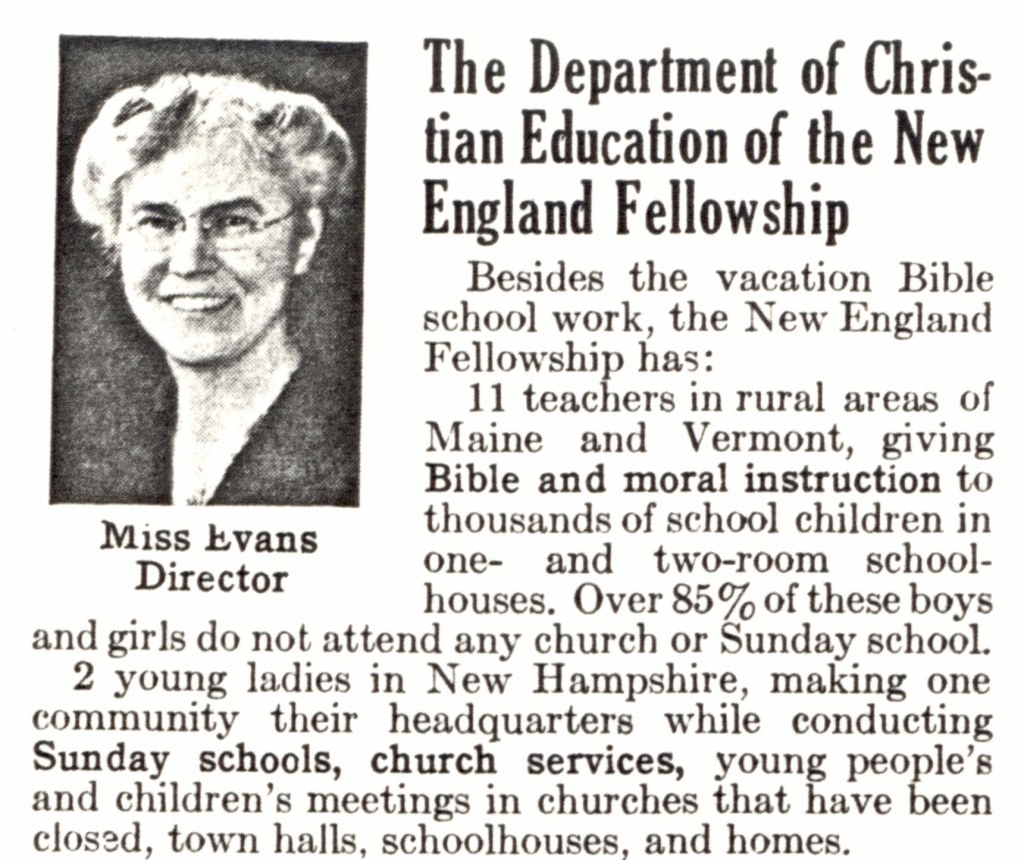
This September, Wheaton Archives & Special Collections shines a spotlight on the remarkable life of Elizabeth Morrell Evans, a woman who tirelessly dedicated herself to doing what she believed was necessary to spread the gospel and multiplied her impact by training others to do the same.
Excerpt from a brochure describing the Christian Education program of the New England Fellowship, 1946. Accession 91-83. Donated by Kathryn Evans.Continue reading →
Cover of the film catalog of Scriptures Visualized Films (later the C. O. Baptista Film Mission), ca. late 1940s. Collection 225, Box 1, Folder 1.
In the 20th century, Archives became museums of obsolete technology, collectors of valuable records in formats no longer commercially viable or practical. This growing list includes wax cylinders, wire recordings, analog audio tapes, audio cassettes, microcassettes, Dictaphone disks, 1” and 2” video reels, U-Matic video cassettes, VHS and Beta cassettes, as well as 8mm and 16mm films.
From the mid-1930s through the late-1980s, 16mm film was a very popular medium for schools, businesses, churches, and parachurch organizations. The Evangelism & Missions Archives has hundreds of movies in these formats (especially 16mm), as well as the production and correspondence files of evangelical film companies. Meant to be shown in church or at church events, these movies were particularly thought to be a means of attracting young people to church.

 From the Vault