Faith, Athletics, and the Archives: An Interview with Dr. Paul Putz

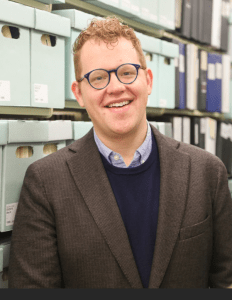
This past October, Wheaton Archives & Special Collections welcomed Dr. Paul Putz for the annual Archival Research Lecture, where he presented “Sports and the Stories We Tell: Evangelical Identity and the Christian Athlete Movement in America.” This month, we feature an interview with Dr. Putz that dives into his research at the intersection of American evangelicalism and big-time sports.

When and how were you first introduced to Wheaton Archives & Special Collections?

When you study American evangelicalism, the archives at Wheaton are a go-to destination. During my dissertation research, I looked to see what holdings Wheaton had related to sports and Christianity, and I found that it had several significant collections. I applied for a travel grant that allowed me to make the trip up from Texas. Getting to spend a week at Wheaton going through archival material was truly a joy, and it shaped my dissertation and then my book project in significant ways, too.

Continue reading

Hidden In Plain Sight

The Evangelism and Missions Archives holds over seven hundred processed collections. Some correspondence in our purchased microfilm stretches back into the 1600s, but we also have documents and media from as recent as the current year. The predominant time frame for most of the evangelistic and missionary activity documented in these collections, however, is the 20th century. As the Archives’ name suggests, the topics that hold together all the collections are evangelism and missions.

But to assume that the Archives only reflects these two areas is to miss the depth and breadth that these primary sources offer. Many collections also document social movements, political events, cultural trends, and more in the countries where missionaries and evangelists happened to find themselves. It is still surprising to discover unexpected points of convergence between collections that we archivists never anticipated or noticed until a collection was arranged and described to be fully open to the public. Four examples come to mind:

Continue reading

“Show, Don’t Tell:” Introducing the Religious Postcard Collection 

This week, Wheaton Archives & Special Collections shares a guest post from Andre-Ross Gennette, who is interning with the Archives this academic year. Andre-Ross Gennette is a junior at Wheaton College, dual majoring in History and Biblical and Theological Studies, as well as a Wheaton Aequitas Fellow with the cohort for the Fellowship in Public Humanities and the Arts. Along with his work processing Wheaton College alumni scrapbooks, Andre-Ross curated three exhibits for the Archives this spring, including one on the Archives’ extensive collection of religious postcards.

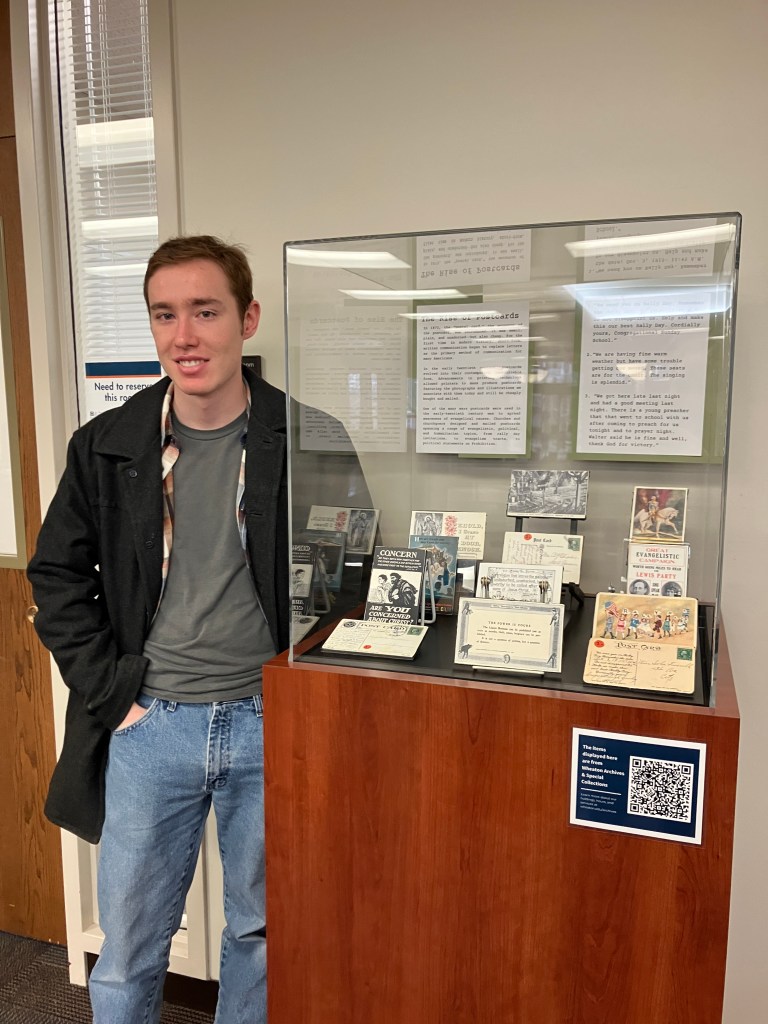
This February, Wheaton Archives and Special Collections digs into its collection of evangelical postcards, a now forgotten but vitally important resource for 20th century Christians in the United States.  

In 1873, the United States Postal Service introduced the “postal card”—a small and plain card that had its postage pre-printed on it, and cost just one cent, equivalent to about 25 cents today. It wasn’t big enough to send a full letter but was enough for a few sentences. Despite its simplicity, the postal card was a resounding success. For the first time in United States history, short form communication via cheap and accessible postal cards began to replace full-size letters.  

Continue reading

A Voice for Change: Excerpts from the William E. Pannell Oral History Collection

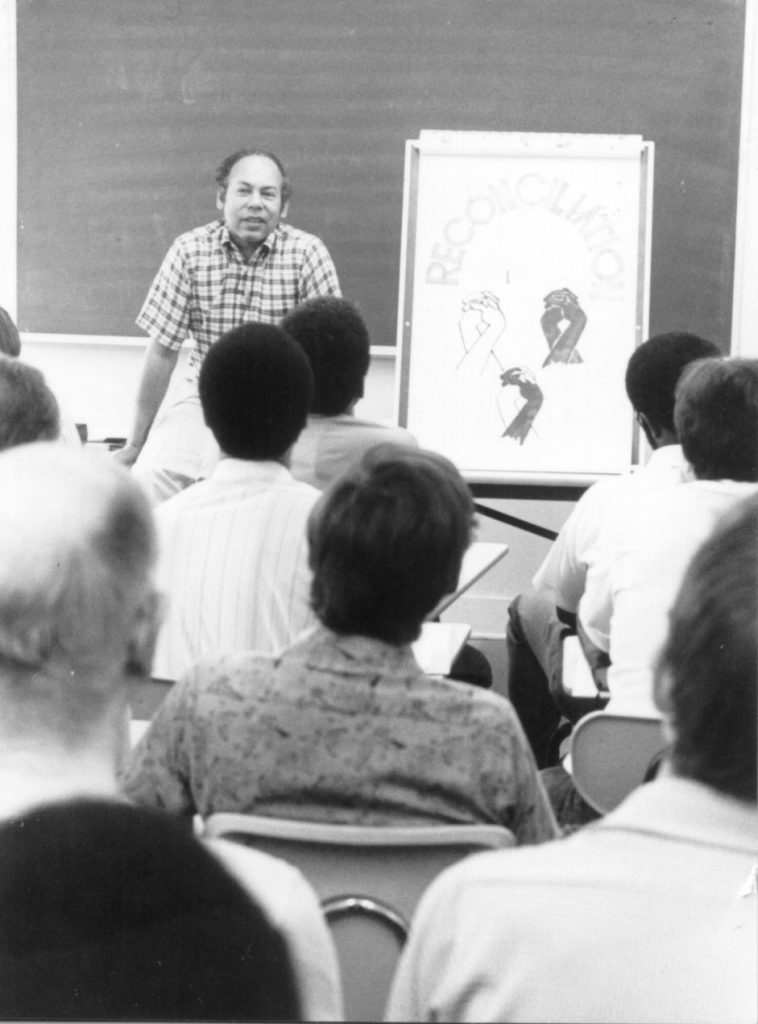
1981: Rev. Pannell leading a Christian Community Development workshop at the Voice of Calvary Ministries’ Study Center in Jackson, Mississippi, USA. (PF: Voice of Calvary – Conferences and Meetings)

In celebration of Black History Month this February, Wheaton Archives & Special Collections features our oral history collection with Rev. Dr. William E. Pannell, who passed away last October. Over more than five decades of ministry, Dr. Pannell served as a youth pastor in Detroit, directed training for Youth for Christ, helped lead Tom Skinner Associates as Vice President, and taught future generations of pastors and evangelists at Fuller Theological Seminary as the assistant professor of evangelism and director of the Black Pastors’ program. Along with his busy work as an evangelist and teacher, Dr. Pannell published several influential books on race and the evangelical church, including My Friend, the Enemy (1968), Evangelism from the Bottom Up (1992), and The Coming Race Wars?: A Cry for Reconciliation (1993).

From 1995 to 2007, Wheaton archivist Bob Shuster sat down with Dr. Pannell for several sessions of oral history interviews. Totaling more than seven hours, the recordings include Dr. Pannell’s reflections on his childhood, education, Christian faith, ministry development, and race relations in the American church. Wheaton Archives & Special Collections recently released the complete transcripts to these interviews, which are now available through the online guide to Collection 498: William E. Pannell Oral History Interviews. Below are selections from the interviews covering Dr. Pannell’s early life, growing racial consciousness, visit to the 1966 Congress on Evangelism, and development of his work with B.M. Nottage and Tom Skinner. The selections have been edited for clarity and brevity.

Continue reading

New Old Stuff in the Archives: 2024 Edition

As we celebrate the start of a new year, Wheaton Archives & Special Collections looks back at some of the interesting accessions of historical documents that the Archives received in 2024 and the new or updated collections we processed and opened to researchers.

New Accessions

For almost seventy years, the story of missionaries’ attempts to bring Christianity to the Waorani people of the Amazon (called the Aucas by their enemies) has been well known to American evangelicals. This year we received the files of Dr. Kathryn Long, who wrote God in the Rainforest (2017), which tells the story from the killing of the five missionaries who first made the attempt to reach the Waorani in 1956 through the development of an Indigenous Christian community among the Waorani in later years. She generously gave her voluminous research files and relevant books to the Archives, including material from her own trips to Ecuador and documents about her work on the staff of Campus Crusade in South America in the 1980s.

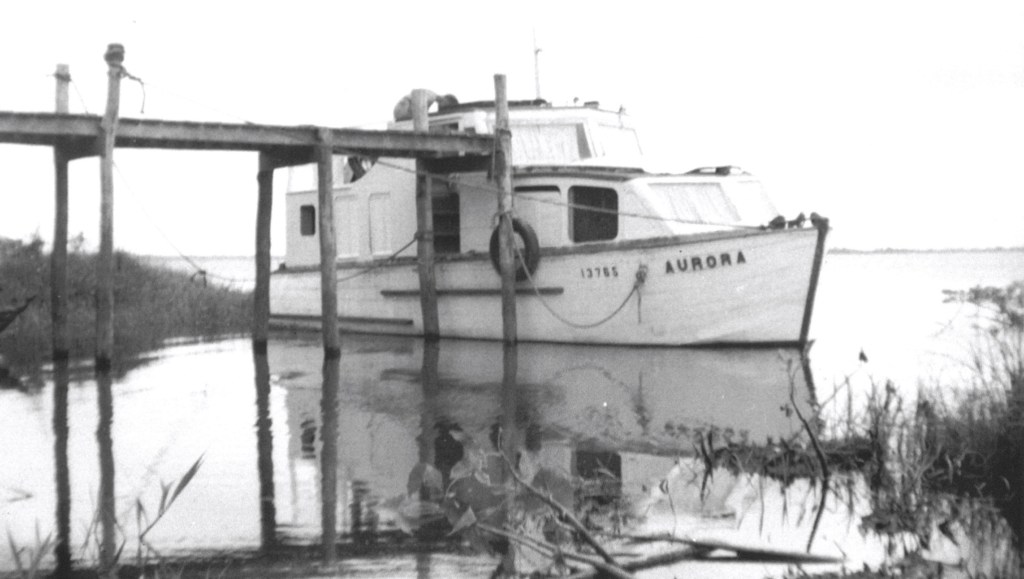
Boat used for Unevangelized Fields Mission (later CrossWorld) for river ministry in Brazil.
Continue reading

Oration Glorious

Wheaton Archives & Special Collections holds hundreds of sermon manuscripts from evangelists and pastors like Jonathan Blanchard, William Biederwolf, Billy Sunday, Jonathan Goforth, Oswald Chambers, Aimee Semple McPherson, Torrey M. Johnson, Kathryn Kuhlman, V. Raymond Edman, Louis H. Evans, and Luis Palau.

Portrait of Aimee Semple McPherson. Photo File: McPherson, Aimee Semple.

Ranging from brief outlines and research notes to full sermon transcripts and covering a wide variety of Biblical and pastoral topics, these manuscripts showcase evangelists’ great diversity in style and approach to sharing the gospel. This December, in celebration of the Christmas season, Wheaton Archives & Special Collections features three Advent sermons from one of the most unique and charismatic communicators in our collections – Aimee Semple McPherson.

Aimee Semple McPherson (1890–1944) was a pioneering evangelist and founder of the International Church of the Foursquare Gospel. Converted at a Pentecostal tent revival in 1908, she began her ministry career as a missionary alongside her first husband, Robert Semple, before his untimely death in China. She returned to the U.S. and after a troubled second marriage, she launched an itinerant revival ministry, ultimately founding the Angelus Temple in Los Angeles in 1923. Known for her dramatic and musical preaching, she brought thousands into the Angelus Temple for multiple services every week, made several transcontinental speaking tours, and became the first woman to preach a sermon over the radio.

Continue reading

“Who Cares for the Woman Who Toils for Her Bread?”: The Ministry of Virginia Healey Asher

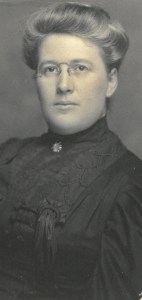
Portrait photo of Virginia Asher, 1905. Photo File: Asher, Virginia.

Scattered throughout the Evangelism & Missions Archives are paper fragments that tell the story of a remarkable woman – Virginia Healey Asher.

Virginia Healey was born to Irish parents in Chicago in 1869. Although her family was Catholic, she attended the church that had grown out of Dwight L. Moody’s Sunday School class and there gave her life to Christ during an evangelistic meeting when she was eleven. Her future husband, William Asher, was saved at the same meeting. When a few years later D. L. Moody called for workers, she volunteered. He assigned her to outdoor street meetings in Chicago where she sang and witnessed. She planned to go to Moody’s school in Northfield, Massachusetts when William, who had also volunteered for evangelism ministry, proposed. She was a teenage bride when they married on December 14, 1887.

Continue reading

Life-writing and the Archives: A Conversation with Lucy S. R. Austen

Wheaton Archives & Special Collections is pleased to announce that writer Lucy S. R. Austen will be our speaker for the annual Fall Archival Research Lecture! In anticipation of her upcoming visit, this month we feature a conversation with Lucy about her time researching for Elisabeth Elliot: A Life, her biography of missionary, speaker, and public evangelical Elisabeth Elliot, published by Crossway last June.

When and how were you first introduced to Archives & Special Collections?

I actually discovered the Archives & Special Collections through a Google search! In 2009, I was working on a mini-biography of missionary and author Elisabeth Elliot for a high-school English textbook featuring American Christian writers, and when I went looking for critical biographies of Elliot to learn more about her life, I was startled to discover that there were no full-length biographies of her in existence. Essentially the only published information about her life dealt with a small portion of the decade she spent in Ecuador as a young woman, working to reduce unwritten languages to writing for the purposes of Bible translation. In the process of digging around for any source material I could lay my hands on, I discovered the webpage for Elliot’s papers at Wheaton. I wasn’t able to visit the Archives at that time, but I relied on the biographical information and the list of “Exceptional Items” from the page for her papers, along with other sources, as I completed my project.

Continue reading

Faith, Memory, and Archives: An Interview with Devin Manuzullo-Thomas

Last September, Wheaton Archives & Special Collections hosted Dr. Devin Manzullo-Thomas for the annual Archival Research Lecture, where he presented “Exhibiting Evangelicalism: Exploring the History of Christian Museums in the United States.” This month, we feature an interview with Dr. Manzullo-Thomas, delving into his archival exploration of how evangelical communities engage with and commemorate their histories.

When and how were you first introduced to Archives & Special Collections?

I first visited the Archives and Special Collections at Wheaton in 2013 or 2014, to conduct research related to my denomination, the Brethren in Christ Church. (Several Brethren in Christ leaders are either alumni of Wheaton College or are otherwise represented in Archives & Special Collections materials.) While there, I also visited the Billy Graham Museum on the first floor of Billy Graham Hall, and my interest was piqued. Because of my training as an archivist/public historian and my scholarly work on the history of my own denomination, I’ve long been interested in how religious communities present their history in museums and historic sites. I started wondering: “How have other evangelical groups and institutions represented the past in public spaces?”

Continue reading