Music to the Glory of God

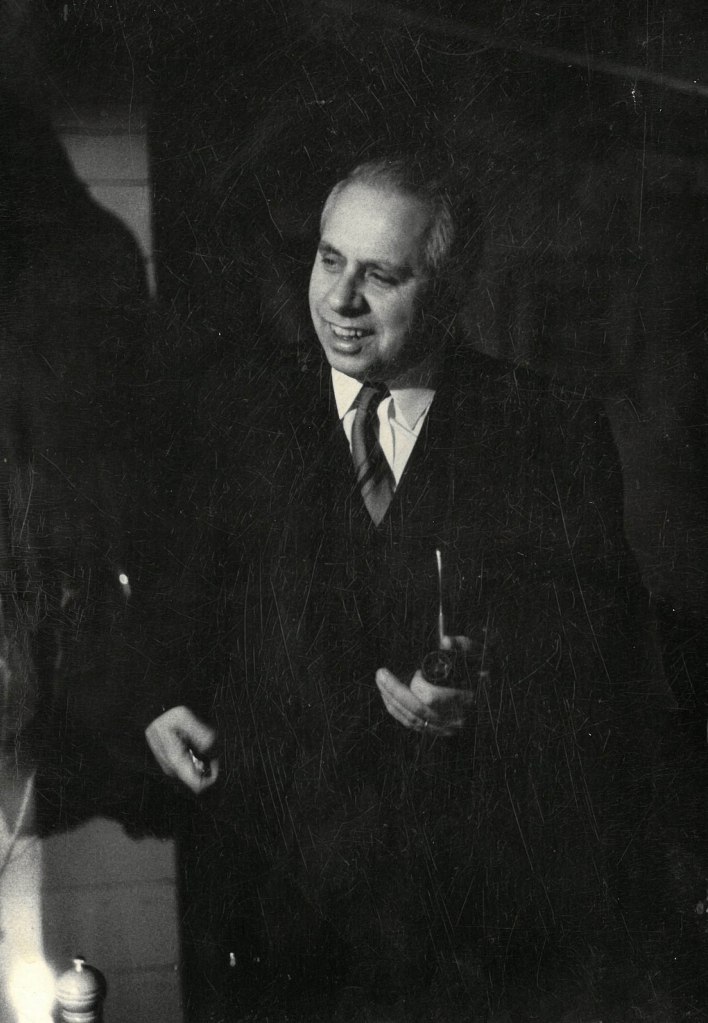
Dr. Hans Rookmaaker (SC-18, Box 25)

The meeting of Hans Rookmaaker, a Dutch art critic, and Mahalia Jackson, a Black American gospel singer seems, at first impression, unlikely. Yet, archives are full of such improbable pairings.

Born February 27th, 1922, in the Netherlands, Hans Rookmaaker came to adulthood under the storm of Nazism and war. As the Dutch Nazi Party organized, teenaged Hans pursued a growing interest in art and music, developing an abiding passion for jazz. Spending his pocket money on albums and phonograph needles; some of his favorites included Jelly Roll Morton, Louis Armstrong and Billie Holiday. Under the Nazi occupation, Hans joined the Underground Press and agreed to distribute anti-Nazi leaflets. Arrested after his first night, he was eventually freed through his father’s political connections. However, in 1943, thousands of Dutch reservists, including Hans, were “officially” enlisted for service at a collecting center where they were herded into trains and transported to concentration camps.

Continue reading

Looking Back on A Year of New Old Stuff

Song sheet (ca. 1928) for evangelist Betty Weakland, one of the most well-known of the so-called “girl evangelists,” popular in the first decades of the 20th century. Donated by long-time friend of the Archives, Robert Dresser. Accession 2022-053.

“Collection” and “Accession” are words used all the time in the archival profession. In Wheaton Archives & Specials Collections, an accession is material received from a single donor, usually an individual or an organization. It might be a single folder or hundred of boxes, with only a general inventory to use as a finding aid.  A collection is a set of materials (perhaps including paper-based records, photographs, audio or video recordings, etc.) that has been fully arranged and described. Most of our collections have been formed from several accessions. Here in the Archives & Special Collections, both collections and accessions are open for research (unless there have been donor-requested restrictions) but the lack of a complete finding aid and access points can make accessions difficult to locate or use for research.

Continue reading

The Landon Chronicles

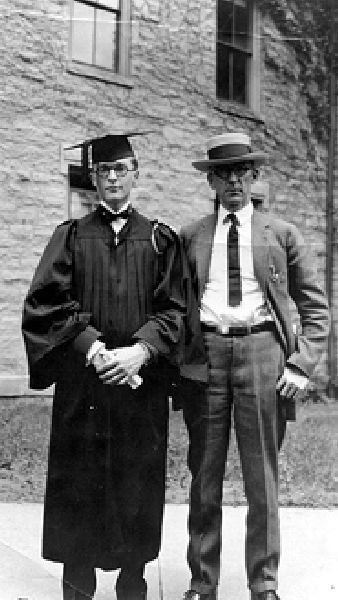
Kenneth Landon’s graduation from Wheaton College, 1924

One of the exceptional artifacts held by Special Collections are the 95 hours of oral history interviews with Kenneth and Margaret Landon, conducted over thirteen years by their youngest son, Kip (Kenneth). Gathered together as ‘The Landon Chronicles,’ the interviews provide rich detail and insight into the lives of these two remarkable individuals.

Margaret Mortenson and Kenneth Landon met as undergraduate students at Wheaton College in the early 1920s. Kenneth graduated in 1924 and the two were engaged in September 1924 before his move to Princeton, where he pursued a Th.M. degree. Margaret graduated from Wheaton a year later in 1925 and taught school until their wedding in June 1926.

Continue reading

Marginalia in the Archives

Wheaton Archives & Special Collections holds a wide variety of rare book collections, including more than 200 editions of John Bunyan’s Pilgrim’s Progress, many early texts by and about influential theologians and ministers like John Wesley and Jonathan Edwards, and hundreds of other manuscripts on Christian life, missions, art, and history. A few of these books also include inscriptions and marginalia – the scribbles, notes, and other markings made on the cover pages or in the margins of texts. These extra-textual materials often provide unique insights into the history of a book, as well as its impact.

Continue reading

A Call to United Action: Commemorating 80 Years of the National Association of Evangelicals

Wheaton Archives & Special Collections holds the records of many national evangelical organizations – From Youth for Christ (CN 48) and Christianity Today (CN 08) to Christians for Social Action (CN 37) and Prison Fellowship Ministries (CN 274). These collections provide valuable and fascinating insights into the history of evangelical Christianity in the United States. But few offer as broad a view of American evangelicalism in the last half of the 20th century as the National Association of Evangelicals (SC 113), which celebrates the 80th anniversary of its founding conference this month.

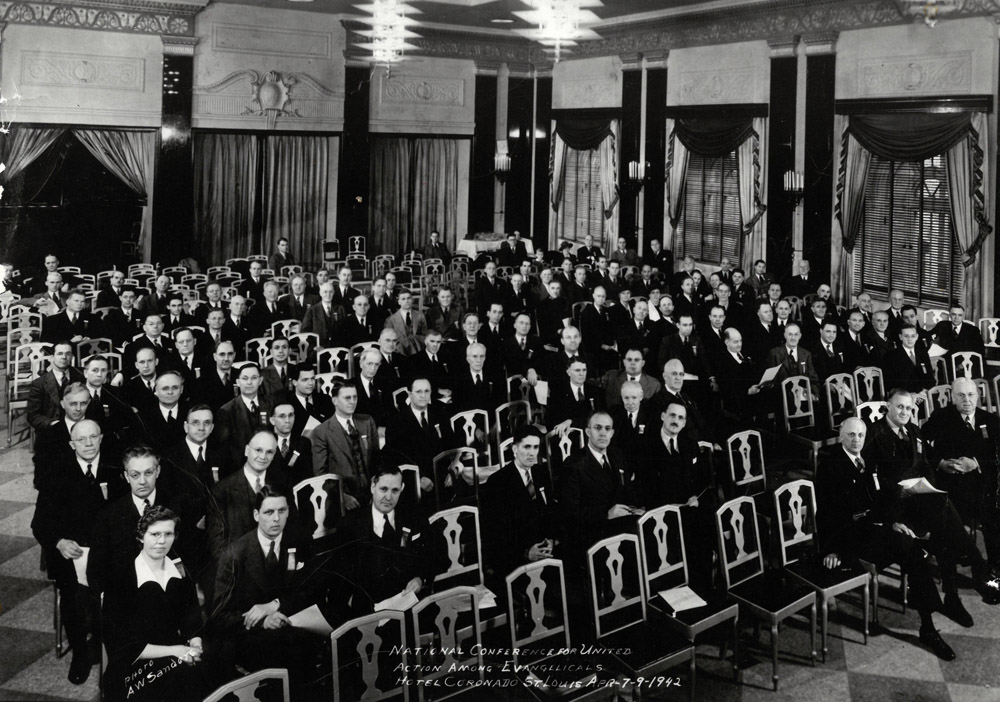
Meeting on April 7th 1942, the group of 147 evangelical pastors, leaders, and educators gathered together in St. Louis to consider the question: Who should speak for evangelical Protestantism in America?

St. Louis Conference, 1942. (SC113, Folder 10-6)
Continue reading

“The Letter Kills but the Spirit Gives Life”: Julia E. Smith’s Bible Translation

From the first century onward, the form and text of the Bible has been a source of near-endless debate, review, reinvention, and artistry. Available in thousands of different translations, editions, and compilations, it is a text that is at once universal and individual.

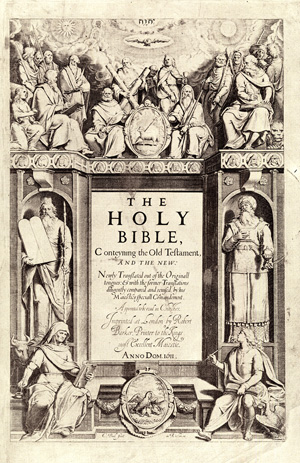
Title page for a King James translation, 1613. (SC-10)

Wheaton Archives & Special Collections holds more than five hundred whole or partial Bible monographs. Each of these instances carry forward the spirit of their common text and yet remain unique, with their own voices and particularities. Some of this variety comes from the different language translations available in the Archives (ranging from Hawaiian to Sanskrit), but remarkable diversity can also be found within the English translations alone.

The archive’s shelves include multiple printings, editions, and facsimiles of famous English translations, such as the Wycliffe Bible (1388), the Coverdale Bible (1535), and the King James version (1613), as well more modern classics, like the New International Version (1984) and the Living Bible (1971), among many others.   

Continue reading