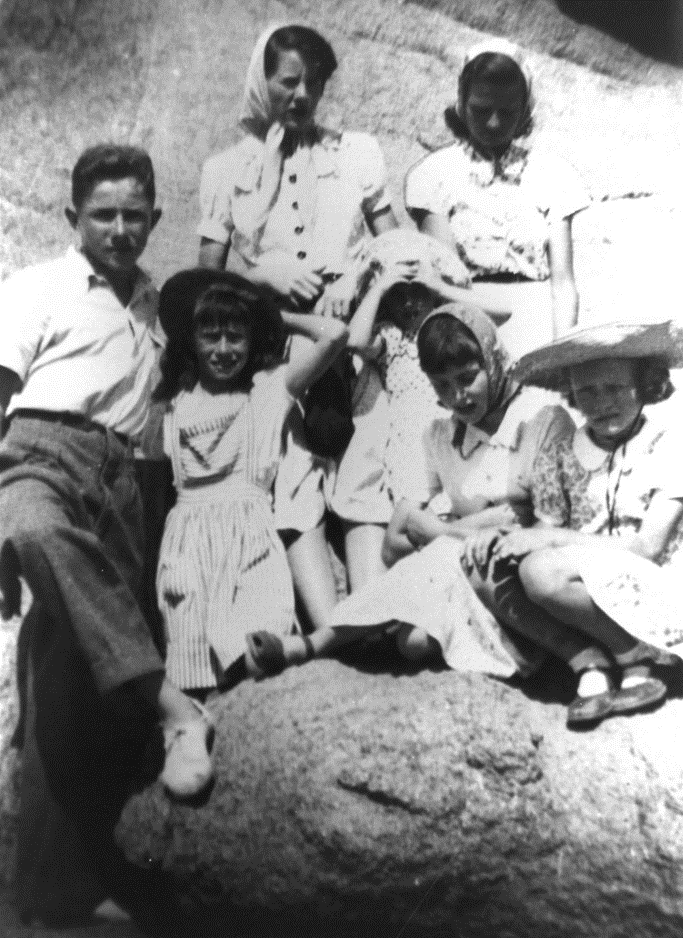
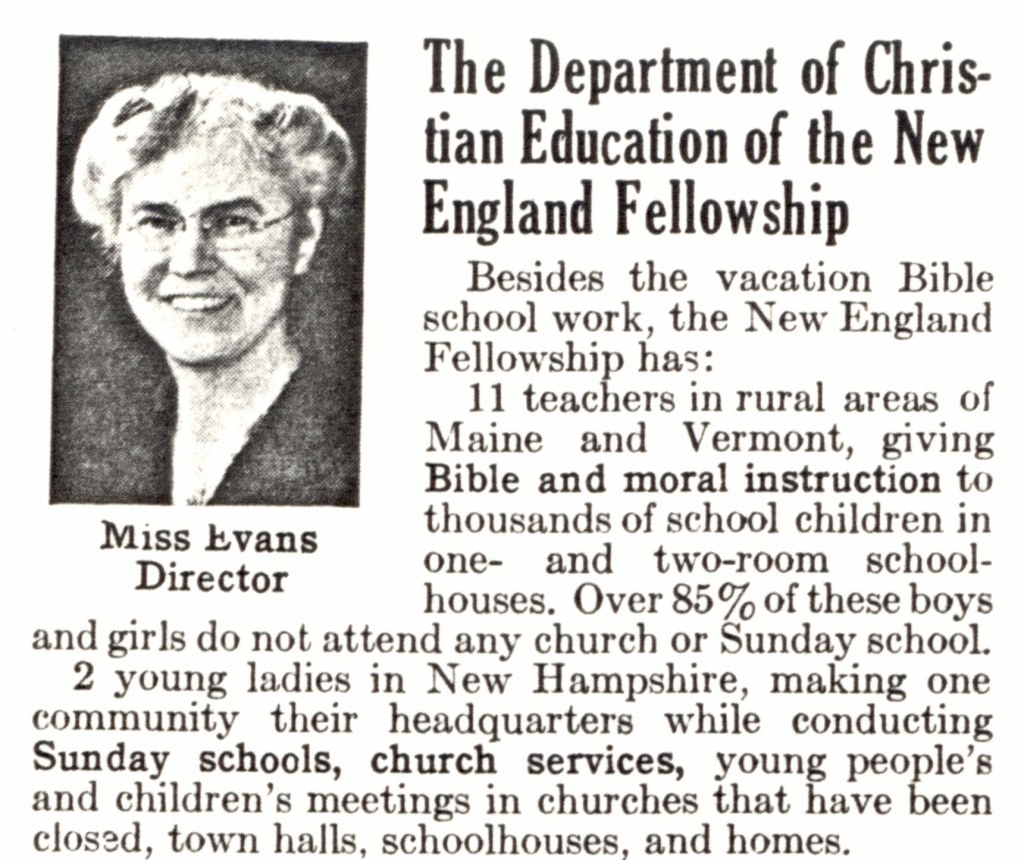
This September, Wheaton Archives & Special Collections shines a spotlight on the remarkable life of Elizabeth Morrell Evans, a woman who tirelessly dedicated herself to doing what she believed was necessary to spread the gospel and multiplied her impact by training others to do the same.
Excerpt from a brochure describing the Christian Education program of the New England Fellowship, 1946. Accession 91-83. Donated by Kathryn Evans.Continue reading →
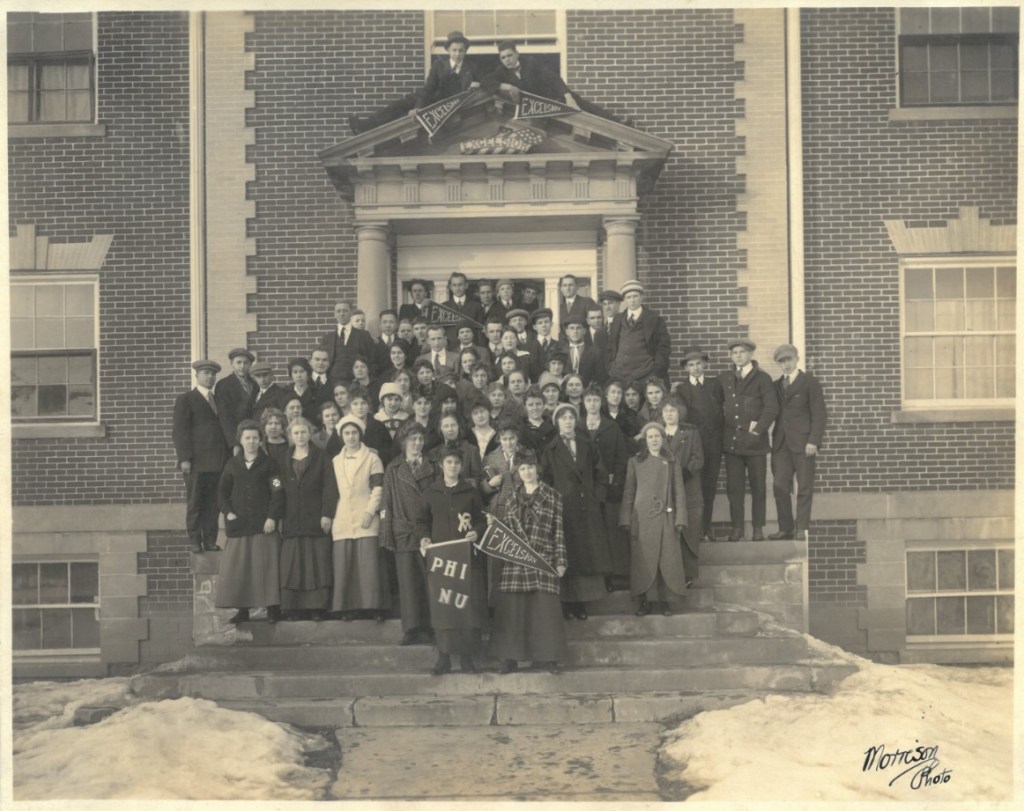
In his history of the Wheaton College literary societies, former Wheaton College communications professor, Edwin Hollatz, aptly stated that “the development of the American college is a story that can hardly be told without some consideration of Literary Societies” (Wheaton Alumni Magazine, September 1967). These student-led organizations, which thrived at Wheaton College from the mid-nineteenth century until World War II, played a pivotal role in shaping the college life and education of Wheaton students.
Members of the Celts (Excelsior) and Phils (Philalethian), brother-sister societies, 1914. (College Archives Photograph B06142)Continue reading →
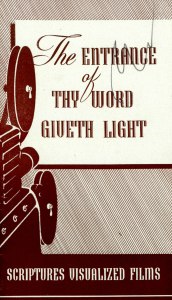
Cover of the film catalog of Scriptures Visualized Films (later the C. O. Baptista Film Mission), ca. late 1940s. Collection 225, Box 1, Folder 1.
In the 20th century, Archives became museums of obsolete technology, collectors of valuable records in formats no longer commercially viable or practical. This growing list includes wax cylinders, wire recordings, analog audio tapes, audio cassettes, microcassettes, Dictaphone disks, 1” and 2” video reels, U-Matic video cassettes, VHS and Beta cassettes, as well as 8mm and 16mm films.
From the mid-1930s through the late-1980s, 16mm film was a very popular medium for schools, businesses, churches, and parachurch organizations. The Evangelism & Missions Archives has hundreds of movies in these formats (especially 16mm), as well as the production and correspondence files of evangelical film companies. Meant to be shown in church or at church events, these movies were particularly thought to be a means of attracting young people to church.
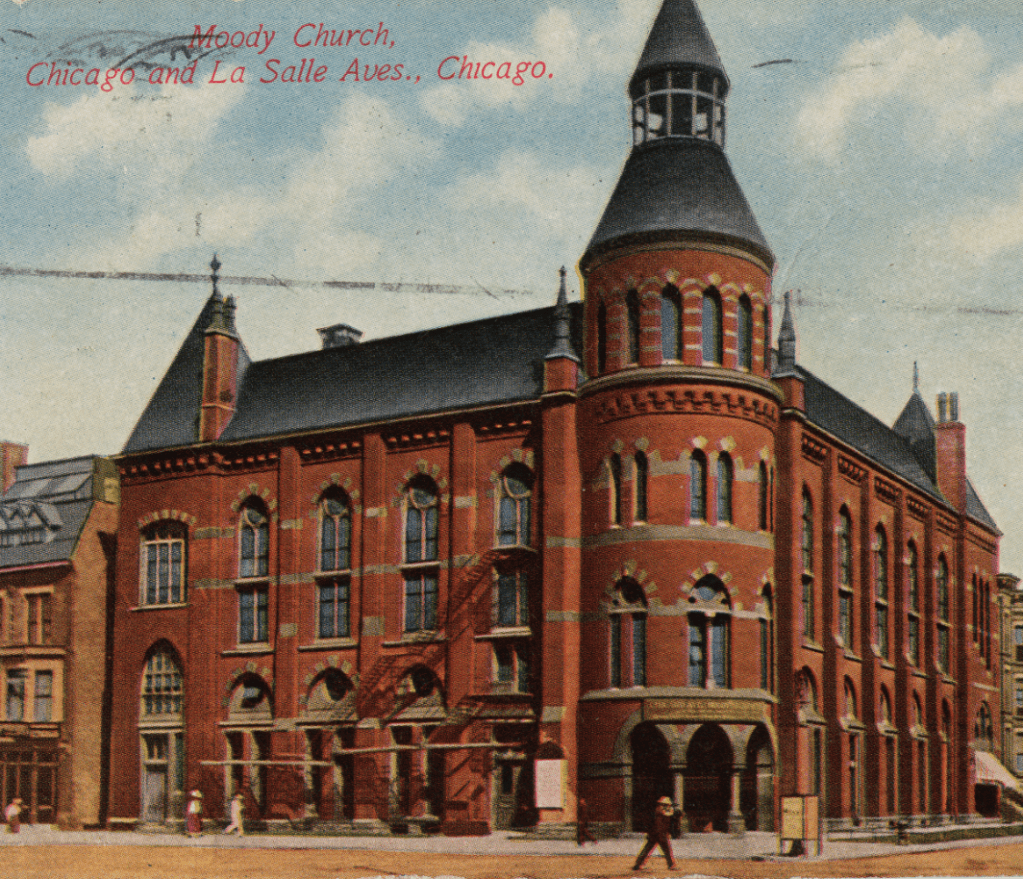
Collection 330 in the Evangelism & Mission Archives is the Records of Moody Memorial Church, one of the oldest and largest independent churches of Chicago, Illinois. Part of that collection is Photo Album VI, an old and dilapidated scrapbook with this introduction pasted onto its inside front cover:
THIS BOOK OF PICTURES REPRESENTING THE FRESH AIR WORK OF THE Moody Sunday School (during the years between 1903 and 1905) is presented to the Moody Sunday School and to be kept where the officers and teachers of the Sunday School may have access.
The pictures were taken by G. P. Rockwell who at that time was Superintendent of the Fresh Air work under the direction of A. F. Gaylord who was Supt. of the Sunday School. The book was made by Mr. Rockwell and after many years of care, become the property of the Moody Sunday School. The book is very dear to his heart and many pleasant memories could be recalled through the pictures and the wonderful fellowship of the School and dear Mr A. F. Gaylord.
Needy boys and girls were selected by Mrs. A. F. Gaylord for the occasion of a vacation out in the country. Groups of about 75 were taken on the Northwestern Railroad to Ravinia, Ill. and Glencoe, Ill. Each group was kept there under the care of a competent Christian workers for about two weks [sic]. Then they were carried back to the city much to their worrow [sic]. Often another group would take their place and thus the work was carried on during the entire summer,
Physical training were given the boys and girls daily. Big, hikes were given the groups each week end sometimes daily. Occasionaly [sic] they were given a taffy pull or hay ride to Fort Sheridan but every day they were taken to the lake where they splashed and ran and were taught to swim. Each child was given some work to do about the home and every one of them looked forward to the night time when they gathered for their evening devotions before going to bed. Thank God many found the Christ at the Camp for the General Supt. Mr Gaylord insisted that the spiritual work should come first.
For nearly sixty years the primary means of transportation for Wheaton College staff, students or anybody traveling from the Fox River Valley into the concrete canyons of the Windy City was the Chicago, Aurora and Elgin railway. Established in 1902, the locomotive, called “The Roarin’ Elgin,” conveyed passengers and freight between Chicago, Geneva, Batavia, Aurora, Elgin and St. Charles. Because evening trains headed westward from Chicago into the setting sun, it was also romantically (but unofficially) nicknamed the “Sunset Lines.”
This May, Wheaton Archives & Special Collections talks with historian David Reagles, author of Searching for God in Britain and Beyond: Reading Letters to Malcolm Muggeridge, 1966-1982, about his journey through the vast collection of fan letters held in the Malcolm Muggeridge Papers.
When and how were you first introduced to Archives & Special Collections? What kinds of research projects have led you to the Archives’ collections?
I first stepped on Wheaton’s beautiful campus as a graduate student in 2011. Two moments really stand out in my mind when I think about the archives during those life-changing years. The first took place during a seminar on the history of evangelicalism in the Atlantic world. It was a wonderful eye-opening class, which included among other things a jaunt to the archives. There Bob Shuster masterfully guided us through proper archival procedures and etiquette, as well as offered an overview of the kinds of rich materials available. As we walked into the classroom, he had placed one or more archival boxes at each seat. After a short lecture, he asked us to open our materials and to try as best as we could to tell a “story” of the box. I recall pouring through the contents and feeling a kind of weird combination of confusion, excitement, anticipation, uncertainty, and discomfort. I loved it. That short lesson really affirmed the kind of joy-filled experience archival research could be.
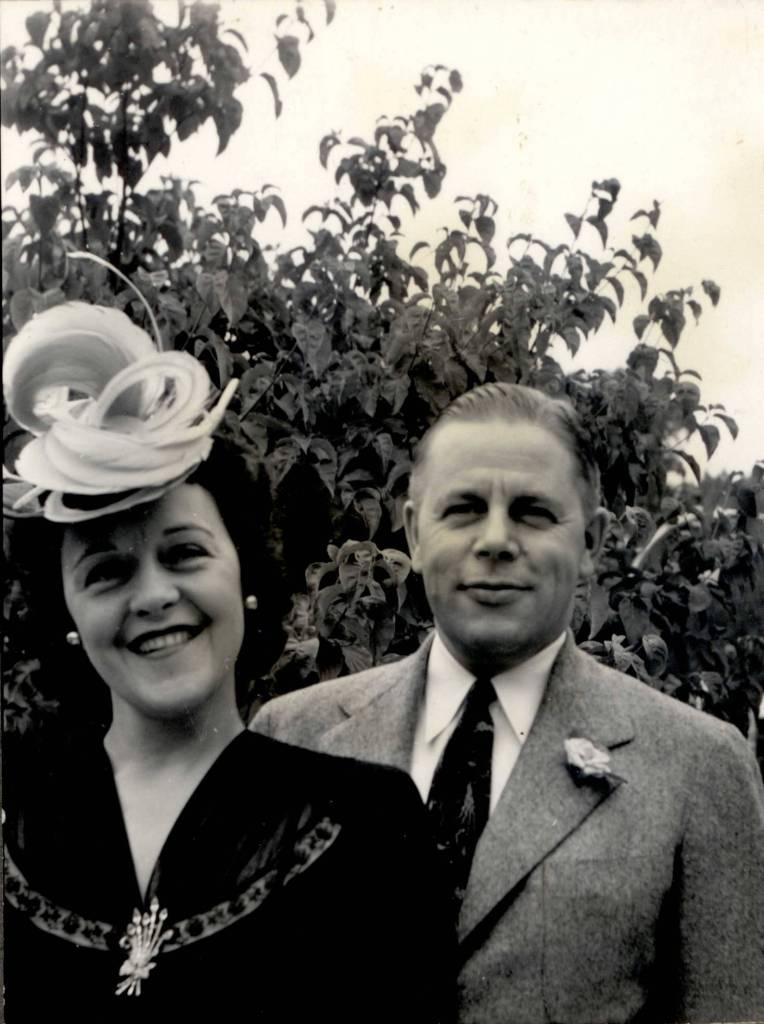
Stereo slide of Taylor and his wife Gloria, ca. 1930s. (Photo File: Taylor, Herbert J.)
One of the earliest collections opened by the Archives (in 1978) and one of the most heavily used (over 360 times at last count) is Collection 20, the papers of Chicago businessman and philanthropist Herbert John Taylor (1893-1978).
Taylor’s life was in many ways a typical American success story. He started out as a salesman in Oklahoma. After service with the YMCA in France, assisting servicemen during World War I and then a shore post in the Navy, he moved to Chicago and eventually became president of Club Aluminum Products, a near bankrupt company he rescued and made into a multi-million dollar enterprise.
Each class of Wheaton College brings new traditions, experiences, and stories to the long history of the campus. One of the ways the College Archives seeks to preserve these transitory memories is by collecting student scrapbooks. With their rich ephemera of college life – jokes, notes, invitations, photographs, and other mementos – student scrapbooks offer a glimpse into a strange yet familiar past. While clothing has changed, new buildings have appeared, and student groups have come and gone, these scrapbooks document the continued vibrancy and experimentation of a liberal arts college education. Here are the snapshots of jaunts off-campus, the portraits of new friends, the paper remains of events (official and unofficial), and the scraps from the programs and clubs that come to define many students’ college experience.
The meeting of Hans Rookmaaker, a Dutch art critic, and Mahalia Jackson, a Black American gospel singer seems, at first impression, unlikely. Yet, archives are full of such improbable pairings.
Born February 27th, 1922, in the Netherlands, Hans Rookmaaker came to adulthood under the storm of Nazism and war. As the Dutch Nazi Party organized, teenaged Hans pursued a growing interest in art and music, developing an abiding passion for jazz. Spending his pocket money on albums and phonograph needles; some of his favorites included Jelly Roll Morton, Louis Armstrong and Billie Holiday. Under the Nazi occupation, Hans joined the Underground Press and agreed to distribute anti-Nazi leaflets. Arrested after his first night, he was eventually freed through his father’s political connections. However, in 1943, thousands of Dutch reservists, including Hans, were “officially” enlisted for service at a collecting center where they were herded into trains and transported to concentration camps.
While Wheaton Archives & Special Collections continually adds new digital content to our online archival photograph database and oral history interview collections, most of the thousands of pages of records in our collections can only be accessed in the Manuscripts Reading Room. We frequently receive inquiries from researchers who are unable to travel to use the collections, and so keep a list of local researchers who provide research and scanning services to distance patrons as “proxy researchers.” This week, we sat down with Chelsey Geisz for a behind-the-scenes look at proxy research in the Archives.
Chelsey Geisz is in her final semester of Wheaton College Graduate School’s MA in Systematic Theology. For the last year and a half, she has also served as a proxy researcher and a research assistant for a major College history project. Because of her work as a research assistant, she has the dubious distinction of likely being the only person alive who has read every Wheaton student publication from 1860-2000!