Malla Moe was a legend among missionaries during her own lifetime. Born in Norway in 1863, she immigrated to Chicago as a young woman to live with her sister. However, after meeting Frederick Franson and hearing of his work with the nascent Scandinavian Alliance Mission, she felt a strong call to missions. In 1892 she traveled to Port Natal (Durban) in South Africa to begin missionary and language training. She then went to live and work in the Swaziland (now Eswatini) countryside, traveling between Swazi homesteads (sometimes called kraals in Afrikaans). From that time on, in the words of one biographical dictionary, “she served as evangelist, church planter, teacher, and preacher.” Although she often rubbed other missionaries the wrong way, she loved and was loved by her African congregations. When it became difficult for her to walk, she traveled in a specially built gospel wagon. By the time of her death in 1953, Swaziland and Tonga were dotted with the dozens of churches she helped to found.
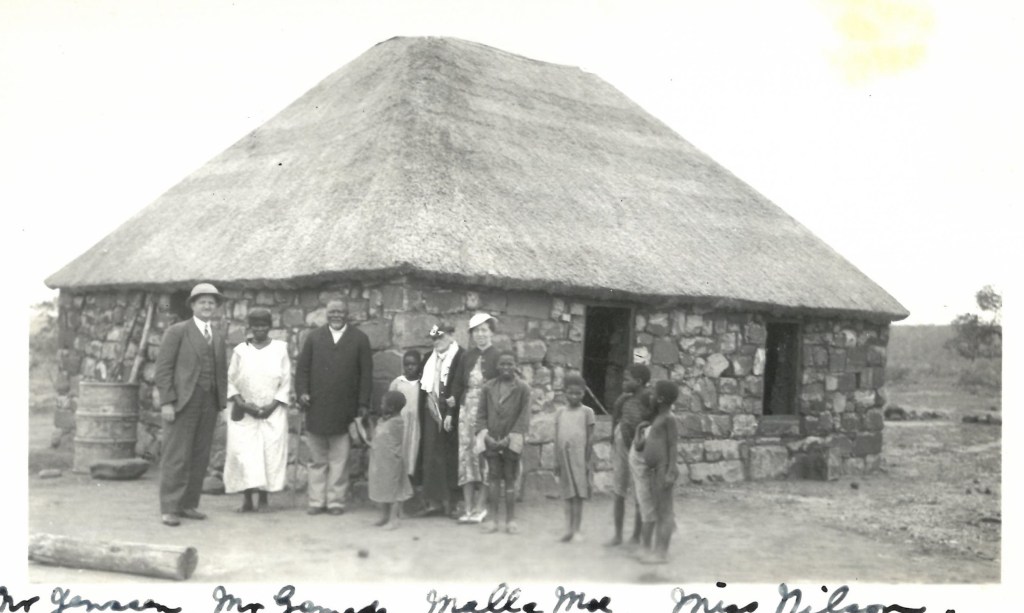
That is the story told in many Western histories of missions. But it is incomplete. (An exception is TEAM’s own history, God Made It Grow, by Vernon Mortenson). Some of those histories mention a Swazi helper named Gamede or sometimes just indicate she had an anonymous native helper. Sometimes no African worker is mentioned.
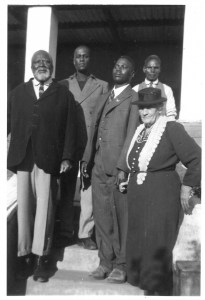
Christians in Eswatini have another perspective. They too credit Malla Moe with contributing to founding the church in Eswatini but also recount the story of one of the great apostles of the country, Johane or John (Mbulawa) Gamede. Himself a Zulu, Gamede was converted at another mission station and met Malla about a year after his conversion. Almost immediately he became her partner in the work of spreading the gospel. John knew the people and culture of Swaziland in ways that could be known only by one of their own. Meanwhile, Malla was the contact with the missionary resources coming from the West. Together they were a dyad, both determined pioneers, preaching, planting churches, and training leaders in Swaziland and, toward the end of Malla’s life, in Tonga.
The Evangelism & Missions Archives hold the papers of Malla Moe, given to the Archives by TEAM (descendant of the Scandinavian Alliance Mission) in 1983. The collection includes letters, journals and other documents from Malla’s ministry and John’s name can be found throughout. However, the Archives’ staff never fully recognized the depth of his part in the story of the Eswatini church until we met another kind of descendant, John’s great-granddaughter.
Londiwe “Londi” Gamedze is a citizen of South Africa currently studying as a graduate student at the University of California-Berkely, working on a dissertation about South African woman writers and political consciousness in the anti-apartheid movement. Through searching for the college records of her grandfather Aaron Gamedze on the internet she came across Malla Moe’s papers in Wheaton Archives & Special Collections. She traveled to Chicago in November 2024 and took the long train ride out to Wheaton. And in the dusty old archives, she spent hours of thrilling discovery. She knew from family tradition a couple of stories about John, including the astounding story of his learning to read after a day of focused prayer. But it was not enough to know him as a person.
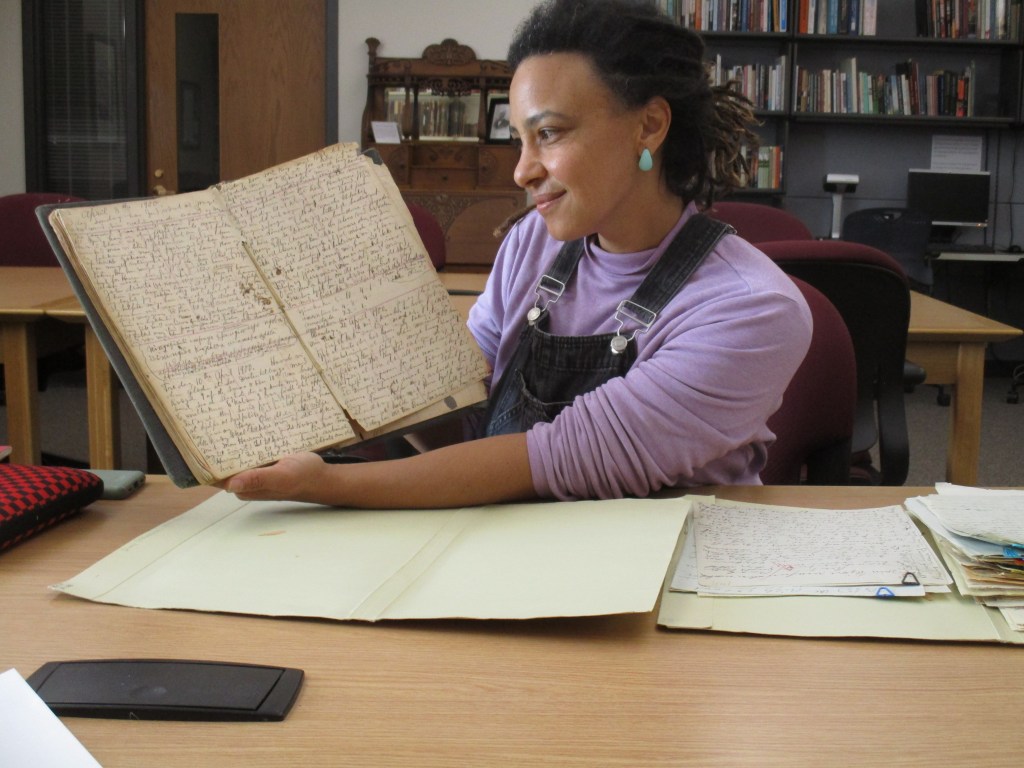
And here she found in Malla’s papers frequent mentions of him, including letters from John himself. These are in Zulu, a language in which she is not fluent, but they seem to be letters to pastors, exhorting and raising support for the work. She was amused to find that, “his handwriting was absolutely beautiful. Malla Moe’s is a chicken scratch.” And while she was learning, she was also sharing with the Archives staff John’s significance in the story of Christ’s church in Africa.
Reflecting on what she found in the Archives, Londi commented, “It is just incredible. After they meet, he is probably in a third to a half of her letters and her diary entries, so they are really connected to each other’s lives, they take more than a casual interest in what is happening with one another. Malla is so grateful for him in her diaries, often praying for him and thanking God. ‘This is the best possible thing that could happen to me here.’ So, there is a real collaboration between them. And it is great to see.” Because of what we learned from Londi, the Archives’ staff revised the guide to Malla Moe’s papers to give greater emphasis to John’s partnership and ministry.
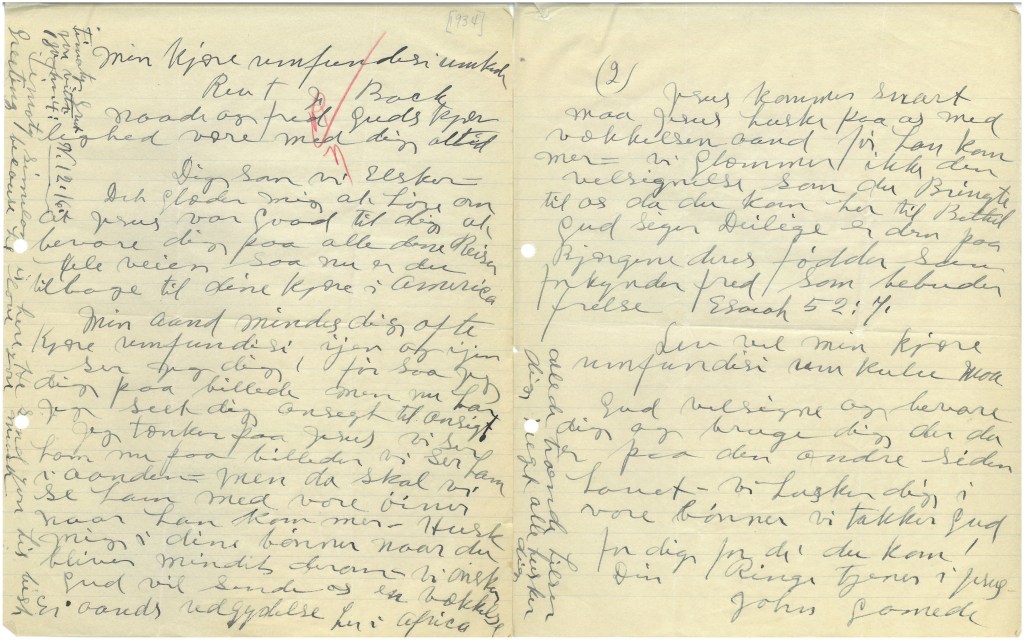
One of the most interesting documents in the Archives related to Gamede is from a new donation – more than two hundred boxes of TEAM archival material received in 2022. In Box 197 of Accession 2022-017 is a 165-page typed transcript in English of an interview with John Gamede after Malla’s death in 1953. In it he described his ministry in Swaziland, including his work with Malla Moe. (John died in 1959). These materials were perhaps gathered and used for the biography of Moe published in 1956 by Mara Nielsen, with the cooperation of TEAM.
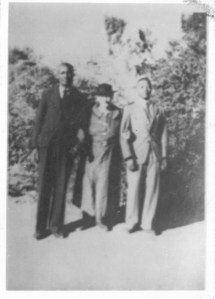
And we of the staff learned from Londi another page in the story of the impact of the Moe-Gamede partnership. On her furloughs back to the United States, Malla renewed her links with the Chicagoland area and told John about Wheaton College. He was looking for a school to send his son, Aaron Bhekithemba Gamede. Aaron attended Wheaton and completed a bachelor’s degree in 1950 and a master’s degree the next year. He returned to Swaziland, and when it won independence in 1967, he became the first Minster of Education. At that time, he was already vice-chairman of the Bantu Evangelical Church of Swaziland and later was High Commissioner to England, all the while remaining deeply connected to Swazi churches – traveling and preaching throughout the nation.
Londi’s visit was an exciting time for the Archives, a chance to see the old Gospel story with both eyes open, in its true, multi-faceted perspective. As Londi said, “Reading about the whole universe they lived in – it’s amazing!”
 From the Vault