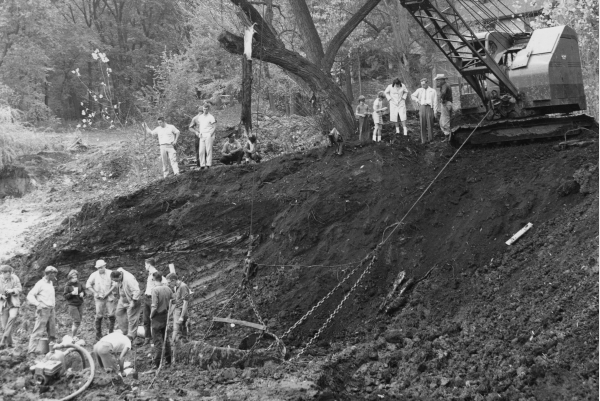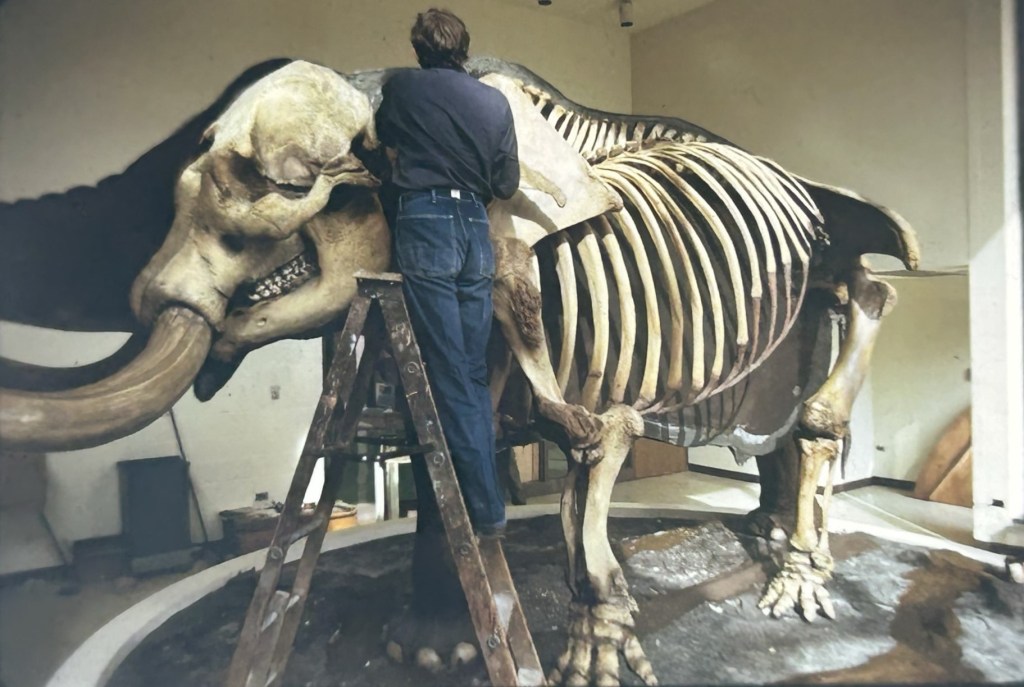
On October 16, 1963, Judge Sam Perry of Glen Ellyn, intending to merely deepen the pond on his property, received much more than he expected when diggers unearthed a prehistoric femur. Upon hearing the news, Judge Perry called for help from Wheaton College, and Dr. Douglas Block of the Geology Department took charge of the site. Judging the find to be geologically significant, the decision was made to drain the lake and excavate. Enlisting Wheaton students from the Geology Department and with technical advice from Orville Gilpin of the Chicago Field Museum, Dr. Block oversaw a strenuous eight-day dig. The muddy excavation was soon joined by hundreds of interested community members and extensive media coverage from local DuPage County and Chicago papers.
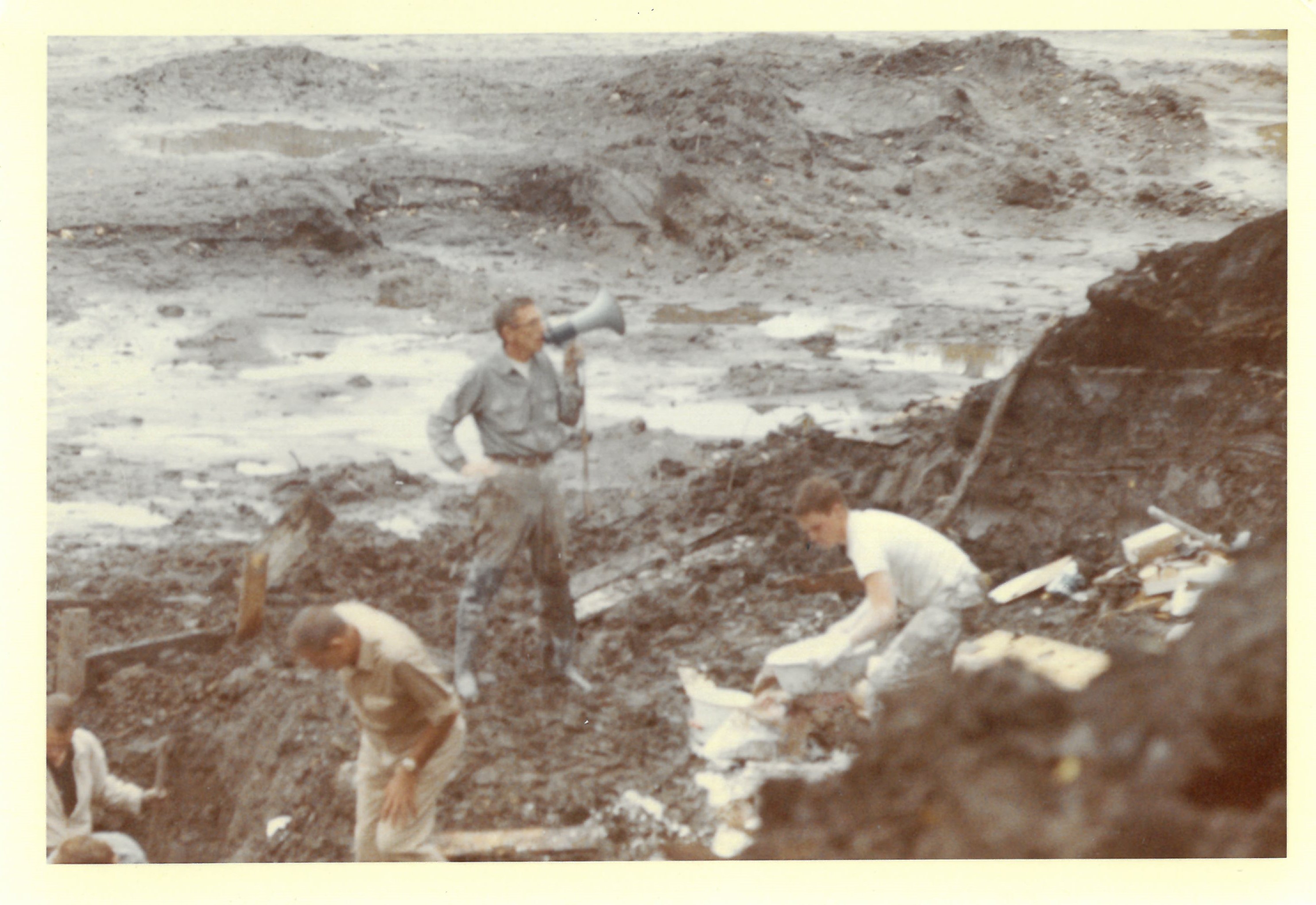
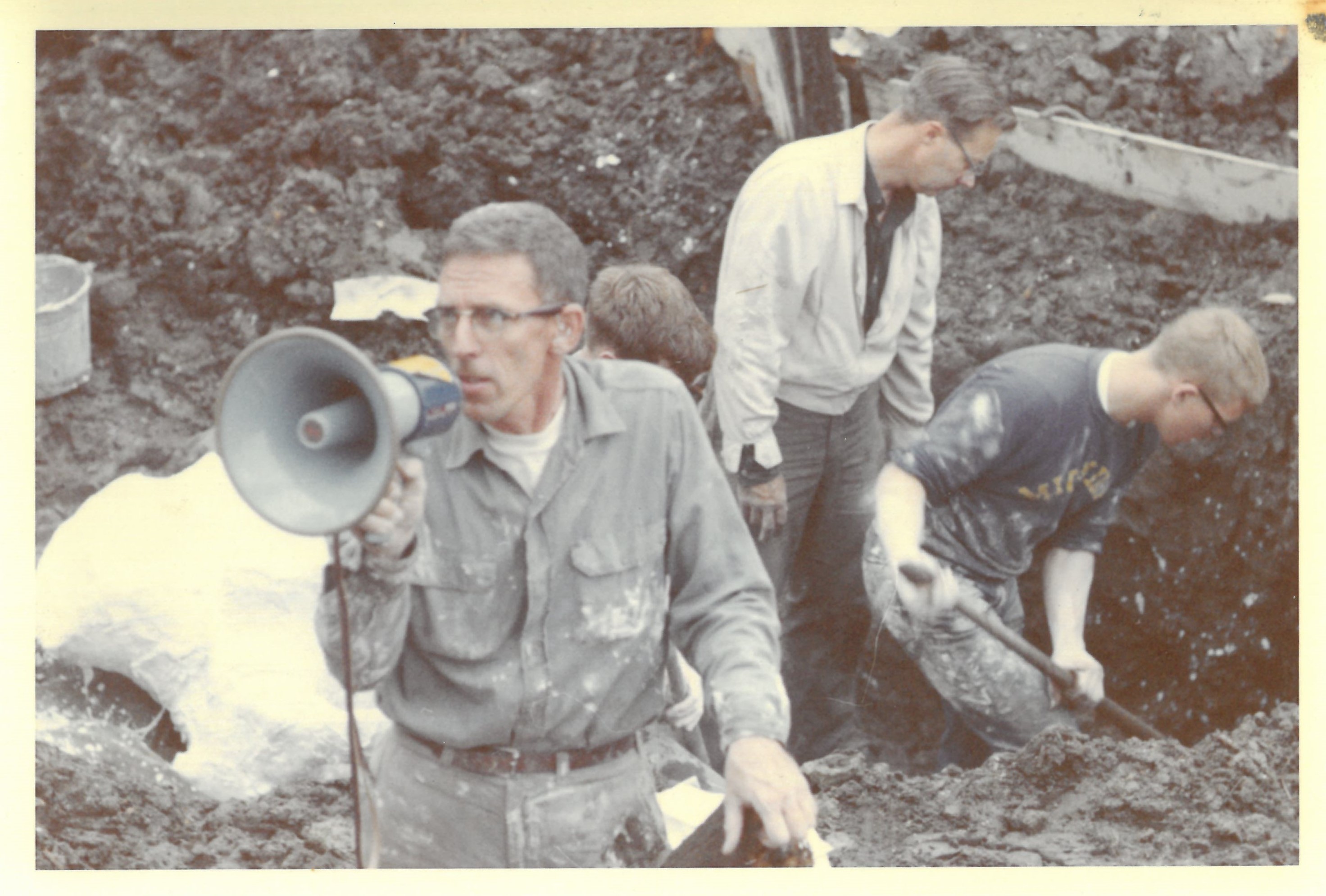
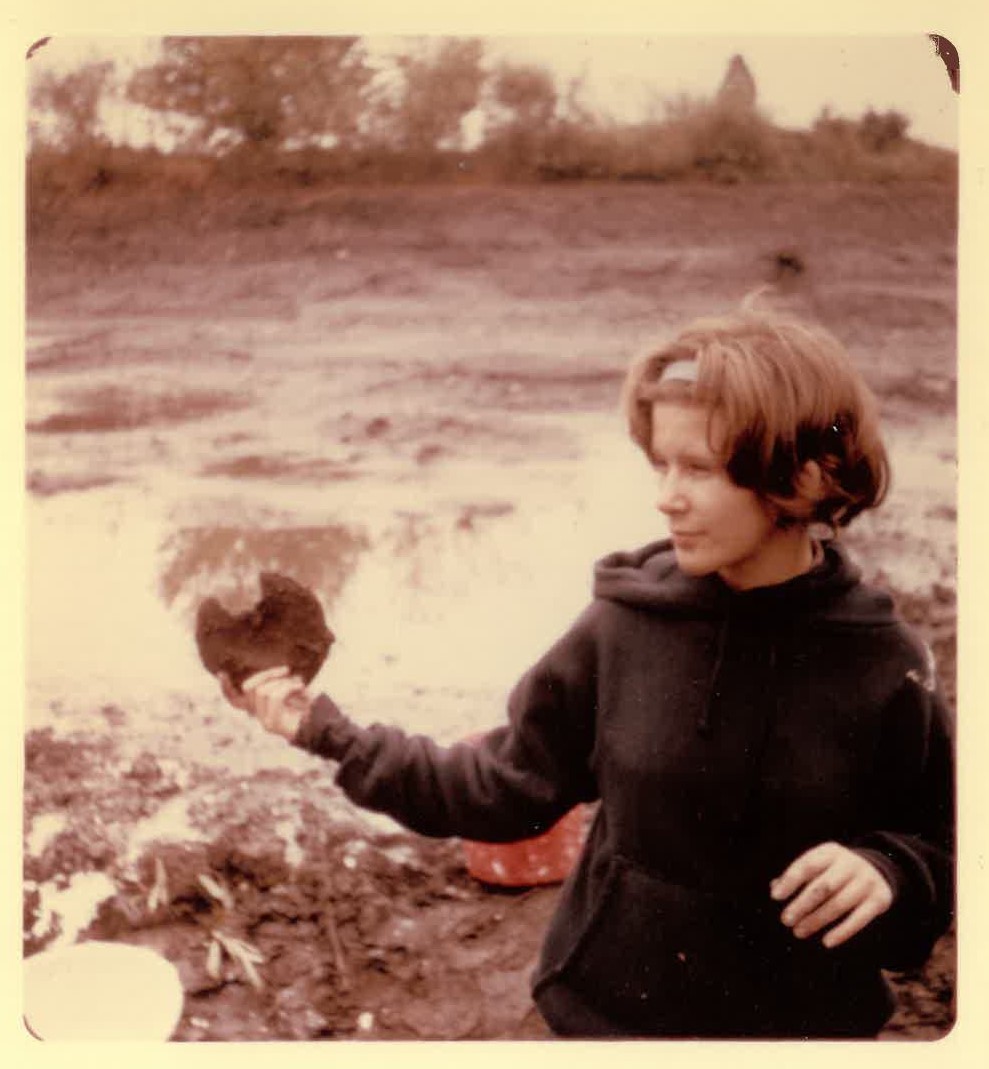
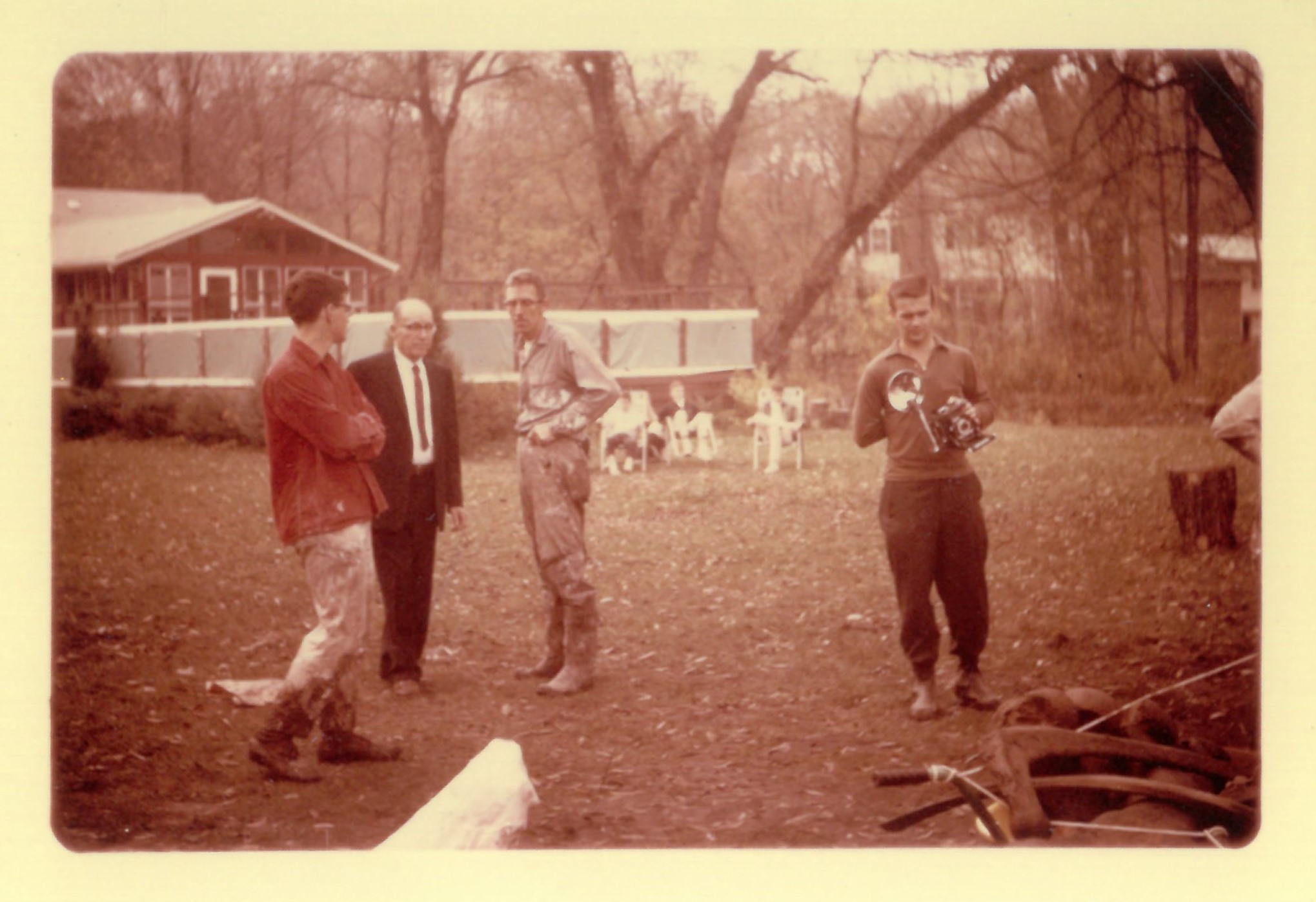
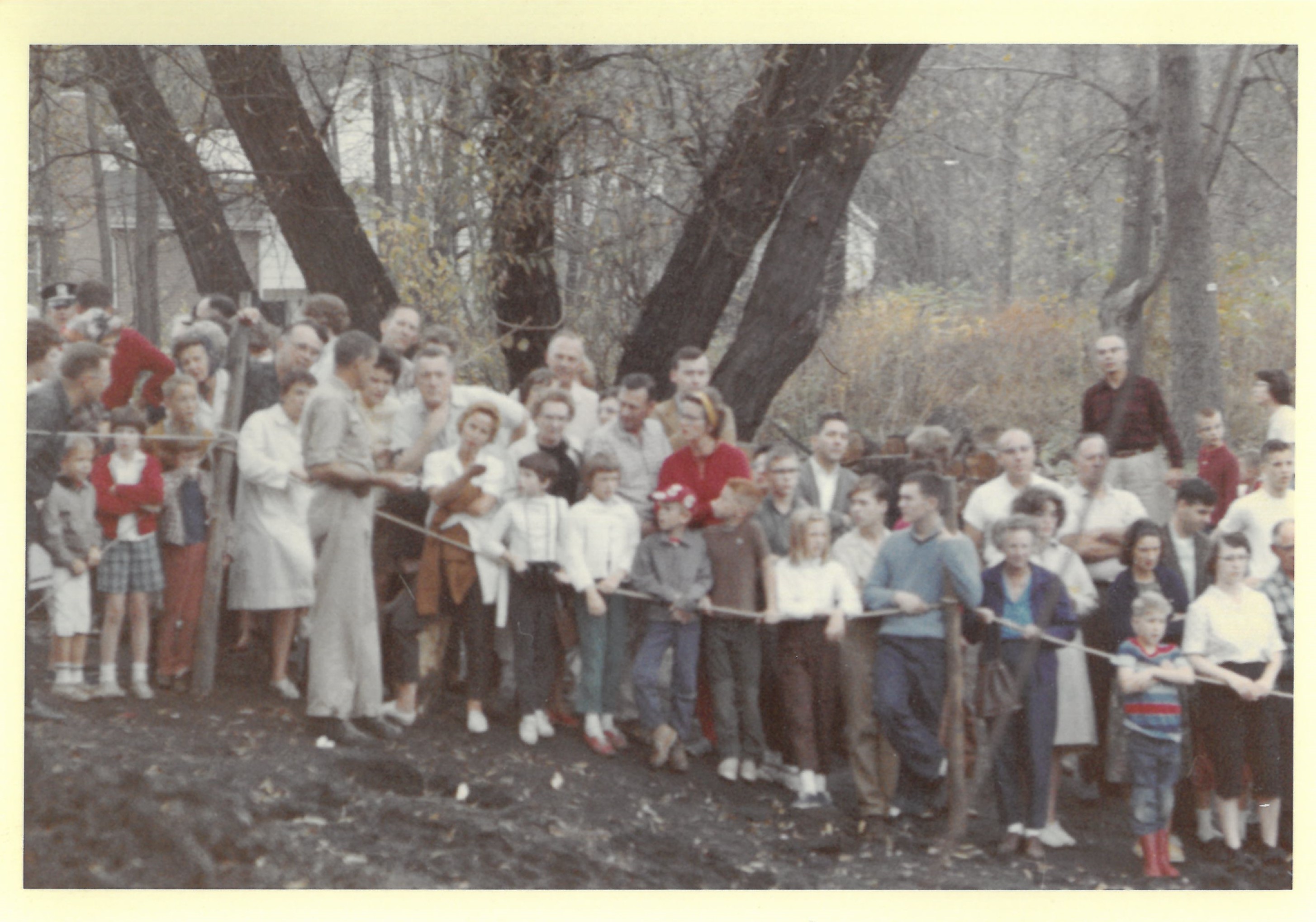
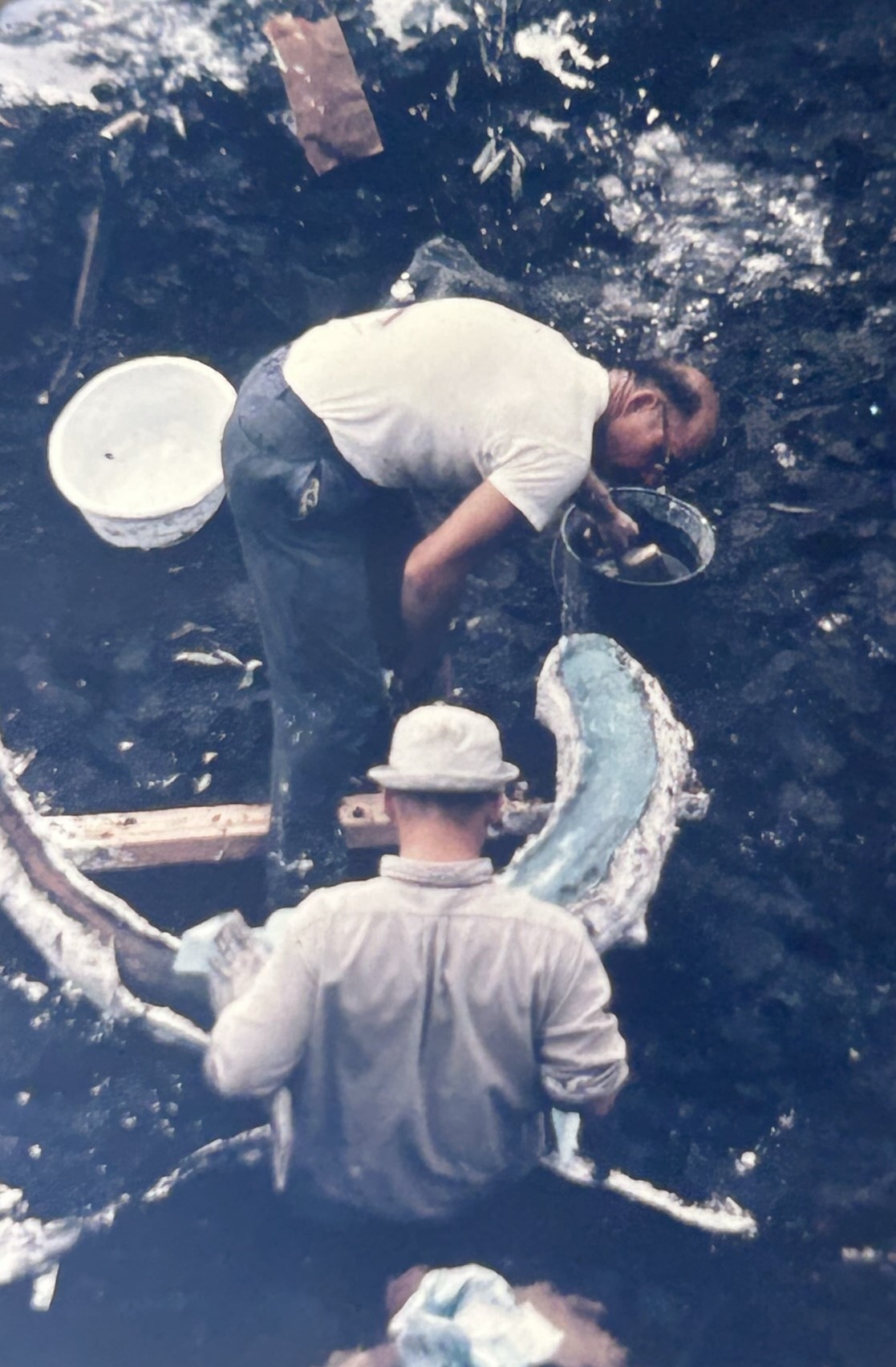
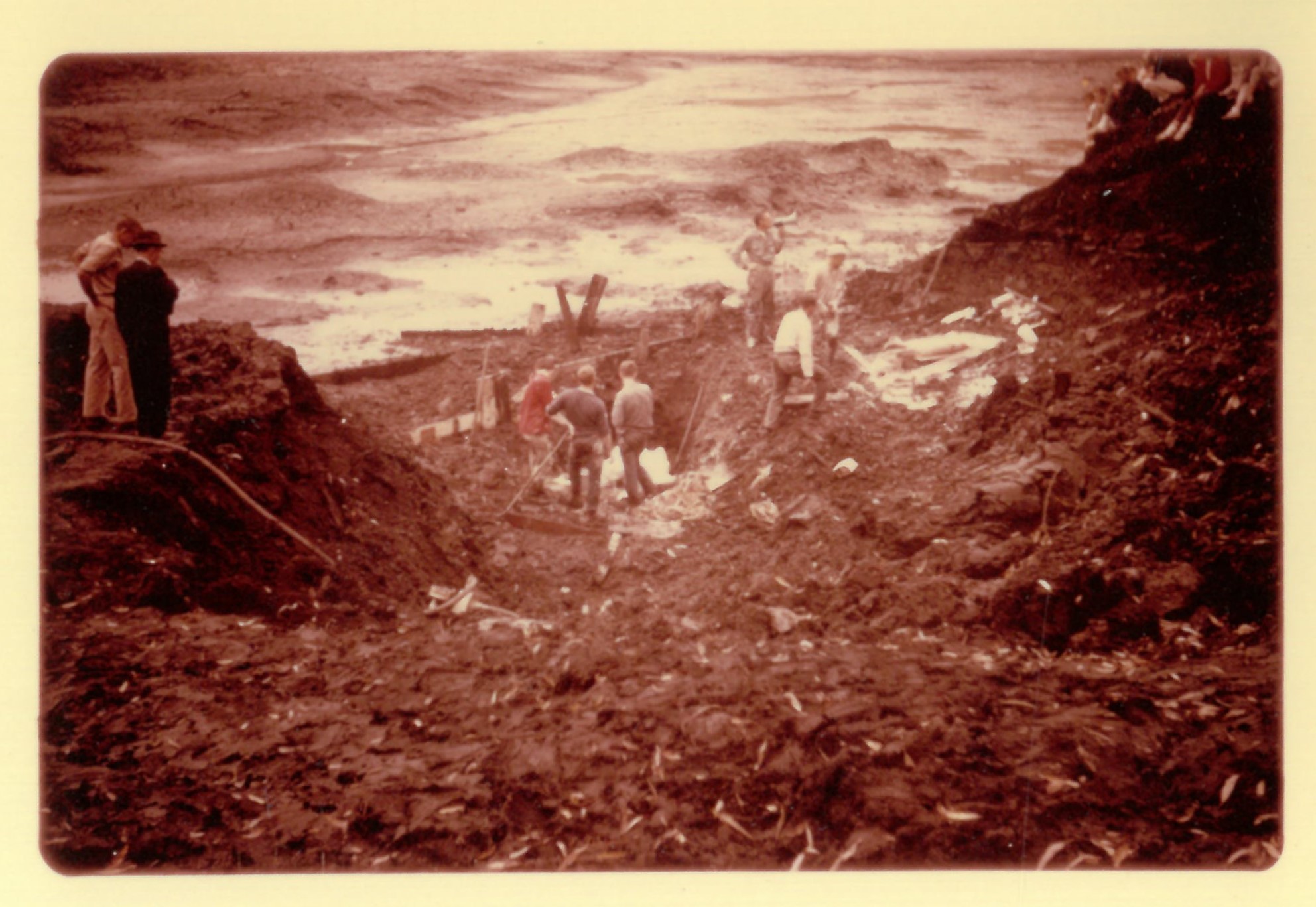
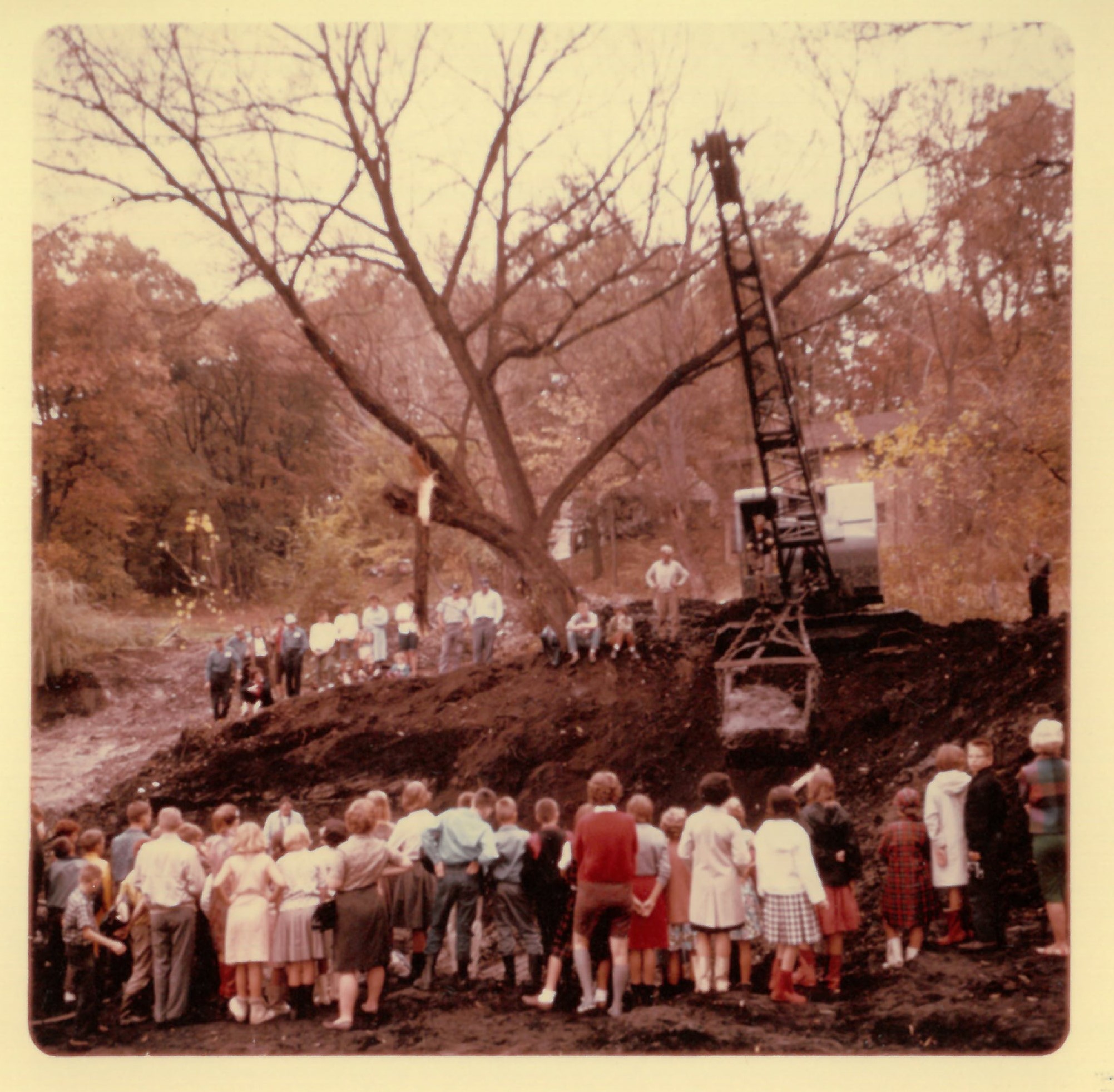
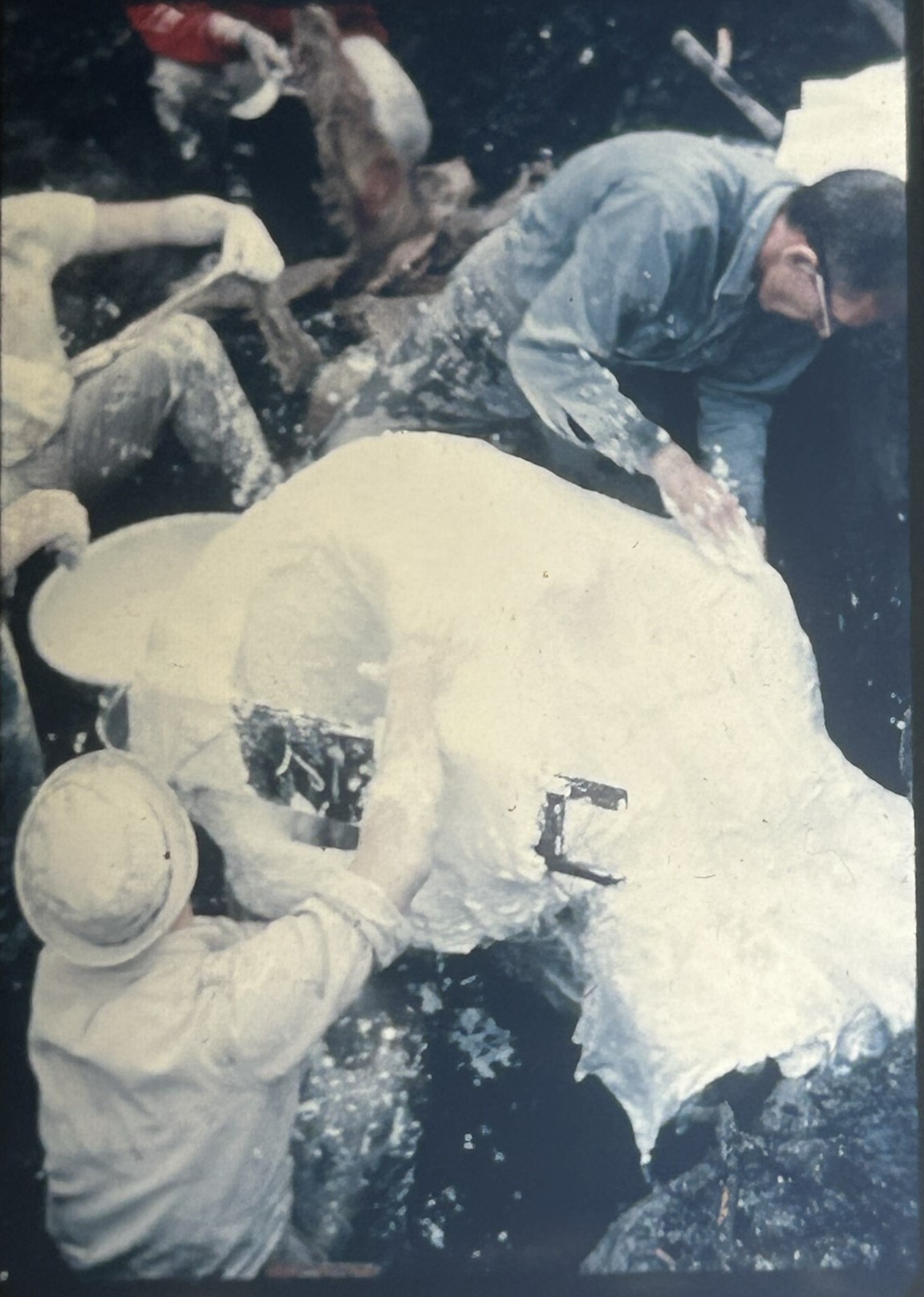
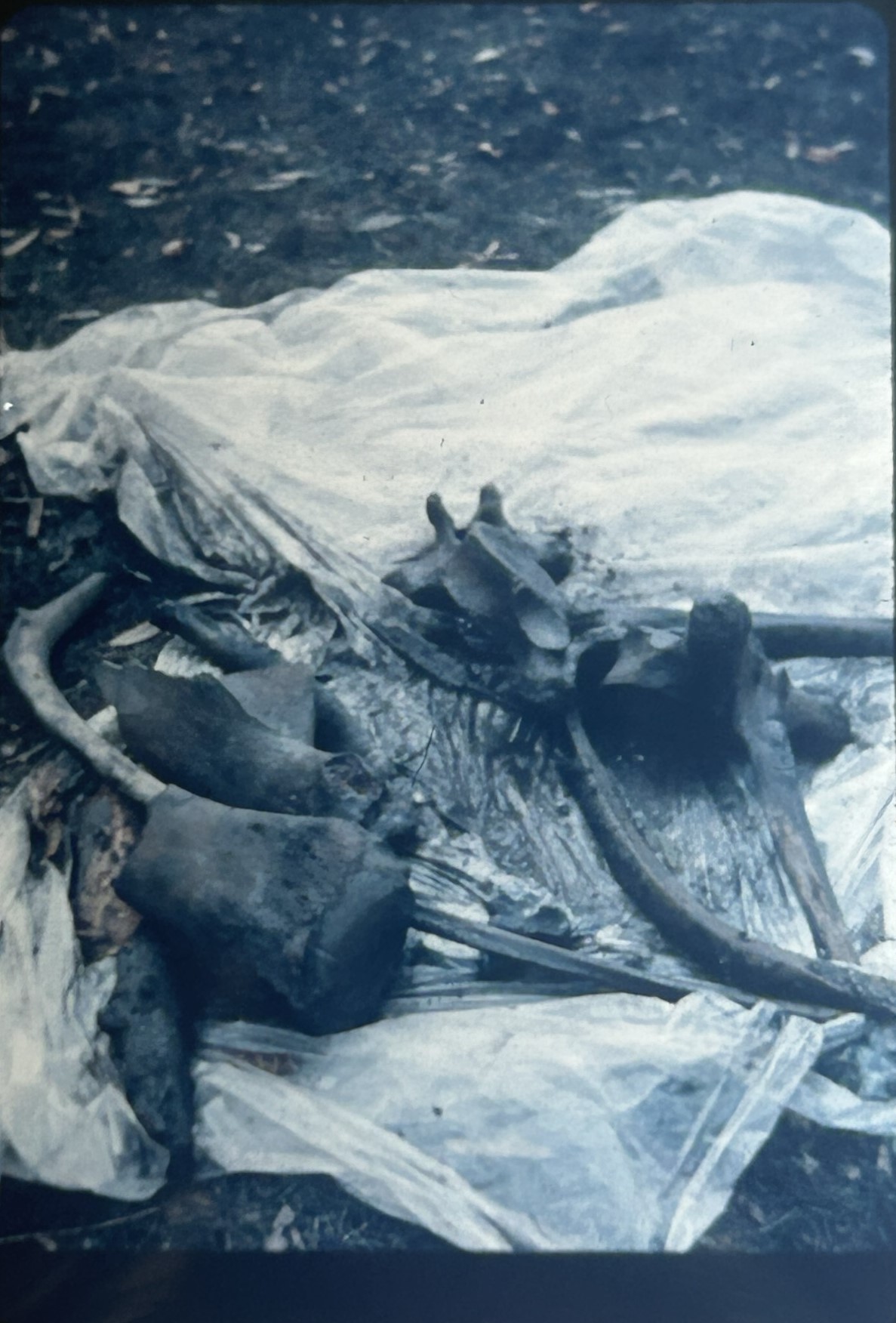
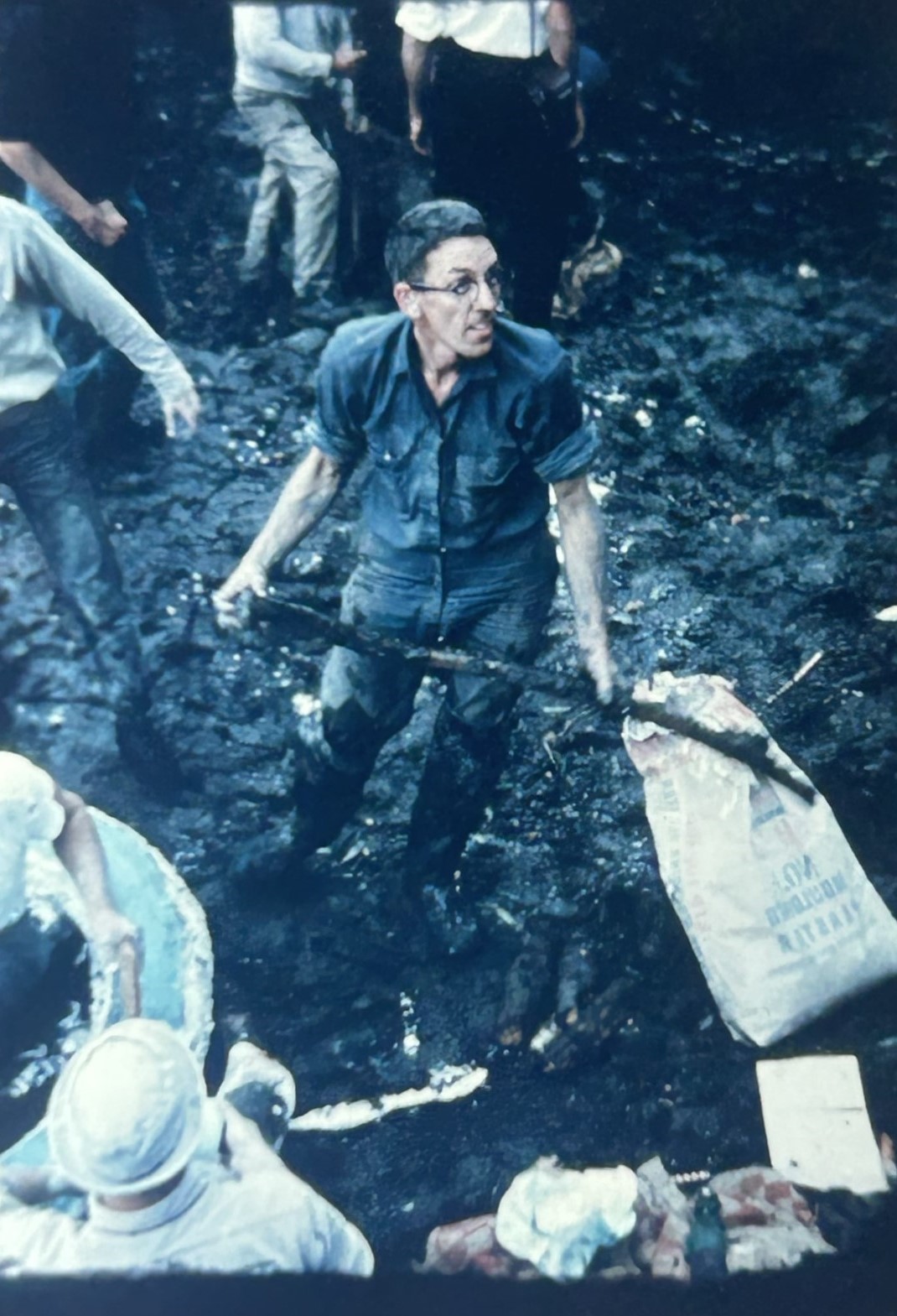
Snapshots from the excavation of the mastodon skeleton, October 1963. Pictured is Dr. Block in overalls with a megaphone, as well as several Wheaton students who assisted in the dig. Excavation involved not only uncovering the bones from the site, but also coating them in plaster for preservation and safe transport. RG 10.02, Box 4 and 5.
Over several days additional bones surfaced, including a skull with well-preserved teeth that helped confirm the find as an American mastodon skeleton. Based on the discovery of a broken leg bone, the excavators posited that the unfortunate creature may have been injured and died at the site of what had been an ancient lake. The water and muddy lakebed encased the bones, preserving them from decomposition for more than 10,000 years. The mastodon was the second mastodon skeleton uncovered in DuPage County, the first being a dozen bones reportedly found in 1869 by local farmer Ned Jayne.
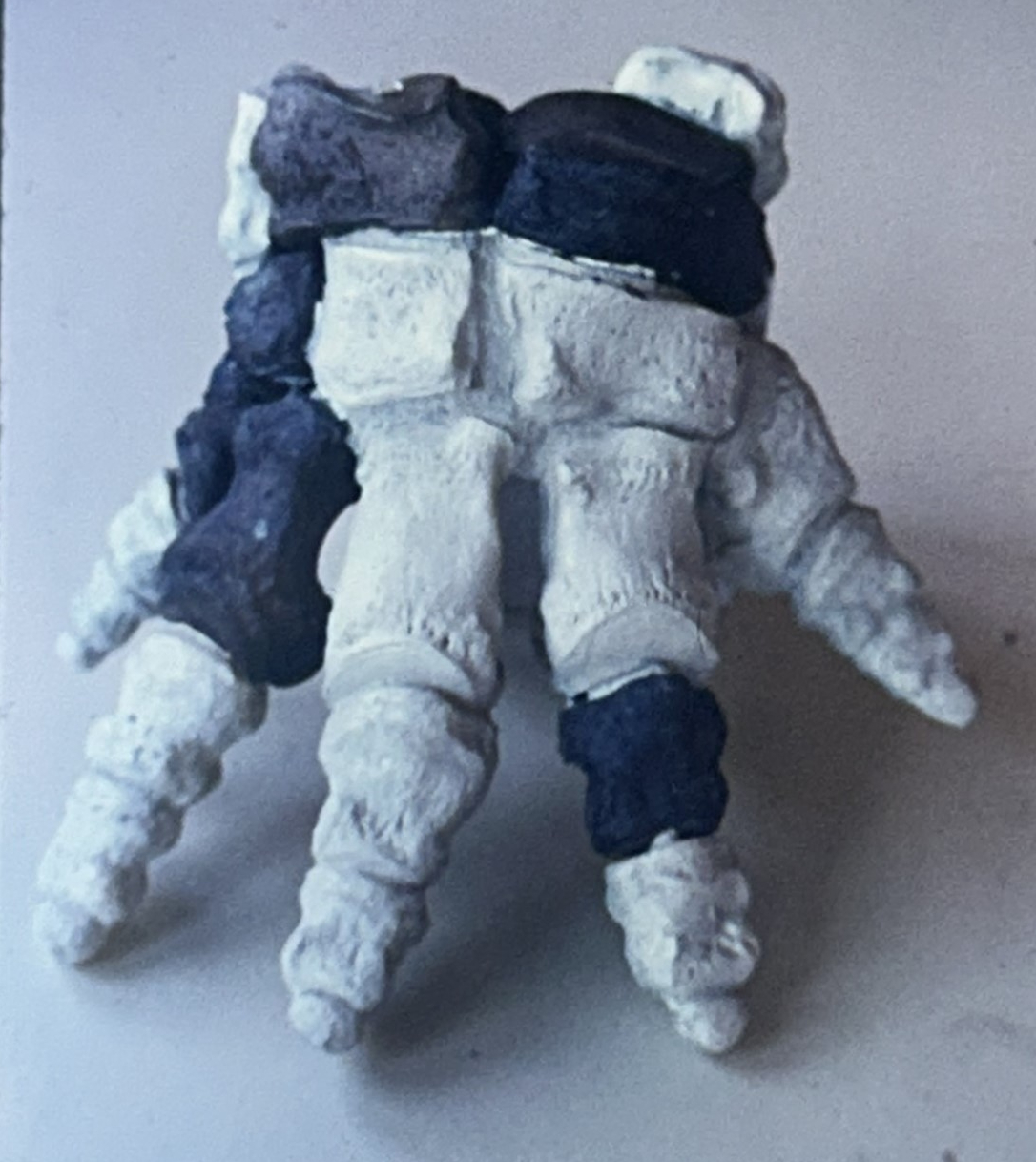
By the end of the dig more than 40% of the mastodon’s bones were recovered, including most of the large bones like the skull, tusks, ribs, and limbs. Judge and Mrs. Perry donated the skeleton to Wheaton College and the bones were transferred to a prepared work and display room in the basement of the Breyer Chemistry Building. Dr. Donald C. Boardman, then chair of the Geology Department, was placed in charge of the restoration. A mammoth task which took over 11 years to complete, Dr. Boardman enlisted talents and expertise from across the College. Geology students meticulously recorded, washed, dried, photographed and coated the bones with dilute shellac. Comparative anatomy students assisted in arranging the skeleton and identifying missing bones. Students and faculty from Wheaton’s art department also helped in sculpting mirror images of some of the missing bones in clay in preparation for later casting in fiberglass. The tusk and skull bones were also duplicated, as the originals were too heavy for display.
Officially identified as “Perry’s Mastodon” after Judge Sam Perry, Wheaton students determined that it needed “a meaningful pet name,” so the skeleton was initially named “Bonaparte” (bone-apart) in 1964. But the name was soon forgotten, and the Wheaton Mastodon was dubbed simply “Perry.”
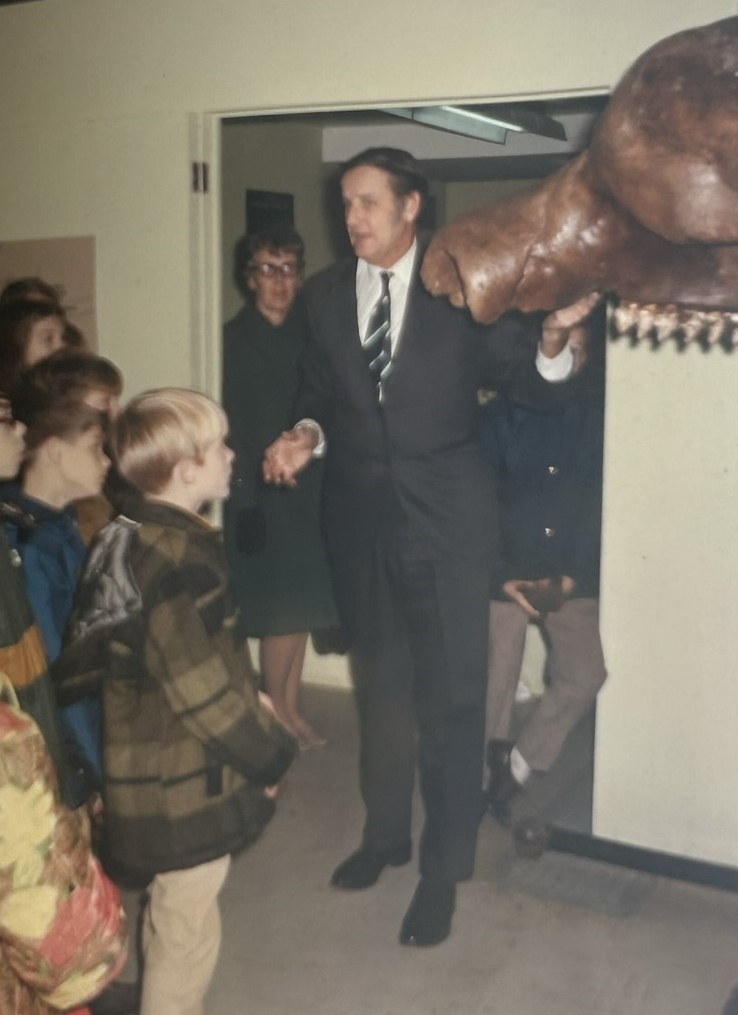
Over its years of reconstruction in the basement of Breyer Laboratory, Perry Mastodon received many visitors from the Wheaton and DuPage County community, especially children from local elementary schools and scout clubs. From October 1963 to June 1974, Dr. Boardman hosted visits for over 30,000 children to see the ongoing work of restoring the Mastodon bones and reconstructing the skeleton. Many local community groups and schools, like the Wheaton Lions Club and Longfellow Elementary, also donated money to help finance the restoration and display.
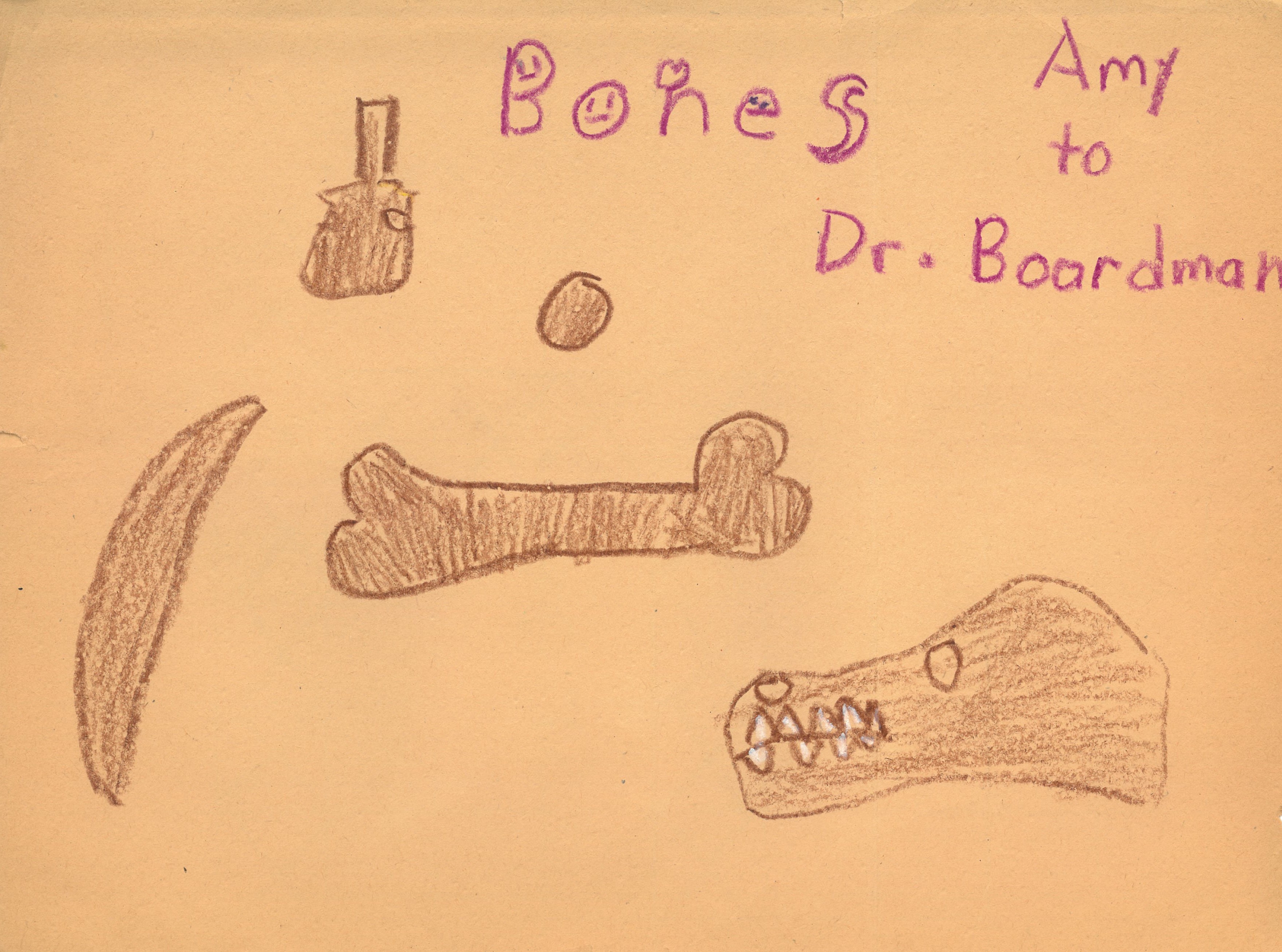
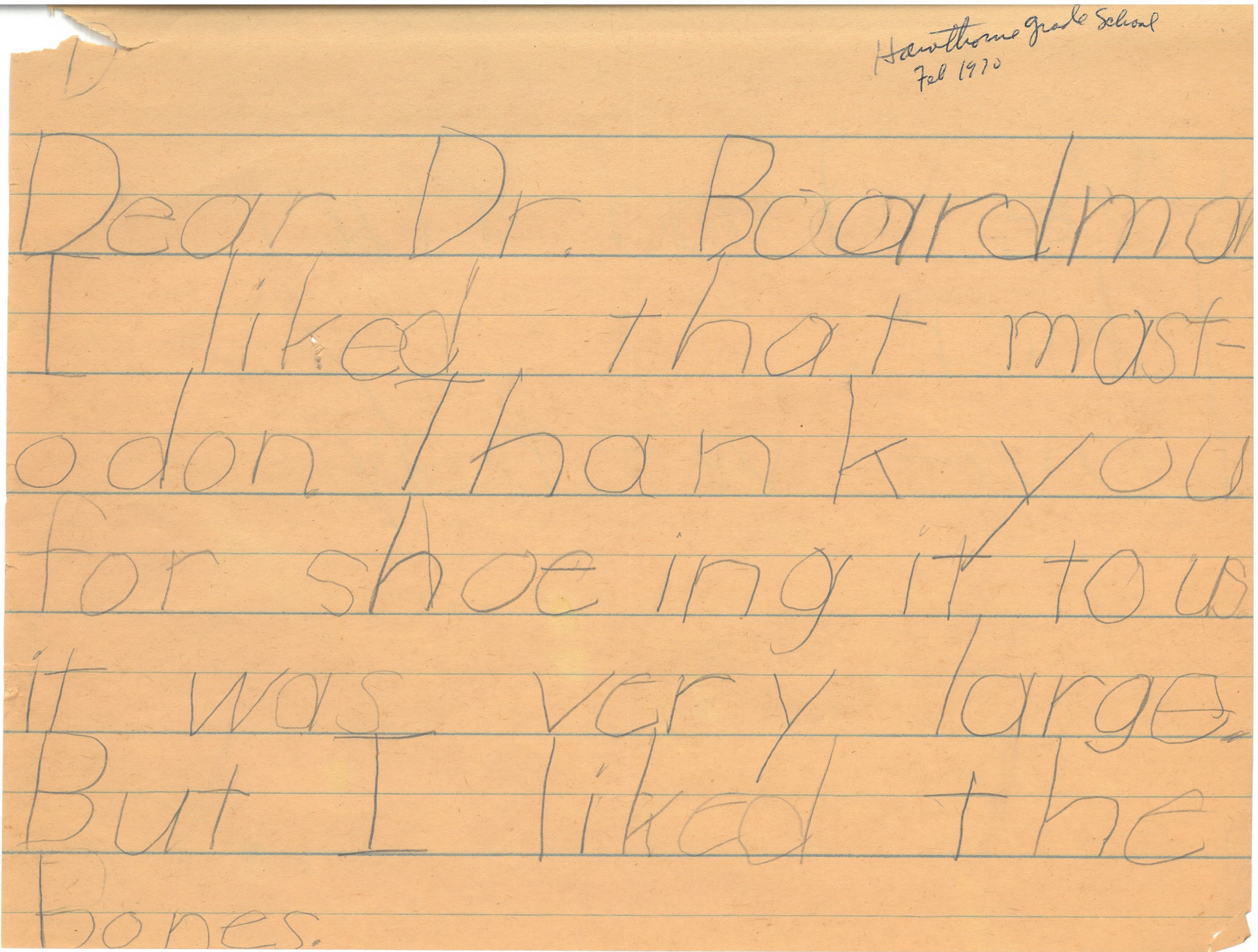
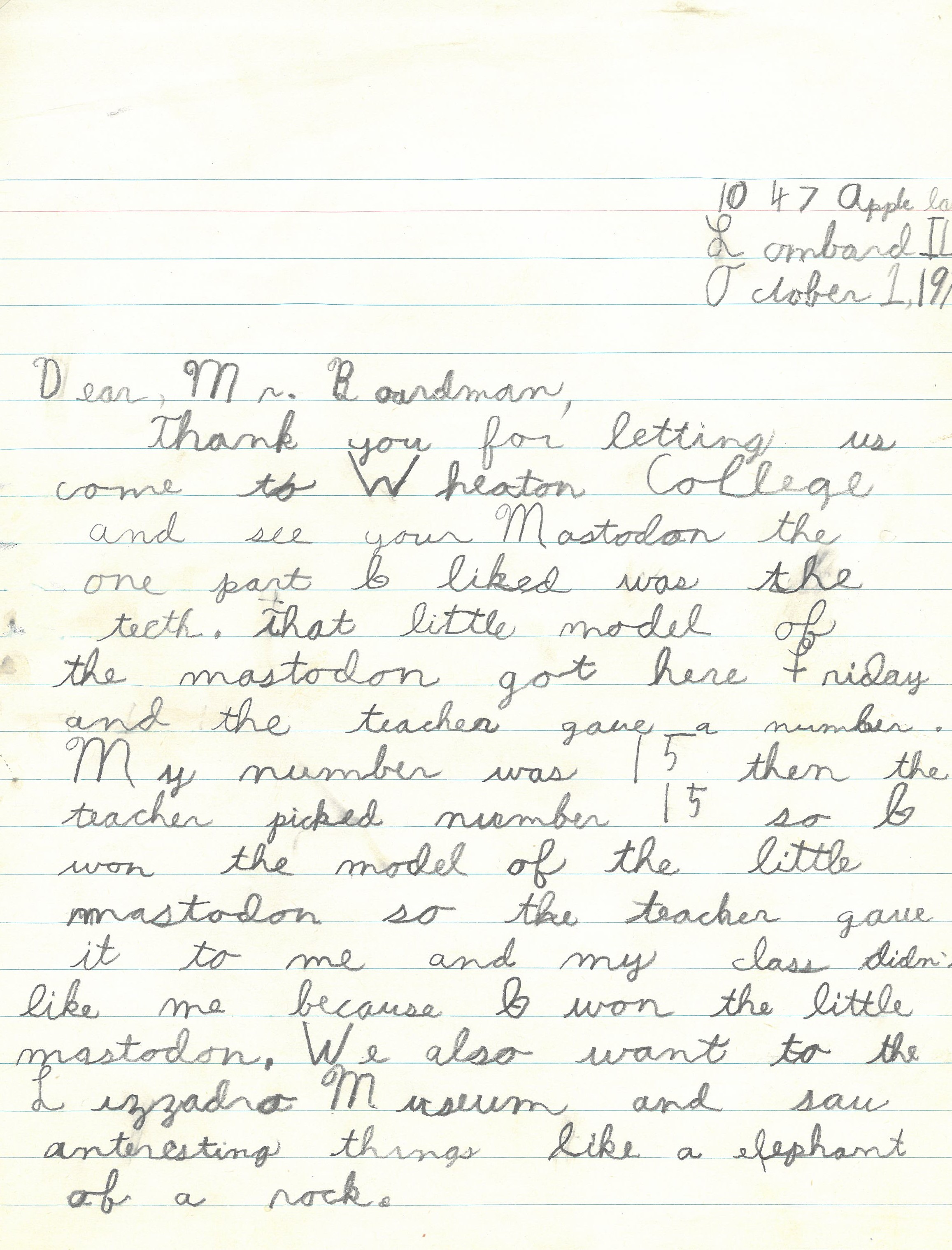
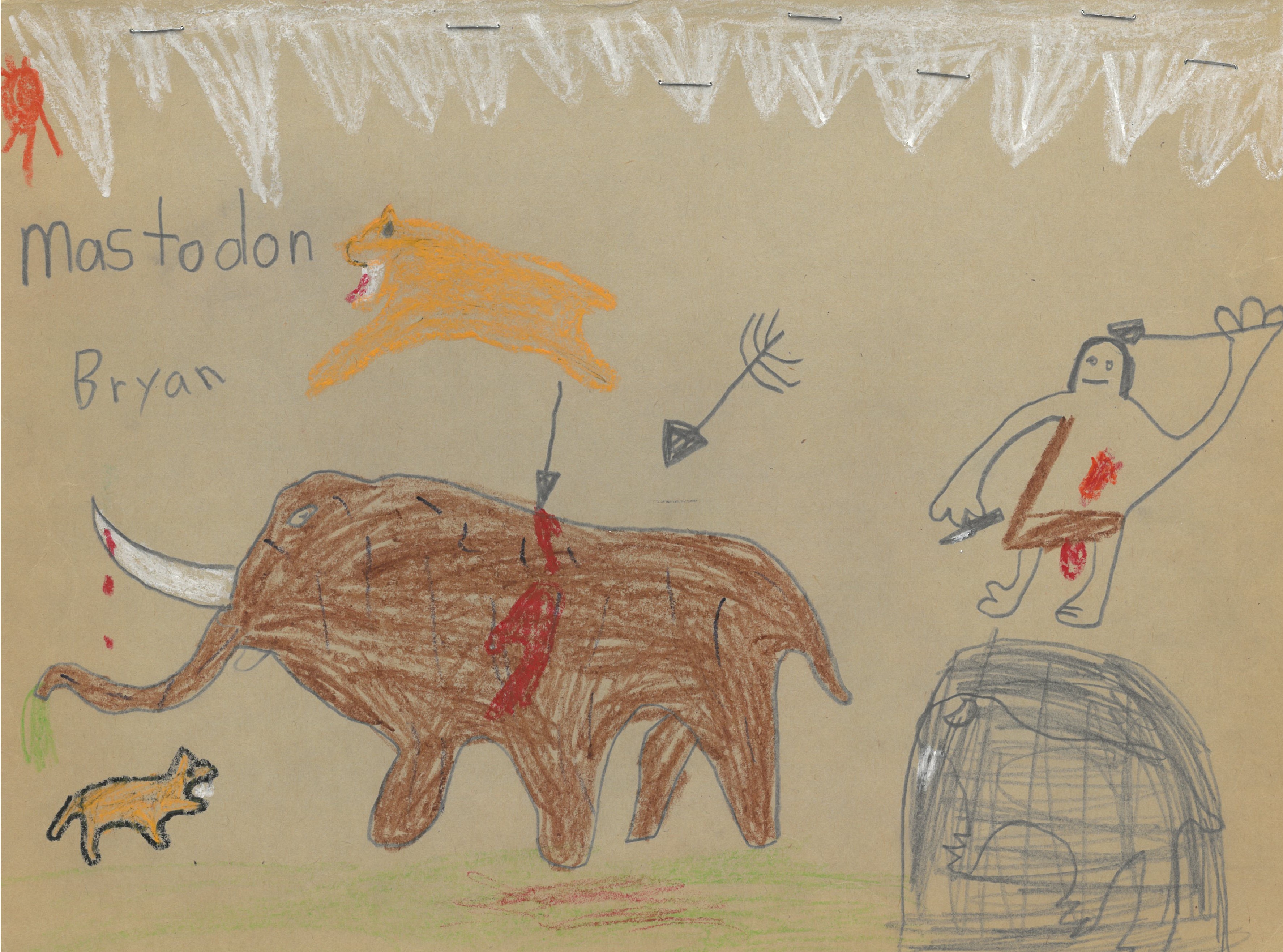
Select letters and drawings given to Dr. Boardman from local children after visiting Perry Mastodon, 1967-1971. RG 10.02, Box 1, “Correspondence – Children.”
Plans for a permanent exhibit of the skeleton began soon after its discovery. With a campaign for a new science building projected for the late 1960s, the Campus Planning Committee decided to incorporate a special exhibit wing into the existing plans. Construction began on the new building in 1970, and the exhibit wing was named the Edwin F. Deicke Exhibit Hall after one of the generous financial donors who made the Perry Mastodon project possible. Leading Chicago model-maker, Richard Rush, designed and constructed the new display, which featured a rotating mount with the mastodon’s skeleton on one side and a reproduction of the imagined skin and hair on the other. After more than ten years of fundraising, construction, and painstaking restoration, Wheaton president Dr. Hudson Armerding officially dedicated the exhibit on January 18, 1975.
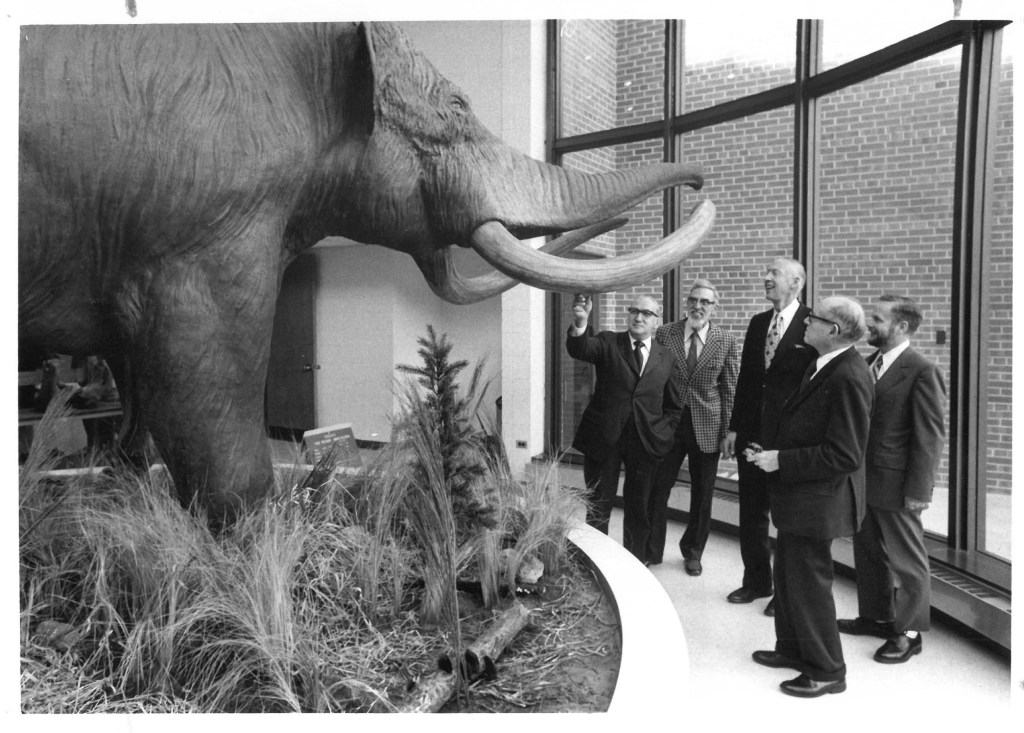
One of the better student pranks in Wheaton’s history involved the Perry Mastodon not long after its dedication. A phony recording was found to have replaced the original exhibit narration. The tape told a reworked and fanciful history of Perry Mastodon that included being frozen in a giant ice cube for thousands of years, being tranquilized by Judge Perry after reawakening, having half of its body removed for use in the cafeteria, and knowing how to talk and dance, among other things. The prank was the work of Larry Shackley (’77) who recorded the fake tape in the WETN studios.
Listen to the alternative recording now held by the College Archives.
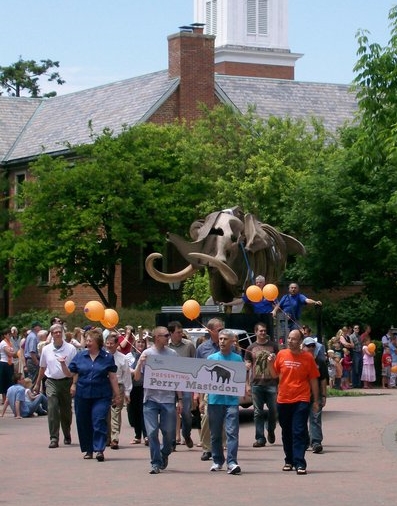
After more than three decades of standing sentinel over Wheaton’s central Quad, Perry Mastodon moved in 2010 from the Deicke Exhibit Hall to a new home in Meyer Science Center. With over a thousand people in attendance, Perry was carted by flat-bed truck to great fanfare and excitement. The fun can also be seen on Youtube. Campus visitors can still see Perry at the Meyer Science Center during regular visiting hours, Monday-Saturday 7 am – 11 pm.
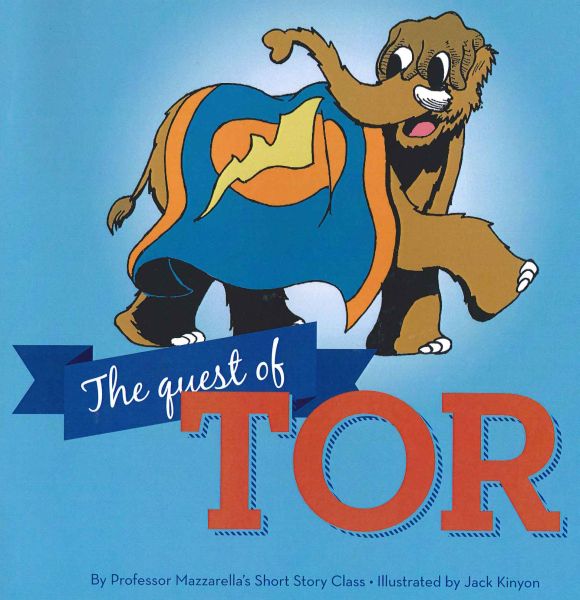
When Wheaton was considering a new character mascot in 2011, a mastodon was a natural choice. After centuries alone, Perry finally received a companion in Stertorous “Tor” Mastodon. Professor Nicole Mazzarella’s Short Story Class explored the origins of the new mascot in their 2013 publication The Quest of Tor. The story described a young mastodon who left his herd and stomped across the United States, searching for “the land of Wheaton,” where a monument honors his legendary ancestor. Endearing himself to the campus, Tor is invited by Dr. Ryken to stay. These days, at Wheaton College athletic events, Tor is often seen proudly displaying the Thunder banner amid cheering fans. Illustrated by Jack Kinyon, the booklet is now part of the College Archives’ collection and can be viewed in the Manuscripts Reading Room at Billy Graham Hall.
Explore more correspondence, reports, photographs, and other records of the dig, restoration, and exhibit of Perry Mastodon through the Perry Mastodon Excavation and Exhibition Records in the College Archives.
 From the Vault