In September 1959, Wheaton, Illinois, made history as “the smallest city ever to conduct a crusade,” when it welcomed evangelist Billy Graham back to his alma mater, Wheaton College.
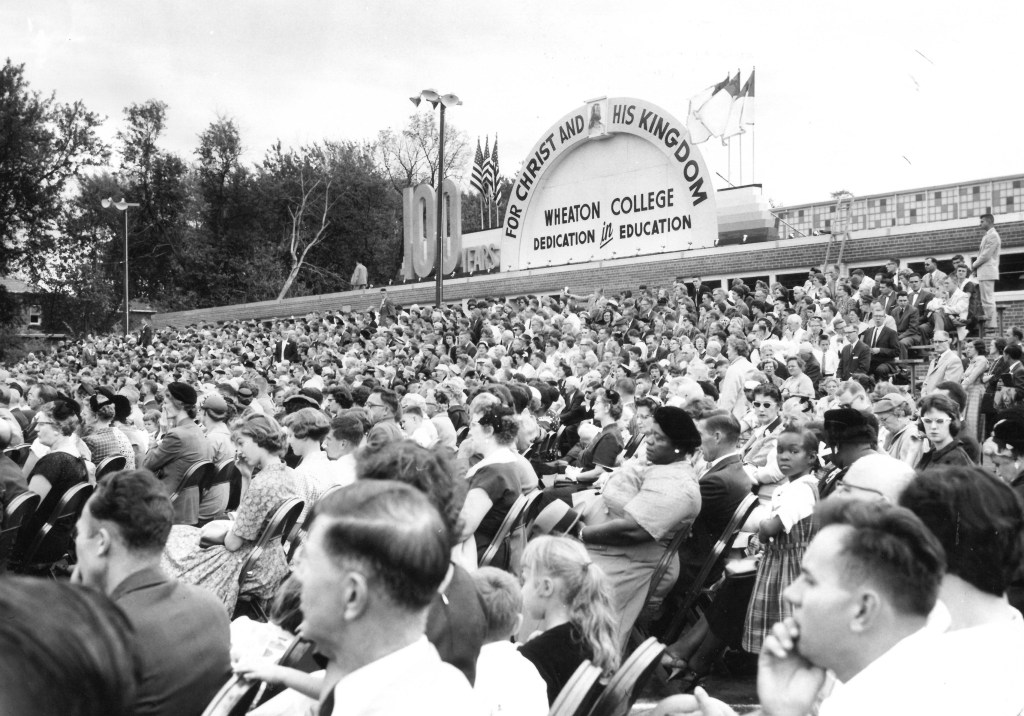
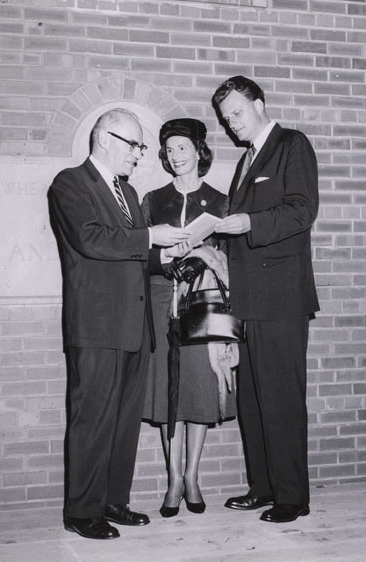
To commemorate the 65th anniversary of the Wheaton crusade, Wheaton Archives & Special Collections features below recordings, photographs, and documents from this historic event.
Originally, Wheaton’s president, V. Raymond Edman, had invited Graham to lead the College’s annual fall evangelism meetings as part of its centennial year celebrations. However, at Graham’s suggestion, the scope of the event quickly expanded to a weeklong crusade that extended far beyond the campus, reaching into the surrounding suburbs and Chicago. The following letter from Billy Graham to Wheaton Chaplain Evan Welsh, held in the College’s Centennial Committee Records, outlines Graham’s growing vision for the meetings:
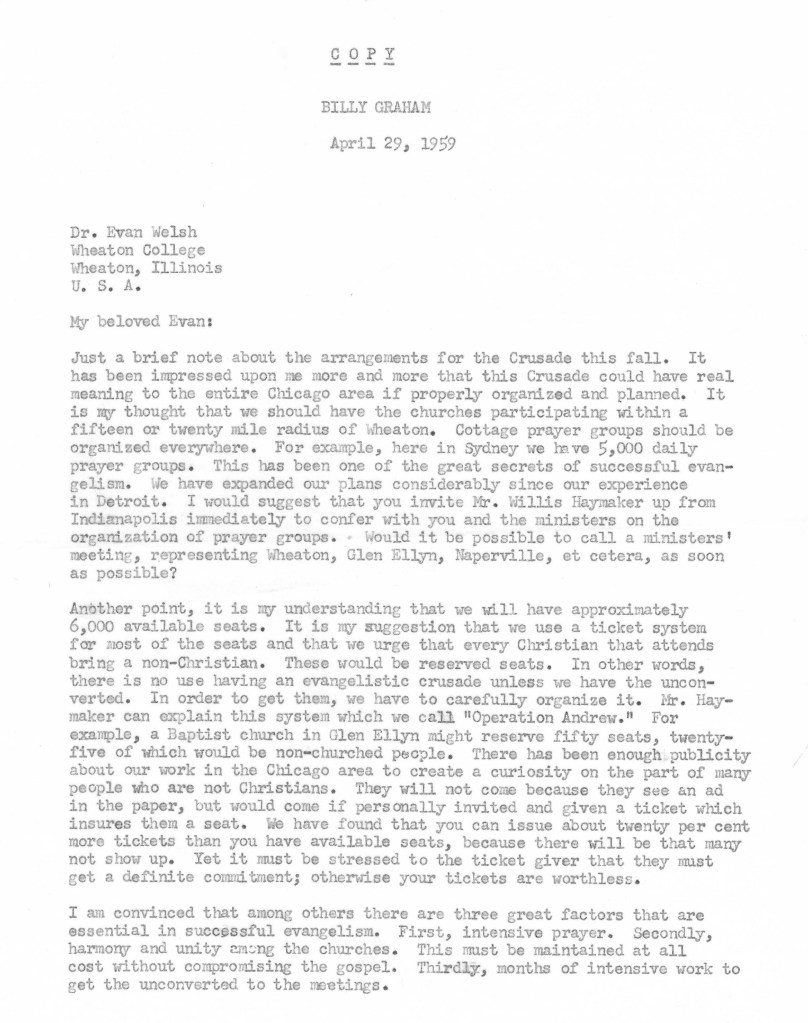
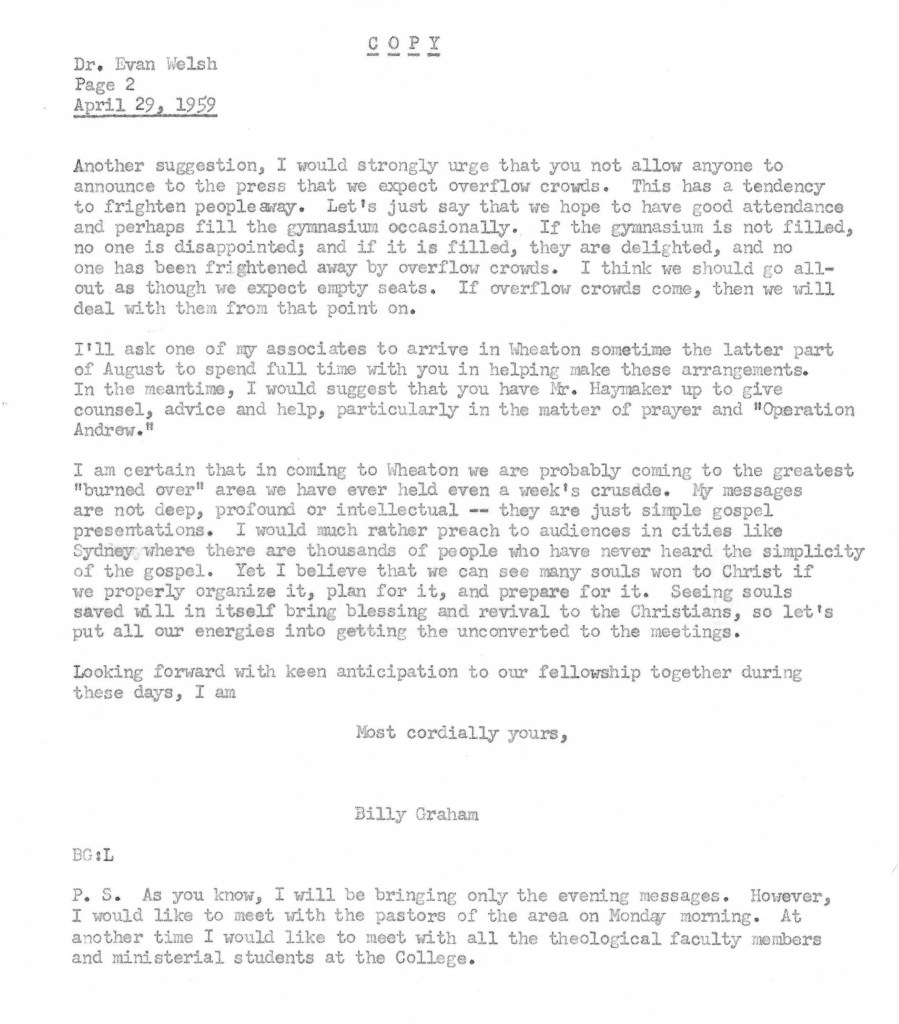
Set for the last week of September, a committee of Wheaton College staff and faculty and Billy Graham Evangelistic Association (BGEA) members organized a busy series of evangelistic meetings, college chapels, and church services, led by Graham and his associate evangelists Leighton Ford, Grady Wilson (both also Wheaton grads), and Joe Blinco. At the end of the week of public meetings, the College planned a three-day laymen’s evangelistic training conference, with BGEA staff leading some of the sessions and Graham speaking at the final banquet.
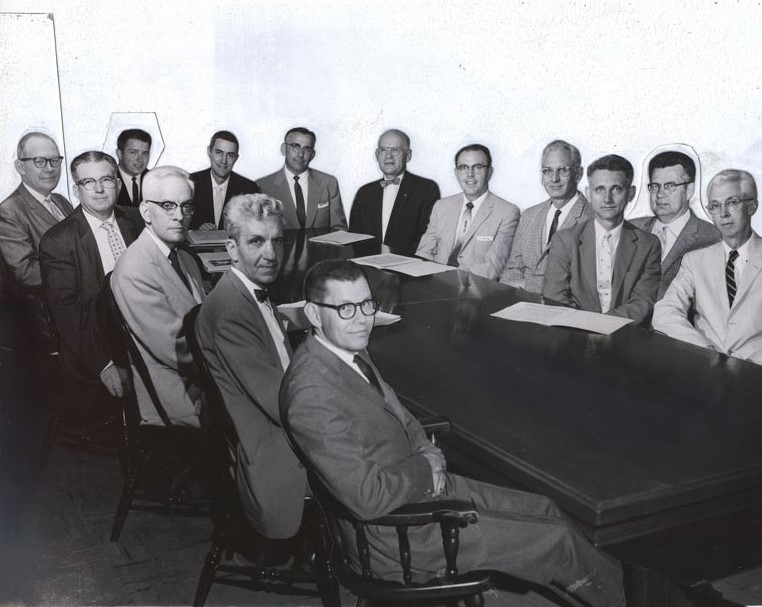
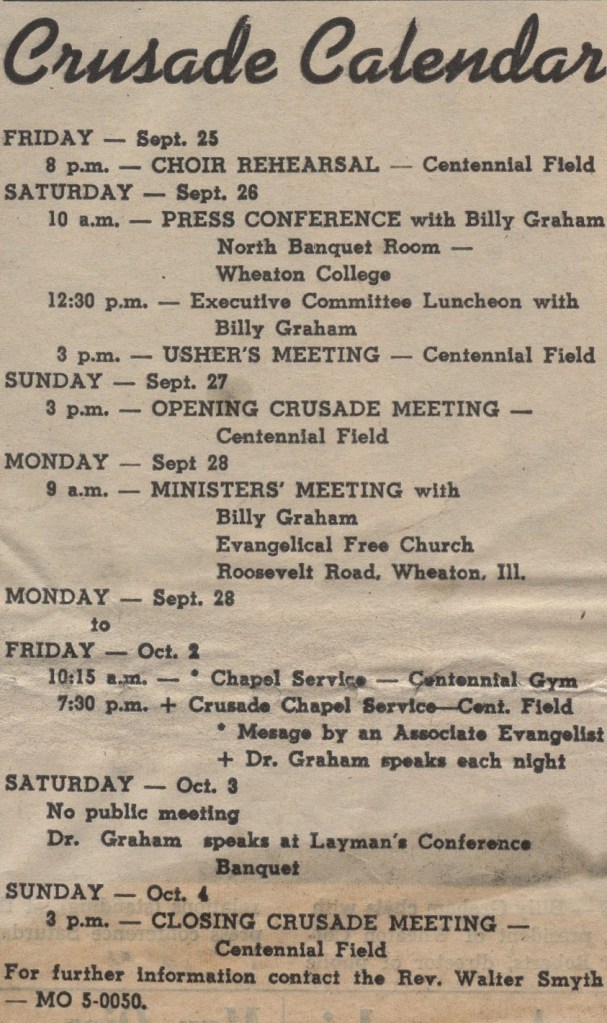
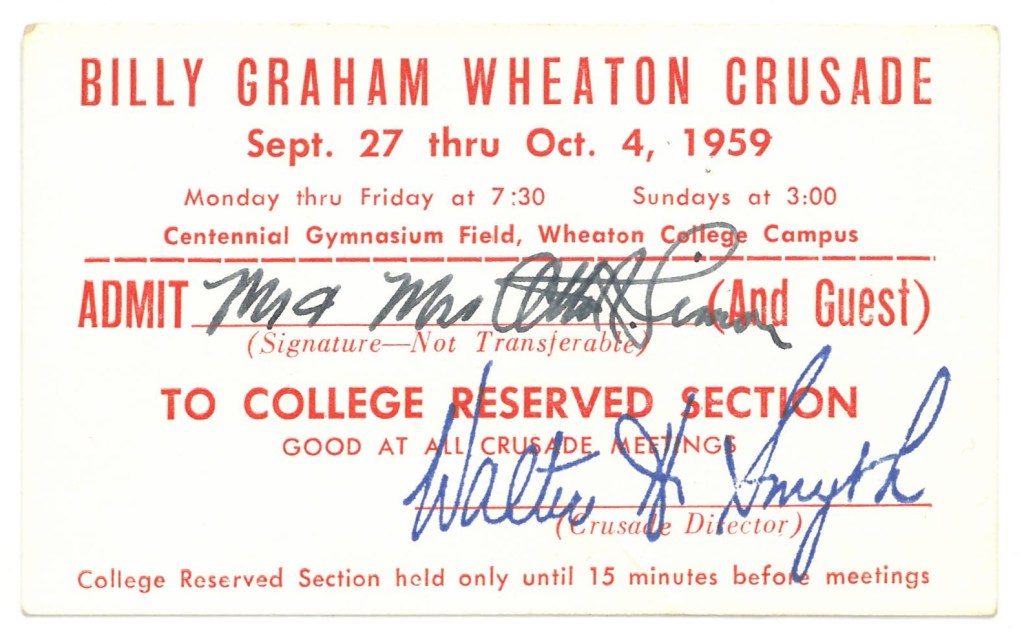
Through the summer of 1959, crusade preparations continued. Hundreds of Wheaton students and local church members trained as ushers and counselors or volunteered for the 800-member choir led by BGEA song leader Cliff Barrows. The College also completed construction of its new Centennial Gym, which was dedicated at the start of the crusade. The gym’s first events were chapel and crusade services held during the week.
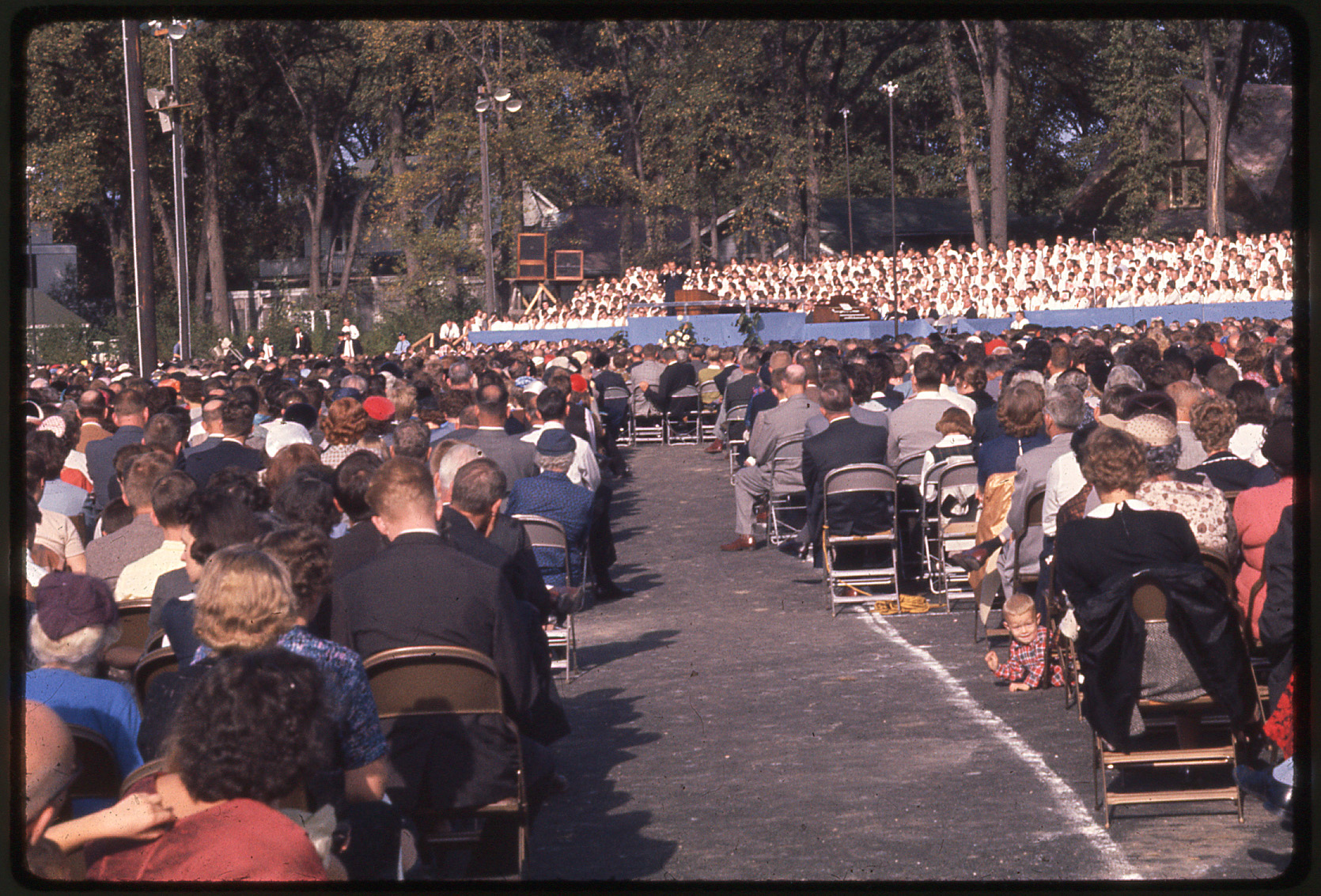
On September 27, the crusade’s opening day, buses and cars streamed in from surrounding suburbs and Chicago, bringing thousands to a large field just north of Centennial Gym. In a city of only 24,000, an estimated 18,000 people gathered on the newly dubbed Centennial Field. James L. Adams, city editor for the DuPage Daily Journal, marveled, “As you sat there and watched the seats fill up, you kept telling yourself that these people were not turning out for a football game or a theatrical event but were coming to hear a man tell about the grace of God” (Sept. 28, 1959). After music by George Beverly Shea and Cliff Barrows, and an introduction by V. Raymond Edman, Billy Graham preached on Acts 17 and issued an ardent call for response from the crowd.
Listen to the audio recordings of the 1959 Wheaton Crusade from Collection 28: Billy Graham Wheaton Crusade Records.
Despite intermittent cold winds and bad weather, total attendance at the crusade meetings was estimated at 101,000, with 2,182 people who came forward to give their lives to Christ or reaffirm their faith. As the crusade drew to a close, the College trustees honored the event by renaming the field where the outdoor meetings had taken place as Graham Field. (Today, the site is home to Fischer Hall.)
Following the three-day Laymen’s Conference at Wheaton College, Billy Graham and the Billy Graham Evangelistic Association (BGEA) moved on to a monthlong crusade in Indianapolis, Indiana—a city nearly 20 times the size of Wheaton. Reflecting on the experience of participating in the Wheaton crusade, one editorial in the October 6th Daily Journal wryly remarked, “It was something like playing the World Series on the Northside Park Little League diamond.”
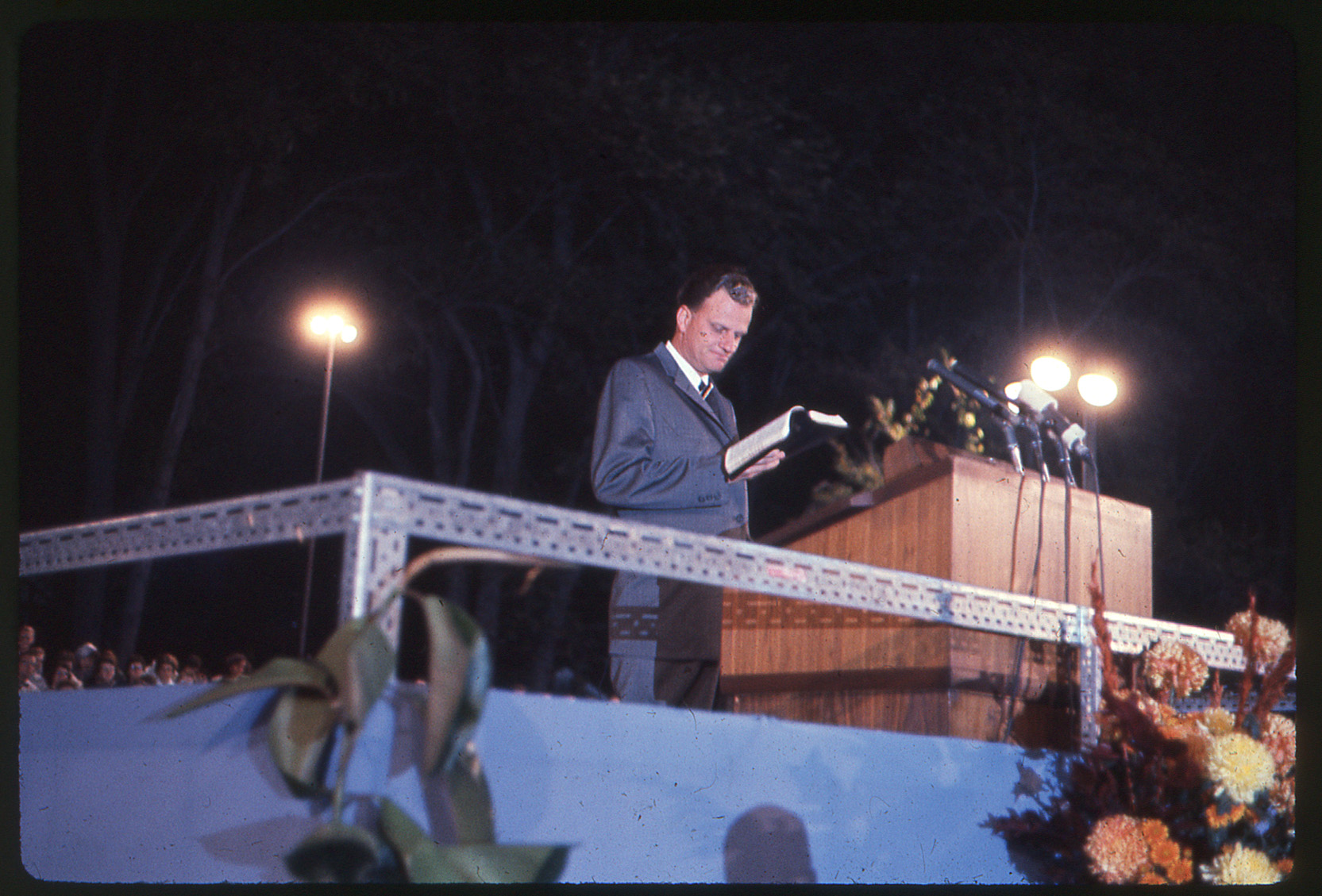
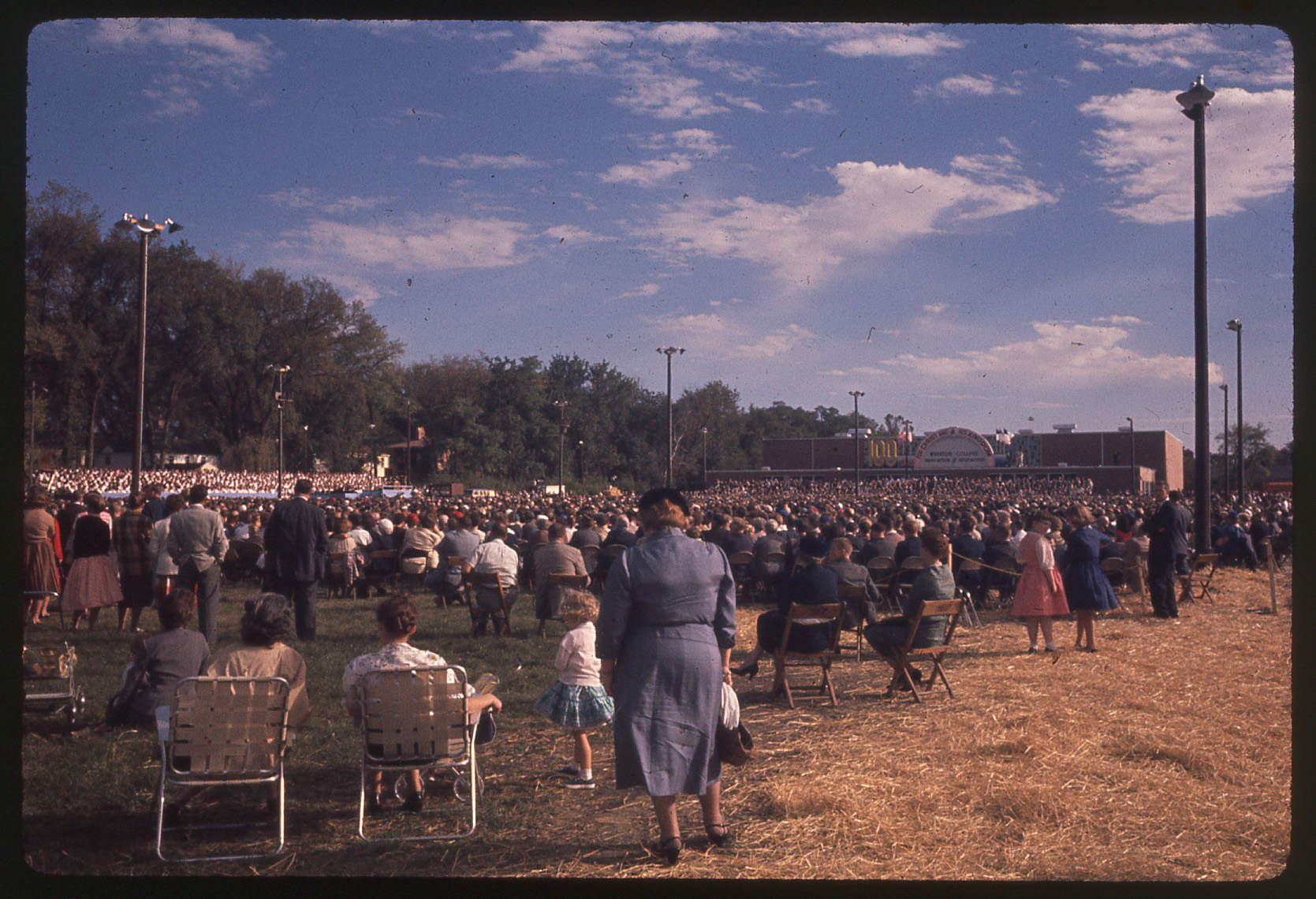
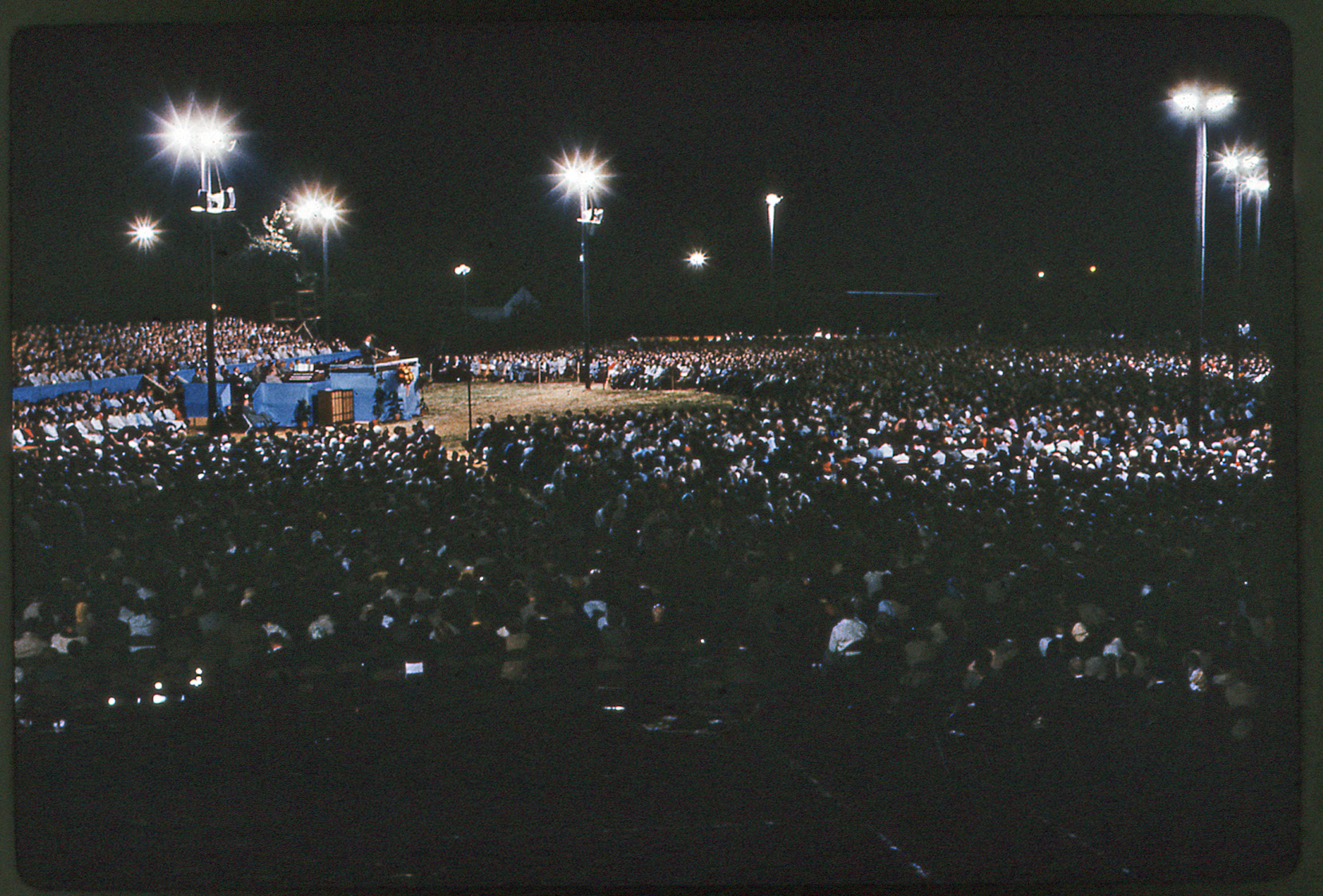
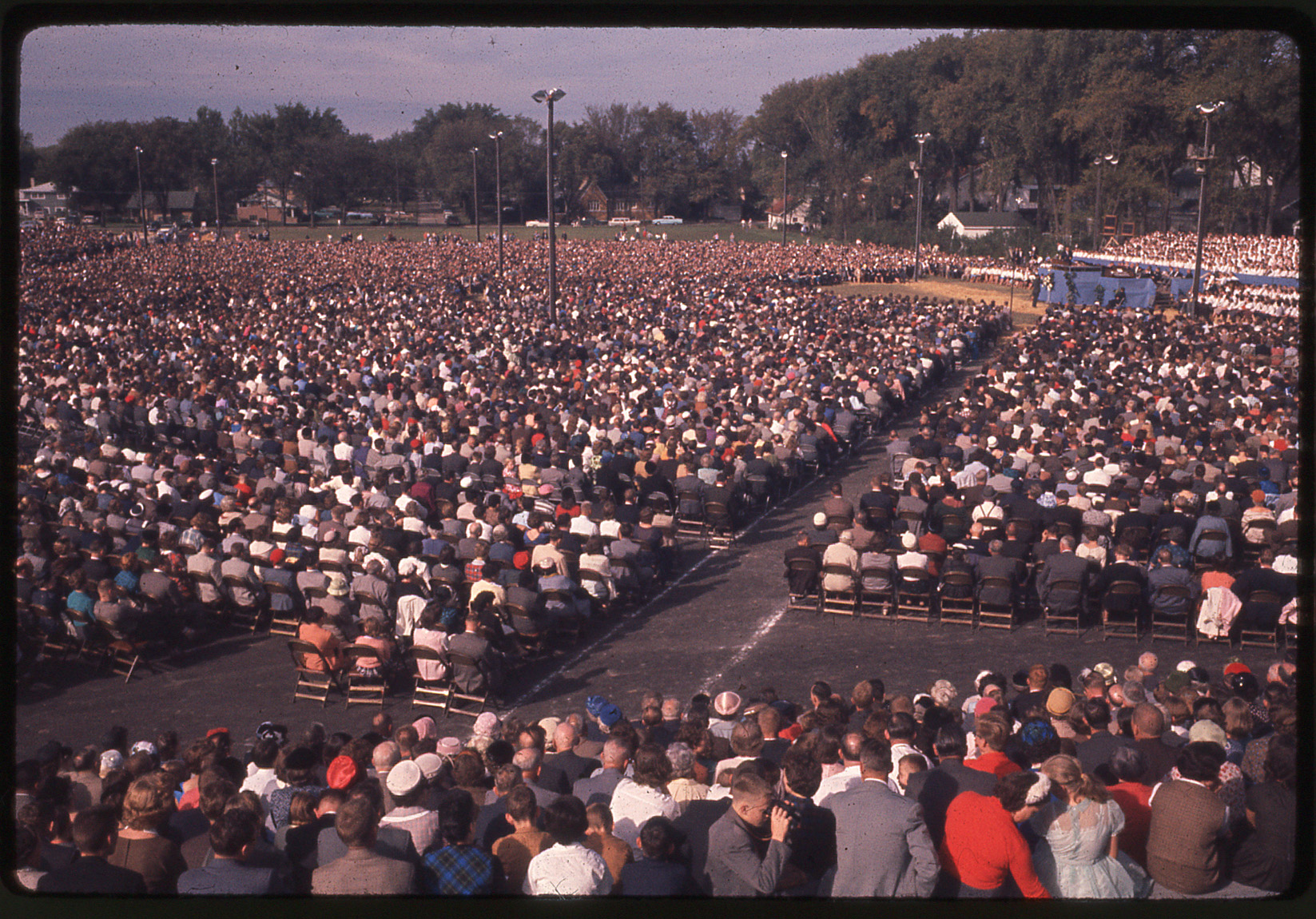
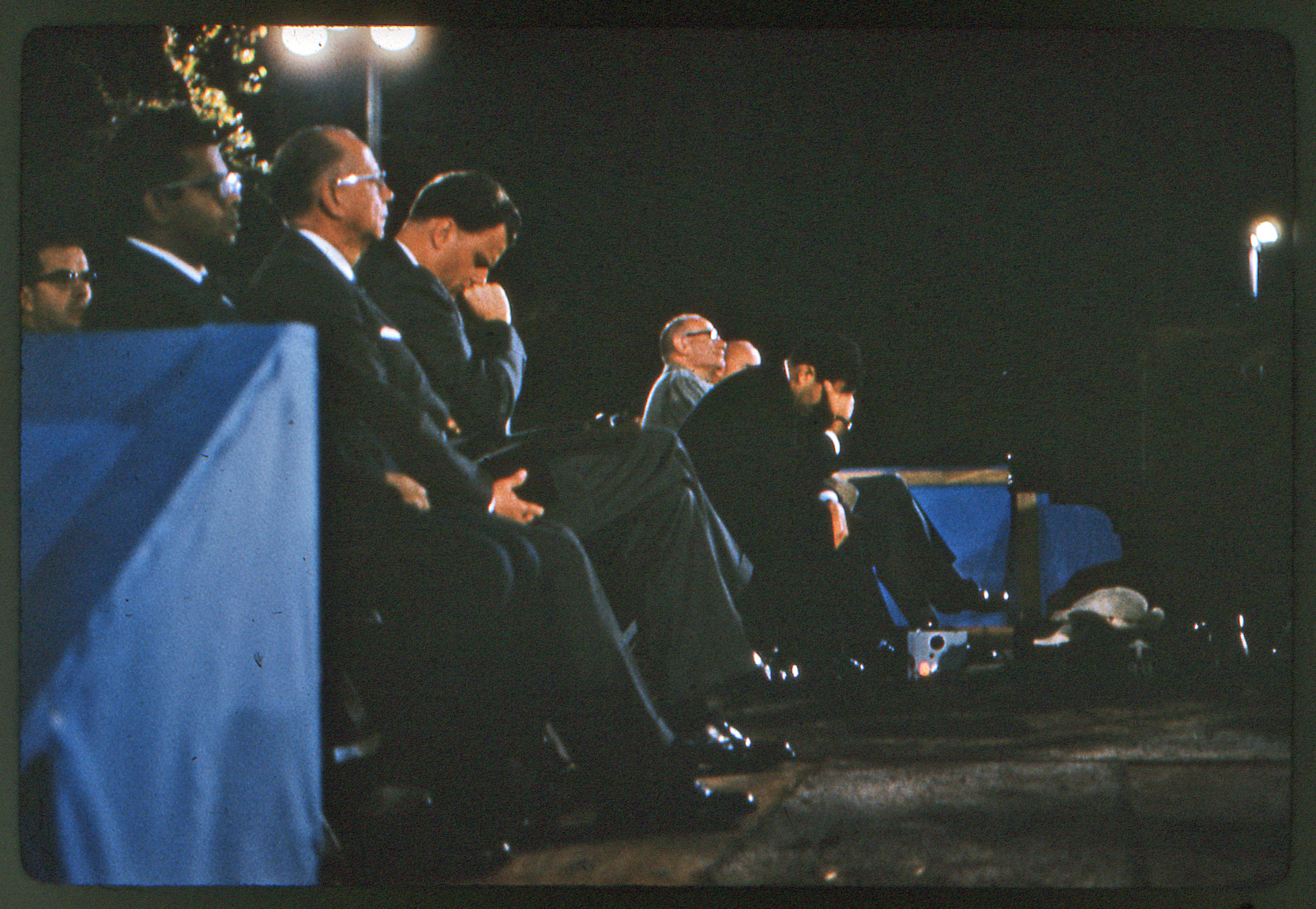
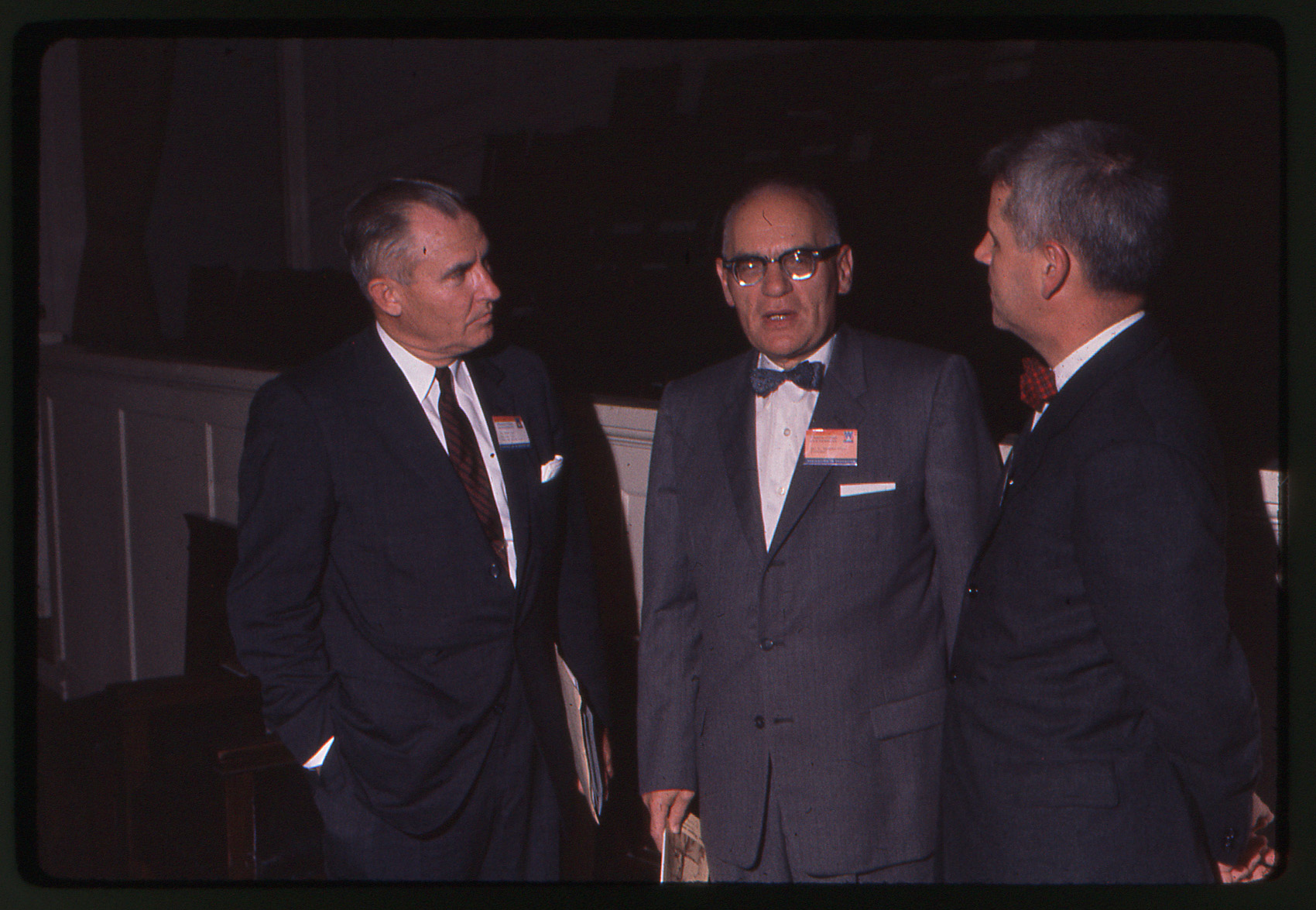
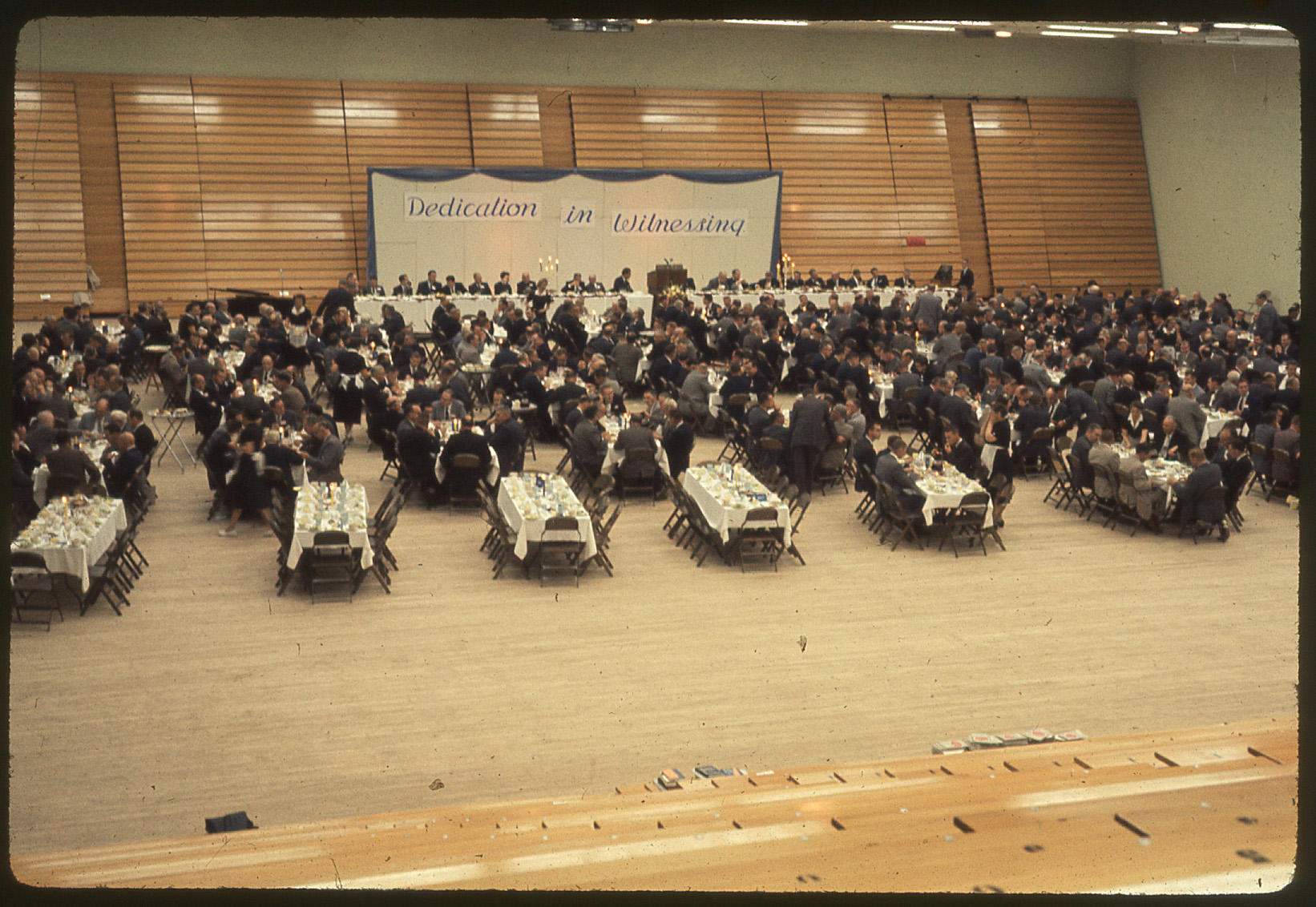
Even with the logistical challenges of transportation, press coverage, and unpredictable weather, leaders from Wheaton College and the local church community observed a meaningful spiritual impact. Rev. Allan Billman, pastor of Gary Memorial Methodist Church in Wheaton, reflected, “Our church should never be the same again. We have been touched—from our official board to our children. I am counseling with 90 of our young people who made decisions for Christ.” Similarly, Rev. Evan Welsh, in an October 10th Daily Journal article, observed that “in his four years in his present post [as Wheaton College Chaplain] and for years as a youth, a student, and a local minister, he had never seen a breaking down before God among the student body.” He added, “The community and the campus worked together beautifully; it was inspired.”
Dozens of clippings and photographs documenting the Wheaton Crusade are preserved in a scrapbook on the campaign put together by the Wheaton College Public Relations Department for Billy Graham. The scrapbook is now held in Collection 74: Ephemera of the Billy Graham Evangelistic Association. Additional materials on the Wheaton Crusade can be found in Collection 28: Billy Graham Wheaton Crusade Records and Wheaton College’s Centennial Committee Records, as well as the College Archive’s photograph collections.
 From the Vault