150 Years of The Wheaton Record

In November 1875, the Literary Union of Wheaton College published the first issue of the College Record, Wheaton’s student newspaper. Over the next 150 years, the Record became both a laboratory for student writing and journalism and a living chronicle of campus life. Its pages have documented student activities, campus developments, educational changes, social movements and conflicts, political campaigns, visiting speakers, chapels and mission work, theological debates, faculty projects, and countless other moments that trace the evolving history of Wheaton College.

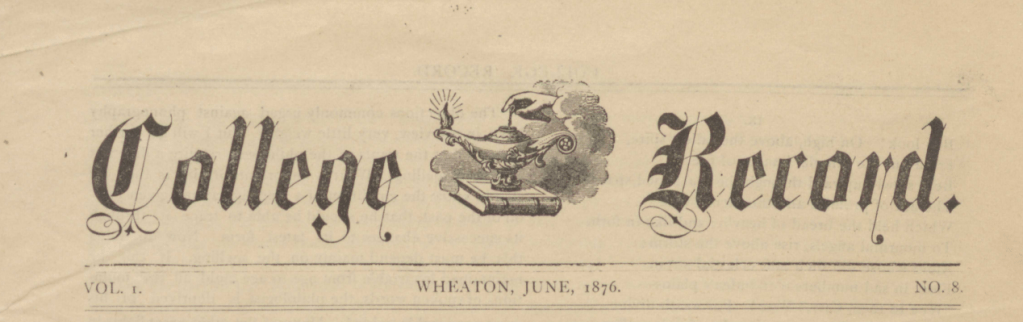
Wheaton Archives & Special Collections holds only scattered records for the first twenty years of the paper’s publication. Among these, the earliest surviving issue of the Record dates from June 1876. Although the inaugural issue of the Record is lost to history, the June 1876 editorial provides a helpful update on the paper’s first eight months, including plans for an enlargement of the paper from eight to sixteen pages. To fill this new space, the editors appealed directly to the student body, urging Wheaton students to contribute writing:

Students write for your paper. Don’t say you haven’t time to write because you are so pressed with your studies, but take a few moments each day to write and you will soon find you are the gainer by it. Of what value will your education be to you unless you learn to apply what you learn? It may, indeed, be some satisfaction to you to know that you have a college education, but certainly it will be of very little benefit to others if you know not how to use it. And in our opinion, there is no better way of putting to practical use the knowledge we have gained than by writing.

Let us, then, improve the opportunities given to us, and thus be enabled to benefit ourselves and our fellows. A college paper furnishes one of the means of improvement, and it is to be hoped that the students in future will improve the advantages thus offered to them more than they have in the past.

Continue reading

The Jim Elliot Bible Project

Ava Pardue and Mariah Sray

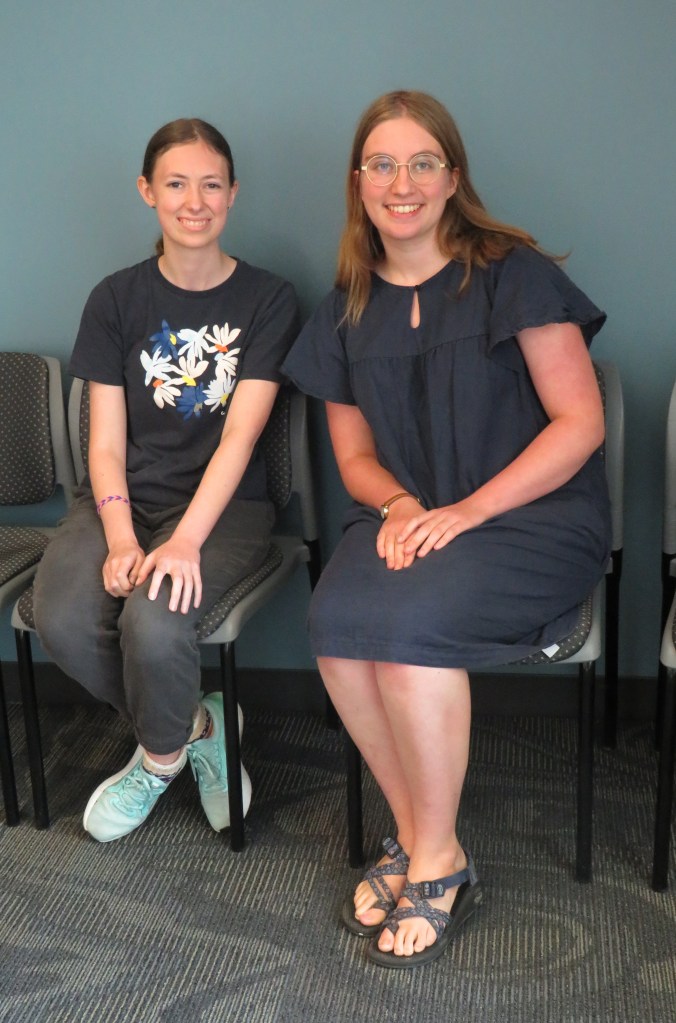
In November of 2024, Wheaton Archives & Special Collections collaborated with the Museum of the Bible to digitize Jim Elliot’s three college-era annotated Bibles held in CN 277: Jim Elliot Collection. After digitization was completed in February 2025, two archives interns, Ava Pardue and Mariah Sray, both part of Wheaton’s Aequitas Fellows Program in Public Humanities and Arts, spent the summer indexing all the annotations in the Bibles.

Ava Pardue just finished her freshman year at Wheaton. Along with being an Aequitas Fellow, she plans to major in English and Classical Languages. Mariah Sray is a senior at Wheaton with a major in Classical Languages integrated with Choral Studies.

Below, we feature an interview with Ava and Mariah about their work on the project.

What drew you to the Jim Elliot Bible project?

Ava: When I heard about the opportunity to work with Elliot’s Bibles, I jumped at the chance to engage with language, theology, and history in a way that could be useful to the public. One of the three Bibles is a Greek New Testament, which I was particularly interested in studying with the knowledge of Koine Greek that I’ve picked up during the last several years. And ultimately, I think the biggest thing that drew me to the project was a chance to look at Jim Elliot—a man hailed as a martyr, hero, and catalyst for modern missions—as an ordinary college student.

Mariah: An interest in exploring archival work drew me to this internship, but I was also curious to learn more about Jim Elliot. I knew the broad contours of his death in Ecuador but wasn’t familiar with the details of his life. I was also interested to how Jim interacted with his Bible, especially his Greek New Testament.

Continue reading

Wheaton College in Wartime: Life on the Home Front, 1941–1945

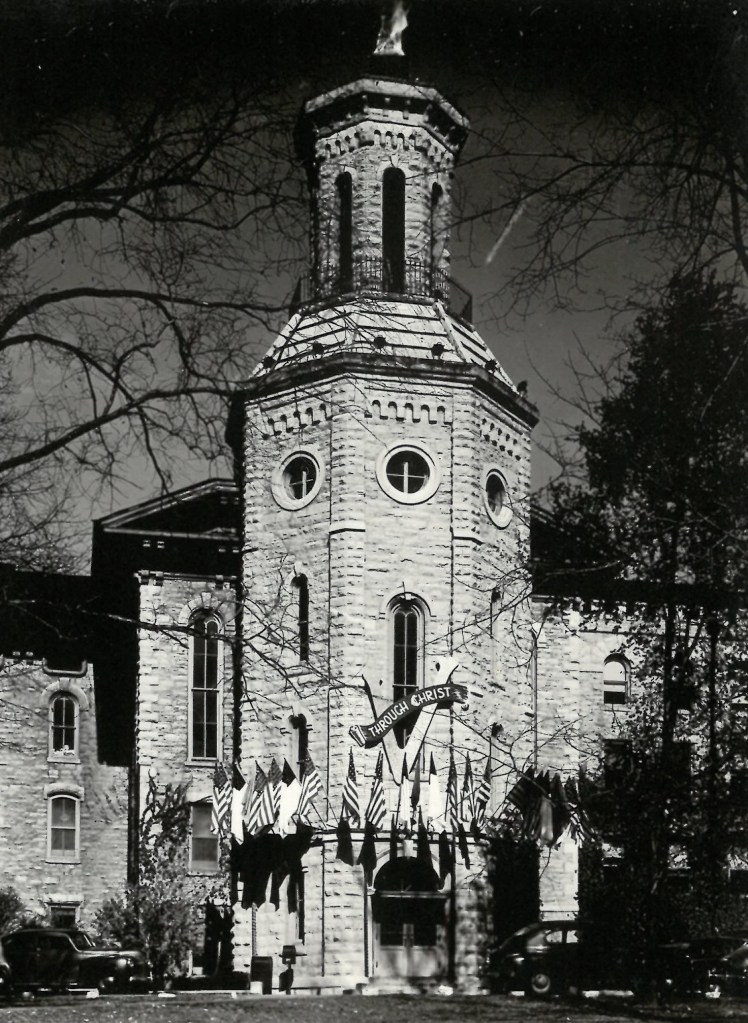
Blanchard Tower decorated for the 1945 Homecoming with theme “Victory Through Christ,” College Archives Photograph #CA-B13859.

This September marks the 80th anniversary of the end of World War II – A conflict that reshaped many aspects of American life, from industrial production and women in the workforce to urban migration and higher education. In commemoration of this anniversary, Wheaton Archives & Special Collections features photographs, clippings, and other materials from the Wheaton College Archives that document the experience of the Wheaton College home-front from 1941 to 1945.

Like much of the country at the start of 1941, Wheaton faculty and students were divided on America’s appropriate role in the European and Pacific wars. Debates on the growing conflict appeared in dueling opinion pieces in the Wheaton Record and as topics for lectures and featured speakers. However, for most of 1941, the possibility of America entering the war lingered only as a shadow over the busy routines of campus life. When the U.S. base at Pearl Harbor was attacked at the close of the year, the hypothetical quickly became reality. On December 8, 1941, students, faculty, and staff gathered together in Pierce Chapel to hear President Franklin Roosevelt’s special radio broadcast requesting a Congressional declaration of war.

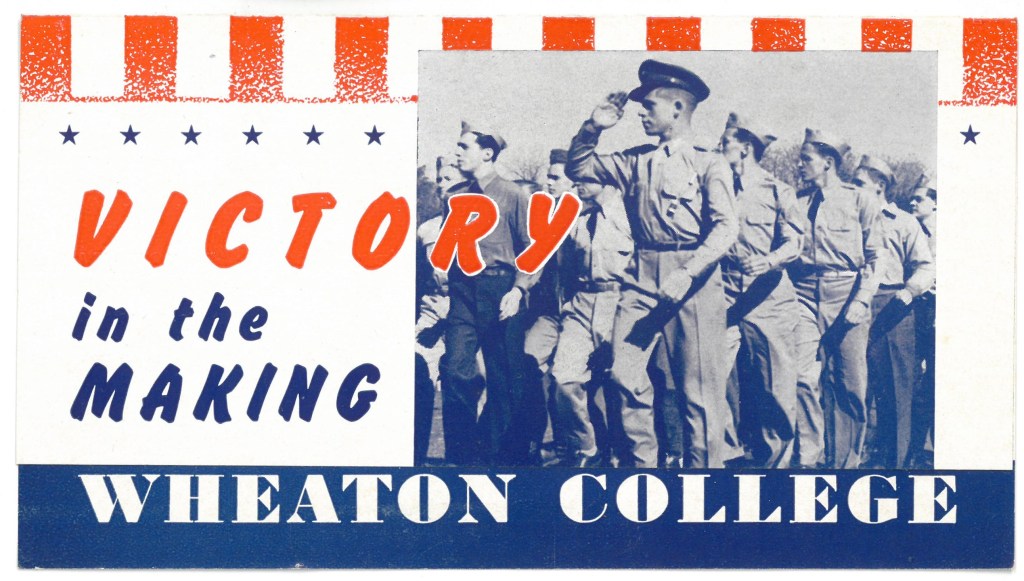
Front of a brochure advertising the War Training Program at Wheaton College. Vertical File: War Training Program.
Continue reading

Shakespeare on Display

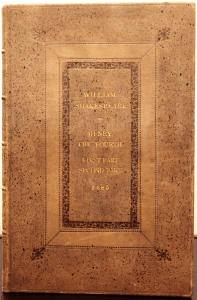
One of the jewels of the E. Beatrice Batson Shakespeare Collection is a copy of Henry the Fourth, taken from the fourth folio edition of Mr. William Shakespear’s Comedies, Histories, and Tragedies (1685). The play was donated to the College in honor of Dr. Batson’s retirement from the English Department in 1990. In celebration of the fourth folio turning an impressive 340 this year, Wheaton Archives & Special Collections revisits a 2015 feature from former Wheaton Library Metadata Associate, Brittany Adams, on the history and unique textual features of Wheaton’s “Henry.” The folio will be on display throughout the 2025 fall semester in the Wheaton College Library.

Continue reading

50 Years of the Billy Graham Scholarship Program

In 1974, Wheaton College and the Billy Graham Evangelistic Association embarked on an ambitious project – The Wheaton College Billy Graham Center. While the beginnings of construction on the expansive College Ave building was the most visible sign of the new plans, the purpose of the Center was fixed not in a building but in the diverse work of the global church. As a 1976 slide presentation promoting the Graham Center outlined, “The three basic goals of the Billy Graham Center are, first, to advance Biblical evangelism and to contribute to world evangelization. Second, to cooperate as widely as possible with all evangelical Christians in advancing world evangelization in every possible way, and third, to reflect and extend the evangelistic ministry of Billy Graham.”

Billy Graham Center pamphlet, c. 1980s. (Acc. 2017-042).

Integral to plans for “advancing world evangelization” at the new Billy Graham Center (BGC) was the desire to support students “who will go from the Center with the Gospel of Jesus Christ into foreign missions, evangelistic organizational leadership, humanitarian efforts, and so many, many more wonderful ministries.” This vision took tangible form through initiatives like the BGC Scholarship program, which aimed to equip international students for global ministry leadership. In the fall of 1975, international students from South Africa, Kenya, and Australia received the first BGC Scholarship funds to begin their studies in the Wheaton College Graduate School.

Continue reading

“We’re Glad You’re Here”: Wheaton College’s Japanese American Alumni

This blog post has been adapted and updated from the Wheaton College Historical Review Task Force Report (pp 55-57), released on September 14, 2023. The entire report can be found here.  

Every spring, Wheaton College celebrates Asian American Pacific Islander Heritage Month from April 15 – May 15, and this year the Wheaton Archives & Special Collections commemorates several Japanese American alumni who studied at Wheaton College during the turbulent years of World War II. The United States’ entry into World War II after the Japanese attacks on Pearl Harbor in December 1941 brought a wave of Japanese students to Wheaton College and with them questions surrounding the place of Japanese and Japanese American students both on Wheaton’s campus and in American society.

On February 19, 1942, President Roosevelt signed Executive Order 9066, stipulating that civilians could be excluded from military spaces. Under EO 9066, the military began “evacuating” Japanese American residents from the West Coast the following month, first into temporary assembly centers followed by incarceration in camps supervised by the War Relocation Authority. Scattered over seven states, the 10 internment camps eventually housed over 122,000 Nikkei (Japanese immigrants and their descendants), the majority of whom were American citizens.

When the United States entered World War II in December 1941, approximately 2,500 Japanese American students were enrolled in colleges and universities on the West Coast, their lives and educations traumatically interrupted by the War Relocation Authority. To assist Japanese American students whose educations were interrupted, the National Japanese-American Student Relocation Council (NJASRC) was formed in May 1942 to place select college-aged students into higher education institutions east of the military areas. Candidates for placement were screened for “doubtful loyalty.” If cleared by the Council, students were transferred to participating institutions and enrolled. While some colleges and universities chose not to accept students out of the Relocation Centers due to anti-Asian prejudice, others advocated to bring Nikkei students to their institutions, working to provide campus housing, support from the community, and financial assistance in the form of scholarships. Although spearheaded by the American Friends Service Committee, the Council included a wide range of members, from college and university presidents and administrators to clergy representing mainline Protestant churches, to evangelical mission board executives, to the YMCA/YWCA.

Continue reading

A Global Chorus Before the Lord: Remembering Ethnomusicologist Vida Chenoweth

Vida Chenoweth
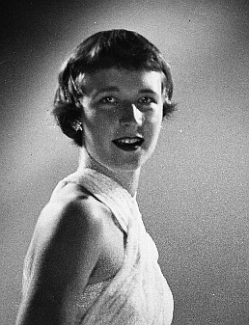
Portrait of Vida Chenoweth, c. 1950s. SC114, Photo-08.

This March, in honor of Women’s History Month, Wheaton Archives and Special Collections remembers Vida Chenoweth—a concert marimbist, Bible translator, and pioneering ethnomusicologist. From the glittering concert halls of Europe to the remote highlands of Papua New Guinea, Vida’s life and ministry combined a love of music with a deep commitment to the dignity of all peoples and a celebration of the unique traditions of diverse musical cultures. SC 114: Vida Chenoweth Papers showcase the breadth of her remarkable career, featuring recital and field recordings, photographs, press clippings, original research, correspondence, and diaries.

Continue reading

A Half Century with Perry Mastodon

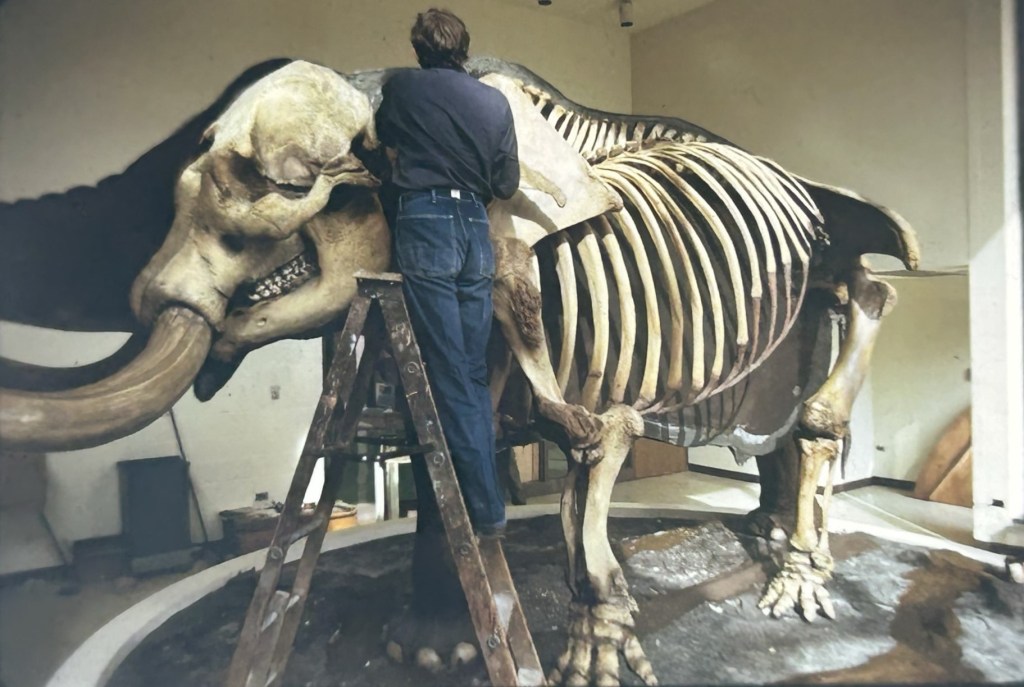
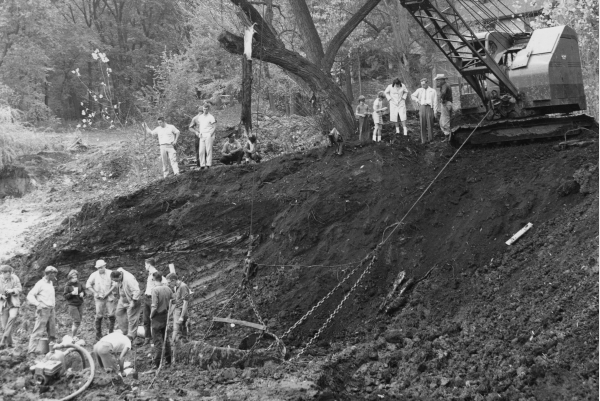
Perry Mastodon being prepared for display in Deicke Exhibit Hall in the former Armerding Science Building, ca. 1974. RG 10.02, Box 5.


On October 16, 1963, Judge Sam Perry of Glen Ellyn, intending to merely deepen the pond on his property, received much more than he expected when diggers unearthed a prehistoric femur. Upon hearing the news, Judge Perry called for help from Wheaton College, and Dr. Douglas Block of the Geology Department took charge of the site. Judging the find to be geologically significant, the decision was made to drain the lake and excavate. Enlisting Wheaton students from the Geology Department and with technical advice from Orville Gilpin of the Chicago Field Museum, Dr. Block oversaw a strenuous eight-day dig. The muddy excavation was soon joined by hundreds of interested community members and extensive media coverage from local DuPage County and Chicago papers.

Continue reading

Billy Graham Before the Crusades: Stories from Wheaton College Classmates

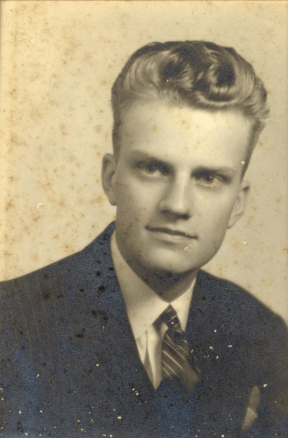
Portrait of Billy Graham, c. 1940s. Taken by local Wheaton photographer (and Wheaton College alum) Orlin Kohli. Photo File: Graham, Billy 1940s

Seeking to add a liberal arts education to his Bible College background, Billy Graham enrolled in Wheaton College for the fall of 1940. With previous credits from Florida Bible Institute and Bob Jones University, Graham came to Wheaton as a Sophomore, graduating in the spring of 1943.

In 2010, the staff of the Evangelism & Missions Archives at Wheaton College contacted dozens of Graham’s surviving classmates, asking them to fill out questionnaires about their memories of Wheaton in the 1940s and especially their memories of Billy Graham. The staff also taped and transcribed oral history interviews with more than twenty-eight of these classmates. The interviews are all online in the guide to Collection 74 and can be accessed there. Below are excerpts from the interviews, documents, and questionnaires. The excerpts have been edited for length and clarity.

Continue reading

A Centennial Crusade

In September 1959, Wheaton, Illinois, made history as “the smallest city ever to conduct a crusade,” when it welcomed evangelist Billy Graham back to his alma mater, Wheaton College.

The crowd at one of the outdoor crusade meetings, Wheaton College’s Centennial motto “Dedication in Education” in background. College Archive Photograph #B06313.
V. Raymond Edman with Ruth and Billy Graham in front of Memorial Student Center, 1959. CN 74, OS 13: 1959 Crusade Scrapbook.

To commemorate the 65th anniversary of the Wheaton crusade, Wheaton Archives & Special Collections features below recordings, photographs, and documents from this historic event.

Originally, Wheaton’s president, V. Raymond Edman, had invited Graham to lead the College’s annual fall evangelism meetings as part of its centennial year celebrations. However, at Graham’s suggestion, the scope of the event quickly expanded to a weeklong crusade that extended far beyond the campus, reaching into the surrounding suburbs and Chicago. The following letter from Billy Graham to Wheaton Chaplain Evan Welsh, held in the College’s Centennial Committee Records, outlines Graham’s growing vision for the meetings:

Continue reading