“Black Students of Wheaton Present…”

The origins of Black History Month can be traced back more than a century to Carter G. Woodson, who founded the Association for the Study of Negro Life and History (ASNLH) in 1915, after attending the fiftieth anniversary celebrations for national emancipation in Chicago. As part of its efforts to draw attention to the study of Black history and culture, the Association established Negro History Week in February 1926. Observance gradually gained national traction, especially during the 1960s, as a growing number of college students organized campus events highlighting Black culture and urged universities to established courses and academic departments dedicated to Black history or literature. In 1976, President Gerald R. Ford officially recognized February as Black History Month, and Congress formally institutionalized its observance ten years later in Public Law 99-244.
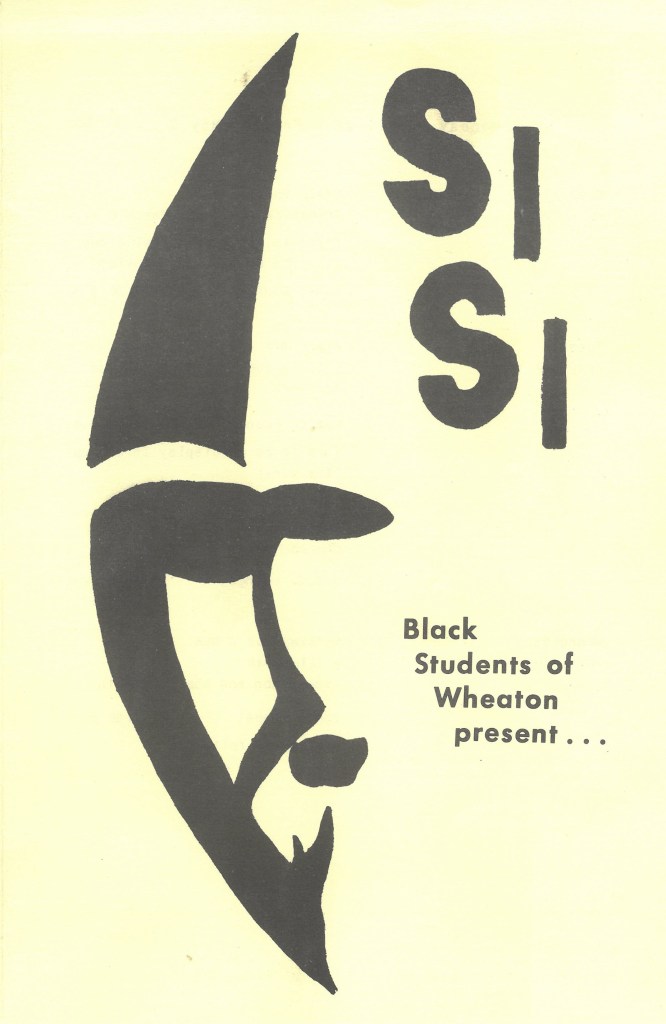
Program for first Black Arts Festival, April 28-May 2,1969. Vertical File: SOUL.

In keeping with national trends, Wheaton College’s earliest organized observances of Black history and culture took shape with the student-led “Black Arts Festival,” inaugurated in the spring of 1969.

While Wheaton College had enrolled students of color since the 1860s, their numbers had typically remained small. The introduction of the Compensatory Education Program (CEP) in the fall of 1968 brought a notable increase of Black and Puerto Rican students to campus from urban centers around the United States, like Chicago or New York. Adjusting to life in suburban Wheaton, CEP students sought to form an organization that would both foster solidarity among minority students and educate a predominantly white campus community. Under the guidance of Dr. Ozzie Edwards, Wheaton’s only Black faculty member at the time, students founded the Student Organization for Urban Leadership (SOUL) in early 1969. The organization quickly turned its attention to planning a week-long celebration dedicated to Black art, music, and culture.

SOUL gave their new festival the theme “Si Si,” a Swahili word meaning “we” or “us.” Reflecting on this theme of unity amid difference, The Wheaton Record reported that SOUL: “express[es] hope that their Festival will be received biculturally by the rest of the campus and community…. that they desire that one culture not be judged by the standards of another, but that it be viewed as an entity in itself.” (The Wheaton Record, “Students Announce Plans for Black Arts Festival,” April 1969).

Continue reading
Hidden In Plain Sight

The Evangelism and Missions Archives holds over seven hundred processed collections. Some correspondence in our purchased microfilm stretches back into the 1600s, but we also have documents and media from as recent as the current year. The predominant time frame for most of the evangelistic and missionary activity documented in these collections, however, is the 20th century. As the Archives’ name suggests, the topics that hold together all the collections are evangelism and missions.

But to assume that the Archives only reflects these two areas is to miss the depth and breadth that these primary sources offer. Many collections also document social movements, political events, cultural trends, and more in the countries where missionaries and evangelists happened to find themselves. It is still surprising to discover unexpected points of convergence between collections that we archivists never anticipated or noticed until a collection was arranged and described to be fully open to the public. Four examples come to mind:

Continue reading

A Voice for Change: Excerpts from the William E. Pannell Oral History Collection

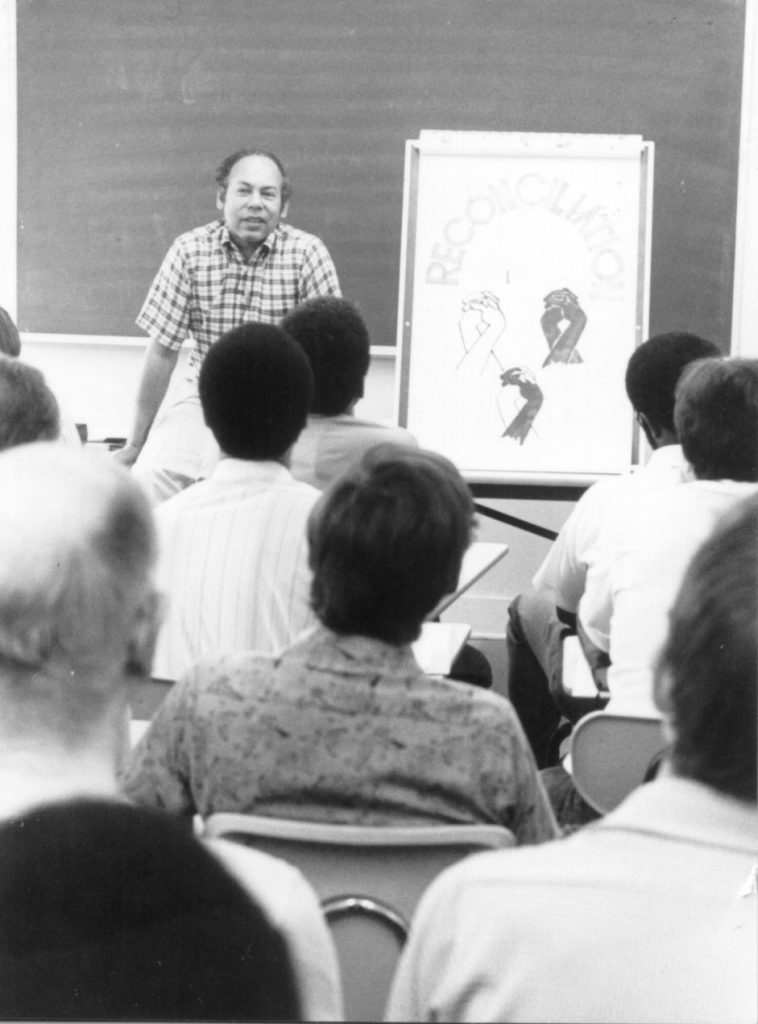
1981: Rev. Pannell leading a Christian Community Development workshop at the Voice of Calvary Ministries’ Study Center in Jackson, Mississippi, USA. (PF: Voice of Calvary – Conferences and Meetings)

In celebration of Black History Month this February, Wheaton Archives & Special Collections features our oral history collection with Rev. Dr. William E. Pannell, who passed away last October. Over more than five decades of ministry, Dr. Pannell served as a youth pastor in Detroit, directed training for Youth for Christ, helped lead Tom Skinner Associates as Vice President, and taught future generations of pastors and evangelists at Fuller Theological Seminary as the assistant professor of evangelism and director of the Black Pastors’ program. Along with his busy work as an evangelist and teacher, Dr. Pannell published several influential books on race and the evangelical church, including My Friend, the Enemy (1968), Evangelism from the Bottom Up (1992), and The Coming Race Wars?: A Cry for Reconciliation (1993).

From 1995 to 2007, Wheaton archivist Bob Shuster sat down with Dr. Pannell for several sessions of oral history interviews. Totaling more than seven hours, the recordings include Dr. Pannell’s reflections on his childhood, education, Christian faith, ministry development, and race relations in the American church. Wheaton Archives & Special Collections recently released the complete transcripts to these interviews, which are now available through the online guide to Collection 498: William E. Pannell Oral History Interviews. Below are selections from the interviews covering Dr. Pannell’s early life, growing racial consciousness, visit to the 1966 Congress on Evangelism, and development of his work with B.M. Nottage and Tom Skinner. The selections have been edited for clarity and brevity.

Continue reading

Tom Skinner’s “New Beginning”

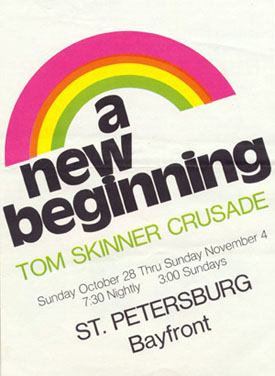
Handbill advertising Tom Skinner evangelistic meetings held in St. Petersburg, Florida from October 28 to November 4, 1973.

In celebration of Black History Month this February, the Wheaton College Billy Graham Center Archives commemorates the spiritual legacy of Tom Skinner (1942-1994), Christian evangelist, social reformer, and persistent critic of racial divisions within American culture. Collection 430: Papers of Tom Skinner contains oral history interviews, correspondence, articles, newspaper clippings, photographs, and other materials documenting the development of Tom Skinner Associates and provides a fascinating glimpse into Skinner’s tireless efforts to challenge the white evangelical community to engage issues of systemic racism, while still prioritizing his call to Christian evangelism.

Continue reading

“World Evangelism: Why? How? Who?” A Backward Look at Urbana ’70

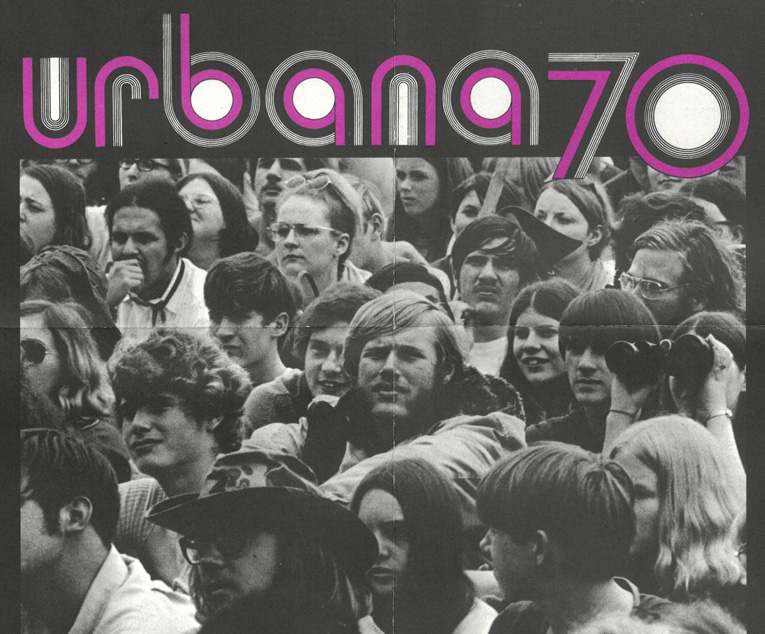
A publicity poster for the 1970 Urbana Student Missionary Convention. CN 300, Box 344, Folder 12.

This December, the Wheaton College Billy Graham Center Archives highlights the ninth triennial InterVarsity Christian Fellowship (IVCF) Student Missionary Convention held 50 years ago this month. The traditional climax of IVCF’s ministry year, the five-day conference exists to mobilize college students for Christian evangelism, on university campuses across the globe. Since its first iteration in 1946, dubbed the “International Student Convention for Missionary Advance” held in Toronto, Canada, thousands of students from North America and around the world have dedicated themselves to the work of Christian evangelism and discipleship after hearing the likes of Billy Graham, John Stott, Stacey Woods, David Howard, Samuel Escobar, Elisabeth Elliot, and Francis Schaeffer describe the challenge and call of world evangelization. Today, significant numbers of men and women in full-time Christian service can trace their vocational inspiration back to an “Urbana” convention.

Continue reading