Seeing with Both Eyes: Church History in a New Perspective

Malla Moe was a legend among missionaries during her own lifetime. Born in Norway in 1863, she immigrated to Chicago as a young woman to live with her sister. However, after meeting Frederick Franson and hearing of his work with the nascent Scandinavian Alliance Mission, she felt a strong call to missions. In 1892 she traveled to Port Natal (Durban) in South Africa to begin missionary and language training. She then went to live and work in the Swaziland (now Eswatini) countryside, traveling between Swazi homesteads (sometimes called kraals in Afrikaans). From that time on, in the words of one biographical dictionary, “she served as evangelist, church planter, teacher, and preacher.”  Although she often rubbed other missionaries the wrong way, she loved and was loved by her African congregations. When it became difficult for her to walk, she traveled in a specially built gospel wagon. By the time of her death in 1953, Swaziland and Tonga were dotted with the dozens of churches she helped to found.
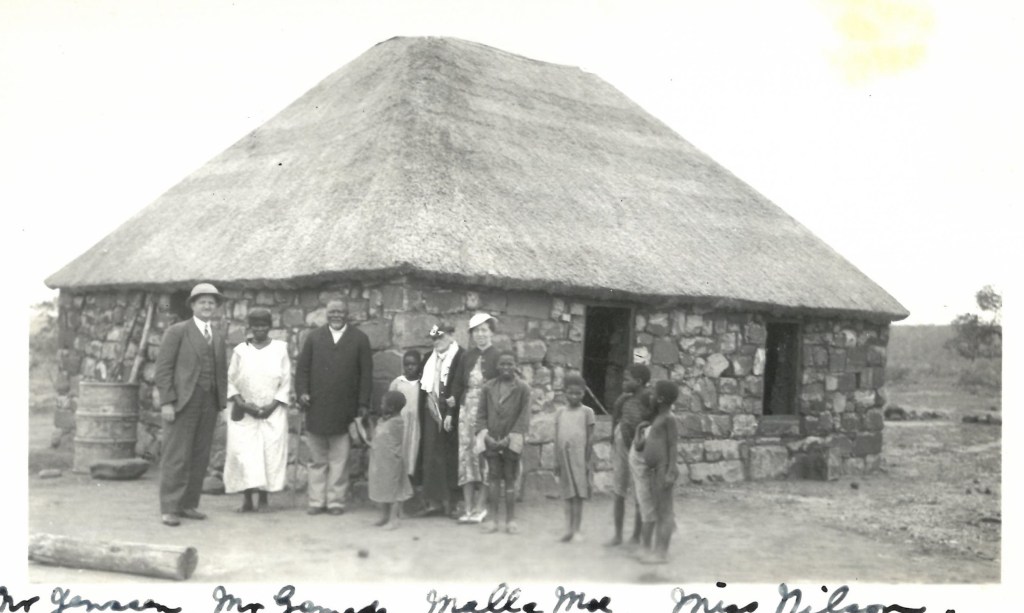
“This is a church. A good evangelist, Johann Muosi[?], died there like a good soldier in the fever country for the work of God. He left his good home for Jesus’ sake. He was happy when he went to be with the Lord. Malla Moe.” (From Acc. 2007-031).

That is the story told in many Western histories of missions. But it is incomplete. (An exception is TEAM’s own history, God Made It Grow, by Vernon Mortenson). Some of those histories mention a Swazi helper named Gamede or sometimes just indicate she had an anonymous native helper. Sometimes no African worker is mentioned.

Continue reading

Looking Back on A Year of New Old Stuff

Song sheet (ca. 1928) for evangelist Betty Weakland, one of the most well-known of the so-called “girl evangelists,” popular in the first decades of the 20th century. Donated by long-time friend of the Archives, Robert Dresser. Accession 2022-053.

“Collection” and “Accession” are words used all the time in the archival profession. In Wheaton Archives & Specials Collections, an accession is material received from a single donor, usually an individual or an organization. It might be a single folder or hundred of boxes, with only a general inventory to use as a finding aid.  A collection is a set of materials (perhaps including paper-based records, photographs, audio or video recordings, etc.) that has been fully arranged and described. Most of our collections have been formed from several accessions. Here in the Archives & Special Collections, both collections and accessions are open for research (unless there have been donor-requested restrictions) but the lack of a complete finding aid and access points can make accessions difficult to locate or use for research.

Continue reading