“The Truth Needs to Be Illustrated”: Gospel Posters in China

In the early 1920s, the first commercial four-color offset lithograph machines came to China. While Chinese Christian posters, tracts, and books had circulated from various presses for a century, these machines allowed for quick, inexpensive, and large-scale print production. Christian mission organizations like the Religious Tract Society and Christian Witness Press quickly capitalized on the new technology. In 1929 alone, the Religious Tract Society printed 150,000 posters in China. Joining and in some ways anticipating China’s vibrant political and commercial print culture, these colorful posters became a prevalent tool for Christian evangelization in China through the 1930s and 1940s.
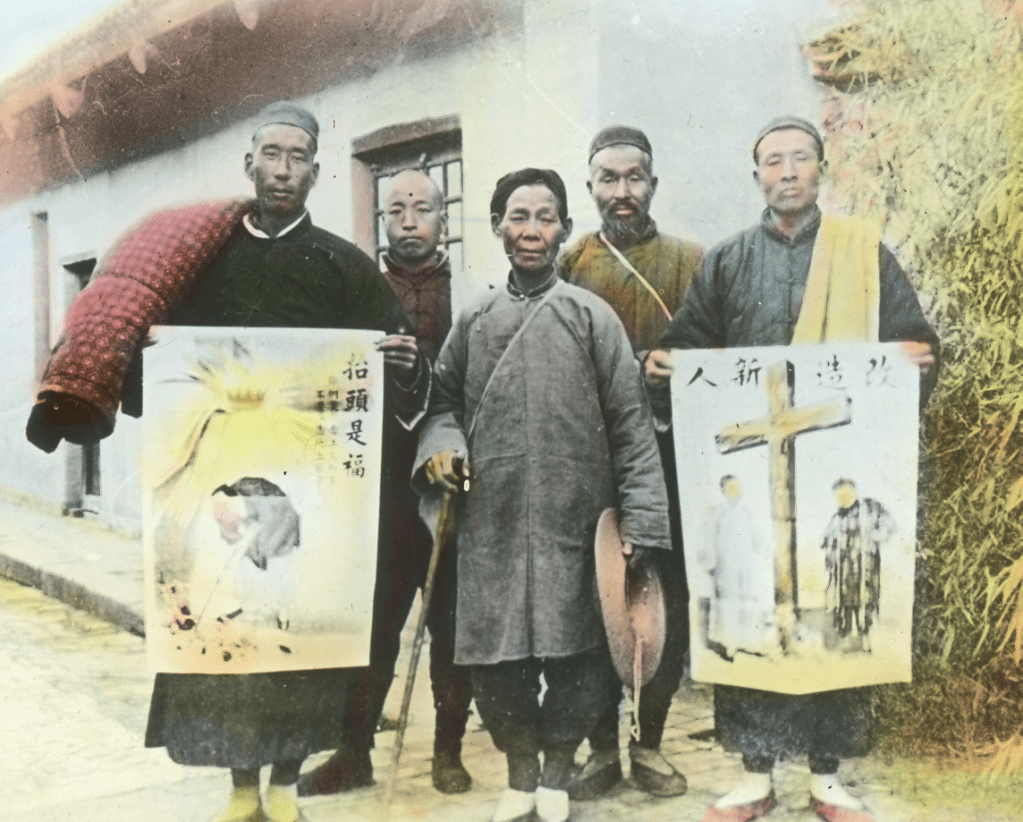
Chinese Christians, possibly an itinerate preaching band, with evangelism posters, ca. 1930-1940. Collection 215, Lantern Slide Box 11.

Wheaton Archives & Special Collections holds more than fifty of these posters throughout several collections, including Collection 215: Records of Overseas Missionary Fellowship, Collection 231: Papers of Ian and Helen Anderson and Collection 706: Evangelism Posters Ephemera.

Continue reading

Snapshots of Global Missions

CN 278: Papers of Elisabeth Elliot, Slide 66

Missionaries often find themselves in disparate places all over the world, and even though their primary role is not to be photographers, many have a camera in hand to capture landscapes, peoples, rituals, homes, costumes, daily activities, ministry activities, staff group shots, and more. Sometimes the images are intended for use in prayer letters or marketing efforts by their agency or sending church. Other times missionaries, like amateur anthropologists, are perhaps among the first to photograph a people group, such as Elisabeth Elliot’s shots of the Waodani people in Ecuador.

As we archivists say to budding researchers, understanding why a document is created (including photographs) is one key to interpreting the document. Knowing the original contexts and the intended use of these photographs helps us understand them more deeply.

Continue reading

Letters from Lisuland: The Ministry of Isobel Kuhn

In celebration of Women’s History Month, the Wheaton College Billy Graham Center Archives commemorates the many women whose unique voices and stories are preserved in our collections and who labored—in the public eye or in obscurity—in faithful Christian services as missionaries, writers, doctors, preachers, musicians, evangelists, and more. This March, the Archives highlights the ministry of Isobel Miller Kuhn, author and long-term missionary with her husband John to the Lisu people of southwest China and Thailand from 1928-1954 under the auspices of China Inland Mission. The Kuhns’ nearly three decade service with China Inland Mission is documented in the organization’s records, including the couple’s voluminous newsletters, a CIM-published biography of Isobel, and John’s report on missionary evacuations from China in 1951, following the Chinese Communist Revolution. Isobel Kuhn’s personal papers, including prayer letters, photographs, correspondence, and articles, are described in Collection 435: Ephemera of Isobel Miller Kuhn, and provide a glimpse into the daily struggles and joys of missionary service—the loneliness and isolation of rural evangelism and church planting, the breathtaking beauty of remote Yunnan Province, Lisu culture and customs, and her own deep Christian faith.

Continue reading

“Stam Baby Safe”: Remembering John and Betty Stam

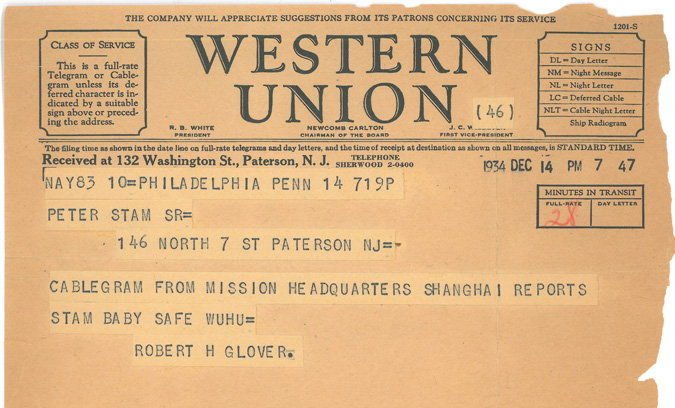
The telegram contained only a single sentence: “Cablegram from mission headquarters Shanghai reports Stam baby safe Wuhu.”

Viewed today, the fragile, yellowing Western Union message is unremarkable, but to Peter Stam, its original recipient in Paterson, New Jersey, the telegram furnished yet another detail in a still-unfolding tragedy on the other side of the world. But this time it was good news. Signed by Robert Glover, longtime North America Home Director for China Inland Mission, the telegram announced to desperate, waiting relatives that their granddaughter was alive and safe at Wuhu General Hospital in Anhui Province, China, the same institution where she had been born three months earlier. Only now she was an orphan.

Telegram
Telegram sent by Robert Glover, China Inland Mission Home Director for North America from 1929-1943. The original telegram is found in Collection 449: Ephemera of the Stam Family.

The deaths of John and Betty Stam at the hands of communist soldiers and the “miraculous” survival of their daughter, Helen Priscilla, have been documented in multiple books, articles, blogs, and testimonies over the decades, becoming something of twentieth-century American evangelical missionary lore. Much like Jim Elliot and the “Auca Incident” twenty years later, the Stams’ deaths shocked American Fundamentalists, heightening anxiety over the spread of global communism and inspiring a new generation of missions efforts.

Continue reading

Chariot Racing in the Archives

CoversA

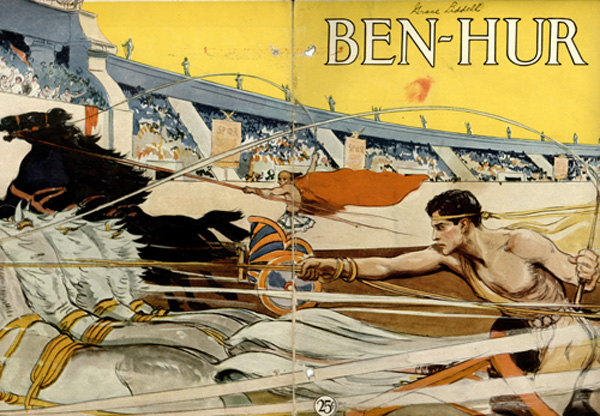
On any given Saturday, thousands of Americans are giving garage sales and tens of thousands, maybe hundreds of thousands are looking over these dubious treasures as they lay on card tables set up on the driveway and the lawn.  One thought that must strike anyone who has glanced over these accumulations is that one person, one family in a lifetime sure collects a lot of stuff.  Some of it is obvious – old TV guides, second best dinner settings.  Others are inexplicable – a 1300-year-old coin, a vintage Monopoly board game.  Archivists too, often have the same revelation.  When we get the papers of an individual, it is because they contain substantial information on the topic which is the Archives’ main area of interest.  But there will be other things as well that reflect all the unexpected corners one encounters when intruding in the remains of another person’s life. Continue reading