Japan for Christ: The Evangelistic Travels of H. S. Kimura

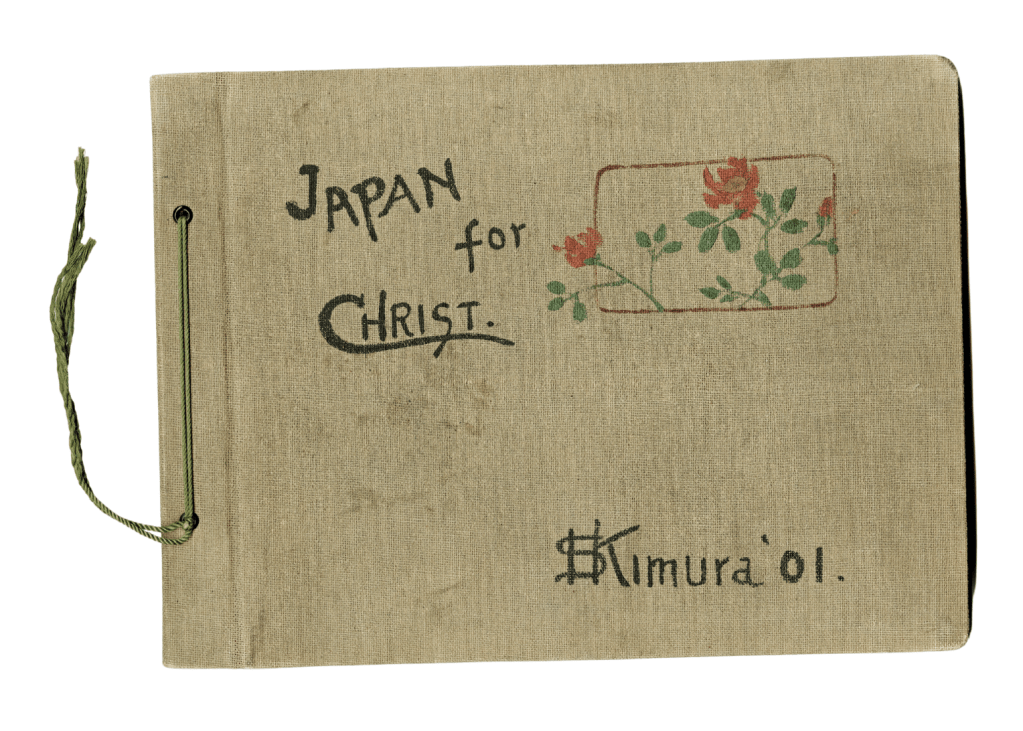
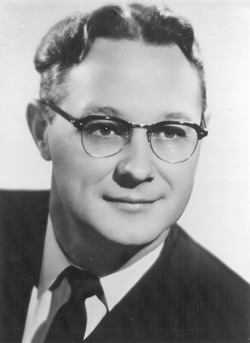
Kimura Kiyomatsu (木村 清松), known in the United States as Henry Seimatsu Kimura, was born in 1874 to a family of sake brewers in Gosen City, Niigata Prefecture. At seventeen Kimura was baptized during an evangelistic service held by Teiichi Hori in Niigata. His conversion to Christianity led to conflict within his family, especially with his father, who disowned him; although both his parents and his two brothers eventually became Christians.

Continue reading

A Holiday by the Lake

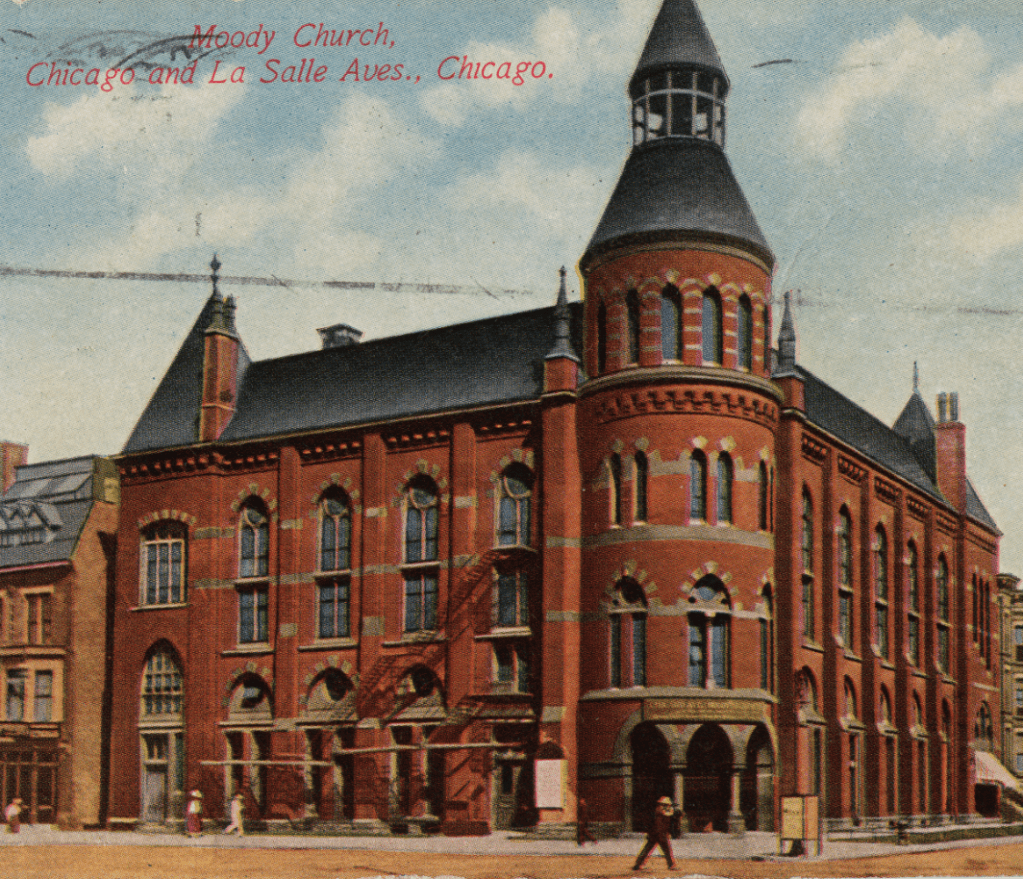
Photo File: Moody Church, Exteriors

Collection 330 in the Evangelism & Mission Archives is the Records of Moody Memorial Church, one of the oldest and largest independent churches of Chicago, Illinois. Part of that collection is Photo Album VI, an old and dilapidated scrapbook with this introduction pasted onto its inside front cover:

THIS BOOK OF PICTURES REPRESENTING THE FRESH AIR WORK OF THE Moody Sunday School (during the years between 1903 and 1905) is presented to the Moody Sunday School and to be kept where the officers and teachers of the Sunday School may have access.

The pictures were taken by G. P. Rockwell who at that time was Superintendent of the Fresh Air work under the direction of A. F. Gaylord who was Supt. of the Sunday School. The book was made by Mr. Rockwell and after many years of care, become the property of the Moody Sunday School. The book is very dear to his heart and many pleasant memories could be recalled through the pictures and the wonderful fellowship of the School and dear Mr A. F. Gaylord.

Needy boys and girls were selected by Mrs. A. F. Gaylord for the occasion of a vacation out in the country. Groups of about 75 were taken on the Northwestern Railroad to Ravinia, Ill. and Glencoe, Ill. Each group was kept there under the care of a competent Christian workers for about two weks [sic]. Then they were carried back to the city much to their worrow [sic]. Often another group would take their place and thus the work was carried on during the entire summer,

Physical training were given the boys and girls daily. Big, hikes were given the groups each week end sometimes daily. Occasionaly [sic] they were given a taffy pull or hay ride to Fort Sheridan but every day they were taken to the lake where they splashed and ran and were taught to swim. Each child was given some work to do about the home and every one of them looked forward to the night time when they gathered for their evening devotions before going to bed. Thank God many found the Christ at the Camp for the General Supt. Mr Gaylord insisted that the spiritual work should come first
.

Continue reading

Around the World in 1905

(CN 330, Folder 71-3)

Although most of the records held in our Evangelism & Missions Archives document the work of global missions and evangelism, as an archive of people’s lives, as well as their ministries, our records can also provide fascinating windows into the experiences and adventures of past generations. This week, we feature a scrapbook from Collection 330: Records of Moody Church that chronicles the 1905 world travels of William Borden, future missionary and board member of Moody Church.

Continue reading

Jazz Age Evangelism: Paul Rader and the Chicago Gospel Tabernacle

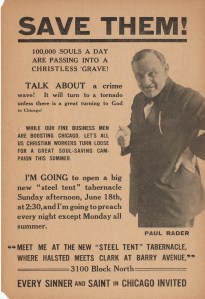
Advertisement announcing the Steel Tent, which became the Chicago Gospel Tabernacle,1922. (CN 38, Folder 1-52)

Wheaton Archives & Special Collections holds the stories of many an unsung figure in the history of evangelism, people who made an impact in their own time but are little remembered today. Such a one is Daniel Paul Rader, more widely known by his middle name Paul. The Chicago Gospel Tabernacle he started in the 1920s was a center of innovation and excitement, launching the ministries of several significant evangelical Christian figures of the next generation.

Rader was the son and grandson of ministers and was one himself for a few years, before a loss of faith led him to resign his pastorate. After leaving the ministry, Rader worked as a boxing promoter and then as an oil company representative. Around 1912 Rader experienced a renewal of his Christian faith. He became active in the Christian and Missionary Alliance, eventually serving as an assistant to C&MA founder A. B. Simpson on Simpson’s evangelistic tours. The next year Rader became an evangelist himself and preached around the United States. In 1915, he accepted the pulpit of Moody Church in Chicago and in 1919, upon the death of Simpson, Rader became the second president of C&MA.

Continue reading

Autographs as Artifacts

In the Archives’ collections, personal signatures are everywhere, littering correspondence, membership rosters, covenants, and random scraps of paper. These signatures come in all shapes and sizes, some deliberate and others barely more than doodles—breezy nicknames closing a letter, hasty initials scrawled on a memo, or elaborate signatures finalizing deeds and contracts, or legitimizing passports. Occasionally, signatures are accompanied by additional information, like a favorite biblical text, personal motto, illustrations, or decorative flourishes. Depending on the size and style of handwriting, signatures can give researchers insight into a subject’s personality, level of education, and even nationality.

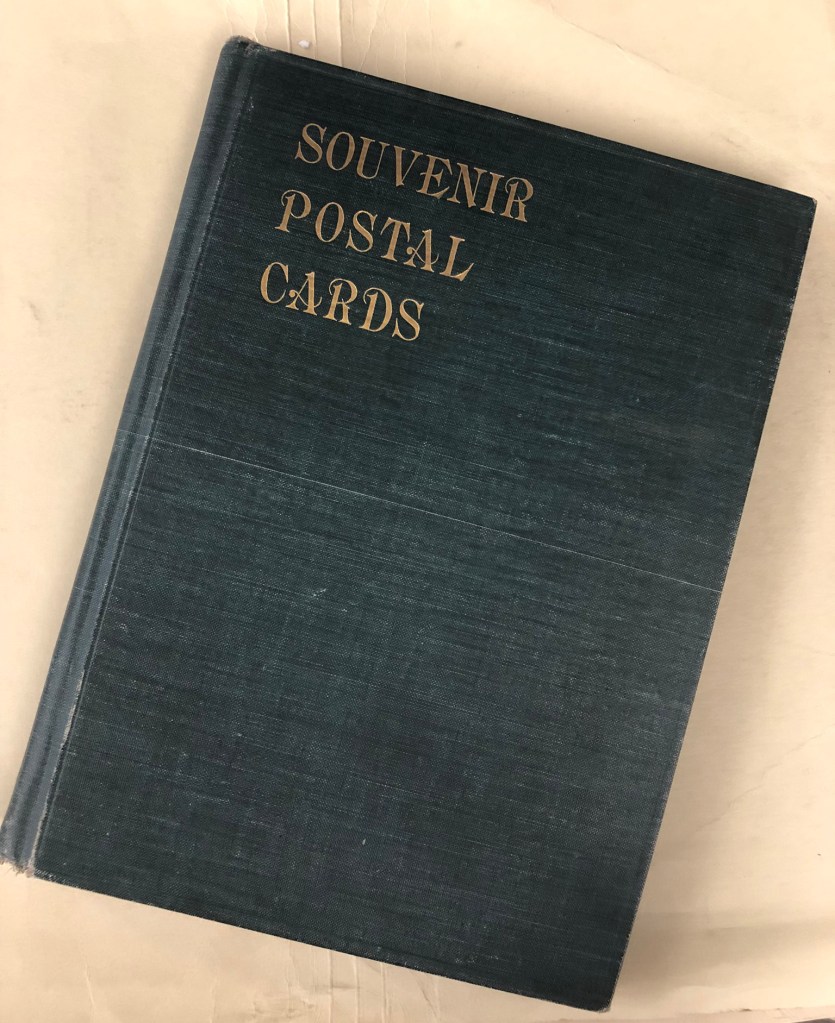
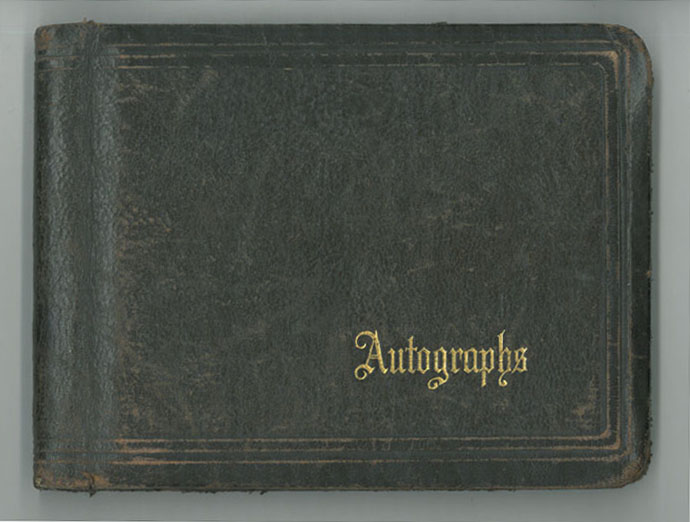
This April, the Wheaton College Billy Graham Center Archives features the autograph album of Edna Asher Case (1905-1999), a Chicago native and 1929 graduate of Wheaton College. In the 1920s, autograph albums were a popular way to document and remember the places and people you encountered and to exchange personal messages. Case’s autograph album—a slim 4×6 leather bound book with brightly-colored pages—offers readers today a glimpse into the bustling world of 1920s American evangelistic fervor, captured in the sprawling signatures and well wishes of celebrity revivalists, musicians, and urban social work crusaders who spread the gospel through revival meetings and rescue missions in the city that came to epitomize the Jazz Age.

Cover
The worn cover of Edna Asher Case’s autograph album held in Collection 197 Papers of Virginia Healey Asher, Folder 1-1.

Born in 1905 to parents deeply involved in evangelism work in Chicago and St. Louis, Edna’s childhood coincided with the pinnacle of Billy Sunday’s revival ministry. Sunday’s traveling evangelistic team included Edna’s aunt, the vocalist and speaker, Virginia Healey Asher. Through her aunt’s connections, Edna was introduced to many of the leading evangelists and revival preachers of the early twentieth century whose signatures and personal messages fill her autograph book. The album contains dated entries spanning 1922-1929, and ranges from Chicago to Winona Lake, Indiana.

Continue reading

Still “Geared to the Times, Anchored to the Rock”: Celebrating 75 Years of Youth for Christ

“‘What are you doing? Can’t we do it here? How do you get started?” And we did everything we possibly could to help everybody we possibly could. And they came here, and we sent people out there, and we were busy” (CN 285, Tape 3).

Johnson headshot
Torrey Johnson, founding member and first president of Youth for Christ.

“Busy” is how Torrey Maynard Johnson describes the explosion of interest in youth evangelism stemming from the runaway success of Youth for Christ evangelistic rallies in Chicago in 1944. In a 1984 oral history interview with Archives staff, Johnson recalls the rapid emergence of Youth for Christ during World War II, a movement that innovated evangelism practices—specifically targeting young people—launched the career of a young Billy Graham, and became an international phenomenon still ministering to young adults today.

This November, the Wheaton College Billy Graham Center Archives celebrates seventy-five years of Youth for Christ, and explores the origins and early rallies of Youth for Christ in Chicago prior to its formal establishment in November 1944.

Continue reading