The Jim Elliot Bible Project

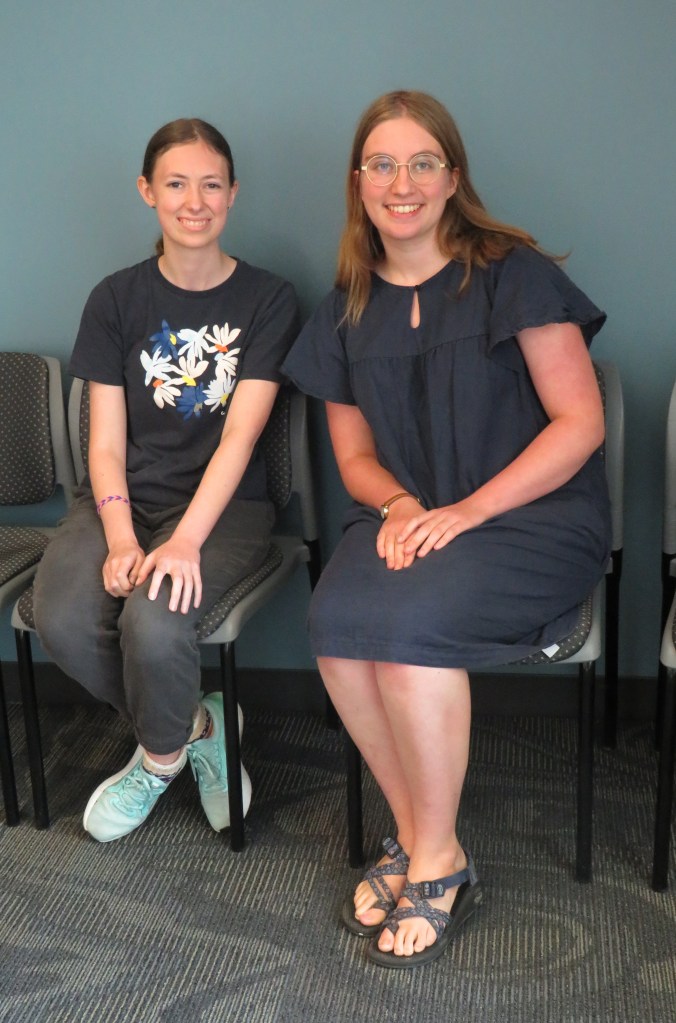
Ava Pardue and Mariah Sray

In November of 2024, Wheaton Archives & Special Collections collaborated with the Museum of the Bible to digitize Jim Elliot’s three college-era annotated Bibles held in CN 277: Jim Elliot Collection. After digitization was completed in February 2025, two archives interns, Ava Pardue and Mariah Sray, both part of Wheaton’s Aequitas Fellows Program in Public Humanities and Arts, spent the summer indexing all the annotations in the Bibles.

Ava Pardue just finished her freshman year at Wheaton. Along with being an Aequitas Fellow, she plans to major in English and Classical Languages. Mariah Sray is a senior at Wheaton with a major in Classical Languages integrated with Choral Studies.

Below, we feature an interview with Ava and Mariah about their work on the project.

What drew you to the Jim Elliot Bible project?

Ava: When I heard about the opportunity to work with Elliot’s Bibles, I jumped at the chance to engage with language, theology, and history in a way that could be useful to the public. One of the three Bibles is a Greek New Testament, which I was particularly interested in studying with the knowledge of Koine Greek that I’ve picked up during the last several years. And ultimately, I think the biggest thing that drew me to the project was a chance to look at Jim Elliot—a man hailed as a martyr, hero, and catalyst for modern missions—as an ordinary college student.

Mariah: An interest in exploring archival work drew me to this internship, but I was also curious to learn more about Jim Elliot. I knew the broad contours of his death in Ecuador but wasn’t familiar with the details of his life. I was also interested to how Jim interacted with his Bible, especially his Greek New Testament.

Continue reading

Life-writing and the Archives: A Conversation with Lucy S. R. Austen

Wheaton Archives & Special Collections is pleased to announce that writer Lucy S. R. Austen will be our speaker for the annual Fall Archival Research Lecture! In anticipation of her upcoming visit, this month we feature a conversation with Lucy about her time researching for Elisabeth Elliot: A Life, her biography of missionary, speaker, and public evangelical Elisabeth Elliot, published by Crossway last June.

When and how were you first introduced to Archives & Special Collections?

I actually discovered the Archives & Special Collections through a Google search! In 2009, I was working on a mini-biography of missionary and author Elisabeth Elliot for a high-school English textbook featuring American Christian writers, and when I went looking for critical biographies of Elliot to learn more about her life, I was startled to discover that there were no full-length biographies of her in existence. Essentially the only published information about her life dealt with a small portion of the decade she spent in Ecuador as a young woman, working to reduce unwritten languages to writing for the purposes of Bible translation. In the process of digging around for any source material I could lay my hands on, I discovered the webpage for Elliot’s papers at Wheaton. I wasn’t able to visit the Archives at that time, but I relied on the biographical information and the list of “Exceptional Items” from the page for her papers, along with other sources, as I completed my project.

Continue reading

Giving Old Images a New Life: Digital Preservation in the Archives

This week we go behind the scenes of Wheaton Archives and Special Collections with a guest post from Becky Baker Halberg, who completed a practicum with the Archives last fall. Becky is an alumna of both Wheaton College and Wheaton College Graduate School and holds a B.A. in history and theology and a M.A. in History of Christianity. She is currently finishing her final semester at University at Buffalo where she is expected to graduate with her M.S. in Information and Library Science in May 2022. Becky worked at Wheaton College for the last five years while completing her M.A. before recently relocating to Minnesota. In addition to her interest in archival research related to the history of Christianity, she enjoys exploring the topic of Christian laity’s information literacy, particularly concerning the role of church libraries in fostering its growth.

This past fall, I had the privilege of participating in the inaugural Wheaton Archives & Special Collection Digital Preservation Practicum. Over the course of the fall semester, under the guidance of Katherine Graber, Assistant Professor of Library Science, and Emily Banas, Public Services Archivist, I reorganized, compiled metadata, and ingested into Preservica hundreds of slide images from Collection 278 Papers of Elisabeth Elliot.

Continue reading

Valentines in July

Valentines in July? It is as good a month as February, actually. Although the feast day of Valentine is celebrated in the Western tradition on February 14, there is an equally strong tradition in the Eastern Orthodox Church for commemorating St. Valentine on July 6th. So this is indeed a month for valentines

Why are there valentines in the Wheaton College Billy Graham Center Archives? As mentioned in previous blogs, archives and manuscript repositories always include many unexpected odds and ends. A collection of personal papers can include a myriad of different objects and artifacts documenting the creator’s mundane daily activities as well the events, ideas, and milestones the creator is best known for. A good example of this is Elisabeth Elliot’s Memory Book. Elliot (1926-1915), a Bible translator and missionary to Ecuador, is perhaps best known as the author of several bestselling books narrating the death of her husband Jim, killed by members of the Waorani tribe in Ecuador in 1956, and her own later experiences living with the Waorani after that tragic event.

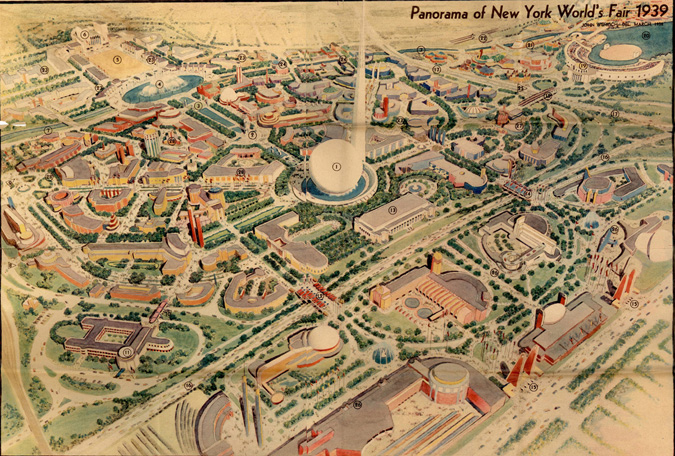
Elliot became an influential evangelical writer, speaker, and teacher in the second half of the 20th century. But her Memory Book in the Archives precedes her famous ministry, when she was just Elisabeth Howard, known to her friend and family as Betty or Bets. The scrapbook reflects the interests of a young girl in her pre-teen and teen years. Its contents includes letters, photos, postcards, hair curls, paper dresses, maps, early writings, and much more, covering the period of approximately to 1938 to 1943 as well as comments Elliot later wrote in the book as an adult . A map of the 1939 New York World’s Fair contained in the Memory Book was featured in a previous blog post. And among all this wonderful memorabilia are Valentine cards Elliot received at school on February 14, 1940, when she was 13 years old.

Continue reading

Remembering the Other Elliots

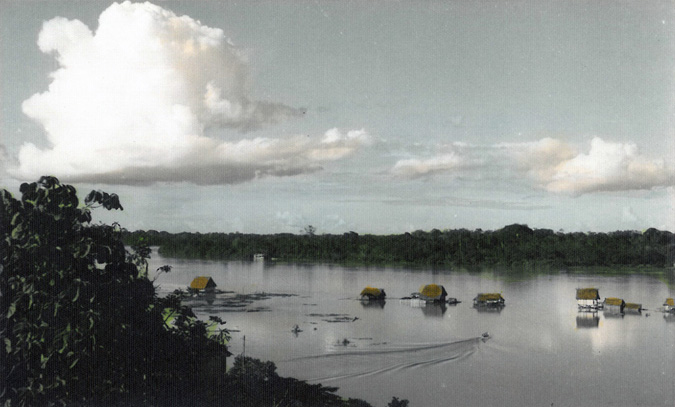
The above photograph was taken in Yurimaguas, a port town in the Amazonian rainforests of northern Peru where Bert and Colleen Elliot ministered for over thirty years. The river depicted is either the Río Huallaga or Río Paranapura. Undated

Earlier this year, the Wheaton College Billy Graham Center Archives marked the 65th anniversary of the death of Wheaton alumnus Jim Elliot and four other American missionaries in Ecuador at the hands of Waorani tribe members in January 1956. The shocking event became an instant media sensation among evangelicals and the general public in the United States. The five missionaries—particularly Jim Elliot—were praised as examples of heroic dedication to Christian evangelism following their deaths, due in large part to the literary efforts of Jim’s widow, Elisabeth Elliot, who chronicled the now-famous story in Through Gates of Splendor (1957) and secured her husband’s place in post-war missionary mythology through the publication of his journals, Shadow of the Almighty, in 1958. The Archives’ digital exhibit To Carry the Light Further explores this fascinating narrative of missionary martyrdom through photographs, newspaper clippings, letters, and diary entries held in the Archives’ collections.

The death of the five men remains a perpetually fascinating story in American evangelical circles today, and the Elliot papers are among the most popular collections in the Archives’ holdings. Archival materials relating to the other Ecuador martyrs have also found their way to the Archives over the years, adding new dimensions to the story of the Waorani. Those collections include the papers of Peter Fleming’s brother Kenneth, and widow Olive, as well as Ed and Marilou McCully. Just this year, the Archives opened Collection 721, a recent donation of papers containing significant correspondence from Jim Elliot to his parents, Fred and Clara, and their own response in the wake of his shocking death.

Continue reading

Ring in the New, Accession the Old: 2020 Edition

In grim 2020, the staff of the Wheaton College Billy Graham Center Archives had much to be thankful for in our miniscule corner of the world. Our staff remained healthy and productive. Although on-site access to the collections for researchers was either completely or mostly restricted for the year after March, we were not only able to acquire, but to make a significant amount of material available online. It was indeed the best of times, the worst of times.

Map of the 1939 World’s Fair from the new material added to Collection 278 The papers of Elisabeth Elliot in 2020. Written on the back, “Pop took me in Sept. [1940]”

Continue reading

Ring in the New, Accession the Old: 2019 Edition

01a
Accession 19-31. A portion of the Elisabeth Elliot Gren papers, which were donated in 2019 by her husband, Lars Gren, with assistance from Kathy and David Reeg.

As the Wheaton College Billy Graham Center Archives greets New Year 2020, we remember with thanks the accessions of 2019. Every profession has its own special terminology, rarely used by those outside it. Architects have muntin. Archivists have accession. We share the word with libraries, museums, and some monarchs. As a verb (in archival usage), to accession or accessioning means logging a new item into our collections. As a noun, it refers to an individual addition, which might be a single photograph or hundreds of boxes of correspondence. Archivists accept diverse material from a wide variety of sources and are much more inclined to collect than divest materials (although in recent years deaccessioning has become more of a priority among institutions). For the Archives, 2019 will always be remembered as the year when the records from the Billy Graham Evangelistic Association that had been deposited in the Archives were returned to the BGEA at its request. But it was also a year that brought a variety of significant, unusual, and wonderful additions.

02a
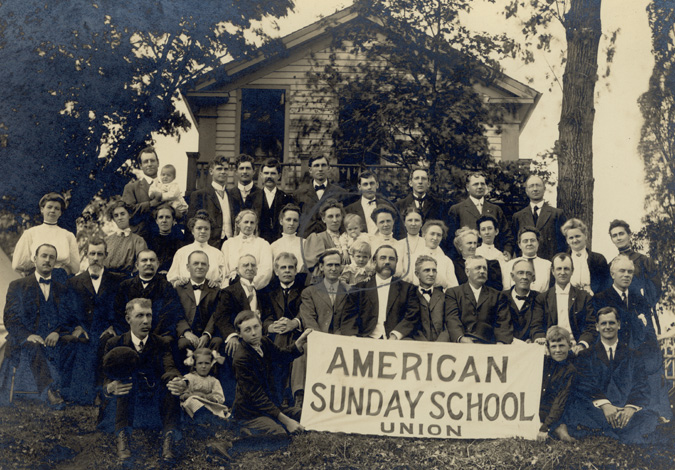
Accession 19-34. Undated photo of the staff of the American Sunday School Union. An example of the many individual items sent to us unsolicited by kind donors.

Every once in a while, acquisitions in a given year seem to follow a specific theme. In 2018 we received several large collections of private papers by prominent figures in evangelistic ministry, including Merrill Dunlop, Luis Palau, Merv Rosell, and George Beverly Shea. On the other hand, 2019 was the year of the authors. Individuals who had written significant books on evangelism and /or evangelical history contributed their research files, which included boxes and boxes of letters, transcripts, audio recordings, photos, and more that they had gathered. For example, Valarie Elliot Shepard donated the letters her parents had written to each other during their courtship, which formed the basis of her book, Devoted: The Personal Letters and Love Story of Jim and Elisabeth Elliot (2019) The gift also included Jim Elliot’s papers from his days as a Wheaton College student. The Elliots were best known for their involvement in evangelism among the Waorani people of Ecuador. The Waorani had never heard the Christian gospel, and Jim and five other men formed a project to reach them. On January 6, 1956 after an initial friendly contact, all five men were killed by members of the tribe. In October 1958, Elisabeth, along with Rachael Saint, the sister of one of the five, and three-year old Valerie traveled into the jungle to live among the Waorani and begin the work that was to bring many of them to faith in Jesus Christ.

Continue reading