“Show, Don’t Tell:” Introducing the Religious Postcard Collection 

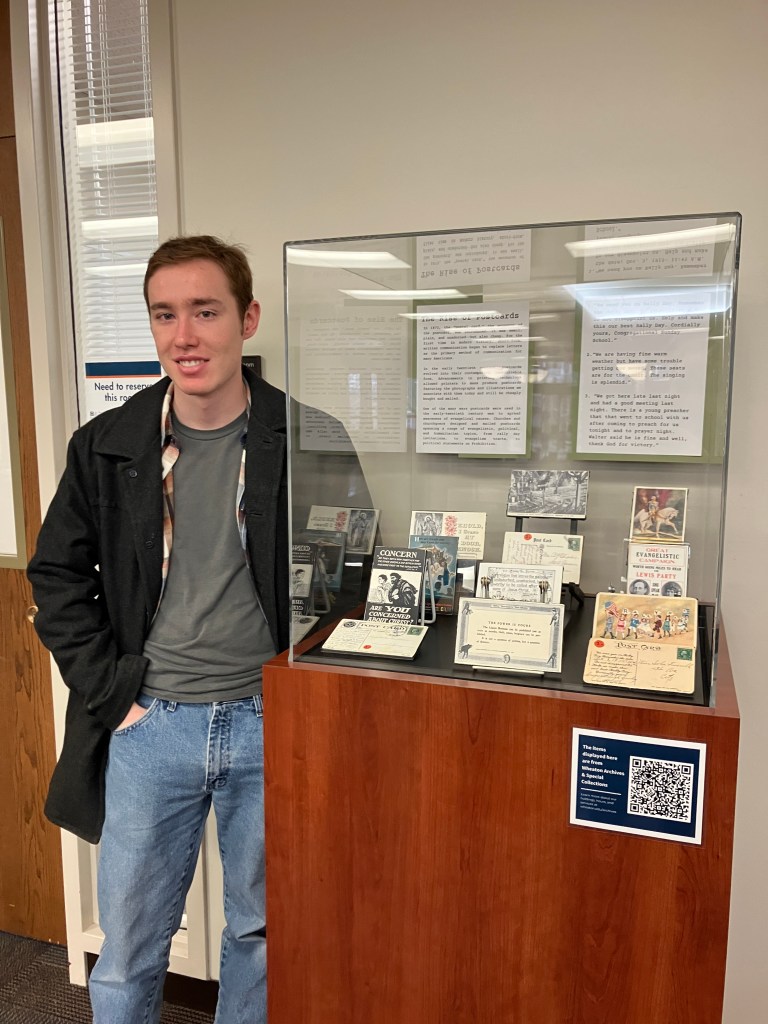
This week, Wheaton Archives & Special Collections shares a guest post from Andre-Ross Gennette, who is interning with the Archives this academic year. Andre-Ross Gennette is a junior at Wheaton College, dual majoring in History and Biblical and Theological Studies, as well as a Wheaton Aequitas Fellow with the cohort for the Fellowship in Public Humanities and the Arts. Along with his work processing Wheaton College alumni scrapbooks, Andre-Ross curated three exhibits for the Archives this spring, including one on the Archives’ extensive collection of religious postcards.

This February, Wheaton Archives and Special Collections digs into its collection of evangelical postcards, a now forgotten but vitally important resource for 20th century Christians in the United States.  

In 1873, the United States Postal Service introduced the “postal card”—a small and plain card that had its postage pre-printed on it, and cost just one cent, equivalent to about 25 cents today. It wasn’t big enough to send a full letter but was enough for a few sentences. Despite its simplicity, the postal card was a resounding success. For the first time in United States history, short form communication via cheap and accessible postal cards began to replace full-size letters.  

Continue reading

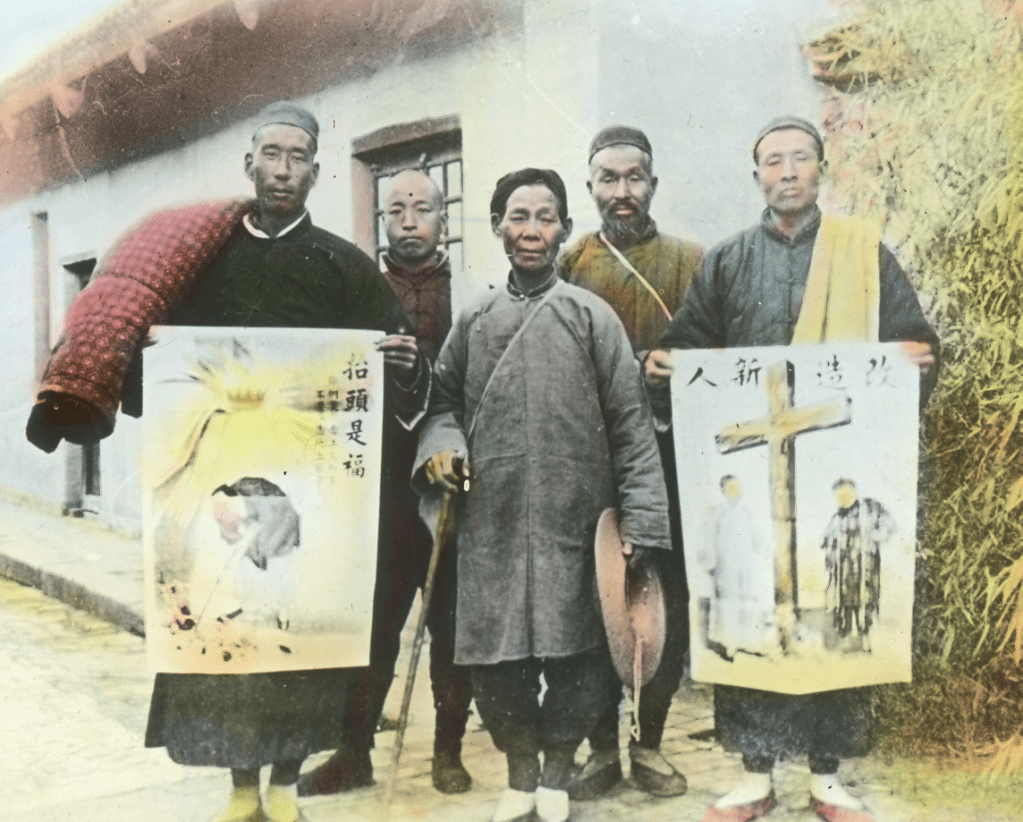
“The Truth Needs to Be Illustrated”: Gospel Posters in China

In the early 1920s, the first commercial four-color offset lithograph machines came to China. While Chinese Christian posters, tracts, and books had circulated from various presses for a century, these machines allowed for quick, inexpensive, and large-scale print production. Christian mission organizations like the Religious Tract Society and Christian Witness Press quickly capitalized on the new technology. In 1929 alone, the Religious Tract Society printed 150,000 posters in China. Joining and in some ways anticipating China’s vibrant political and commercial print culture, these colorful posters became a prevalent tool for Christian evangelization in China through the 1930s and 1940s.

Chinese Christians, possibly an itinerate preaching band, with evangelism posters, ca. 1930-1940. Collection 215, Lantern Slide Box 11.

Wheaton Archives & Special Collections holds more than fifty of these posters throughout several collections, including Collection 215: Records of Overseas Missionary Fellowship, Collection 231: Papers of Ian and Helen Anderson and Collection 706: Evangelism Posters Ephemera.

Continue reading

Snapshots of Global Missions

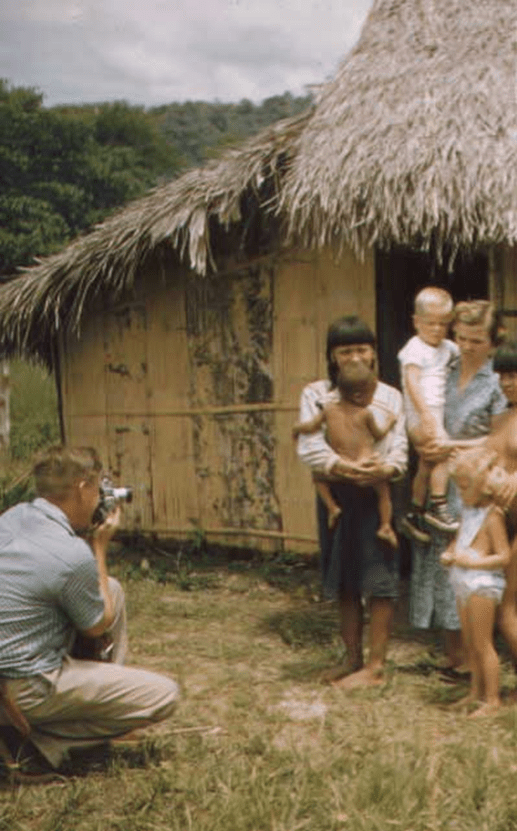
CN 278: Papers of Elisabeth Elliot, Slide 66

Missionaries often find themselves in disparate places all over the world, and even though their primary role is not to be photographers, many have a camera in hand to capture landscapes, peoples, rituals, homes, costumes, daily activities, ministry activities, staff group shots, and more. Sometimes the images are intended for use in prayer letters or marketing efforts by their agency or sending church. Other times missionaries, like amateur anthropologists, are perhaps among the first to photograph a people group, such as Elisabeth Elliot’s shots of the Waodani people in Ecuador.

As we archivists say to budding researchers, understanding why a document is created (including photographs) is one key to interpreting the document. Knowing the original contexts and the intended use of these photographs helps us understand them more deeply.

Continue reading

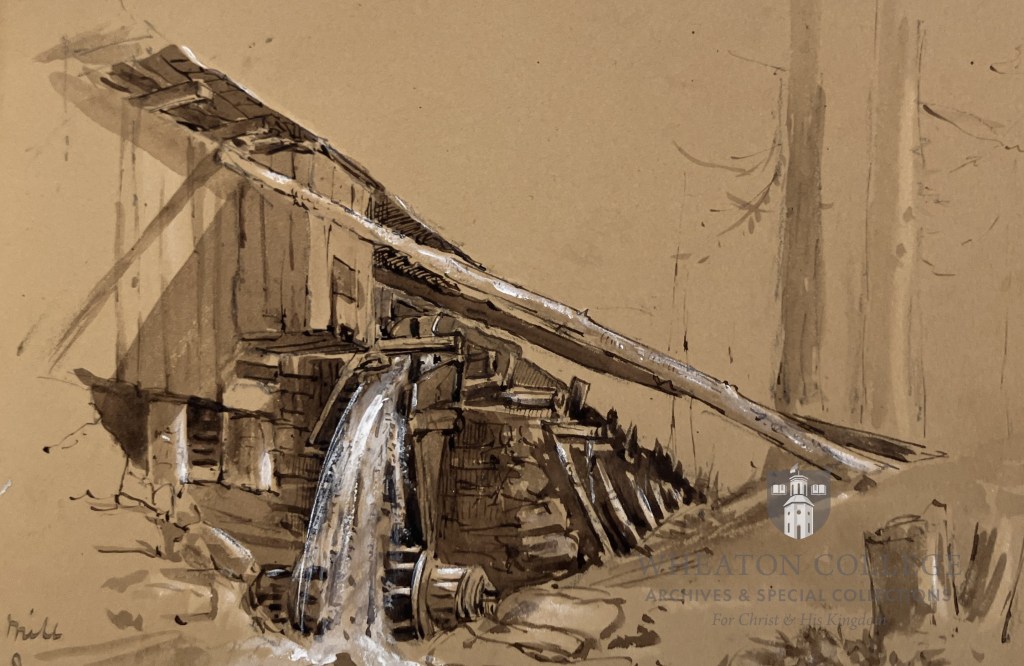
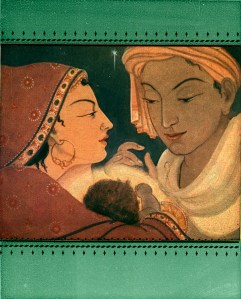
O Holy Night

One of the joys of archives and archival work is the opportunity the collections offer to explore the great variety of human invention and artistry across both time and space, as well as the ways in which common ideas and images endure through different cultures and generations.

Collection 177, Folder 8-12

As people all around the world begin their celebrations of Advent, this month we delve into the many intriguing variations in our collections on one of the most enduring of Christmas images – the Nativity.

From the origins of the story of Jesus Christ’s birth in the world of first century Palestine, to Western Europe and North America, and across the globe in India, China, and the Philippines, a review of just a few of the images of the nativity held by the Wheaton Archives & Special Collections demonstrates the many ways the Christmas story has been reflected and reimagined in a myriad of different times and places.

Continue reading