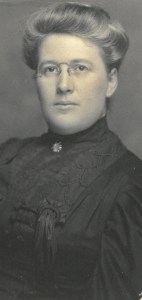
Portrait photo of Virginia Asher, 1905. Photo File: Asher, Virginia.
Scattered throughout the Evangelism & Missions Archives are paper fragments that tell the story of a remarkable woman – Virginia Healey Asher.
Virginia Healey was born to Irish parents in Chicago in 1869. Although her family was Catholic, she attended the church that had grown out of Dwight L. Moody’s Sunday School class and there gave her life to Christ during an evangelistic meeting when she was eleven. Her future husband, William Asher, was saved at the same meeting. When a few years later D. L. Moody called for workers, she volunteered. He assigned her to outdoor street meetings in Chicago where she sang and witnessed. She planned to go to Moody’s school in Northfield, Massachusetts when William, who had also volunteered for evangelism ministry, proposed. She was a teenage bride when they married on December 14, 1887.
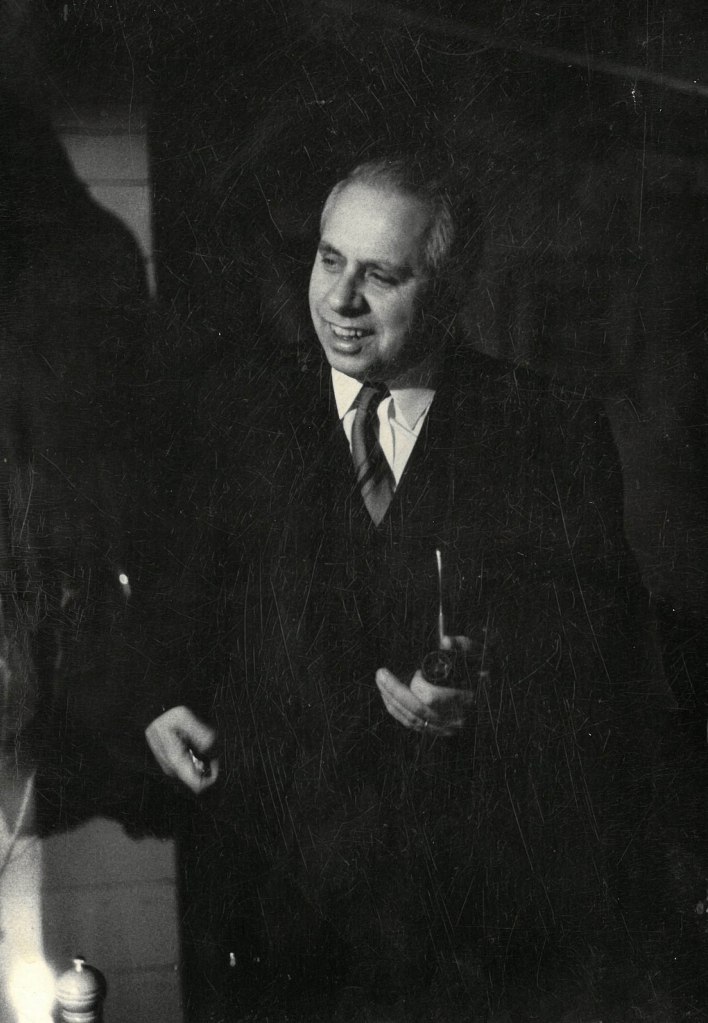
The meeting of Hans Rookmaaker, a Dutch art critic, and Mahalia Jackson, a Black American gospel singer seems, at first impression, unlikely. Yet, archives are full of such improbable pairings.
Born February 27th, 1922, in the Netherlands, Hans Rookmaaker came to adulthood under the storm of Nazism and war. As the Dutch Nazi Party organized, teenaged Hans pursued a growing interest in art and music, developing an abiding passion for jazz. Spending his pocket money on albums and phonograph needles; some of his favorites included Jelly Roll Morton, Louis Armstrong and Billie Holiday. Under the Nazi occupation, Hans joined the Underground Press and agreed to distribute anti-Nazi leaflets. Arrested after his first night, he was eventually freed through his father’s political connections. However, in 1943, thousands of Dutch reservists, including Hans, were “officially” enlisted for service at a collecting center where they were herded into trains and transported to concentration camps.
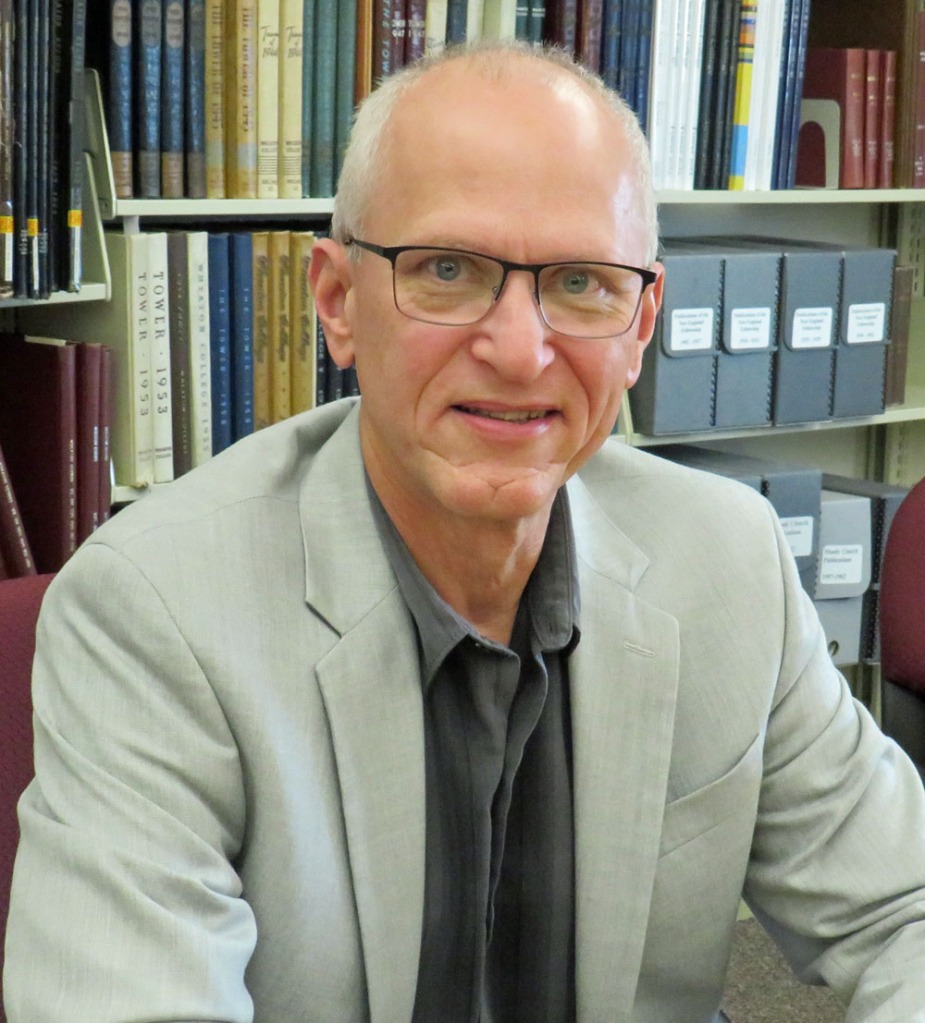
This May, Wheaton Archives & Special Collections features an interview with professional trombonist and Wheaton College lecturer Douglas Yeo about his recent adventures in the archives, as well as his experience researching for his newly published book with co-author Kevin Mungons, Homer Rodeheaver and the Rise of the Gospel Music Industry.
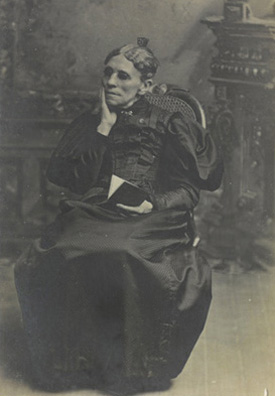
When commemorating National Women’s History Month, the Wheaton College Billy Graham Center Archives could celebrate any number of extraordinary women represented in its collections: author and missionary Elisabeth Elliot, evangelist Helen “Ma” Sunday, prison preacher Rev. Consuella York, Mission Aviation Fellowship pilot Betty Greene, Holocaust-survivor and author Corrie ten Boom, faith-healer and evangelist Kathryn Kuhlman, and many others. But this March, the Archives remembers poet, hymnist, composer, social reformer, and public speaker, Fanny Crosby (1820-1915), born two hundred years ago this month.
Although she could print little more than her name, Fanny Crosby became the most prolific American hymnist of the nineteenth century, writing thousands of sacred songs, sometimes composing up to six or seven hymns a day. Her most famous works include “Blessed Assurance”, “To God be the Glory”, “Pass Me Not, O Gentle Savior”, and “Safe in the Arms of Jesus.” A household name in her lifetime, Fanny Crosby’s compositions still litter hymnals across American Protestant denominations today. Crosby’s enduring popularity is a testimony not only to the extraordinary volume of her musical corpus but also to the simplicity and power of her lyrics to convict, comfort, and inspire audiences around the globe.
In addition to photographs, song books, and memorabilia, the Archives holds nearly 2,400 original manuscripts of Crosby’s hymns and poetry, composed between 1862 and 1915. The majority of the manuscripts are numbered and dated, a helpful guide for researchers tracing Crosby’s immense literary output. The finding aid for Collection 35: Papers of Fanny Crosby provides more details about these materials.
 From the Vault