A Holiday by the Lake

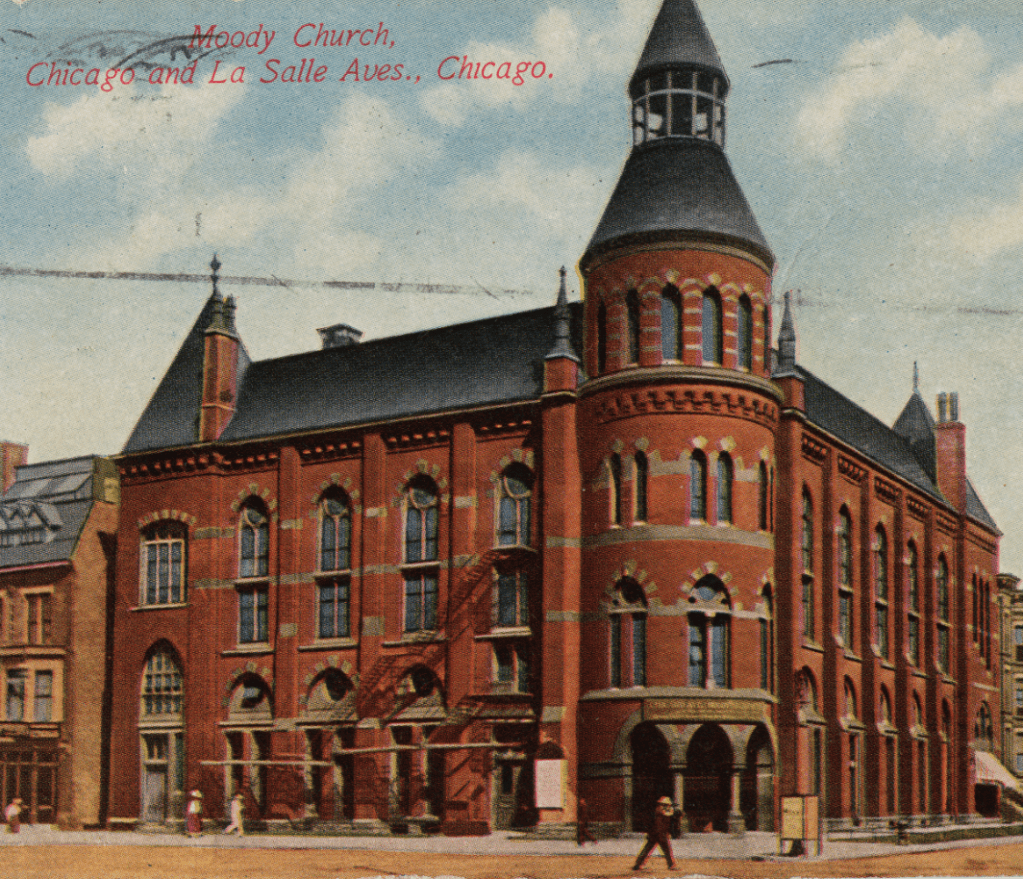
Photo File: Moody Church, Exteriors

Collection 330 in the Evangelism & Mission Archives is the Records of Moody Memorial Church, one of the oldest and largest independent churches of Chicago, Illinois. Part of that collection is Photo Album VI, an old and dilapidated scrapbook with this introduction pasted onto its inside front cover:

THIS BOOK OF PICTURES REPRESENTING THE FRESH AIR WORK OF THE Moody Sunday School (during the years between 1903 and 1905) is presented to the Moody Sunday School and to be kept where the officers and teachers of the Sunday School may have access.

The pictures were taken by G. P. Rockwell who at that time was Superintendent of the Fresh Air work under the direction of A. F. Gaylord who was Supt. of the Sunday School. The book was made by Mr. Rockwell and after many years of care, become the property of the Moody Sunday School. The book is very dear to his heart and many pleasant memories could be recalled through the pictures and the wonderful fellowship of the School and dear Mr A. F. Gaylord.

Needy boys and girls were selected by Mrs. A. F. Gaylord for the occasion of a vacation out in the country. Groups of about 75 were taken on the Northwestern Railroad to Ravinia, Ill. and Glencoe, Ill. Each group was kept there under the care of a competent Christian workers for about two weks [sic]. Then they were carried back to the city much to their worrow [sic]. Often another group would take their place and thus the work was carried on during the entire summer,

Physical training were given the boys and girls daily. Big, hikes were given the groups each week end sometimes daily. Occasionaly [sic] they were given a taffy pull or hay ride to Fort Sheridan but every day they were taken to the lake where they splashed and ran and were taught to swim. Each child was given some work to do about the home and every one of them looked forward to the night time when they gathered for their evening devotions before going to bed. Thank God many found the Christ at the Camp for the General Supt. Mr Gaylord insisted that the spiritual work should come first
.

Continue reading

The Shadow of a Modest Man

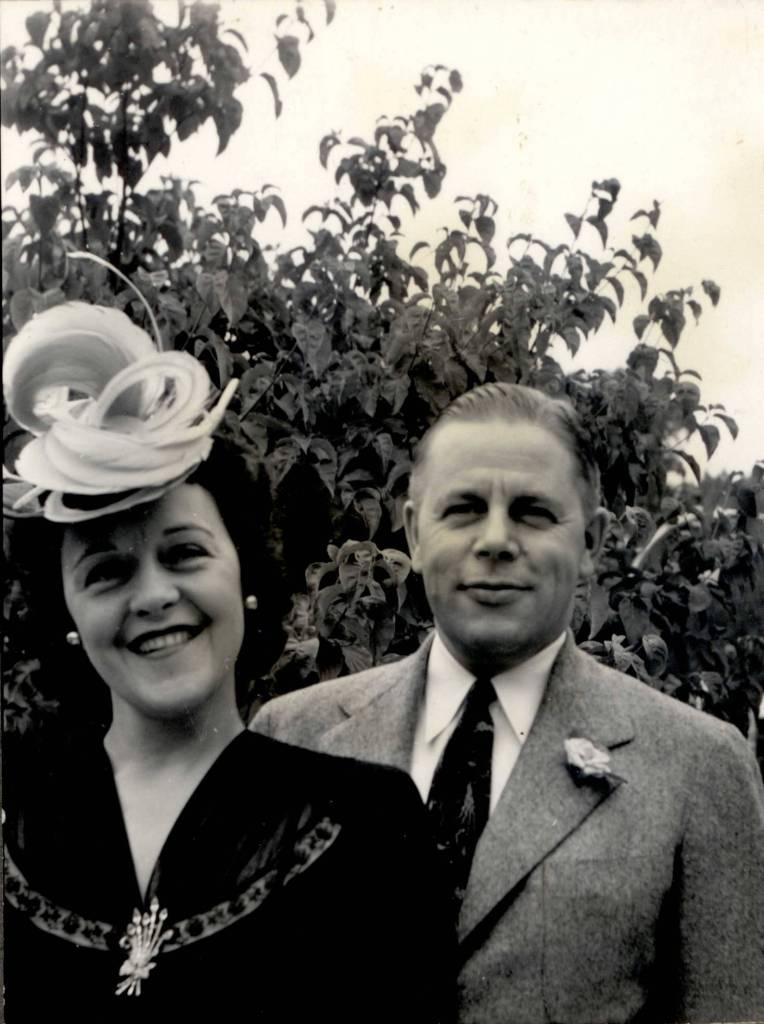
Stereo slide of Taylor and his wife Gloria, ca. 1930s. (Photo File: Taylor, Herbert J.)

One of the earliest collections opened by the Archives (in 1978) and one of the most heavily used (over 360 times at last count) is Collection 20, the papers of Chicago businessman and philanthropist Herbert John Taylor (1893-1978).

Taylor’s life was in many ways a typical American success story. He started out as a salesman in Oklahoma. After service with the YMCA in France, assisting servicemen during World War I and then a shore post in the Navy, he moved to Chicago and eventually became president of Club Aluminum Products, a near bankrupt company he rescued and made into a multi-million dollar enterprise.

Continue reading

A Good Stenographer, Spirit-Filled, Can Always Be Used

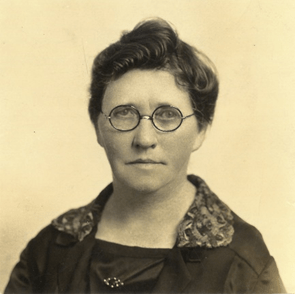
In celebration of Women’s History Month, Wheaton Archives & Special Collections commemorates the many contributions from women whose unique voices and experiences are documented throughout our rich collections. This March, we highlight the life and missionary service of Hulda Stumpf, a missionary to Kenya from 1907-1930.

Hulda Jane Stumpf, ca. 1906. From Photo File: Stumpf, Hulda.

A native of Pennsylvania, Stumpf left the comforts of her middle-class, Midwestern life for the unknown challenges of missionary service as a single woman in British East Africa in 1907. During her two decades of service at the Kijabe Mission Station in Kenya, Stumpf became an outspoken advocate for the education and advancement of women and girls from the surrounding indigenous ethnic people groups. Her willingness to challenge the long-cherished cultural mores and religious rites resulted in her tragic murder at the age of 62.

Continue reading

‘He Had Something to Say and He Said It Well’: Billy Graham at Wheaton College

Billy Graham, The Tower, 1944.

Next week will mark the five year anniversary of Rev. Billy Graham’s passing on February 21, 2018. This month, in remembrance of his remarkable life and legacy, Wheaton Archives & Special Collections commemorates the beginnings of Billy Graham’s evangelistic ministry as a fledgling undergraduate preacher at Wheaton College in 1940.

During Billy Graham’s time as a student at Florida Bible Institute (1937-1940), Alma Toff Edman, mother of then-interim president of Wheaton College, V. Raymond Edman, heard Graham preach at a local service. Impressed, she told her son Elner Edman and his friend Paul Fischer about the young preacher and urged that they hear him too. The two men invited Graham with them as a caddy for a round of golf. Similarly impressed with his passion for ministry and gift for speaking, they urged him to attend Wheaton College after graduating from FBI, to add a liberal arts education to his Bible and homiletics training. Graham applied to Wheaton and was accepted, starting on September 19, 1940.

Continue reading

“They Called Him the Jesus Man”: Montrose Waite and the Afro-American Missionary Crusade

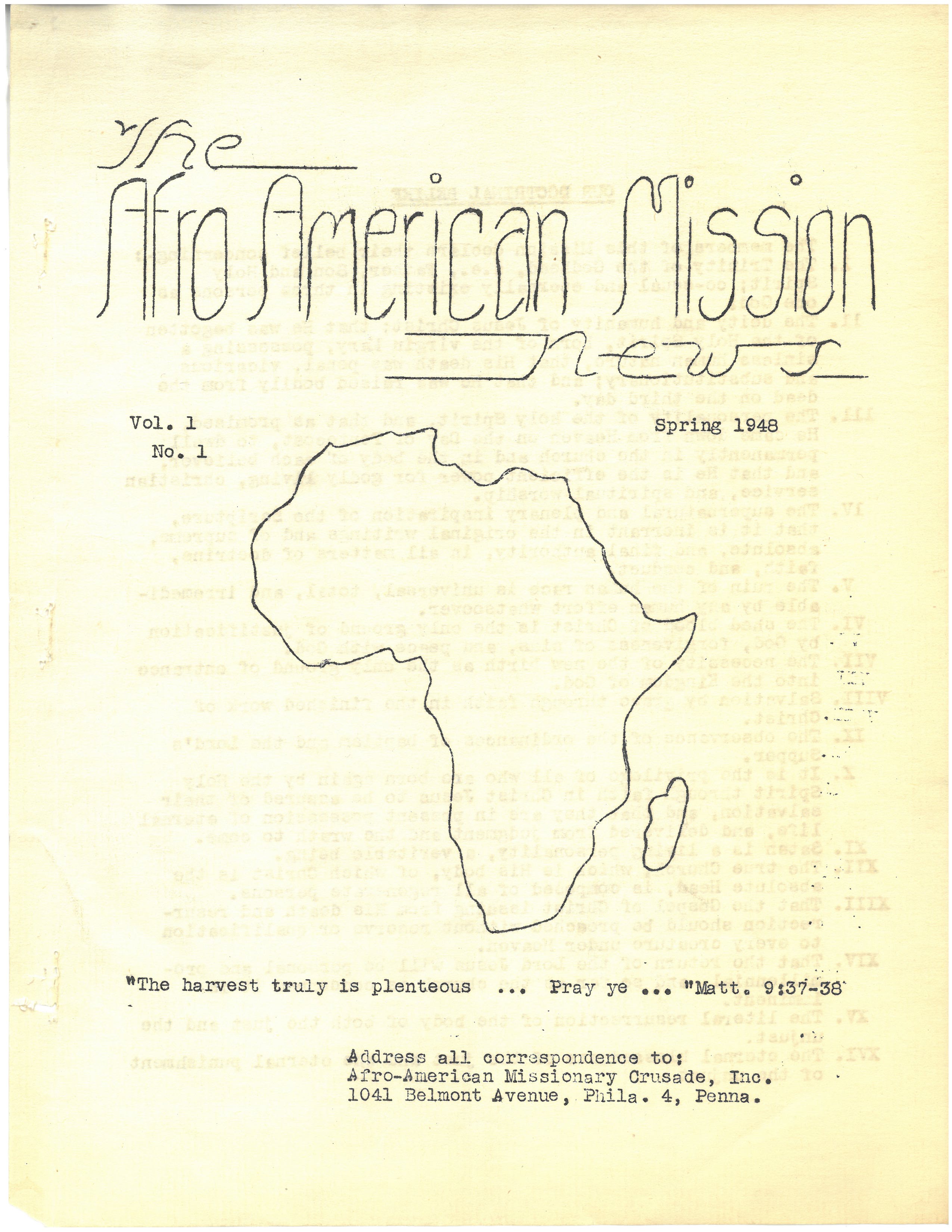
In celebration of Black History Month this February, Wheaton Archives & Special Collections commemorates the legacy of Montrose Waite, dedicated missionary to Africa and founder of one of the first independent Black faith missions in America, the Afro-American Missionary Crusade.

Newsletter for the Afro-American Missionary Crusade, 1948. (CN 81, Folder 8-40)

Born 1893 in Jamaica, Waite immigrated to the United States in 1916 with the promise of munitions factory work created by the ongoing World War. Settling in New York City, he wrote of his interest in missions to Dr. A. B. Simpson, founder of the Christian and Missionary Alliance (C&MA), who encouraged him to seek out missionary education at the C&MA’s Nyack Institute.

Continue reading

Looking Back on A Year of New Old Stuff

Song sheet (ca. 1928) for evangelist Betty Weakland, one of the most well-known of the so-called “girl evangelists,” popular in the first decades of the 20th century. Donated by long-time friend of the Archives, Robert Dresser. Accession 2022-053.

“Collection” and “Accession” are words used all the time in the archival profession. In Wheaton Archives & Specials Collections, an accession is material received from a single donor, usually an individual or an organization. It might be a single folder or hundred of boxes, with only a general inventory to use as a finding aid.  A collection is a set of materials (perhaps including paper-based records, photographs, audio or video recordings, etc.) that has been fully arranged and described. Most of our collections have been formed from several accessions. Here in the Archives & Special Collections, both collections and accessions are open for research (unless there have been donor-requested restrictions) but the lack of a complete finding aid and access points can make accessions difficult to locate or use for research.

Continue reading

Leafing through the Pages of China Inter-Varsity Christian Fellowship

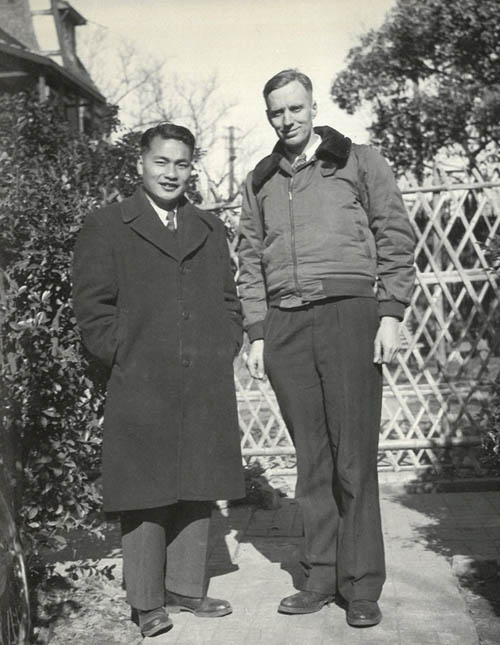
Mr. Chang & David Adeney, Shanghai, 1950. (Photo File: OMF-China II)

An archivist never knows what they will find as they begin opening boxes and folders in donated materials to arrange and describe a collection. And they don’t know what threads might appear that lead to other collections or lines of inquiry, or what gaps the new material might fill. For all they can’t anticipate, archivists can expect that there will be materials that will uncover or add to areas of interest for researchers. Sometimes new materials become their own puzzle to figure out — like who is the unidentified Western female in several of the photographs below? — while other times they provide the missing piece to a partially completed puzzle. A recent example of this is the photo album that Ruth Adeney donated to the Archives in 1997 along with the rest of the papers of her husband, David Adeney (CN 393), soon to be opened for researcher use.

Continue reading

Stories from the Archives: An Interview with Dr. Aaron Griffith

At the end of September, Wheaton Archives & Special Collections hosted historian Dr. Aaron Griffith for the 2022 Archival Research Lecture, “American Evangelicals and the Making of Modern Prison Ministry.” For those who were unable to attend the lecture, this month we feature an interview with Dr. Griffith about the many visits he made to the Archives during his research on prison ministry and evangelical attitudes to criminal justice.

When and how were you first introduced to Archives & Special Collections?

Believe it or not, when I was a Wheaton undergraduate student (and a philosophy major, not history), I had very little idea of the Archives’ existence or purpose (though I remember a friend telling me that the third floor of the Billy Graham Center was a nice, quiet place to hang out). It wasn’t until much later, as I started getting interested in American religious history during my M.Div. program, that I realized that the Archives was an absolute goldmine for the study of evangelicalism. My first research trip to the Archives was when I accompanied Grant Wacker there for a day, to assist him with some research for his book on Billy Graham. We were both in Wheaton for a conference, and he asked me to help him read through some letters to Billy Graham and categorize them. I remember feeling energized by this work, and I think it was this experience that really sealed the deal for me in terms of getting me excited about historical research and showing me how important the Archives is for understanding American evangelicalism.

Continue reading

Snapshots of Global Missions

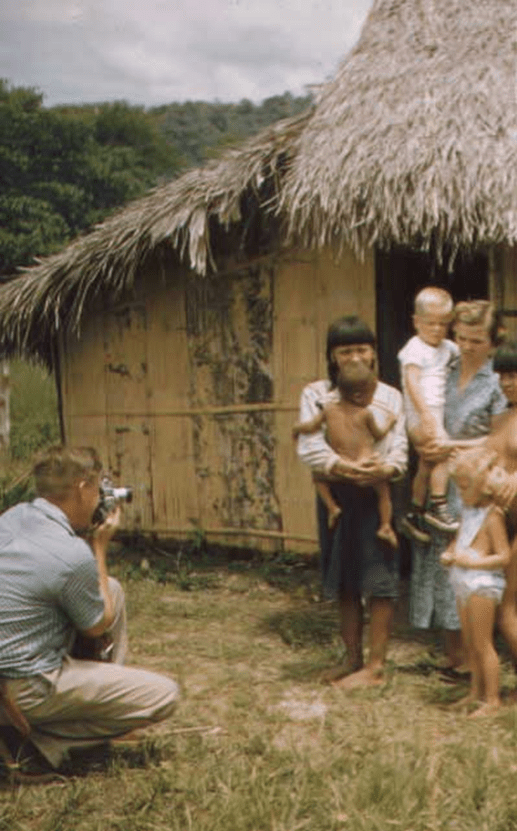
CN 278: Papers of Elisabeth Elliot, Slide 66

Missionaries often find themselves in disparate places all over the world, and even though their primary role is not to be photographers, many have a camera in hand to capture landscapes, peoples, rituals, homes, costumes, daily activities, ministry activities, staff group shots, and more. Sometimes the images are intended for use in prayer letters or marketing efforts by their agency or sending church. Other times missionaries, like amateur anthropologists, are perhaps among the first to photograph a people group, such as Elisabeth Elliot’s shots of the Waodani people in Ecuador.

As we archivists say to budding researchers, understanding why a document is created (including photographs) is one key to interpreting the document. Knowing the original contexts and the intended use of these photographs helps us understand them more deeply.

Continue reading