A Voice for Change: Excerpts from the William E. Pannell Oral History Collection

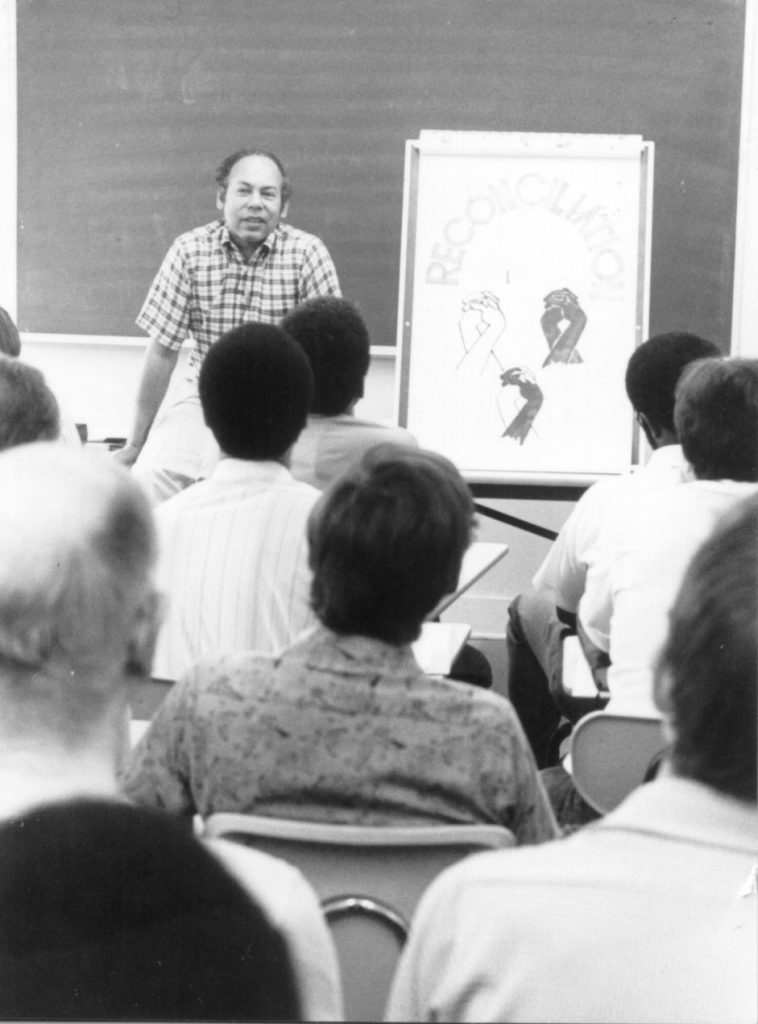
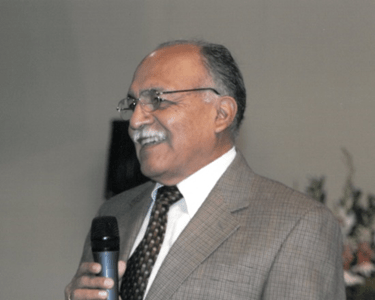
1981: Rev. Pannell leading a Christian Community Development workshop at the Voice of Calvary Ministries’ Study Center in Jackson, Mississippi, USA. (PF: Voice of Calvary – Conferences and Meetings)

In celebration of Black History Month this February, Wheaton Archives & Special Collections features our oral history collection with Rev. Dr. William E. Pannell, who passed away last October. Over more than five decades of ministry, Dr. Pannell served as a youth pastor in Detroit, directed training for Youth for Christ, helped lead Tom Skinner Associates as Vice President, and taught future generations of pastors and evangelists at Fuller Theological Seminary as the assistant professor of evangelism and director of the Black Pastors’ program. Along with his busy work as an evangelist and teacher, Dr. Pannell published several influential books on race and the evangelical church, including My Friend, the Enemy (1968), Evangelism from the Bottom Up (1992), and The Coming Race Wars?: A Cry for Reconciliation (1993).

From 1995 to 2007, Wheaton archivist Bob Shuster sat down with Dr. Pannell for several sessions of oral history interviews. Totaling more than seven hours, the recordings include Dr. Pannell’s reflections on his childhood, education, Christian faith, ministry development, and race relations in the American church. Wheaton Archives & Special Collections recently released the complete transcripts to these interviews, which are now available through the online guide to Collection 498: William E. Pannell Oral History Interviews. Below are selections from the interviews covering Dr. Pannell’s early life, growing racial consciousness, visit to the 1966 Congress on Evangelism, and development of his work with B.M. Nottage and Tom Skinner. The selections have been edited for clarity and brevity.

Continue reading

New Old Stuff in the Archives: 2024 Edition

As we celebrate the start of a new year, Wheaton Archives & Special Collections looks back at some of the interesting accessions of historical documents that the Archives received in 2024 and the new or updated collections we processed and opened to researchers.

New Accessions

For almost seventy years, the story of missionaries’ attempts to bring Christianity to the Waorani people of the Amazon (called the Aucas by their enemies) has been well known to American evangelicals. This year we received the files of Dr. Kathryn Long, who wrote God in the Rainforest (2017), which tells the story from the killing of the five missionaries who first made the attempt to reach the Waorani in 1956 through the development of an Indigenous Christian community among the Waorani in later years. She generously gave her voluminous research files and relevant books to the Archives, including material from her own trips to Ecuador and documents about her work on the staff of Campus Crusade in South America in the 1980s.

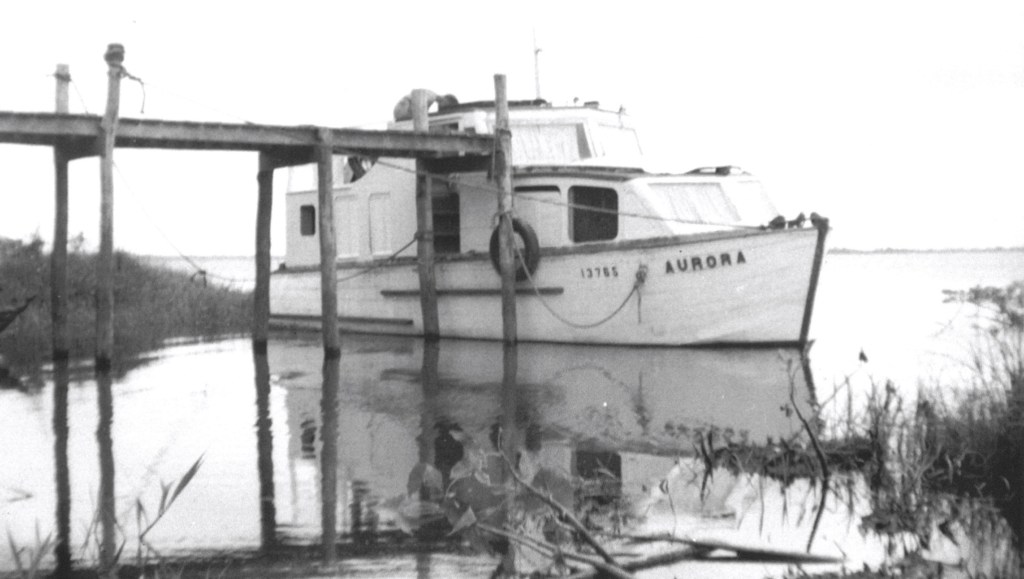
Boat used for Unevangelized Fields Mission (later CrossWorld) for river ministry in Brazil.
Continue reading

Oration Glorious

Wheaton Archives & Special Collections holds hundreds of sermon manuscripts from evangelists and pastors like Jonathan Blanchard, William Biederwolf, Billy Sunday, Jonathan Goforth, Oswald Chambers, Aimee Semple McPherson, Torrey M. Johnson, Kathryn Kuhlman, V. Raymond Edman, Louis H. Evans, and Luis Palau.

Portrait of Aimee Semple McPherson. Photo File: McPherson, Aimee Semple.

Ranging from brief outlines and research notes to full sermon transcripts and covering a wide variety of Biblical and pastoral topics, these manuscripts showcase evangelists’ great diversity in style and approach to sharing the gospel. This December, in celebration of the Christmas season, Wheaton Archives & Special Collections features three Advent sermons from one of the most unique and charismatic communicators in our collections – Aimee Semple McPherson.

Aimee Semple McPherson (1890–1944) was a pioneering evangelist and founder of the International Church of the Foursquare Gospel. Converted at a Pentecostal tent revival in 1908, she began her ministry career as a missionary alongside her first husband, Robert Semple, before his untimely death in China. She returned to the U.S. and after a troubled second marriage, she launched an itinerant revival ministry, ultimately founding the Angelus Temple in Los Angeles in 1923. Known for her dramatic and musical preaching, she brought thousands into the Angelus Temple for multiple services every week, made several transcontinental speaking tours, and became the first woman to preach a sermon over the radio.

Continue reading

Billy Graham Before the Crusades: Stories from Wheaton College Classmates

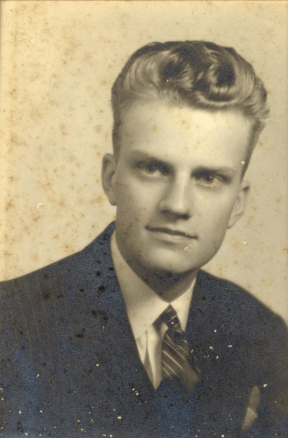
Portrait of Billy Graham, c. 1940s. Taken by local Wheaton photographer (and Wheaton College alum) Orlin Kohli. Photo File: Graham, Billy 1940s

Seeking to add a liberal arts education to his Bible College background, Billy Graham enrolled in Wheaton College for the fall of 1940. With previous credits from Florida Bible Institute and Bob Jones University, Graham came to Wheaton as a Sophomore, graduating in the spring of 1943.

In 2010, the staff of the Evangelism & Missions Archives at Wheaton College contacted dozens of Graham’s surviving classmates, asking them to fill out questionnaires about their memories of Wheaton in the 1940s and especially their memories of Billy Graham. The staff also taped and transcribed oral history interviews with more than twenty-eight of these classmates. The interviews are all online in the guide to Collection 74 and can be accessed there. Below are excerpts from the interviews, documents, and questionnaires. The excerpts have been edited for length and clarity.

Continue reading

“As This is our First Broadcast…”: Percy Crawford and the Birth of Televangelism

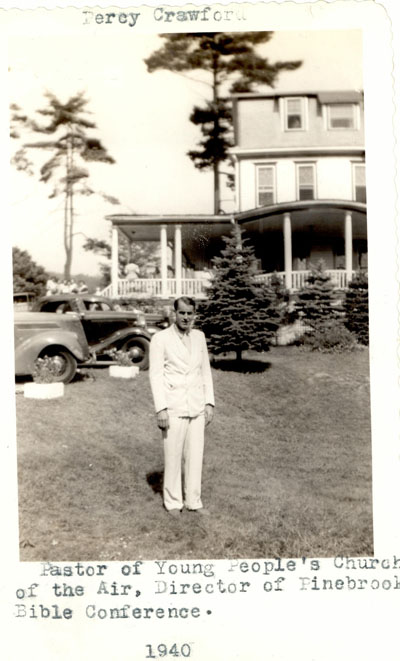
PF: Pinebrook Camp

Known to friends as “The Pioneer,” Percy Crawford (1902-1960) was an American evangelist and entrepreneur, who founded, among other things, the Pinebrook Bible Conference, Pinebrook Christian camps for boys and girls, a radio ministry, King’s College, a mission, and a chain of Christian radio and televisions stations. He also produced the first nationwide evangelism television program. These were in addition to the evangelistic tours and “Youtharama” rallies he led across the United States. His restless energy, vision, and strong personality made a deep impression on those who knew or worked with him.

When Crawford committed his life to ministry at Los Angeles’ Church of the Open Door in 1923, radio was just beginning to emerge as a powerful national platform for entertainment, news, politics, and religion. Inspired by Christian radio pioneers like Paul Rader in Chicago and Walter Maier in St. Louis, Crawford began broadcasting in 1931 with The Young People’s Church of the Air. During the summer months, these broadcasts often came from Pinebrook in Pennsylvania’s Pocono Mountains.

Continue reading

“Could You Say More About That?”: Oral History as Process and Document in the Archives

This month, Wheaton Archives & Special Collections features a post from long-time Wheaton archivist, Paul Ericksen. Since joining the then Billy Graham Center Archives in 1982, Paul has interviewed more than 125 individuals and processed and transcribed dozens of oral history interviews with missionaries, evangelists, and Christian leaders.


Archivists are primarily skilled facilitators as they focus on gathering, arranging and describing primary source materials, and assisting researchers in using their collections. Through archival “finding aids,” archivists help create the intricate web of descriptions, subject headings, and box lists that guide a researcher to identify which collections will contain relevant documents for their study, and in which boxes or folders they will find these documents. While gathering existing historical documents and preparing them for optimal access and use by researchers forms the core of archival work, archivists also collaborate to create historical documents through oral history interviews. An oral record of a person’s life and career, these interviews offer a stimulating window into the unique narratives and experiences of individuals.

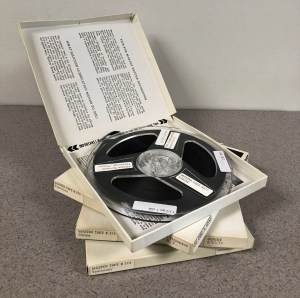
Our earliest interviews were captured on reel to reel tapes like those pictured above, using Wollensak portable recorders.

Over the course of the almost fifty years since the Billy Graham Center Archives (now the Evangelism and Missions Archives) was formed in 1975, its archivists have continuously managed an informal oral history program to further enrich its resources on global evangelism. Archivists have interviewed more than 370 individuals, compiling over 1,200 hours of sound recordings on analog reels, cassette tapes, and as digital files. Through further transcription of recordings, researchers also gain the benefit of reading or searching the full-text accounts for information on a topic, person, or location. One of the earliest of these interviews was with Andrew Wyzenbeek about his memories of Billy Sunday meetings at the turn of the century. Most recently, a few current Billy Graham Scholarship recipients were interviewed in the past year about their experience and ministry in several Asian countries.

Continue reading

Introducing the Samuel Escobar Papers

Dr. Samuel Escobar, undated. From Accession 2024-0023, Box 6.

The Wheaton Archives & Special Collections is pleased to announce the recent acquisition of a significant research collection documenting the life and ministry of Peruvian missiologist and theologian Dr. Samuel Escobar. Spanning more than five decades of Dr. Escobar’s life and ministry, the papers are a valuable addition to the Evangelism & Missions Archives and will significantly expand our collections representing the Global South, especially voices from Latin America.

Continue reading

“The Truth Needs to Be Illustrated”: Gospel Posters in China

In the early 1920s, the first commercial four-color offset lithograph machines came to China. While Chinese Christian posters, tracts, and books had circulated from various presses for a century, these machines allowed for quick, inexpensive, and large-scale print production. Christian mission organizations like the Religious Tract Society and Christian Witness Press quickly capitalized on the new technology. In 1929 alone, the Religious Tract Society printed 150,000 posters in China. Joining and in some ways anticipating China’s vibrant political and commercial print culture, these colorful posters became a prevalent tool for Christian evangelization in China through the 1930s and 1940s.

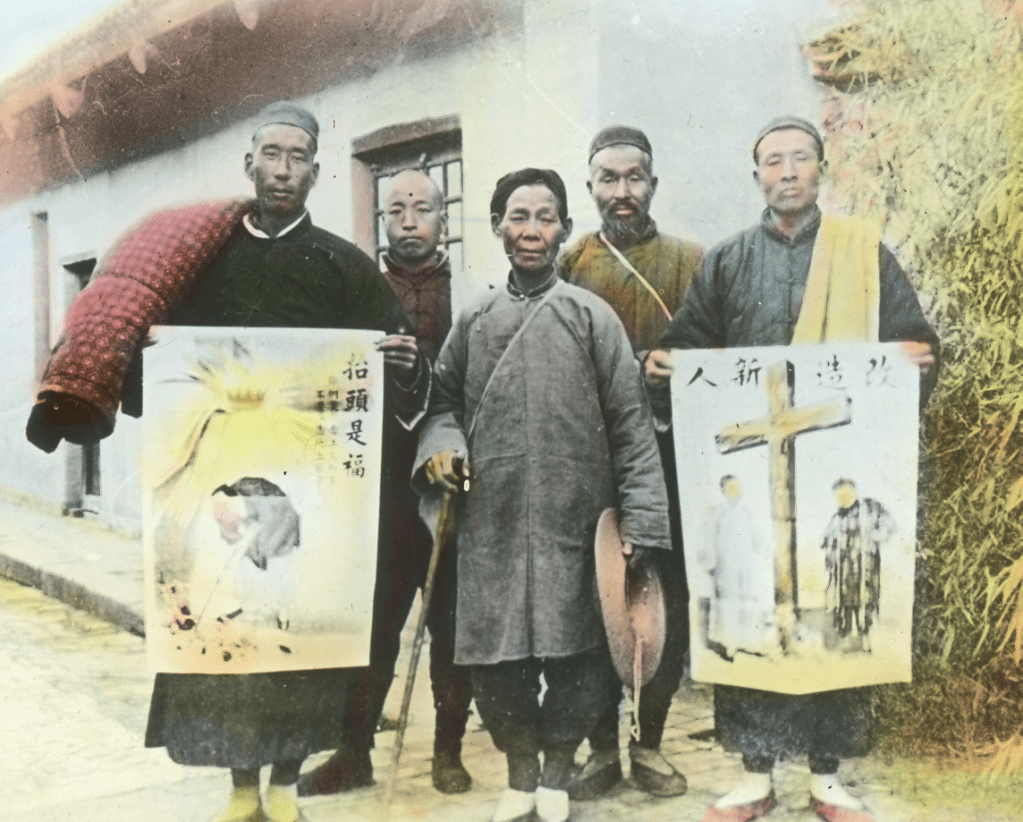
Chinese Christians, possibly an itinerate preaching band, with evangelism posters, ca. 1930-1940. Collection 215, Lantern Slide Box 11.

Wheaton Archives & Special Collections holds more than fifty of these posters throughout several collections, including Collection 215: Records of Overseas Missionary Fellowship, Collection 231: Papers of Ian and Helen Anderson and Collection 706: Evangelism Posters Ephemera.

Continue reading

‘For the Evangelization of the Whole World’: Looking Back at the 1974 Lausanne Congress

Logo for International Congress of World Evangelization (ICOWE), Lausanne, 1974. Printed on Congress program.

In July 1974, 2,500 leaders from 150 countries gathered in Lausanne, Switzerland, for the International Congress on World Evangelization, better known as the Lausanne Congress. Over the course of ten days, evangelical leaders from around the world spoke in plenary sessions and workshops to consider the project of world evangelization in the modern era. An immediate outcome of the congress was the Lausanne Covenant, a statement of Christian belief and lifestyle that became a touchstone for many evangelicals around the globe.

To celebrate the 50th anniversary of the Lausanne Movement’s founding Congress, Wheaton Archives & Special Collections features highlights from Collection 46: Records of the Lausanne Movement, as well as our oral history collections with Lausanne leaders and participants.

Continue reading

Japan for Christ: The Evangelistic Travels of H. S. Kimura

Kimura Kiyomatsu (木村 清松), known in the United States as Henry Seimatsu Kimura, was born in 1874 to a family of sake brewers in Gosen City, Niigata Prefecture. At seventeen Kimura was baptized during an evangelistic service held by Teiichi Hori in Niigata. His conversion to Christianity led to conflict within his family, especially with his father, who disowned him; although both his parents and his two brothers eventually became Christians.

Continue reading