150 Years of The Wheaton Record

In November 1875, the Literary Union of Wheaton College published the first issue of the College Record, Wheaton’s student newspaper. Over the next 150 years, the Record became both a laboratory for student writing and journalism and a living chronicle of campus life. Its pages have documented student activities, campus developments, educational changes, social movements and conflicts, political campaigns, visiting speakers, chapels and mission work, theological debates, faculty projects, and countless other moments that trace the evolving history of Wheaton College.
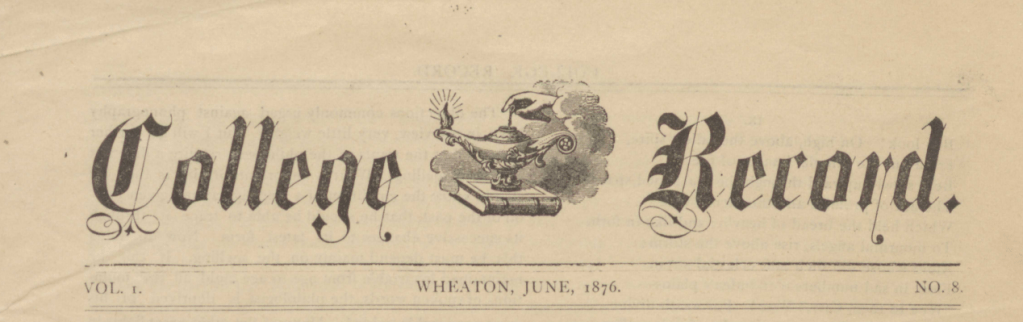
Wheaton Archives & Special Collections holds only scattered records for the first twenty years of the paper’s publication. Among these, the earliest surviving issue of the Record dates from June 1876. Although the inaugural issue of the Record is lost to history, the June 1876 editorial provides a helpful update on the paper’s first eight months, including plans for an enlargement of the paper from eight to sixteen pages. To fill this new space, the editors appealed directly to the student body, urging Wheaton students to contribute writing:

Students write for your paper. Don’t say you haven’t time to write because you are so pressed with your studies, but take a few moments each day to write and you will soon find you are the gainer by it. Of what value will your education be to you unless you learn to apply what you learn? It may, indeed, be some satisfaction to you to know that you have a college education, but certainly it will be of very little benefit to others if you know not how to use it. And in our opinion, there is no better way of putting to practical use the knowledge we have gained than by writing.

Let us, then, improve the opportunities given to us, and thus be enabled to benefit ourselves and our fellows. A college paper furnishes one of the means of improvement, and it is to be hoped that the students in future will improve the advantages thus offered to them more than they have in the past.
Continue reading

The Jim Elliot Bible Project

Ava Pardue and Mariah Sray

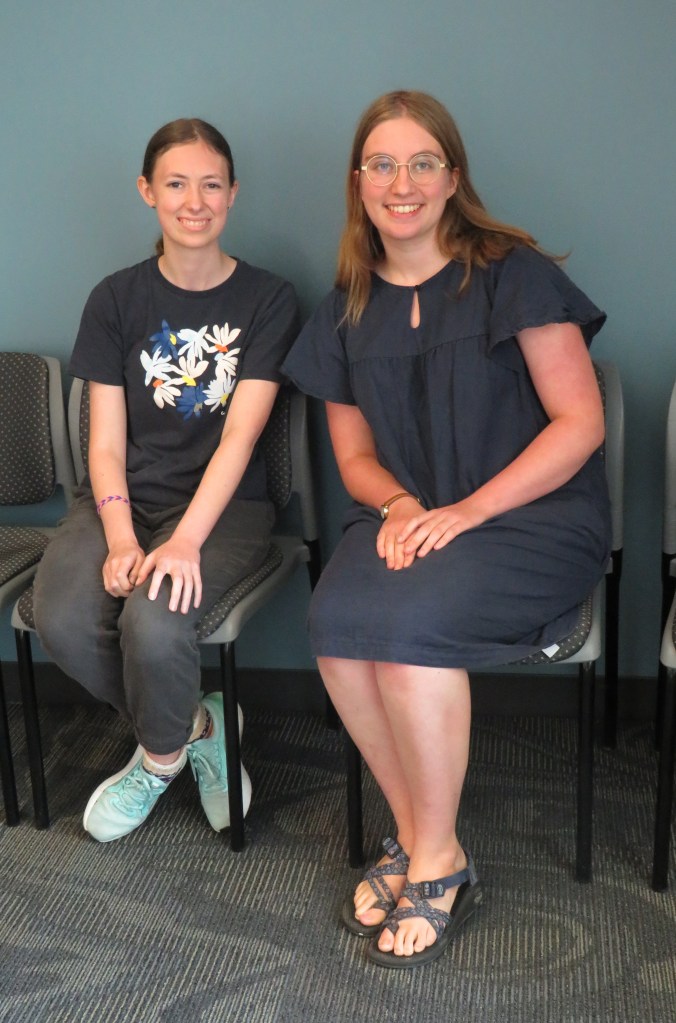
In November of 2024, Wheaton Archives & Special Collections collaborated with the Museum of the Bible to digitize Jim Elliot’s three college-era annotated Bibles held in CN 277: Jim Elliot Collection. After digitization was completed in February 2025, two archives interns, Ava Pardue and Mariah Sray, both part of Wheaton’s Aequitas Fellows Program in Public Humanities and Arts, spent the summer indexing all the annotations in the Bibles.

Ava Pardue just finished her freshman year at Wheaton. Along with being an Aequitas Fellow, she plans to major in English and Classical Languages. Mariah Sray is a senior at Wheaton with a major in Classical Languages integrated with Choral Studies.

Below, we feature an interview with Ava and Mariah about their work on the project.

What drew you to the Jim Elliot Bible project?

Ava: When I heard about the opportunity to work with Elliot’s Bibles, I jumped at the chance to engage with language, theology, and history in a way that could be useful to the public. One of the three Bibles is a Greek New Testament, which I was particularly interested in studying with the knowledge of Koine Greek that I’ve picked up during the last several years. And ultimately, I think the biggest thing that drew me to the project was a chance to look at Jim Elliot—a man hailed as a martyr, hero, and catalyst for modern missions—as an ordinary college student.

Mariah: An interest in exploring archival work drew me to this internship, but I was also curious to learn more about Jim Elliot. I knew the broad contours of his death in Ecuador but wasn’t familiar with the details of his life. I was also interested to how Jim interacted with his Bible, especially his Greek New Testament.

Continue reading

Seeing with Both Eyes: Church History in a New Perspective

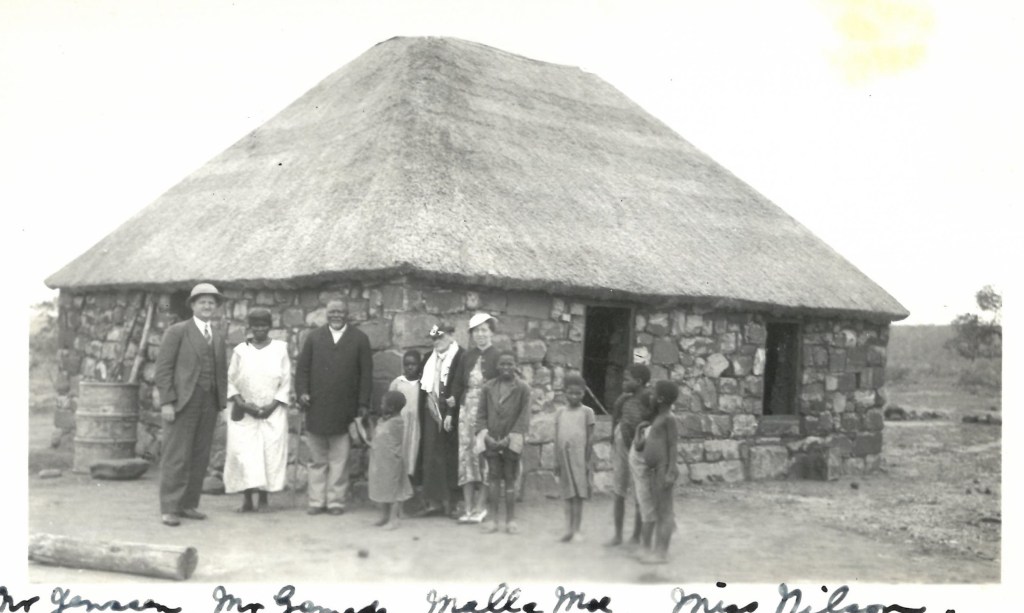
Malla Moe was a legend among missionaries during her own lifetime. Born in Norway in 1863, she immigrated to Chicago as a young woman to live with her sister. However, after meeting Frederick Franson and hearing of his work with the nascent Scandinavian Alliance Mission, she felt a strong call to missions. In 1892 she traveled to Port Natal (Durban) in South Africa to begin missionary and language training. She then went to live and work in the Swaziland (now Eswatini) countryside, traveling between Swazi homesteads (sometimes called kraals in Afrikaans). From that time on, in the words of one biographical dictionary, “she served as evangelist, church planter, teacher, and preacher.”  Although she often rubbed other missionaries the wrong way, she loved and was loved by her African congregations. When it became difficult for her to walk, she traveled in a specially built gospel wagon. By the time of her death in 1953, Swaziland and Tonga were dotted with the dozens of churches she helped to found.

“This is a church. A good evangelist, Johann Muosi[?], died there like a good soldier in the fever country for the work of God. He left his good home for Jesus’ sake. He was happy when he went to be with the Lord. Malla Moe.” (From Acc. 2007-031).

That is the story told in many Western histories of missions. But it is incomplete. (An exception is TEAM’s own history, God Made It Grow, by Vernon Mortenson). Some of those histories mention a Swazi helper named Gamede or sometimes just indicate she had an anonymous native helper. Sometimes no African worker is mentioned.

Continue reading

“Could You Say More About That?”: Oral History as Process and Document in the Archives

This month, Wheaton Archives & Special Collections features a post from long-time Wheaton archivist, Paul Ericksen. Since joining the then Billy Graham Center Archives in 1982, Paul has interviewed more than 125 individuals and processed and transcribed dozens of oral history interviews with missionaries, evangelists, and Christian leaders.


Archivists are primarily skilled facilitators as they focus on gathering, arranging and describing primary source materials, and assisting researchers in using their collections. Through archival “finding aids,” archivists help create the intricate web of descriptions, subject headings, and box lists that guide a researcher to identify which collections will contain relevant documents for their study, and in which boxes or folders they will find these documents. While gathering existing historical documents and preparing them for optimal access and use by researchers forms the core of archival work, archivists also collaborate to create historical documents through oral history interviews. An oral record of a person’s life and career, these interviews offer a stimulating window into the unique narratives and experiences of individuals.

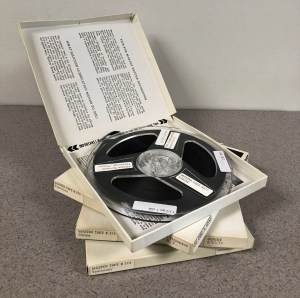
Our earliest interviews were captured on reel to reel tapes like those pictured above, using Wollensak portable recorders.

Over the course of the almost fifty years since the Billy Graham Center Archives (now the Evangelism and Missions Archives) was formed in 1975, its archivists have continuously managed an informal oral history program to further enrich its resources on global evangelism. Archivists have interviewed more than 370 individuals, compiling over 1,200 hours of sound recordings on analog reels, cassette tapes, and as digital files. Through further transcription of recordings, researchers also gain the benefit of reading or searching the full-text accounts for information on a topic, person, or location. One of the earliest of these interviews was with Andrew Wyzenbeek about his memories of Billy Sunday meetings at the turn of the century. Most recently, a few current Billy Graham Scholarship recipients were interviewed in the past year about their experience and ministry in several Asian countries.

Continue reading

Research by Proxy: In the Manuscripts Reading Room with Chelsey Geisz

While Wheaton Archives & Special Collections continually adds new digital content to our online archival photograph database and oral history interview collections, most of the thousands of pages of records in our collections can only be accessed in the Manuscripts Reading Room. We frequently receive inquiries from researchers who are unable to travel to use the collections, and so keep a list of local researchers who provide research and scanning services to distance patrons as “proxy researchers.” This week, we sat down with Chelsey Geisz for a behind-the-scenes look at proxy research in the Archives.

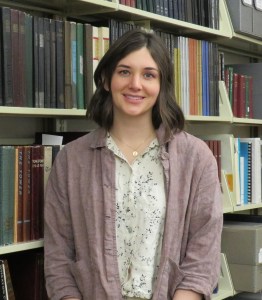
Chelsey Geisz is in her final semester of Wheaton College Graduate School’s MA in Systematic Theology. For the last year and a half, she has also served as a proxy researcher and a research assistant for a major College history project. Because of her work as a research assistant, she has the dubious distinction of likely being the only person alive who has read every Wheaton student publication from 1860-2000!

Continue reading

Giving Old Images a New Life: Digital Preservation in the Archives

This week we go behind the scenes of Wheaton Archives and Special Collections with a guest post from Becky Baker Halberg, who completed a practicum with the Archives last fall. Becky is an alumna of both Wheaton College and Wheaton College Graduate School and holds a B.A. in history and theology and a M.A. in History of Christianity. She is currently finishing her final semester at University at Buffalo where she is expected to graduate with her M.S. in Information and Library Science in May 2022. Becky worked at Wheaton College for the last five years while completing her M.A. before recently relocating to Minnesota. In addition to her interest in archival research related to the history of Christianity, she enjoys exploring the topic of Christian laity’s information literacy, particularly concerning the role of church libraries in fostering its growth.

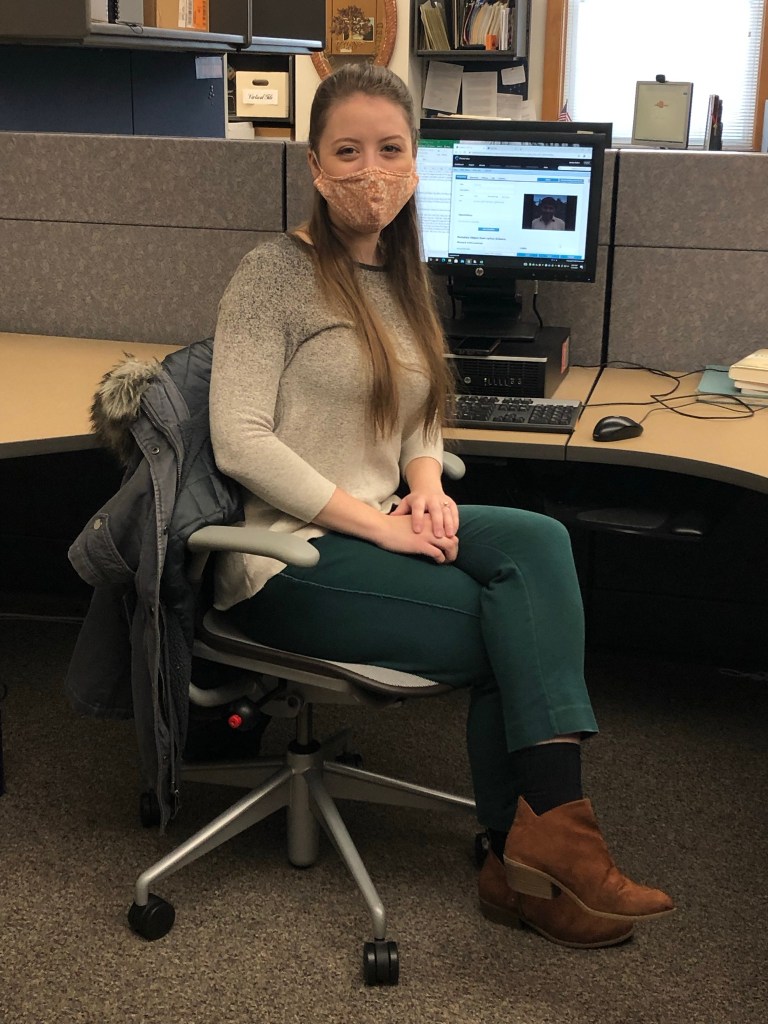
This past fall, I had the privilege of participating in the inaugural Wheaton Archives & Special Collection Digital Preservation Practicum. Over the course of the fall semester, under the guidance of Katherine Graber, Assistant Professor of Library Science, and Emily Banas, Public Services Archivist, I reorganized, compiled metadata, and ingested into Preservica hundreds of slide images from Collection 278 Papers of Elisabeth Elliot.

Continue reading

Ring in the New, Accession the Old: 2021 Edition

As circulation and movement slowly returned, life approached closer to normal in Wheaton Archives & Special Collections, as elsewhere, in 2021.

The first accession of 2021: 21-01 the papers of David Howard, described below.

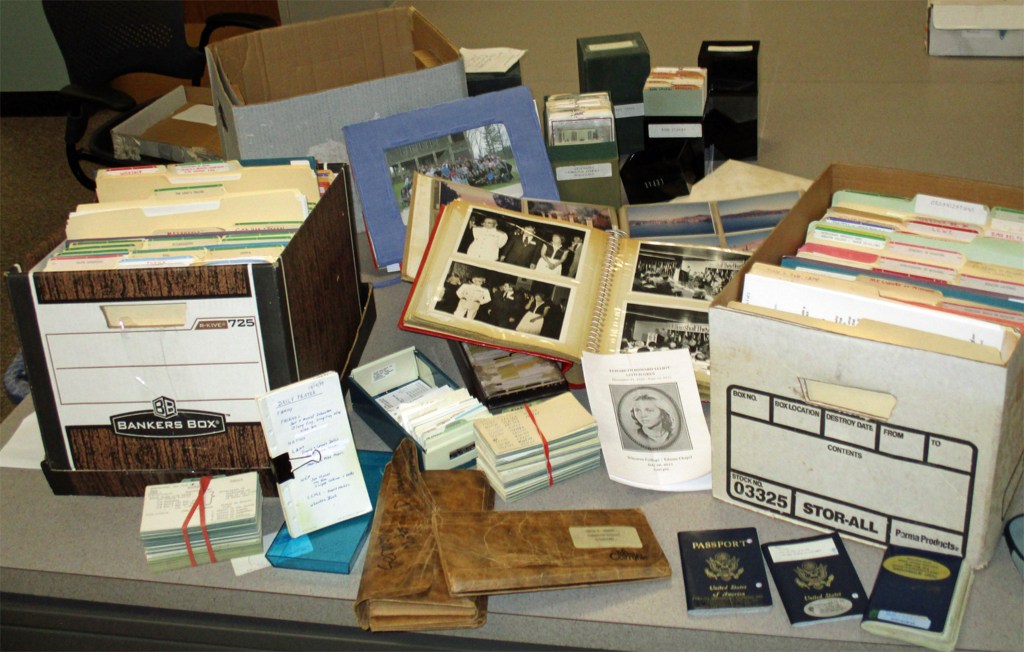
Most of the staff worked from the office for almost the entire year and with proper precautions researchers could once more be seen reading in the Reading Room. Normalcy (to borrow President Harding’s term from just over a century ago) could be seen in other areas too. In 2020, the Archives acquired 16 accessions, totaling a little more than 9 cubic feet. In 2021 there were 45 accessions, totaling 119 cubic feet. 

Continue reading

What’s To Do in the Archives?: The Annual Archival Research Lecture

Some may look to October for the start of crisp fall weather, trips to apple orchards, and pumpkin carving, but here at the Wheaton College Billy Graham Center Archives we celebrate October as American Archives Month. Joining archives, historical societies, and special collections around the country, we take this time to highlight the place of archives in preserving and making accessible the important records of our past and present communities.

David Kirkpatrick

While much of the work of archives takes place behind the scenes, both with archivists in stacks and researchers in reading rooms, this month we invite the wider community into the Archives through the 2021 Archival Research Lecture, A Gospel for the Poor: René Padilla and the Reshaping of Global Evangelicalism, presented by Dr. David Kirkpatrick at Wheaton College on Thursday, October 7th.

Continue reading

Getting Acquainted with the Archives: A Student Worker’s Perspective

Hannah head shotAbout the author: Hannah Ting is a Wheaton College junior, majoring in anthropology and media communication. She has worked at the Wheaton College Billy Graham Center Archives since August 2017.

Two years ago, I didn’t know exactly what I was signing up for. As a freshman at Wheaton College, I stumbled upon the unique opportunity to become a student worker at the Archives. Naively conjuring ambiguous, exaggerated notions of what an archives was and what archivists did, I ventured into the following school year, eager to begin my adventure in the mysterious place on the fourth floor of the Billy Graham Center. Continue reading