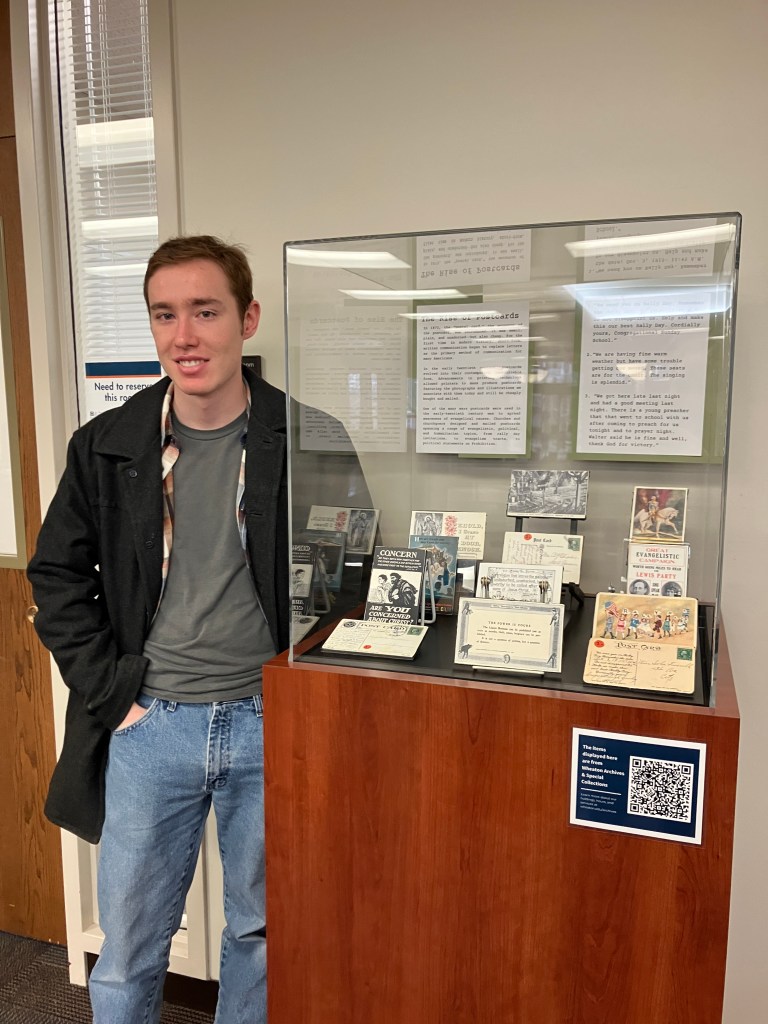
“Show, Don’t Tell:” Introducing the Religious Postcard Collection 

This week, Wheaton Archives & Special Collections shares a guest post from Andre-Ross Gennette, who is interning with the Archives this academic year. Andre-Ross Gennette is a junior at Wheaton College, dual majoring in History and Biblical and Theological Studies, as well as a Wheaton Aequitas Fellow with the cohort for the Fellowship in Public Humanities and the Arts. Along with his work processing Wheaton College alumni scrapbooks, Andre-Ross curated three exhibits for the Archives this spring, including one on the Archives’ extensive collection of religious postcards.

This February, Wheaton Archives and Special Collections digs into its collection of evangelical postcards, a now forgotten but vitally important resource for 20th century Christians in the United States.  

In 1873, the United States Postal Service introduced the “postal card”—a small and plain card that had its postage pre-printed on it, and cost just one cent, equivalent to about 25 cents today. It wasn’t big enough to send a full letter but was enough for a few sentences. Despite its simplicity, the postal card was a resounding success. For the first time in United States history, short form communication via cheap and accessible postal cards began to replace full-size letters.  

Continue reading
A Voice for Change: Excerpts from the William E. Pannell Oral History Collection

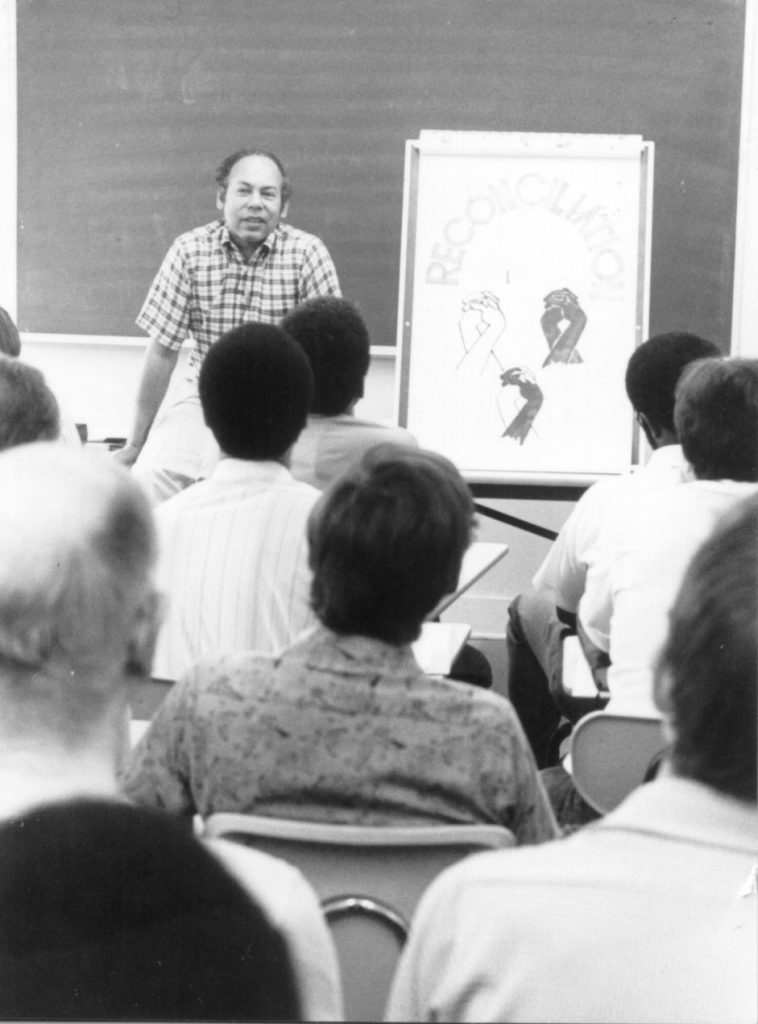
1981: Rev. Pannell leading a Christian Community Development workshop at the Voice of Calvary Ministries’ Study Center in Jackson, Mississippi, USA. (PF: Voice of Calvary – Conferences and Meetings)

In celebration of Black History Month this February, Wheaton Archives & Special Collections features our oral history collection with Rev. Dr. William E. Pannell, who passed away last October. Over more than five decades of ministry, Dr. Pannell served as a youth pastor in Detroit, directed training for Youth for Christ, helped lead Tom Skinner Associates as Vice President, and taught future generations of pastors and evangelists at Fuller Theological Seminary as the assistant professor of evangelism and director of the Black Pastors’ program. Along with his busy work as an evangelist and teacher, Dr. Pannell published several influential books on race and the evangelical church, including My Friend, the Enemy (1968), Evangelism from the Bottom Up (1992), and The Coming Race Wars?: A Cry for Reconciliation (1993).

From 1995 to 2007, Wheaton archivist Bob Shuster sat down with Dr. Pannell for several sessions of oral history interviews. Totaling more than seven hours, the recordings include Dr. Pannell’s reflections on his childhood, education, Christian faith, ministry development, and race relations in the American church. Wheaton Archives & Special Collections recently released the complete transcripts to these interviews, which are now available through the online guide to Collection 498: William E. Pannell Oral History Interviews. Below are selections from the interviews covering Dr. Pannell’s early life, growing racial consciousness, visit to the 1966 Congress on Evangelism, and development of his work with B.M. Nottage and Tom Skinner. The selections have been edited for clarity and brevity.

Continue reading