This September, Wheaton Archives & Special Collections shines a spotlight on the remarkable life of Elizabeth Morrell Evans, a woman who tirelessly dedicated herself to doing what she believed was necessary to spread the gospel and multiplied her impact by training others to do the same.
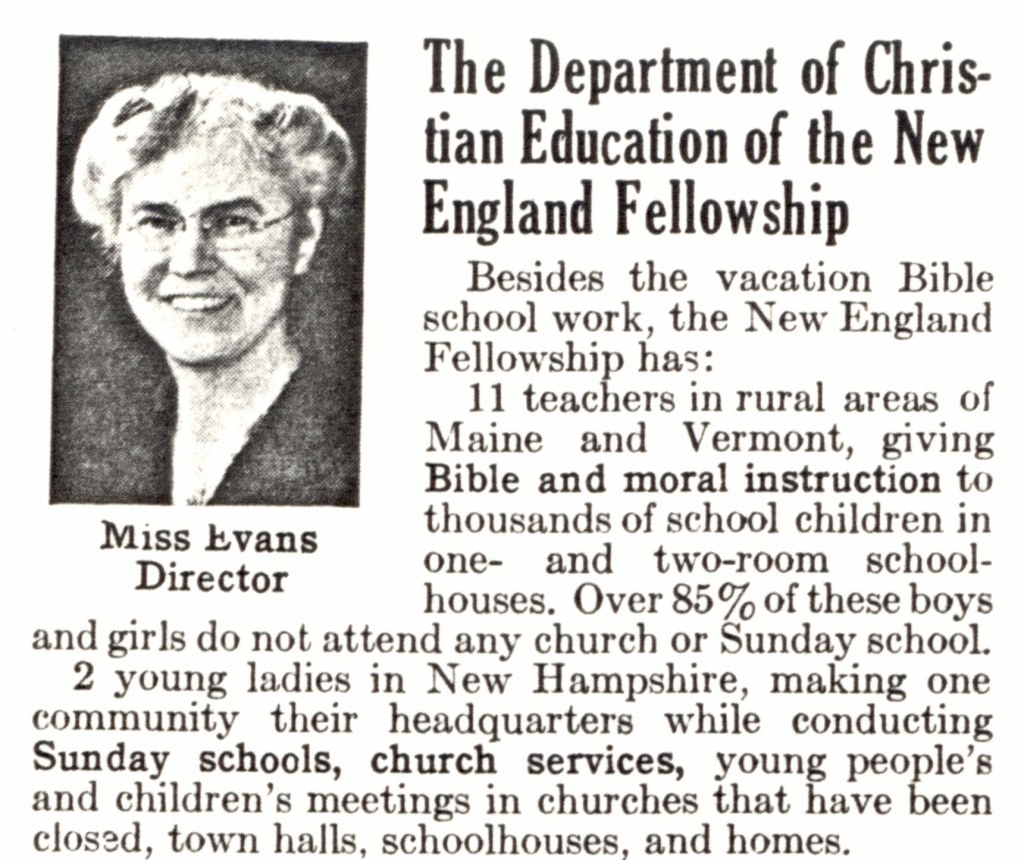
Born in Lynchburg, Virginia in 1899, Elizabeth came from a family deeply involved in evangelistic work. She completed her education at the Christian and Missionary Alliance’s Nyack Institute in 1919 and later obtained a BA in Education from Wheaton College. After graduation, she joined the teaching staff at the Bethesda Children’s Home in New Hampshire, where she met the home’s founder, J. Elwin Wright.
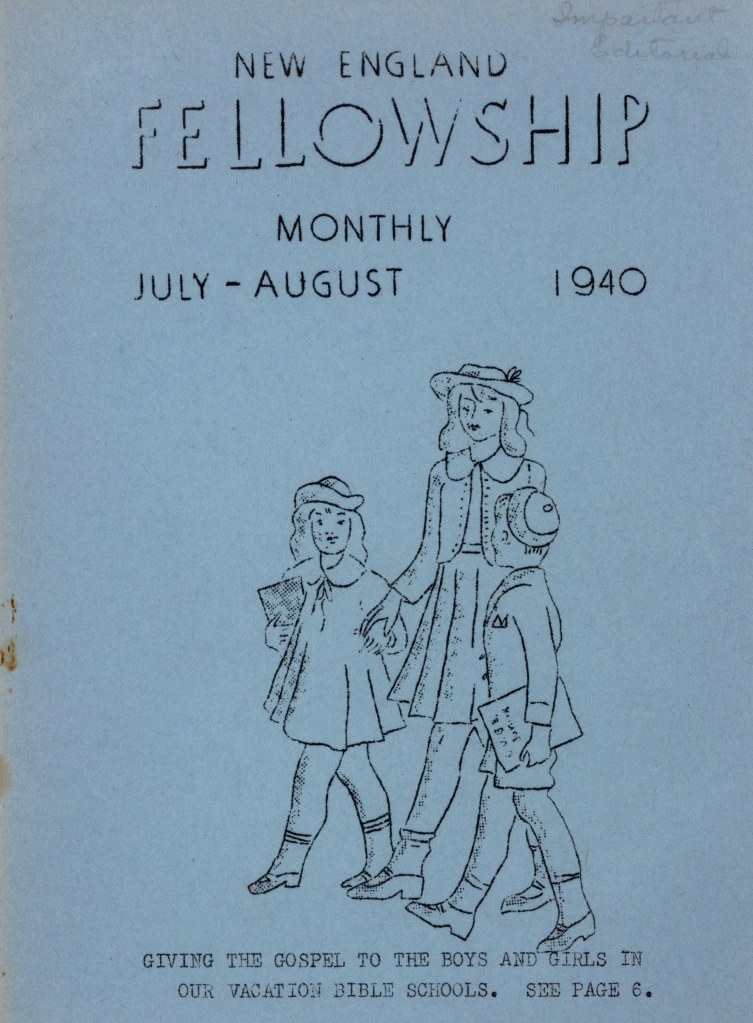
This encounter marked the beginning of a fruitful partnership that would span over 30 years. Wright played a pivotal role in establishing the New England Fellowship (NEF), which, in turn, laid the foundation for organizations such as the National Association of Evangelicals and the World Evangelical Fellowship. Elizabeth, along with her sister Kathryn, played essential roles in helping Wright create and develop these associations, which became pillars of the North American Evangelical movement.
However, Elizabeth never lost sight of her true passion—teaching. While serving on the staff of the New England Fellowship, she taught Daily Vacation Bible Schools (DVBS) across the region. As the demand for her teaching grew, Wright encouraged her to establish week-long training schools for teachers. This led to her appointment as the Christian Education director of the NEF.
Elizabeth’s concerns extended beyond the church walls. In her travels, she noticed unchurched children who knew more about Santa Claus than Jesus Christ, and in response, she started the Rural Bible Teachers program. This program trained teachers to conduct Bible classes in public schools, a concept that might seem unimaginable in the 21st century. By the 1940s, these programs had produced hundreds of teachers who annually reached tens of thousands of children.
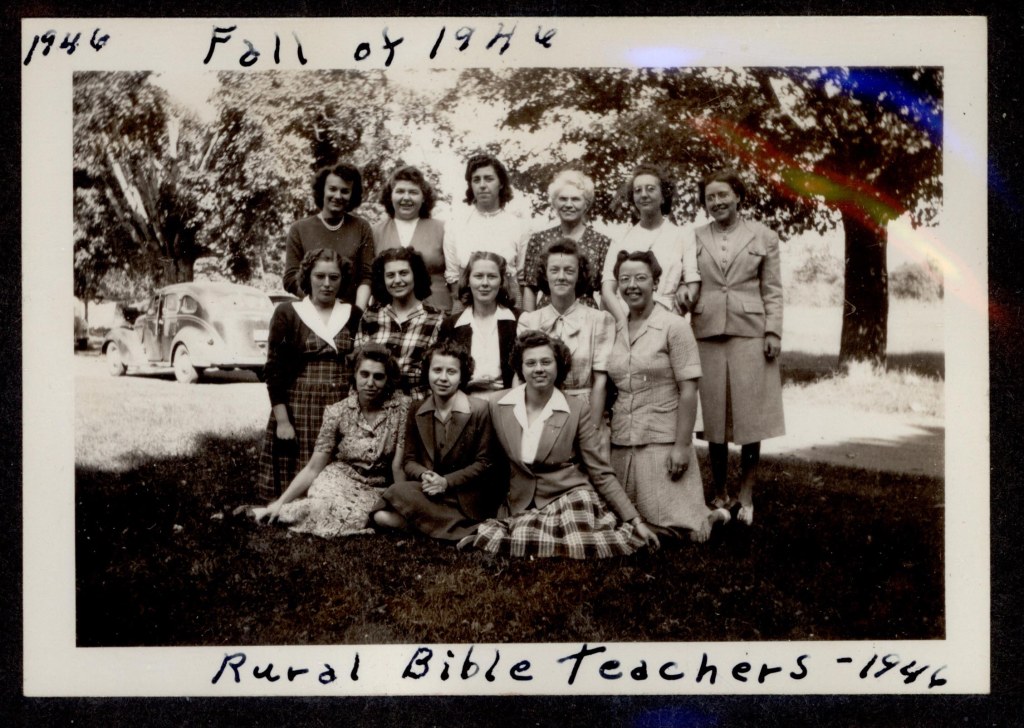
In 1946, Elizabeth earned a master’s degree in Education from Harvard University. That same year, she played a leading role in founding the Boston Christian High School, the first accredited Christian high school in New England. She also taught DVBS courses at various institutions, including the New England School of Theology, the Boston School of the Bible, Gordon College, and the Providence Bible Institute.
The 1950s marked a new phase in Elizabeth’s journey. She began leading seminars on Christian education internationally, in countries like Cyprus, Egypt, Greece, Hong Kong, Lebanon, and Vietnam. The Evangelical Fellowship of India invited her to conduct seminars, but visa restrictions for foreign missionaries prevented her from going. Instead, in 1956, at the age of 57, she traveled to Taiwan.
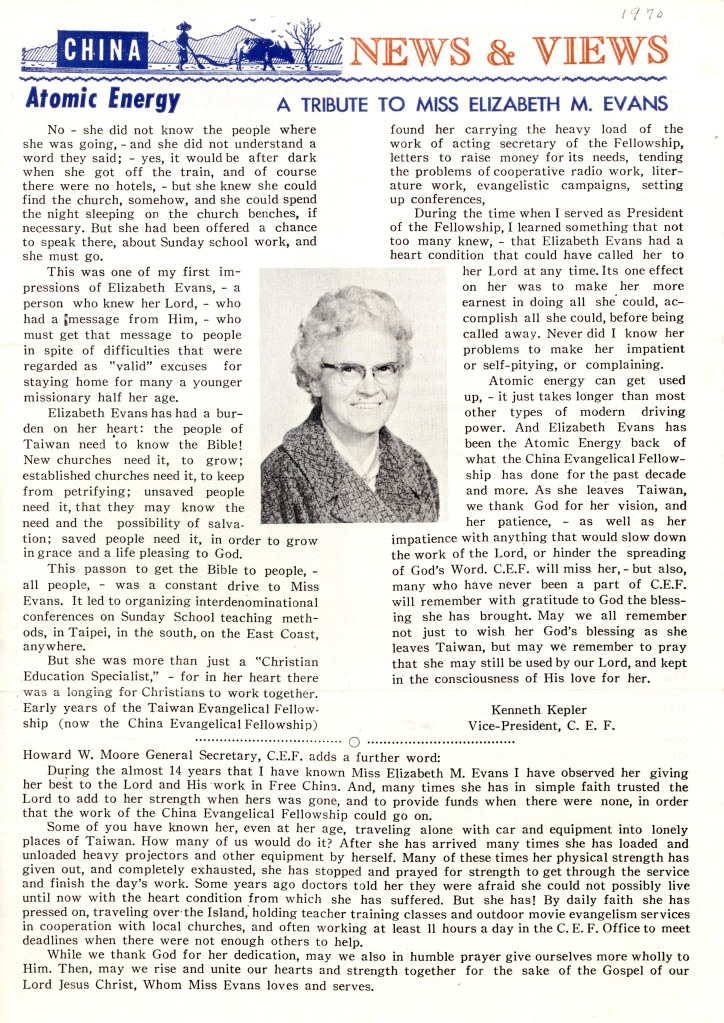
Elizabeth’s time in Taiwan opened her eyes to the urgent need for international teacher training, and she decided to stay on as an independent missionary. Over the next two decades, including a brief retirement that didn’t last, Elizabeth conducted training seminars for Christian education throughout Taiwan and across Asia. She also played a significant role in the Taiwan Evangelical Fellowship and the China Sunday School Association, ministering to both Chinese and Taiwanese populations.
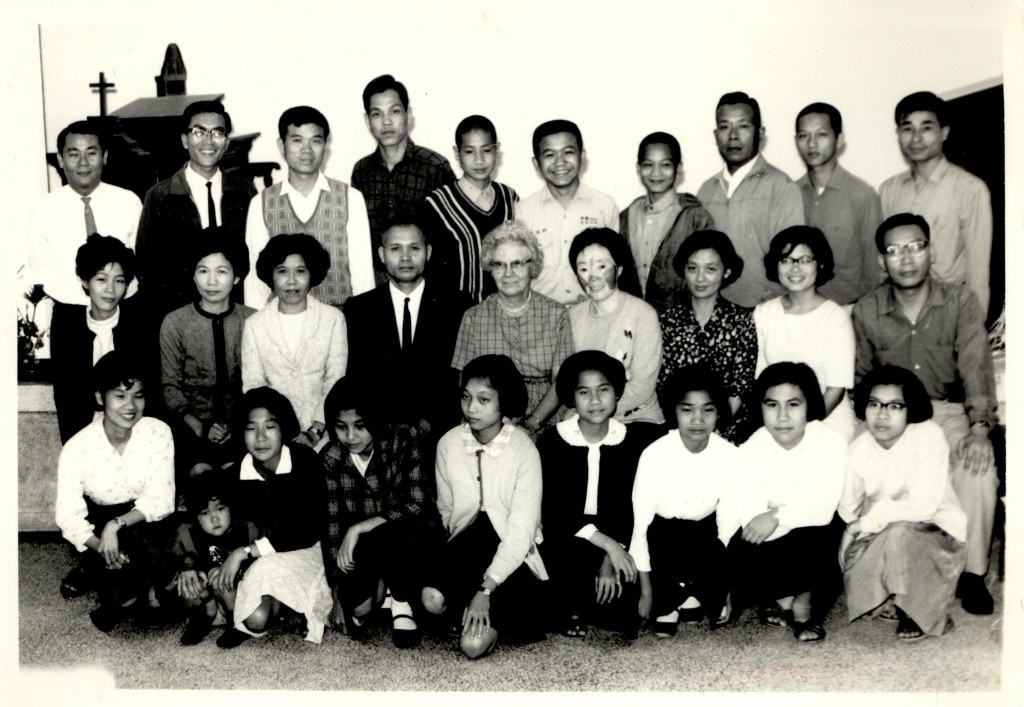
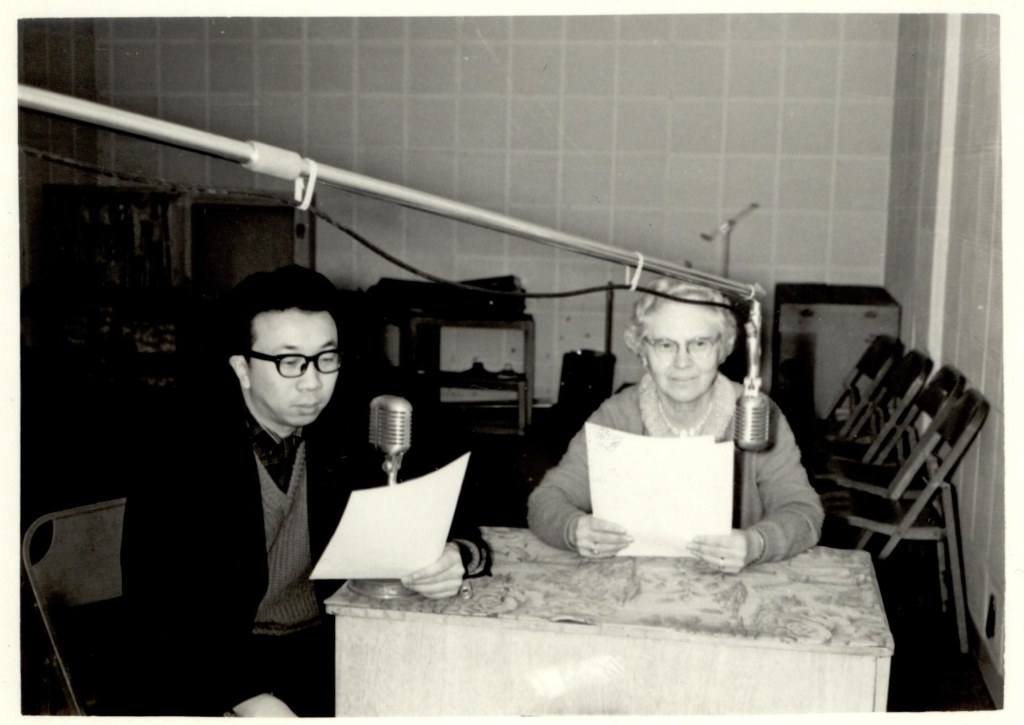
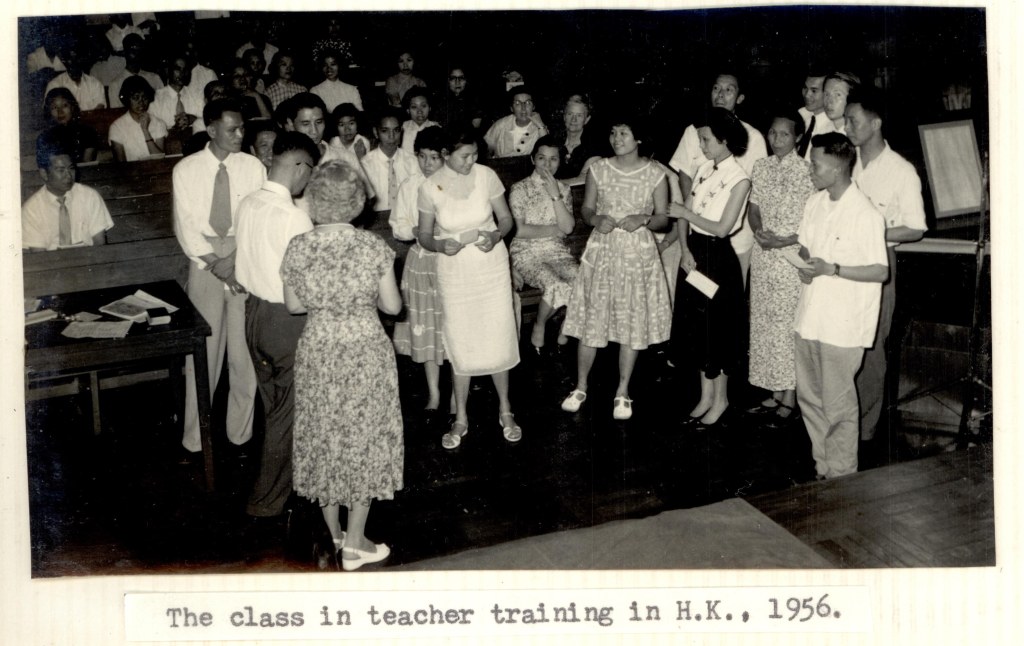
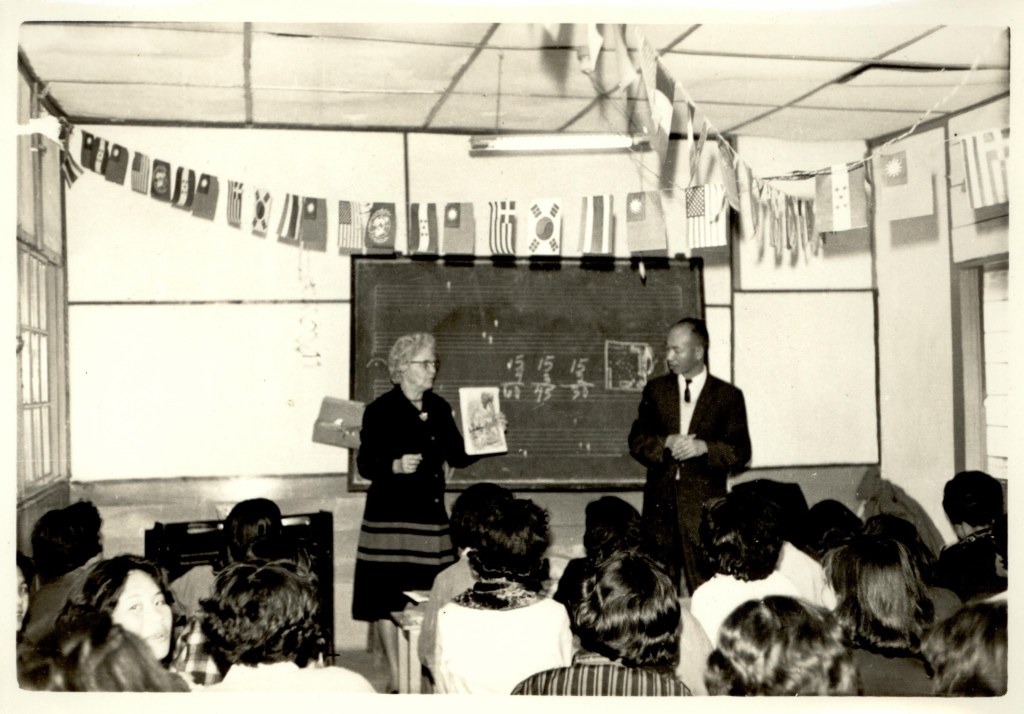
Her sister Kathryn vividly described her rigorous schedule, “she would settle in one area for 8 weeks, going one night every week to six different towns, like spokes in a wheel, giving different courses in a Teacher Training program, returning next year to the same area and same plan but with a different course.” Elizabeth even established a Visual Aids Center in Hsinchu to provide filmstrips and moving pictures for pastors and initiated a bookmobile to bring Christian literature to remote areas with no churches, traveling along roads which Kathryn wrote, “would scare the daylights out of most Americans, but she went and loved it.” At the age of 73, Elizabeth held an astounding 81 outdoor meetings, 68 church meetings, and 36 hospital meetings in a single year.
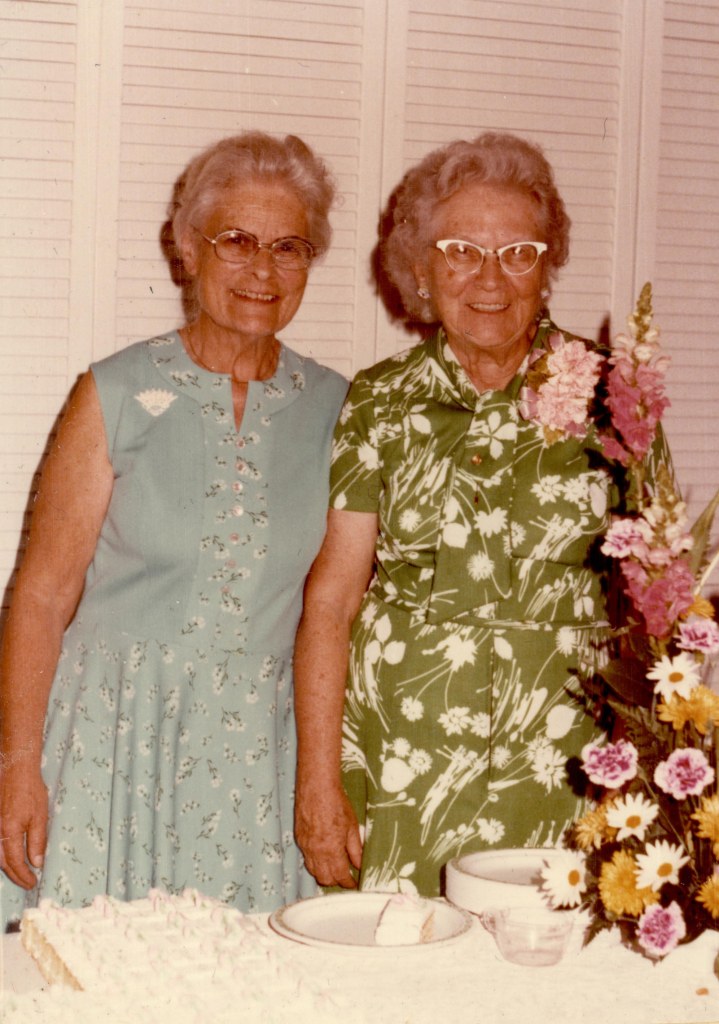
Elizabeth eventually retired to Florida with her sister Kathryn in 1976, but retirement did not mean a quiet old age. The sisters remained active, establishing Sunday schools and youth programs for Haitian immigrants in the state. In 1983, and until her passing in 1989, Elizabeth vigorously responded to President Ronald Reagan’s call for a National Day of Prayer, contacting over 200 ministers and assisting in their planning efforts.
Archives & Special Collections holds seven and a half hours of interviews with Elizabeth about her life, including online audio files and transcripts (Collection 279). In these interviews Evans, besides talking about her own work, gives personal vignettes of many Evangelical leaders of the 1940s, 50s, and 60s. There are also several boxes of correspondence, folders, lesson plans, magazines and other materials that are unprocessed but open to researchers. These document Elizabeth’s remarkable life and her contacts with a host of Evangelical leaders in the United States and other countries.
Caleb, in Joshua 14, was a faithful servant of the Lord who at the age of 85 went out to conquer a mountain. On Elizabeth’s 80th birthday, Paul Rees wrote this in a letter to Elizabeth:
“I think of you as the female counterpart of Caleb of the Old Testament – one who refused to grow old, asked for a mountain to be given to him when he was 80 [sic] years old, and who was paid the Biblical tribute of having ‘wholly followed the Lord.’”
 From the Vault